Another insightful article from Break the Needle and highlights the folly of Harm Minimisation strategy again.
It does not take a visionary to conclude that Victoria is heading down the same path.
This harrowing story of the death of a fourteen-year-old girl from a drug overdose brings into stark relief the flaws that our lawmakers have allowed to permeate our society driven by flawed ideology.
The collision of the principles of harm minimisation and rights of parents over their children which destroys parental responsibility because they have none, according to the State.
This anomaly which conflicts with the age of criminal accountability must be addressed before Victorian children suffer the same fate as Kamilah Sword and the pain inflicted on her family.
By Alexandra Keeler
On Aug. 19, 2022, Kamilah Sword took a single hydromorphone pill, believing it to be safe. She overdosed and was found dead by her grandmother the next day. She was 14.
Kamilah believed the drug was safe — despite having bought it illicitly — because she was told it came from a government-run “safer supply” program, according to Kamillah’s best friend Grace Miller and her father.
“I’ll never get to see her get married, never have grandkids, never get to see her graduate,” said Kamilah’s father, Gregory Sword, lowering his chin to keep his voice steady.
“It’s a black hole in the heart that never heals.”
Sword faced significant challenges trying to get his daughter help during the year he was aware she was struggling with addiction. He blames British Columbia’s safer supply program and the province’s legal youth treatment framework for exacerbating his daughter’s challenges and ultimately contributing to her death.
“It’s a B.C. law — you cannot force a minor into rehab without their permission,” said Sword. “You cannot parent your kid between the ages of 12 and 18 without their consent.”
Sword is now pursuing legal action against the B.C. and federal governments and several health agencies, seeking accountability for what he views as systemic failures.
B.C.’s “Safe” supply program
B.C.’s prescribed safer supply program, which was first launched in 2020, is designed to reduce substance users’ reliance on dangerous street drugs. Users are prescribed hydromorphone — an opioid as potent as heroin — as an alternative to using potentially lethal street drugs.
However, participants in the program often sell their hydromorphone, in some cases to teenagers, to get money to buy stronger drugs like fentanyl.
According to Grace Miller, she and Kamilah would obtain hydromorphone — which is commonly referred to as Dilaudid or “dillies” — from a teenage friend who bought them in Vancouver’s Downtown Eastside. The neighbourhood, which is the epicentre of Vancouver’s drug crisis, is a 30-minute SkyTrain ride from the teenagers’ home in Port Coquitlam.
Sword says he initially thought “dillies” referred to Dairy Queen’s Dilly Bars. “My daughter would ask me for $5, [and say], ‘Yeah, we’re going to Dairy Queen for a Dilly Bar.’ I had no idea.”
He says he only learned about hydromorphone after the coroner informed him that Kamilah had three substances in her system: cocaine, MDMA and hydromorphone.
“I had to start talking to people to figure out what [hydromorphone] was and where it was coming from.”
Sword is critical of B.C.’s safer supply program for being presented as safe and for lacking monitoring safeguards. “[Kamilah] knew where [the drugs] were coming from so she felt safe because her dealer would keep on telling her, ‘This is safe supply,’” Sword said.
In February, B.C. changed how it refers to the program from “prescribed safer supply” to “prescribed alternatives.”
CAA Comment – changing names doesn’t solve a problem but exacerbates it.
Grace says another problem with the program is the quantities of drugs being distributed.
“It would be a big difference if the prescriptions that they were giving out were dosed properly,” she said, noting addicts would typically sell bottles containing 14 pills, with pricing starting at $1 a pill.
Sword estimates his daughter struggled with addiction for about 18 to 24 months before her final, fatal overdose.
After Kamilah overdosed for the first time on Aug. 21, 2021, he tried to get her into treatment. A drug counsellor told him that, because she was over 12, she would need to verbally consent. Kamilah refused treatment.
B.C.’s Infants Act allows individuals aged 12 or older to consent to their own medical treatment if they understand the treatment and its implications. The province’s Mental Health Act requires minors aged 12 to 16 to consent to addiction or mental health treatment.
While parents can request involuntary admission for children under 16, a physician or nurse practitioner must first confirm the presence of a mental disorder that requires treatment. No law specifically addresses substance-use disorders in minors.
When Kamilah was admitted to the hospital on one occasion, she underwent a standard psychiatric evaluation and was quickly discharged — despite Sword’s protests.
Ontario also has a mental health law governing involuntary care. Similar to B.C., they permit involuntary care only where a minor has been diagnosed with a mental disorder.
By contrast, Alberta’s Protection of Children Abusing Drugs Act enables a parent or guardian to obtain a court order to place a child under 18 who is struggling with addiction into a secure facility for up to 15 days for detoxification, stabilization and assessment. Alberta is unique among the provinces and territories in permitting involuntary care of minors for substance-use issues.
CAA Comment – The CAA has advocated for a similar health-based regime to treat all illicit drug users of any age.
Grace, who also became addicted to opioids, says her recovery journey involved several failed attempts.
“I never thought I would have almost died so many times,” said Grace, who is now 16. “I never thought I would even touch drugs in my life.”
Grace’s mother Amanda (a pseudonym) faced similar struggles as Sword in trying to get help for her daughter. Amanda says she was repeatedly told nothing more could be done for Grace, because Grace would not consent to treatment.
“One time, [Grace] overdosed at home, and I had to Narcan her because she was dead in her bed,” Amanda said. “I told the paramedic, ‘Our system is broken.’ And she just said, ‘Yes, I know.’”
Yet Grace, who today has been sober for 10 months, would question whether she even had the capacity to consent to treatment when she was addicted to drugs.
Under B.C.’s Health Care (Consent) and Care Facility (Admission) Act, an adult is only considered to have consented to health care if their consent is voluntary, informed, legitimately obtained and the individual is capable of making a decision about their care.
“Mentally able to give consent?” said Grace. “No, I was never really mentally there.”
System failure
Today, Sword is one of two plaintiffs leading a class-action lawsuit against several provincial and federal health authorities and organizations, including the B.C. Ministry of Health, Health Canada, Vancouver Coastal Health and Vancouver Island Health.
All four of these agencies declined to comment for this story, citing the ongoing court proceedings.
The lawsuit was filed Aug. 15 and is currently awaiting certification to proceed. It alleges the coroner initially identified safer supply drugs as a cause of Kamilah’s death, but later changed the report to omit this reference due to pressure from the province or for other unknown reasons.
It further alleges B.C. and Ottawa were aware that drugs prescribed under safer supply programs were being diverted as early as March 2021, but failed to monitor or control the drugs’ distribution. It points to a Health Canada report and data showing increased opioid-related problems from safer supply programs.
According to Amanda, Kamilah had wanted to overcome her addiction but B.C.’s system failed her.
“I had multiple conversations with Kamilah, and I know Kamilah wanted to get clean,” she says. “But she felt so stuck, like she couldn’t do it, and she felt guilty and ashamed.”
Grace, who battled addiction for four years, is relieved to be sober.
“I’ve never, ever been happier. I’ve never been healthier. It’s the best thing I’ve done for myself,” she said. “It’s just hard when you don’t have your best friend to do it with.”
CAA Comment. – When will illicit drug apologists ever learn?
Another insightful article from Break the Needle in Canada. It is becoming uncanny as these articles relate to the identical issues and fallout from drug use and abuse in this state.
We can easily transpose Nelson for Richmond as the issues are not similar but identical.
They have both gone down the path of harm minimisation and are paying a very high community social price.
The power of these articles is they allow the obverse argument to be published, giving a balanced account of the situation, and allowing readers to form their own views, something the pro-drug lobby will not tolerate.
The tired old chestnut of “Drug addiction is a health issue, not a crime” was again trotted out, and its use is disingenuous.
Addiction per se is a health issue, and on that, there is no argument, but the behaviour of the addicts while under the influence is more often than not criminal, as is the sourcing of their drugs of choice. As are the behaviours that the addicts and all users indulge in facilitating their access to illegal products.
The problem with the Health argument is that it implies that all the other criminal and anti-social behaviours of users and addicts are somehow acceptable or excusable, arrant rubbish.
By Alexandra Keeler
“Just the other night, we had an intruder in our yard,” Kirsten Stolee recounted, her voice unsteady. Her two daughters often watch television with their windows open. “He easily could have gotten inside,” she said.
Stolee lives in Nelson, a picturesque, mountain-rimmed town in BC’s Southern Interior that is struggling with rising public disorder. Some residents, herself included, say that local harm reduction initiatives – which appear to be operating without adequate accountability and safety measures – are responsible for the decay.
Near Stolee’s house, one can find the Stepping Stones emergency shelter alongside the former Nelson Friendship Outreach Clubhouse, which used to provide support services for individuals struggling with mental health issues before being abandoned late last year.
When the clubhouse still operated, supporters claimed that it provided clients with a space to socialize and partake in “art, gardening, cooking and summer camp” – but critics countered that it was a drop-in centre for drug users. After the provincial government announced plans to open a supervised inhalation site at the clubhouse early last year, local residents protested and had the project, and eventually the clubhouse itself, shut down.
Although Stolee supports harm reduction in principle, she opposed the opening of the inhalation site on safety grounds. The incidents near her home were concerning: an assault just outside her window, a drug-addled individual stabbing a pole with scissors, people carrying weapons on the street in front of the site. When her daughter’s phone was stolen, it was eventually recovered from a man at the clubhouse.
Although the clubhouse is closed, Stepping Stones continues to operate and has been similarly chaotic. Stolee watched a suspected drug dealer attack one of the residents there, and learned that another resident had made an inappropriate comment to her daughter.
She has also observed fire hazards near local homeless encampments, including a burning electrical panel and abandoned fires, and says that local drug users “play with fires” on sidewalks and streets. She finds these incidents concerning, as BC and Alberta have recently been ravaged by large wildfires and Nelson’s downtown is filled with historic wooden architecture.
Calling the police seemed unhelpful. In one case, officers dismissed her concerns about a man who was carrying large rocks, considering him non-threatening. However, the man was later arrested for assault and for using these types of rocks to break into a gas station.
Gavin Halford, a representative of Interior Health, the provincial agency which oversees most of the region’s harm reduction programs, stated that his organization “does not tolerate or condone any form of criminal activity, including trespassing.” He claimed that Interior Health has taken “a number of steps to increase security at the Clubhouse,” including increased signage, lighting, video surveillance and on-site security services.
However, the acquisition of 24/7 security services was facilitated by Stolee’s partner, after Interior Health told him that no such options were available. The partner also alleges that he was told by local police officers that Interior Health asked them not to enforce the “No Trespassing” signs around the clubhouse.
Stolee’s family has since invested $1,000 into security upgrades such as video surveillance and fencing. “We have baseball bats and pepper spray by our front door and a bat under the bed,” she said, noting that she wrote a letter to BC Premier David Eby detailing their experiences, which received no reply.
Kari Kroker, another neighbour of Stepping Stones, said that downtown Nelson has experienced a noticeable decline as open drug use and trafficking have proliferated, including sales to youth. “The alley behind my house has become a place of screaming and chaos,” she said, expressing frustration at how some drug users have told local children that using drugs is a form of “play.”
“I’m all in favour of putting more money into this situation, but I think we’re going the cheap way,” said Kroker. “I don’t see the province doing much to solve this. I don’t see rehab and supports for people. We need rehab. Where are the facilities to support people?” She believes that the town’s social fabric is fraying and that “harmony has been completely undermined.”
Tanya Finley, owner of Finley’s Bar and Grill and Sage Wine Bar, is an outspoken critic of provincial harm reduction policies and a leading figure in N2, the local residents’ association. She says that human feces, drug dealing, broken windows and home invasions are daily issues in her community: “Our eighty-year-old neighbour, who had just had surgery, had a brick thrown through her window.”
Finley says that her activism has had personal and professional costs and that, after she wrote a newspaper article advocating that homeless individuals be relocated to more suitable locations, a harm reduction advocate urged for a boycott of her business on social media. This led to a decline in sales and caused some of her employees to worry about their job security.
N2 was formed earlier this year after the province attempted to open the aforementioned supervised inhalation site. Local residents believed that the location of the site was unsuitably close to several youth facilities and that health authorities had, in contravention to Health Canada guidelines, failed to adequately consult the community.
“We were lied to deliberately and continuously,” said Kroker. “We found out later that this had been in the works for almost a year.”
Early efforts to address public safety concerns were undermined by accusations of NIMBYism and inadequate responses from government authorities. After N2 was formed and took collective action – such as letters to officials and media engagement – officials began to take these concerns more seriously and temporarily halted the opening of the inhalation site.
Polly Sutherland from ANKORS, a local harm reduction organization, acknowledged friction with the community but said that deteriorating public safety is largely due to limited resources. “We need more staff hours… We have the expertise and compassion for these individuals. Just give us the resources to do our jobs, and we will get it done,” she said.
She said that high rents have worsened homelessness and dereliction, and that mobile services could mitigate the concentration of public disorder in certain areas.
Nelson’s Mayor, Janice Morrison, who has had 35 years of experience working in healthcare, emphasized that municipal authority over healthcare is limited and argued for improved communication with provincial and federal agencies, which she believed needed to provide more funding.
“I think ANKORS is totally correct in that they need more staff hours and more resources,” she said, while stressing the importance of funding existing roles, such as community safety officers and outreach workers. “Drug addiction is a health issue, not a crime,” she said.
Morrison also criticized Interior Health for its inadequate community consultation regarding the placement of harm reduction sites. “They’ve had a hard go of it in their area,” the mayor said, referring to these sites’ neighbours.
Despite public safety challenges, Morrison noted that Nelson has made progress with operating several safe injection sites and would soon be adding 28 supportive housing beds. She remained committed to finding solutions despite persistent funding difficulties. “I’m ready to hear the solutions, and to support anyone with viable ideas,” she said.
The CAA has long promoted a similar scenario for this state, arguing that kicking those suffering substance abuse or any impairment that removes their acuity to manage themselves into the gutter and walk away is effectively what we are doing in this State and is a disgusting treatment and disrespect for human life.
The drug apologists try to falsely claim the moral high ground, claiming that Harm Minimisation saves lives. How does facilitating the pumping of some questionable drug into an addict’s veins help the addict? It may be okay for them today, but what about tomorrow?
We aggravate the situation by creating an alleged safe injecting room that does nothing to address the issues of the user. How perpetuating the adverse effect that drugs have on people by providing government support in the furtherance of their addiction or risk-taking is incomprehensible.
We can learn a lot from Ontario; they have been there and are now plotting a way back.
Ontario’s decision to close safe consumption sites near schools and daycares comes in the wake of a bystander’s death and class-action lawsuit.
By Alexandra Keeler
In a dramatic shift in policy, Ontario is closing 10 safe consumption sites located near schools and daycares, citing public safety concerns.
“Our first priority must always be protecting our communities, especially when it comes to our most innocent and vulnerable — our children,” said Ontario Health Minister Sylvia Jones at an Association of Municipalities of Ontario conference in Ottawa on Tuesday.
Safe consumption sites, which enable people to use illicit drugs with sterile equipment under staff supervision, will be prohibited from operating within 200 metres of schools and child-care centres after March 31, 2025.
The province also plans to introduce legislation to prevent municipalities from establishing new consumption sites, requesting the decriminalization of illegal drugs or participating in federal safe supply initiatives, a health ministry press release says.
Safe consumption sites have faced mounting scrutiny in the wake of community feedback highlighting their effect on public safety.
“We’ve noticed a real change from 2021 onwards,” Andrea Nickel, a parent who lives near a safe consumption site at Toronto’s South Riverdale Community Health Centre, told Canadian Affairs in May.
“At the beginning of last year it just escalated out of control.”
Unacceptable danger
Ontario opened its first safe consumption site in 2017 with the aim of reducing overdose deaths and providing users with a gateway to treatment. Today, there are 23 safe consumption sites across the province, 17 of which are provincially funded.
KeepSIX, the safe consumption site in South Riverdale, is among the sites facing closure. Last July, Karolina Huebner-Makurat, a local resident and mother of two, was fatally shot during a gunfight outside the site. Her death prompted Ontario to conduct two reviews of the centre and to also review the 16 other provincially funded sites.
A review of keepSIX conducted by the hospital network Unity Health Toronto and released in February recommended improvements in security, community relations, law enforcement communication and staff training. It did not recommend closure.
Drugs found by a child in the South Riverdale neighbourhood. (Photo provided by Andrea Nickel.)
The second review, released in April and conducted by former health-care executive Jill Campbell, also opposed closure. It advocated instead for expanded harm reduction and treatment, enhanced security and increased mental health support.
In March 2024, two South Riverdale residents launched a class-action lawsuit against the operator of keepSIX and all levels of government, Canadian Affairs reported in May. The lawsuit alleges the site has exposed the community to unacceptable danger.
The site’s proximity to daycares and schools and its role in exposing children to illicit drugs and used needles are at the heart of that case.
Reacting to this week’s announcement, South Riverdale parent Andrea Nickel said she is supportive of the site’s services. “[But] it is not unreasonable to ask that they are balanced with community safety, specifically kids’ safety.”
South Riverdale’s response cited the centre’s role in reversing 74 overdoses in 2023.
“Every overdose reversed is a life saved,” Anne Marie Aikins, a public affairs consultant at AMA Communications, said on behalf of the centre.
Subscribe for free to get BTN’s latest news and analysis – or donate to our investigative journalism fund.
‘Devil’s in the details’
In Tuesday’s address, Ontario’s health minister also announced a $378-million investment to establish 19 new Homelessness and Addiction Recovery Treatment Hubs (HART hubs) across the province. These recovery-focused hubs will offer social support services and employment assistance to individuals struggling with addiction.
They will not provide supervised drug consumption, needle exchange programs or the “safe supply” of prescribed controlled substances.
“The devil’s in the details with these things,” said John-Paul Michael, an addictions case manager in Toronto who has extensive experience in harm reduction and lived experience with substance use.
“Everyone I know in the harm-reduction community is very much in favour of having better access to treatment, better access to detox, better wraparound care,” he said. “The problem becomes when it is at the expense of other evidence-based care.”
Michael says safe consumption sites are often the only form of health care available to individuals struggling with addiction. Eliminating them would leave these individuals without support, he says.
“Safe consumption sites are essential for saving lives, particularly for those who may never seek formal treatment,” he said. “Eliminating these supports disregards the value of human life.”
Michael is also concerned about the reduction of needle exchange services, which are crucial for managing HIV and Hepatitis C rates and lessening the burden on emergency rooms.
“Community-based nurses at [safe consumption sites] provide basic care that can prevent emergency department visits and potentially severe outcomes, such as [intensive care unit] stays,” Michael said.
The province will soon seek proposals to establish up to 10 HART hubs. Priority will be given to proposals that aim to transition existing safe consumption sites — especially those facing closure — into HART hubs.
“[T]he likelihood is that [these transitions] would happen very quickly,” Health Minister Jones told reporters on Tuesday. “The other applications — it will depend on what they bring forward.”
I’m not sure when the “ helping community” is going to get it through their heads that helping people stay addicted is not helping them. When addicts have their substance of choice freely available and someone to make sure they don’t die, what possible reason would they have for doing the hard work of getting clean? Users are interested in one thing above health, family, even food: the next dose.
An insightful article and video from our partners, the Dalgarno Institute.
The video is of an interview between Andy, a recovered Ice addict and Shane Varcoe, the CEO of the Dalgano Institute. Although this interview was done in 2015, it is perhaps more relevant today and gives an insight into the wrong-headed thinking of the so-called experts who advise the government on drug-related issues. Andy’s experience should motivate all clear thinkers that new and informed approach must be adopted .
You are sure to be surprised at the issues that Andy exposes – CAA
Andy’s story is a powerful testament to the challenges of ice addiction and the complexities of the recovery process. His journey, as shared in a candid interview, offers valuable insights into the realities of drug use, rehabilitation, and the systemic issues within current drug policies.
Early Beginnings
Andy’s relationship with substances began in his teenage years, starting with alcohol at age 13. While marijuana didn’t become a significant part of his life, alcohol remained a constant until he graduated from university in 2004. Following a period of sobriety, Andy’s life took a turn when his business failed and his mother fell ill.
The Descent into Ice Addiction
Struggling with depression and worry, Andy first tried ice (crystal methamphetamine) as a way to cope. The initial experience provided energy and alertness, seemingly alleviating his concerns. However, his mother’s tragic passing due to medical complications became the catalyst for increased drug use. Andy’s habit escalated rapidly, reaching consumption levels of up to 1.7 grams daily.
Andy’s addiction led to multiple arrests and periods of incarceration. His experiences in custody, particularly during the smoking riots at Melbourne Remand Centre, proved to be a turning point. The inhumane conditions and prolonged period without drugs forced Andy to confront his addiction.
The Rehabilitation Journey
Andy’s path to recovery involved participation in drug court programs and various rehabilitation efforts. He highlights the importance of drug courts in providing support but also notes the challenges within the system. Andy’s experiences shed light on the complexities of recovery, including the risk of relapse and the impact of triggers.
Insights on Current Drug Policies
Andy offers critical perspectives on current drug policies and rehabilitation programs:
Inconsistencies in messaging: He points out the conflicting messages between legal stance and harm reduction approaches.
Problematic rehabilitation strategies: Andy discusses how certain programs, intended to help, can sometimes trigger cravings or relapses.
The need for improved in-custody programs: He emphasises the potential for effective rehabilitation during incarceration, if more comprehensive programs were available.
Criticism of proposed solutions: Andy expresses scepticism about initiatives like ice smoking rooms, highlighting the potential negative impacts on recovering addicts and the broader community.
Andy’s story underscores several key points:
The importance of addressing underlying issues in addiction treatment
The need for consistent messaging in drug policies
The potential of incarceration as a rehabilitation opportunity, if properly structured
The challenges faced by recovering addicts in maintaining sobriety, especially when confronted with triggers or old associates
Andy’s candid sharing of his experiences provides invaluable insights into the world of ice addiction and recovery. To gain a deeper understanding of his journey and the issues he raises, readers are encouraged to watch the full YouTube video here.
Another insightful article from ‘Break the Needle’. The Canadian experiences with Illicit drugs seem to precede the experiences here in Victoria as the government has guided us towards the first step in a broader application of the ‘Safe Suppy’ slide with the introduction of Pill testing. With similar advocates in Victoria promoting drug proliferation, having access to the Canadian experiences gives Victoria a head start to alter course and impact the toll that drugs are taking on our predominantly younger generation.
Drug facilitation by governments all have one thing in common: they increase the use of illegal narcotics, and there is never any evidence that the addiction diminishes, but rather younger people enter the drug dependence regime convinced that because it is government-sanctioned, it must be safe.
This article highlights how drug apologists inject emotive words into their rhetoric, like the use of ‘fake news’, ‘misinformation’ and ‘disinformation’ to further promote the use of illicit drugs. – CAA
Claims about ‘safer supply’ diversion aren’t disinformation
This month, police in London, Ont., admitted to what critics have said all along: safer supply diversion is happening at alarming levels
Last spring, Canada’s minister of mental health and addictions claimed critics’ concerns about “safer supply” diversion — the illegal selling and trading of taxpayer-funded addictive drugs — were based on lies.
“For Pierre Poilievre to state untrue information about safer supply, and try to create barriers to accessing harm reduction services that are saving lives amid this ongoing crisis, is incredibly irresponsible and dehumanizing to people who use drugs,” read a statement by then-minister Carolyn Bennett’s office.
Fast forward a year, and it’s clear which side was telling the truth.
This month, police in London, Ont., admitted to what critics said all along: diversion of pharmaceutically supplied opioids to the streets is happening at alarming levels. London is home to Canada’s longest-running safer supply program, which dates back to 2016 and was significantly expanded in 2020.
The London Police Service released data that shows a staggering 3,000per cent increase in the seizure of hydromorphone tablets — the opioid predominantly given out by safer supply programs — over the last five years. In 2019, London police seized just under 1,000 tablets. By 2020, that number had tripled. In 2023, they seized 30,000 hydromorphone tablets.
For context, hydromorphone is as potent as heroin and just two or three of these pills, if snorted, can cause an overdose in an inexperienced opioid user.
Earlier this month, the city’s deputy police chief, Paul Bastien, told CBC’s London Morning, “We recognize the value that safe supply plays as part of that harm reduction piece, but diversion is an important issue that is affecting community safety. I won’t say that everyone’s doing it, but some of the tablets from safe supply are being diverted for that purpose.”
“Criminal groups are fairly adept at exploiting policy changes that are well intended. But unforeseen consequences sometimes arise and this appears to be, at least in part, one of them,” he continued.
A reasonable person may assume that, given this alarming new evidence, proponents of safer supply would change their tune about widespread diversion being “fake news.” Unfortunately, they haven’t.
Some activists are now claiming on social media that London’s spike in hydromorphone seizures was not caused by safer supply, but rather by a high-profile theftof 245,000 hydromorphone tablets from an Ontario pharmacy. Yet the spike in seizures began years before this theft and, according to multiple addiction physicians, the street price of hydromorphone collapsed in the city well before 2023, suggesting an earlier influx of diverted supply.
However, these mental contortions aren’t surprising. As more and more evidence of widespread diversion emerged over the past year, accusations of disinformation and misinformation haven’t stopped –– they have simply evolved. The narrative changed from “Diversion doesn’t exist” to “Fine, it exists, but only on a small scale” to, now, “Fine, diversion exists at scale, but imagine the alternative?”
This is the angle already emerging in British Columbia, where the province’s top doctor, Bonnie Henry, authored adamning reportthat acknowledges the regularity and harms of safer supply diversion, yet still concludes safer supply is “ethically defensible” and advocates for its expansion.
Like many safer supply activists, Henry often argues diversion isn’t a significant concern because most opioid deaths are caused by fentanyl.
While it’s true that most opioid deaths are attributable to fentanyl, hydromorphone is still incredibly dangerous. When diverted into the black market, it creates new addictions, often among young people, which culminate in fentanyl use.
Moreover, data indicate hydromorphone is implicated in an increasing share of drug-related deaths in young people in B.C. In 2019, there were no reported deaths involving hydromorphone. By 2022, that number jumped to 22 per cent. Similarly, a recent report by the Centre for Addiction and Mental Health in Ontario found the number of youth in the province who self-reported using prescription opioids for “non-medical” reasons jumped 71 per cent between 2021 and 2023.
Still, safer supply activists continue to insist, despite overwhelming evidence to the contrary, that widespread diversion isn’t happening.
In 2017, Collins Dictionary declared “fake news” the word of the year. Since then, the term –– along with sister terms “misinformation” and “disinformation” –– have taken on a disturbing new life.
While fake news, misinformation and disinformation are very real democratic threats, some politicians and activists realized they could delegitimize opponents’ arguments and unflattering media stories by simply proclaiming them fake. Now, we’re in the dizzyingly ironic position of real news, and real facts, being dismissed as misinfo and disinfo by self-declared guardians of the truth.
This is the exact problem journalists and concerned medical professionals continue to face when raising the alarm on so-called “safer supply.” Despite the abundance of solid reporting, emerging data, whistleblower warnings and first-hand accounts of widespread diversion, harm reduction activists and their allies in government don’t just recklessly dismiss the problem, they weaponize the language of fake news to discredit a reality they don’t like.
Communities across Canada, and addicts themselves, deserve better.
Yet another insightful article from Break the Needle.
We are thankfully not at this stage yet, but the efforts of our politicians and the trajectory they have put in place lead to some inevitability that we will as they push the failed ‘Harm Minimisation’ approach they have embraced – ‘Safer Supply’ will be the inevitable next step after safe injecting facilities and pill testing interventions that promote drug use.
The Canadian experience highlights the failure to recognise or accept that early
intervention is the only process that can reverse this trend from ruining lives.
Addiction physician Dr. Sharon Koivu has seen the effects of safer supply programs in her clinical practice and personal life — and is sounding the alarm
Having worked on the front lines of Ontario’s opioid crisis, she views these programs as a catastrophic failure.
In an extended interview, Koivu explained the unintended consequences of these programs, which offer free tablets of hydromorphone — an opioid about as strong as heroin – to vulnerable patients with a history of addiction. While advocates of safer supply claim it mitigates the use of more dangerous illicit substances, there is evidence that most users divert — that is, sell or trade — their hydromorphone to acquire stronger substances.
Safer supply was first piloted in London, Ont., in 2016, before being widely expanded across Canada in 2020 with the help of generous federal grants. While the program looked good on paper, Koivu, who provides comprehensive addiction consultation services at a London-based hospital, saw a different reality: her patients were destabilising, relapsing and fatally overdosing because of safer supply.
Koivu says that “one hundred percent” of her colleagues working in addiction medicine have noticed safer supply diversion. Some patients have told her they have been threatened with violence if they do not procure and divert these drugs. She estimates that, because of safer supply, tens of thousands of diverted hydromorphone pills — also known as “Dilaudid,” “dillies” or “D8s” — are flooding into Canadian streets every day.
For context, just two or three of these pills, if snorted, are enough to induce an overdose in a new user.
This influx has caused the drug’s street price to crash by as much as 95 per cent. While 8-milligram hydromorphone pills used to sell for $20 each several years ago, they can now be bought for as little as a dollar or two. These rock-bottom prices have ignited a new wave of addictions and relapses, and lured opioid-naive individuals into experimenting with what is essentially pharmaceutical heroin.
Koivu estimates that 80 per cent of her opioid-using patients now take diverted hydromorphone.
“The biggest harm is that we’ve turned on the tap and we’ve made everything cheap, which is leading to a large increase in the number of people becoming addicted and suffering,” she said.
“It is the most serious issue that I’ve seen in my lifetime.”
Safer supply programs seem to regularly overprescribe opioids without considering patients’ actual needs, Koivu says. Patients have come into her hospital with prescriptions that provide 40 eight-milligram hydromorphone pills a day, even though they can only tolerate 10 pills.
‘That attraction is horrific’
Throughout the first few decades of Koivu’s career, almost “everyone” in her patient pool developed addictions due to childhood traumas or from mishandling opioids prescribed for chronic pain.
Since the advent of safer supply, the origins of new opioid addictions have shifted toward social or recreational exposure. Concerningly, this exposure often occurs in patients’ adolescent years.
“I’m seeing an increase in youth becoming addicted,” said Koivu, who has had patients as young as 15 tell her their addictions began through diverted hydromorphone.
“Almost everyone I see who’s started since 2018 started recreationally. It started as something that was at a party. It’s now a recreational drug at the youth level.”
Parents often seem completely unaware of the problem. Some have told Koivu they overheard their children discussing the availability of “D8s” at their high schools, only to later realise — when it was too late — they were referring to opioids.
“You can’t walk into your house with a six-pack of beer. If you’re smoking weed, people can smell it. But you can walk into your house with a lot of [tablets] in your pocket. So, it’s cheap, really easy to hide, and is even called ‘safe’ by the government. I think that attraction is horrific.”
“Our youth are dying at a higher rate … and we have a lot more hydromorphone found in [their bodies] at the time of death.”
While safer supply programs claim to make communities safer, Koivu’s lived experiences suggest the opposite. She used to reside in London’s Old East Village, where the city’s first safer supply program opened in 2016, but moved away after watching her neighbourhood deteriorate from widespread crime, overdoses and drug trafficking.
“I moved there to support a supervised injection site,” said Koivu. “Then I watched that community drastically change when safer supply was implemented. … I would go for walks and directly see diversion taking place. Homelessness is very complicated, but this has absolutely fuelled it in ways that are unconscionable.”
Koivu characterises the evidentiary standards used by advocates of safer supply as “deeply problematic.” She says many of the studies supporting safer supply are qualitative — meaning they rely on interviews — and use anecdotal data from patients who have a vested interest in perpetuating the program.
While Koivu has been blowing the whistle on safer supply programs for years, her concerns largely went unnoticed until recently. She has faced years of harassment and denigration for her views.
“When I came to say I’m concerned about what I’m seeing: the infections, the suffering, the encampments … I was literally told that I was lying,” she said.
Last month, the London Police Service provided the National Post with data showing that annual hydromorphone seizures increased by 3,000 per cent after access to safer supply was significantly expanded in 2020. The newspaper has since raised questions about why this data was not released earlier and whether the police stonewalled attempts to investigate the issue.
Koivu considers herself a lifelong progressive and has historically supported the New Democratic Party. But she is concerned many left-leaning politicians have ignored criticism of safer supply. Many seemingly believe that opposition to it is inherently conservative.
“I went to a hearing in Ottawa of a standing committee to talk about addiction,” she said. “We had five minutes to give a talk and then two hours to answer questions, [but] I didn’t receive any questions from the NDP or the Liberals.”
Although Koivu believes safe supply can play a role in the continuum of care for opioid addiction, she says it must be executed in a meticulous manner that prevents diversion and emphasises pathways to recovery.
“It needs to be part of a comprehensive strategy to help people get their lives back. And right now, it’s not.”
Above all, it is Koivu’s experience as a mother that drives her to criticize safer supply. One of her sons struggled with opioid addiction as a young adult. Although he eventually recovered, the experience could have killed him.
“Had this program been around … my family could have been another statistic from an opioid death. That drives me. Because it’s very real, and it’s very personal.”
This article gives an insight into the direction and traps in managing drug addiction.
Canada has been the window to the future of the drug addiction problem in Australia. It has shown the world the contrasting outcome of pragmatic management as opposed to the id
We will bring you further articles authorised to be published by Break the Needle, giving a window into where the drug epidemic is headed and what works and what doesn’t. We would do well to note the Canadian experience.
We have our own conflicted approach, with one arm of the government expending vast resources trying to control the illicit drug trade and use, the Legal system and the Health system dealing with the consequences of use, while all the while the government is promoting and facilitating drug use, with the Drug Injecting Room and further promotion of safe drugs, the Pill Testing service.
Captured by the failed ‘Harm Minimisation’ fallacy, we can expect the next big thing will be an emphasis on ‘Safer Supply’. The toe is already in the door with Pill Testing.
Opioid seizures exploded by 3,000% in Ontario City after a “safer supply” experiment.
Doctors and journalists wondering why local police failed to disclose concerning statistics to the public sooner.
JUL 07, 2024
A London (Canada) police drug seizure in April included 9,298 Dilaudid eight-milligram tablets.
By Matthew Hannick
Nigel Stuckey saved more lives during the last five years of his policing career than the previous three decades combined. “Every time you go back to the street, it has a different flavour,” said Stuckey, a former sergeant with the London Police Service (LPS) who retired in 2022. “As a frontline police officer, you are constantly going to overdoses in the city. I’ve administered Narcan to multiple people, and this is just something that never existed before.”
Stuckey first noticed a dramatic increase in overdoses and drug-related crimes occurring throughout his city – London, Ontario – in 2019. While the reasons behind this increase were initially unclear, recent data released by the LPS suggest that “safer supply” programs may be contributing to the problem.
Safer supply programs aim to save lives by providing drug users with pharmaceutical-grade alternatives to the untested street supply. That typically means distributing hydromorphone, a heroin-strength opioid, as an alternative to illicit fentanyl. However, addiction experts say the program is having the opposite effect, as many people who are enrolled in safer supply programs are illegally selling or trading their prescribed hydromorphone on the black market, a practice known as “diversion.”
Harm reduction advocates claim that safer supply diversion is not a significant issue, but according to an investigation into London Police Services (LPS) seizure data by journalist Adam Zivo, the number of hydromorphone tablets seized in London increased by 3,000 per cent after access to safer supply was greatly expanded in 2020.
In 2019, the LPS seized fewer than 1,000 hydromorphone tablets. This number jumped significantly in 2020 and continued to rise afterwards, reaching 30,000 tablet seizures last year – an unprecedented amount. The London police estimate that last year’s record will be met or exceeded by the end of 2024.
Doctors have said that this is only representative of a small fraction of what is actually out there, and that just 3-4 of these pills, if snorted, are enough to induce an overdose in a new user.
Some people are wondering why this data wasn’t released months, if not years, earlier.
Dr. Sharon Koivu, a London-based addiction physician, was among the first to recognize the harms of safer supply and has been warning the public about widespread diversion for years. Based on her clinical experiences, she believes that diverted safer supply hydromorphone is causing new addictions and falling into the hands of youth.
When Koivu tried to speak out against safer supply and call attention to diversion and an overall lack of program transparency, she was bullied and told that the suffering she was witnessing didn’t exist. This harassment was so severe that her mental health deteriorated and she worried about whether her career had been irreversibly damaged – yet the London police had quietly possessed data showing that she was right all along.
“It’s become an ideological thing,” she said. “People seem to have doubled down on the information they have. They don’t want to hear from someone who has information and concerns that don’t align with their, I’m going to say, ideology – because it’s not science.”
News of skyrocketing hydromorphone seizures might have remained hidden from the public had it not been for a major bust earlier this year.
On April 12, the London police announced a drug seizure which included 9,298 hydromorphone eight-milligram tablets. When Zivo inquired into this seizure, he received no answers to his questions for almost two months. He says that he was “stonewalled” and that the police seemed unwilling to release key data until it became impossible for them not to.
Zivo found it particularly concerning that the 2019-2023 hydromorphone seizure data was not released earlier. “Journalists and addiction physicians have been trying to raise the alarm about this issue for years,” he said, “but have been called liars, grifters and fearmongers, despite the fact that data validating their concerns existed and was held by the London Police Service.”
Stuckey, who now works as a documentary filmmaker covering London’s homelessness, addiction and mental health crisis, had a similar experience when he queried the LPS about the 9,290 hydromorphone pills seized this April.
Despite multiple requests for information about a possible connection to safer supply, the police service did not get back to him. He expressed frustration at the police’s unresponsiveness and worried that a lack of government transparency is endangering both the general public and law enforcement officers.
“Members of the London Police Service are being put in harm’s way dealing with organized crime and firearms to take drugs off the street, which were provided by the federal government. It’s absolute lunacy that we are paying one branch of government to rid a problem that was created by another branch of government,” said Stuckey.
It would be deeply concerning if the LPS knowingly withheld data pertaining to safer supply diversion. Not only has the failure to publish such data hindered informed public debate and policy development, it has also compromised the safety of the very communities which police are tasked with protecting.
According to Zivo, safer supply programs have benefitted from the silence of powerful institutions like the LPS. He said that, as there seems to be significant institutional resistance to acknowledging the community harms of safer supply, then more attention and trust should be given to local grassroots-level addiction medicine practitioners “who are bravely testifying to what they are seeing in their clinics.”
However, Dr. Koivu thinks that “the tide is turning” and that more people are beginning to understand the harms of safer supply
“I think it’s unfortunate that this data wasn’t made available sooner, when it was relevant to the funding of these programs and the changes we’re seeing in the city. The police need to be accountable for that. I really don’t understand their rationale for not addressing this” she said. “They hung me out to dry while knowing that what I was saying was accurate. If the police are afraid to come forward, no wonder physicians are afraid to come forward, too.”
They both make criminals very, very rich and make the Government look very, very silly as they continually fail to implement the tried-and-true strategies that will bring about solutions.
Both issues are intrinsically linked, and one of them could be resolved overnight, greatly affecting the operations of the other.
Removing or greatly reducing the excise on cigarettes/tobacco would seriously damage the criminal elements and destroy their marketing model, plus save many millions of dollars on enforcement.
The Government is not learning from its mistakes as it now moves to curtail and legislate against vaping, which will potentially create another opportunity for criminals to expand their black-market activities, this time predominantly with children, and that is incredibly dangerous. Associating children with the criminal element will inevitably lead to increased crime by children.
Crime entraps our young people, attracted by the lure of wealth, notoriety and excitement, ruining many of their lives and the lives of their families, who are the silent victims.
Additionally, the problem breeds and encourages criminal activity as the addicted and the desperate, some of whom were recruited as children, are forced to commit crimes to fund their addiction.
Although Tobacco and Vapes are still legal, where illicit drugs are not, the CAA is not proposing a prohibition on those products as with illegal drugs for several very good reasons. Smoking tobacco and Vaping affects individuals but does not generally affect others. Illicit drugs potentially affect everyone.
A classic example is the road toll, where evidence shows many drivers involved in collisions, including fatalities, are drug-affected. Violent and anti-social behaviour of those affected by illicit drugs is also very common.
However, there are similarities in how the black markets, which run in parallel, should be handled.
The tried and successful strategies we refer to are the Quit campaign and the Sun Smart, Slip Slop and Slap, which are outstanding examples of the power of marketing that achieved exceptional success in reducing smoking and sun exposure in the community.
It is a pity, bordering on wanton incompetence, that the same weapon has not been used in the Clayton’s Drug War. Because of its potential to succeed, and it is somewhat bothersome that this strategy is avoided, perhaps indicating that dark forces or corruption are at play.
Both initiatives succeeded because the Quit campaign used marketing to target the demand side in marketing parlance. Whether your house, car, or workplace became a smoke-free zone, the impact on the tobacco demand plummeted.
The Sun Smart campaign focused on changing public opinion to change social norms and the bronze Aussie persona. It successfully targeted parents and children to reach a high degree of compliance with the concept.
The Quit campaign worked remarkably well until the government dramatically raised taxes to make cigarettes unaffordable. This spawned the chop-chop tobacco market first, followed by packaged cigarettes smuggled in by the container load.
Criminals’ ability to afford to enter into supply contracts by the container load indicates the enterprise’s profitability. As the gulf grew between the cost of legally purchased tobacco products and what the black market could supply tobacco products for, the back market flourished.
The intent to make tobacco products too expensive and reduce tobacco usage, as a result, has dramatically backfired.
The government flipped the successful targeting of the demand to try and rely on law enforcement tackling the supply side as the solution. That strategy has failed through no fault of the Police but a failed government approach.
Rather than realising what they had done, they continued to raise taxes on tobacco, aggravating the situation by increasing criminals’ profits.
As the gap between what the Cartels can sell illegal tobacco products for and what their retail price is widens, the black-market price can increase, and that is pure profit for the criminals.
Marketing, in its simplest iteration, is all about supply and demand. If there is no demand, the supply side quivers as profits drop, but if the market is solid, there will always be a supply side to service that demand, precisely what has happened with drugs and tobacco.
The black-market enterprise is so lucrative that they are prepared to risk serious jail time by firebombing Tobacco stores to gain market control.
Gangs involved in the illicit drug trade have expanded to include the illegal Tobacco trade because the profits are more significant and the penalties, if caught, are likely to be much less.
The drug market’s primary customer base is drug addicts, and the high rate of dealers needed to distribute the drugs to support their habit, is akin to a pyramid scheme. Most participants support their habit by being a dealer selling the product, but that absorbs a significant share of the profits and becomes less attractive as gang leaders who find their income adversely impacted.
But the criminal elements had no need to fear as the government came to the rescue and provided them with a better alternative with more profit: Tobacco: a golden goose for when your market strategy is not as profitable.
If the government had targeted the demand side and relied on marketing instead of tax income from tobacco, it would not be in its current predicament.
Illicit Drugs are very similar; the government wants to assist addicts to be better addicts; this is a non-strategy to reduce the shocking impact drugs have on our society.
In this area, the government has, in part, been conned.
Drug apologists have convinced the government that the best strategy is Harm Minimization; however, they have manipulated that concept as part of a strategy to achieve acceptance of illicit drugs as the community norm.
How any government can fall for the trick of providing an Injecting Room, which has been empirically determined to be a failure, is beyond comprehension.
The Government has been diverted from the real solution, the four pillars of Prevention, Enforcement, Treatment, and Rehabilitation (PETR). Facilitating drug use in an injecting room as a stand-alone response without the other pillars is a recipe for the disaster we are experiencing.
One Pillar will not stand up without the others supporting it, and it is time for the government to take a more realistic approach to addressing these problems, using PETR principles as the basis.
To date, this government has tried to rely on law enforcement to solve the issue, but plainly, that is not working despite the best efforts of Police and Border security measures.
It is a problem that cannot be resolved by enforcement alone.
Obversely, to assumed norms, the best thing the Government can do in the short term is to drop the tax applied to tobacco products significantly. That will not considerably cause a rise in the number of smokers. But those who do smoke will likely return to legitimate retailers (increasing Tax revenue) and cause a significant blow to the illicit traders, who overwhelmingly are also illegal dealers of drugs.
Addressing these issues properly will have a profound beneficial impact on all Victorians.
When the Government gets something right, it needs to be acknowledged, and Premier Allan has just done that in spades, rejecting the Ken Lay report to install a second injecting room in Melbourne. However, Lay’s report recommended not just an injecting room but a “small (four—to six-booth) and discreet” -injecting service.
That incredible assertion attributed to Lay shows what happens when someone who knows so little about an issue is charged with making recommendations.
Small and discreet in this context belies reality.
As in Richmond, the injecting rooms are honey pots for addicts, dealers and other lowlifes to assemble and trade. Whether it is small or otherwise, the area will become a haven for dealers and addicts.
The majority of the addicts around Richmond do not always use the room but shoot up and perform other bodily functions in lanes, parks, streets and people’s gardens; many others drive to the area buy their hit and shoot up in the car. More often than not, driving away under the influence.
“Why is it acceptable for the citizens of the Richmond area, including a primary school, to be exposed to the full impact of having an injecting room nearby, while the citizens of the City of Melbourne are not?
This is an obvious question that needs to be addressed.
The Government, until now, has effectively turned a blind eye to the problems caused in Richmond, and the Premier’s pushback against this crazy injecting nonsense will save more lives than the injecting rooms ever will.
The Richmond injecting room hides behind the myth that it saves lives,
https://www.drugfree.org.au/images/pdf-files/library/Injecting_Rooms/Over-representation_of_overdose_Melbourne_MSIR.pdf
Drug deaths researched after 18 months of operation are based on empirical data available from the Coroners Court.
That the Richmond facility saves lives has never been confirmed, but what has been confirmed is there are a more significant number of deaths in a community serviced by an injecting room than without, and Richmond is no different.
The facility’s claims are no more substantial than misleading perceptions, but proper research disproves the claims that injecting Rooms saves lives.
Addicts regularly use the facility to experiment with higher dosages or different drugs, knowing that if it goes pear-shaped, the facility will resuscitate them.
Those incidents cannot be counted as positive results by the facility as the injecting room facilitates the practice. Without the room, the addicts are less likely to experiment as the risk is well known to them.
Notably, the Premier has announced that the Yooralla Building in Flinders Street will now be developed into a wraparound service dealing with the health and well-being of not only addicts but also other socially marginalised in the City of Melbourne.
This is not dissimilar to the drug strategies published by the CAA over many years.
As laudable as this is, we caution the Premier that the Harm Minimisation brigade, which has hijacked the principle, must be kept from this initiative; otherwise, it will become a de facto Injecting room by stealth.
These proponents are the enemies of addicts and the community trying to normalise the use of illicit drugs without any effort to help addicts get clean and regain their health.
Now that the Premier has taken this step, we must now turn our attention to Richmond and look to close this facility that promotes and facilitates drug use.
All of the rationales applied to the rejection of the city room are multiples of 10, the quantum of the negative aspects of the Richmond facility that must be closed or be converted to follow the Yooralla model.
Helping addicts and users, not promoting and facilitating their addiction, is the only humane way to go.
It has also amazed us that in this litigious society, an addict has not taken action against the State for the injecting rooms encouraging their drug use.
The Government must now move to close or repurpose Richmond or be accused of applying double standards.
The CAA has long expressed concern and offered alternatives to Injecting Rooms; below is a selection of our submissions published on our website:
The long-awaited report by former Police Commissioner Ken Lay into the possible location of another Safe injecting room for the CBD is now moot, having not seen the light of day.
There is now overwhelming evidence that the purpose of the facility, Called MSIR, to care for drug addicts has failed, and more addicts die as a result of the existence and function of the facility than happens without it.
An eighteen-month analysis of the MSIR overdose rates makes for a compelling read and reality check.
Not only is the facility an abject failure operationally, but the community impact has failed to be considered, and many of the locals and residents have been forced to live in a twilight of fear. Their crime is that they are unfortunate enough to happen to live in an area where the Government has placed the MSIR.
The two reasons alone that should force the Government to close the facility are:
MSIR failure to perform its intended function. Intended to reduce the death rate of addicts, the MSIR overdose rates are 23.5/1000 or 102 times higher than the Sydney Medically Supervised Injecting Centre (MSIC); the MSIR doesn’t work and must be immediately closed to save the lives of addicts.
Yes, you guessed it; the MSIR does not save lives and has not reduced the death rate of addicts but increased it. Not to mention providing the drug trade with a focal point for trading akin to a market.
2. The suffering inflicted on the residents is beyond comprehension for a failed social experiment. The MSIR is a magnet and has become the epicentre of the illicit street drug trade in Victoria, with addicts all over the state travelling to the MSIR not necessarily to use the facility but to access the rampant drug trade.
The addicts, having driven to the site to access drugs, do not drive home sober but pull up not far from the MSIR to consume their purchase before heading back from where they came. Metaphorically enjoying the trip.
That many of them drive to and from should be of enormous concern for the wider safety of the State.
The horror that the residents must endure is best illustrated by their experiences on March 6, 2024.
What long-term damage is caused to those 12-year-olds as drug apologists work to normalise Drug addiction? There are constant and terrifying stories that have become so regular the government dismisses them as a small number of disgruntled anti-drug locals intent on discrediting social advancement.
The objections to the injecting room concept are based in fact and will eventually force a rethink by the Government.
Let’s hope it is done before a local ends up the same way, as many of the addicts who use the facility – dead.
Or perhaps worse, there is an upsurge in young people being hooked on drugs because that behaviour is what they have grown up within a neighbourhood where the scourge has been normalised by the government.
The MSIR must be closed now; enough damage has been wrought, and there are alternatives.
The drug issue in Canada has become so bad the headline’ Canada is Dying’ has resonance. As they desperately try to save their Country, we need to learn and act before the Canadian experience is repeated here.
The CAA has been trying to convince those who make decisions on the drug issue their directions are wrong with little success. As frustrating as this may be, sometimes you are exposed to the effort of others, which reinvigorates. Their experiences and successes confirm that we are on the right path, and the popular theory of ‘Harm Minimisation’, or more accurately, the ‘Drug Facilitation’ strategy, is badly flawed, having been hijacked by the pro-drug lobby.
The ‘Harm Minimisation’ pro-drug lobby will loudly and forcefully defend the strategy, and they have led governments both here and overseas in this failed direction, with many jurisdictions trying to walk back from this concept as the drug issue grows beyond control and the death toll and the suffering of addicts escalates at an alarming rate. Not to mention community harm, which grows expediently with the explosion of addicts.
This heightened problem with drugs is directly attributable to this misused ‘Harm Minimisation’ strategy, with its centrepiece being Drug Injecting Rooms.
Bringing about a change to the three pillars strategy, Education/prevention, Law enforcement and Treatment, is not going to be easy because the Pro Drug lobby is well organised and viciously vocal.
The illicit drug industry is the only beneficiary of the continuing strategy of ‘Harm Minimisation as it is currently applied. How facilitating drug use in Injecting Rooms is ‘Harm Minimisation’ is a mystery.
There are possibly those who are genuinely convinced that the Drug rooms and the ‘Harm Minimisation’ strategy are in the best interests of addicts, but the false benefits of this approach have skewed their views.
Every time you are exposed to the screeching of proponents of ‘Harm Minimisation’ attempting to lay collective guilt on the community, those proponents are delivering the pro-drug strategies of dark forces.
There is only one way to address the problem we face: dump the current failed approach and embrace the ‘Three Pillars’ strategy, which will save lives.
We have previously looked to Canada to see the effects of the various strategies, how they evolve to deal with the market variables, and, importantly, what we can expect looking forward.
The Drug lords and Organised Crime cartel’s insatiable appetite for rivers of gold will be motivation enough as new combinations of drugs are more profitable, easier to manufacture and harder to detect.
Given the loud advocacy for the status quo, the pall of suspicion hangs over many of those pushing the failed strategy. We wonder whether the rivers of gold enjoyed by the drug Tsars have tributaries finding their way into the pockets of ‘Harm Minimisation advocates’.
Canada is currently dealing with a significant influx of Fentanyl. Combined with other drugs, like Ketamine, it can also cause other serious physical impairments, afflicting users with terrible infections, abscesses, strokes or paralysis, the horrific effects of which can sometimes require amputation and can lead to an excruciating death, hence its nickname: the zombie drug.
More than 40,000 Canadians have died from opioid overdoses since 2016. The root of this crisis lies in the proliferation of the manufactured opioid fentanyl, the culprit in more than 85 per cent of these deaths.
Fentanyl is far more powerful than many older and more familiar opioids; it is 40 times stronger than heroin and 100 times stronger than morphine. Beyond its addictive properties, fentanyl is cheap to manufacture, very hard to detect, and twice as addictive as other drugs.
Canadian British Columbia province Alberta has seven consumption sites, and the Government is trying to bring the three pillars into balance as the consumption sites are drug facilitation facilities without any attempt to rehabilitate or divert users. They now tend to accept that the sites are responsible for the broader use of drugs and justify their existence by questionable statistics, something that has been alleged to occur here.
Coincidently and interestingly, Alberta has a group, the Odd Squad, which provides guidance and advice to authorities. Unashamedly, Alberta harvests the wisdom of this group of former Police officers and others.
Although this man appears severely drug-affected, nevertheless, he has become a victim, and this victim deserves the protection of the law without judgment. He was ushered onto the road allegedly by the staff of the North Richmond Medically Supervised Injecting Room (MSIR).
Police, however, seemingly have new investigative techniques.
There is apparently no need to interview witnesses or make decisions based on the facts; in other words, there is no need to conduct an investigation, as it was traditionally called, and they can make arbitrary decisions based on nothing much.
A sceptic may speculate that the investigation was knobbled or that the Police want to avoid any complex work.
But perhaps what the victim is, had a significant bearing.
Maybe the basic police philosophy of executing the law without fear or favour is obsolete.
Perhaps because the Victim is a very heavy drug user, it is not worth their effort?
As much as we despise illicit drugs and their use, we equally detest any action that would further harm addicts, including facilitating their addiction, as the MSIR does, but in this case, the matter goes to a whole new low in the care of addicts.
The incident shows the victim being escorted from the MSIR precinct out onto busy Lenox Street Richmond, effectively ‘playing Russian Roulette’ with the traffic. The only reason the victim was not injured or killed was the responsible drivers of the vehicles at the time.
It was more luck than good judgment that a large commercial vehicle didn’t happen along at that moment as the outcome could have been disastrously different.
The CAA reported this serious criminal offence, Conduct Endangering Life, to the Chief Commissioner’s Office and subsequently to a senior police detective.
The offence reported was.
‘A person must not recklessly engage in conduct that places or may place another person in danger of death (Crimes Act 1958 s22).
–Judicial College of Victoria:
This particular incident was substantially aggravated because the perpetrators were identified by witnesses to be allegedly employees/staff of the Richmond North Medically Supervised Injecting Room (MSIR), who would be well aware of the risk posed to the victim and have an elevated ‘duty of care’ for the victim, above the average person.
Although there is a legislated level of protection within the MSIR, if the victim used the MSIR to get into that state, it was, perhaps, negligent or deliberate indifference by the staff medically supervising the victim, which may negate protection. A matter that should be investigated.
Of further interest is whether the staff leading the victim onto the road acted on instructions. It would be gross negligence to instruct staff, knowing their actions could be illegal, as there is no protection for workers outside the MSIR. This aspect must be investigated.
Apart from the legal aspects, this behaviour by the MSIR is reprehensible in that, as a direct result of their actions, they placed the victim back in the community, which ultimately, Police and emergency services will have to deal with. All because the MSIR abrogated their moral and perhaps legal responsibility to the victim.
Alleged MSIR Staff is escorting the victim – more alleged MSIR Staff following- Witnesses to the event.
On the day following the reporting of this crime, we were contacted to say there would be no action as a prosecution would not be likely to succeed.
How these detectives formed that opinion without interviewing the potential witnesses, a process called an investigation, is beyond us.
Why up to five persons allegedly from the MSIR were not formally interviewed is staggering, let alone the many witnesses that appeared on the CCTV footage. Pedestrians’ and drivers’ vehicle registration details were available from the footage.
Before lodging the report, we asked several retired, experienced detectives to view footage of the incident we had obtained.
Their view of the circumstance was unanimous; there is an unambiguous ‘prima facia’ case of Conduct Endangering Life by three to four individuals, and the matter must be thoroughly investigated. The likelihood of a successful prosecution was optimistic.
By the actions of these individuals, it was clear the drug-affected person was being ejected from the MSIR vicinity, which happens to be a public place, and they have no power to do this.
The key to this ejection was the state of the addict, who was not in control of his actions and rational thought, something the people concerned were the MSIR staff would be aware of.
The offence of endangering life has several elements, as the Victorian Judicial College describes.
This offence has the following five elements:
The accused engaged in conduct;
The accused’s conduct was voluntary;
The accused’s conduct endangered another person’s life;
The accused acted recklessly; and
The accused acted without lawful authority or excuse (R v Nuri [1990] VR 641; Filmer v Barclay [1994] 2 VR 269; Mutemeri v Cheesman [1998] 4 VR 484; R v Wilson [2005] VSCA 78; R v Abdul-Rasool (2008) 18 VR 586; R v Marijancevic (2009) 22 VR 576).
Central to any investigation would be establishing the identity of those involved.
In this incident, given the quality of the evidence from the CCTV, the five elements would seem clear-cut, so how did the detectives decide that no offence was determined within a few hours (overnight)?
This matter must now be investigated by a competent, independent investigation team led by an experienced Officer above the rank of the original team. Essentially, that independence must extend to the MSIR, which we understand has a close working relationship with local Police. An investigation must be conducted in a manner to avoid bias.
The new investigation must not be established to determine that no offence was committed; unfortunately, often, the police response to critiques of their work, and investigators must prepare a brief of properly collated evidence to evaluate the circumstances and the facts accurately.
The actions of the allegedly MSIR staff, apart from being recklessly criminal, if involved, were a shocking breach of their ‘duty of care’ and finally exposed the reckless indifference the facility employs towards drug users.
The MSIR is a facility purely for the furtherance of drug use, as demonstrated in this incident. This victim may have even achieved his state in the facility, indicating that the ethos of the facility is devoid of any ‘duty of care’.
This article by American Holland Marshall is reproduced with permission and gives an insight into the future of the issues Victoria will face if the current Drug strategies are exploited and developed.
The question we pose is who is pushing and funding all these strategies?
The one sector that has the most to gain is the Drug industry, not the users. An industry that kills its customers by dramatically reducing their life expectancy so recruiting(normalisation of drugs) is paramount for their operations.-Editor
HARM REDUCTION IS LONG-TERM PALLIATIVE CARE FOR DRUG ADDICTS.
Harm reduction is based on reducing the likelihood that people will be seriously hurt or die when they do dangerous things. That is why we have laws that require drivers to obey speed limits, motorcyclists must wear helmets and construction workers must wear safety shoes.
Harm reduction doesn’t stop accidents; they make them less dangerous.
In health care, harm reduction started with programs to prevent sexually transmitted diseases by distributing condoms and lubricants. These services expanded with the arrival of the HIV/Aids epidemic and it then included the goal to reduce hepatitis C among heroin users.
Harm reduction industry goals
1.) Increase the number of drug supply facilities & supervised consumption sites.
2.) Make drug use accepted as a normal practice.
3.) Defund the police & have drug use considered solely a medical issue.
4.) Safe Supply. This is when addicts receive government-funded drugs.
Modern times
We now live in more radical times. Harm reduction advocates now focus on social justice and bodily autonomy. People have the right to make decisions about their own bodies, without coercion from anyone.
The harm reduction model doesn’t try to discourage addictions; it seeks to make drug use safer and more accepted.
Stigma
The message is addicts should not feel ashamed about using drugs. Drug addicts have been part of our society for centuries and they will continue to be with us.
Stigma must be eliminated. Drug addiction should be seen as just another craving like drinking coffee, eating chocolate or drinking alcohol. The drug addiction activists state that drug addicts are part of our society and they will continue to de so.
After all, Sherlock Holmes regularly smoked opium.
In a nutshell, this means addicts have the right to use drugs free of judgment or intervention.
Controlling the message
To help get their message across, the activists are constantly changing their language to hide what is actually happening to the addicts. The words:
• shooting galleries has been renamed Supervised Injection Sites.
• crack houses has been renamed Supervised Consumption Sites.
• addicts has been renamed People Who Use Drugs (PWUD)
• vagrants has been renamed homeless and then, persons without housing.
• shoplifting, muggings & thefts have been renamed survival crimes.
• squatting in parks or sidewalks has been renamed sheltering in place.
• police has been renamed strangers with guns.
I could go on and on but you get the idea.
Harm Reduction services
Health officials and the NGOs understand that powerful illegal drugs are killing addicts. In an attempt to prevent the transmission of blood borne and bacterial infections due to drug use, they give addicts:
• all the paraphernalia necessary to consume drugs.
• syringes for the addicts that inject drugs.
• crack pipes.
• smoking & snorting kits.
• condoms & lubricants for safer sex. (For love or for money)
• information on how to safely do drugs.
• snacks & bottles of water
• pet food
• information on what social services are available in the community.
• information on drug treatment facilities.
• Naloxone kits.
These sterile supplies do help reduce the transmission of blood borne and bacterial infections.
The drug supply centres do not want to upset the addicts, so they soft pedal advice on treatment centres and normally will discuss them only when asked.
Who are the experts?
Social justice warriors insist that drug addicts and ex-drug addicts are the experts that the politicians should be listening to for advice when they enact drug addiction policies and laws.
“People with lived and living experience in drug use are the experts that have proposed solutions to the drug poisoning crisis and have for decades.”
Harm Reduction costs
It is expensive for society to casually accept drug addictions as a new normal.
The taxpayers are paying for absolutely everything. Billions are spent on welfare and disability cheques, temporary shelters, hotel and motel rooms, all of the drug paraphernalia and the Narcon kits.
Transit services face increases in security and cleaning costs. The homeless don’t pay fares. Buses, street cars, subways and transit terminals are becoming mobile drug dens and homeless shelters. No wonder ridership is down.
Municipalities have to pay to clean up all the human waste and garbage that the addicts discard in the parks, alleyways and sidewalks. Police, fire services, ambulance services and emergency departments require large increases in their budgets.
Businesses have to pay for increased shoplifting losses, security guards, cameras, graffiti removal and protective fencing. Downtowns do not feel safe so the retail stores lose customers and some have had to close.
According to Statistics Canada, the homeless support sector saw a 60.7% increase in workers between 2016 and 2021. Guess who’s paying for that?
Harm reduction encourages drug use
Giving away free drug paraphernalia, supporting addicts living on the streets, demanding that drug use should be stigma free and even declaring that using drugs while partying is okay does nothing to stop people from experimenting with drugs.
‘Safer snorting kits’ handed out at British Columbia US high school after drug presentation
“Have condoms and lube with you. You may want to have sex while high,” reads one tip. Another advises the drug user to decorate their snorting equipment. “Adding a personal touch to your snorting equipment will help you better recognize your own when using with others,” it reads.
The booklet also notes the wide variety of drugs that can be consumed via snorting, from cocaine to crystal meth; fentanyl and ketamine.
Is this their mission Statement?
“I know it can be a little controversial, but one of the key tenets of harm reduction
that I see is that we want to be able to facilitate and champion autonomy of people
who use drugs.”
—Amber Tejada, Hepatitis Education Project
Addiction isn’t freedom, and “respecting people’s right” to die from it isn’t enlightened or compassionate. Harm Reduction should be named Harm Facilitation or Harm Prolongment. The people harm reduction supposedly saves keep using drugs and have a very short life expectancy.
Three years. Life expectancy of a feral cat.
Three years. Life expectancy of a person addicted to fentanyl.
Assisting someone with severe mental illness to use illicit drugs is nearly criminal negligence.
Having read the account of retiring Liberal member Matt Bach’s last speech, as reported in the Age, it is evident that people in authority are ignorant of the Drug Scene and that we are not prepared for the drug tsunami of epic proportions headed our way.
The most sensible comment attributed was that Drugs should be kept away from children, but children are not idiots, and they will always find out if their parents or associates are using drugs.
All children aspire to adulthood and consequently see drugs as an adult activity and, therefore, something to aspire to.
Equally, children whose parents use drugs are being desensitised to the drug scene and more likely to imbibe at the earliest opportunity.
Most of the pundits spruiking legalisation to decriminalise illicit drugs come from a cloistered affluent existence (and those pretending to be) far removed from the everyday reality of the pain and degradation caused by the Drug scene.
Legalising illicit drugs would be a major social error with astronomically bad consequences – if you think the Drug issue is bad now, see what other jurisdictions have experienced taking the legalisation path.
And don’t be fooled by ‘It’s only grass (marijuana) that we want legalised for personal use’. This is but the second step on the legislative path; the first was the Medically Supervised Injecting Room(MSIR) facility.
The drug problem we have in Victoria, replicated around the world, is fundamentally caused by decisions being made by people who are wilfully blind to reality and too insulated from the effects of illicit drug use to offer a meaningful solution.
Before reading on, it is important to view at least one of these videos to give perspective from jurisdictions that have legalised drugs.
A window to our future.
These jurisdictions started with the MSIR approach and then Legalising Marijuana, and now look at what they are dealing with.
Dealing first with the perception –what drug apologists would have you believe.
Illicit Drugs are harmless –
A person using drugs socially hurts nobody.
Why can’t adults decide what they want to use?
Putting drug users in jail only exacerbates the problem.
Most people who use drugs are not dependent on them.
Drug users with Mental health issues are worsened in the criminal justice system.
The legalisation is Evidence-Based.
This apologist propaganda is usually peddled by people from a professional background living in the bubble of apartments earning over $ 150k P/A, aged mid 20’s to 40’s, and who use drugs ‘Socially’.
They are also in denial of any risk of addiction.
The reality of drugs is poles away.
Drug addicts are consummate liars.
Rarely will an addict confront their addiction, with most in denial.
Their personal hygiene is atrocious.
Every dealer’s role is to increase their customers’ addiction and their own profit to ensure their own drug supply first.
Fentanyl, a super addictive drug, is used to spike drugs to increase the addiction of users and dealers’ profits.
Drug users generally only associate with like-minded people.
By the time they have lost their job (somebody else’s fault) they are entrenched in the criminal sphere.
They are as addicted to the lifestyle as much as the drugs – no cares or responsibilities.
No drug addict can be rehabilitated unless they want to be, but if it garners them favour will readily claim they are willing to rehabilitate.
Users’ behaviour is unpredictable and can be dangerous. Severe violence is just under the surface and within the industry, usually hidden.
Most crime, particularly violent crime, has its genesis in the drug scene.
Mental Health issues are generally caused and aggravated by drug use, reducing the effectiveness of treatment.
Drug users are rarely if ever, jailed for just using an illicit substance.
Criminals, including Outlaw Bikies, are the beneficiaries of huge amounts of cash through their drug enterprises, established by violence and maintained by intimidation.
‘Evidence-based’, used in this context to give some authority to claims, is nonsense. Everything that supports legalisation is claimed to be ‘Evidence-Based’ until the evidence no longer suits, and then it must be ignored.
This poses the question of what to do.
Should the State adopt a Health approach, as occurred in the attached examples, or should it be a Law and Order, Police approach?
The answer is very clear to those who view the issue through clear eyes.
Both is the answer.
It is not an either-or proposition, as that inevitably ends with catastrophic failure.
Policy for Health and the Law and Order must be driven by an Illicit Drug management panel with appropriate authority, skills, and resources to tackle the problem holistically.
In an environment of fiscal challenges, this is one area that cannot be ignored, as effective management of the issue will reduce the costs to the community by reducing crime, welfare costs and health expenses and improving the lot of the addicts.
The current approach is akin to using a ‘band-aid’ to stem the flow of blood from a serious wound.
The CAA has previously published a clear blueprint for a better way to reduce the use of illicit drugs while dealing with the health issues of addicts.
The current strategies being developed, and some implemented to deal with two of the social blights of our society, Drug and alcohol abuse, have and continue to fail, causing substantial disquiet, and a danger to the rest of the law-abiding citizenry.
On the one hand, we send people, of yet-to-be-determined capabilities and skills, onto the streets to recover drunks and remove them to somewhere safe to recover (Drunk Tanks) and on the other, we facilitate drug addiction at safe injecting rooms (MSIR) accounting for a comparatively very small number of addicts, but the majority are just left on the streets to rot where they fall. A classic, ‘being seen to be doing something’.
Perhaps misguided compassion at best or an underlying strategy to minimise an adverse impact on the illegal drug trade, we do not know, but something is terribly wrong with the current approach.
High on the list of ‘wrongs’ is picking up drunks.
Whoever these people are performing these tasks, they will be at high risk of personal harm or high risk of litigation if somebody they are dealing with is harmed. Before the project sees the light of day, ‘Work Cover’ may have something to say about risks to their responsibility.
While it may sound benign in theory, the reality is that a large percentage of the ‘Drunks’ are not only suffering from alcohol excesses as they did 40 years ago, but today’s drunks are more likely to have achieved their state with a cocktail of drugs and alcohol – the ultimate party pack.
This cocktail approach increases the likelihood of belligerence, and the risk of outsourcing this Drunk recovery mechanism, is absolutely fraught with danger.
The Drunk Tank concept is, at best unnecessary and, at worst, placating to a small number of vocal groups that are blind to reality (focusing on the individual) rather than focusing on the overall impact on society.
It is very easy to take one aspect, in the case of drunkenness, the risk to the drunk, and ignore the other aspects of this behaviour.
If we are only talking about Drunks that are comatose and a response from them cannot be elicited, then it is a medical issue and a role for an Ambulance. If they are responsive, then the traditional four hours in a Police cell is perfectly adequate. Albeit that the provision of support services immediately when they sober up would be an enlightened improvement.
The other and most important aspect of managing people who are affected by alcohol is the common propensity for them to become belligerent and often very hostile to either people in authority first and foremost, or anybody in the vicinity.
The greatest risk of this behaviour manifesting is in the domestic situation and is surprisingly common. Drunkenness and drugs are a huge problem, not restricted to the public space.
The so-called safe injecting room (MSIR) is a political stunt and is presented as a solution; however, the facility only claims, on disturbingly questionable data, that they believe they have saved 63 lives.
When you add those alleged saved lives to the irrefutable statistics, there has to be a substantial question mark over this spurious claim. Because of the nature of the question, there can never be a definitive answer- so at best, they think/claim they may have saved 63 lives.
However, the real question is, does the injecting facility, the MSIR, actually reduce harm or elevate it?
The statistics from the Coroners Court, which are empirical, conclusively show that since the introduction of the MSIR in 2018, there has been no appreciable reduction in drug overdose deaths. Moreover, the trajectory of the increase in deaths, apart from the hiatus caused by COVID, has not altered but has accelerated.
Having exposed the flaws in the current approach to Drugs and public intoxication https://caainc.org.au/how-could-we-be-so-wrong/, the CAA has applied its depth of experience to develop workable and practical solutions.
The proposed solutions aim to strike a pragmatic balance between compassion for those entrapped by addiction to drugs or alcohol and those who lack the moral fortitude to control their addiction and the danger to themselves and the whole community.
As a society, our social obligation transcends the current narrow obligations to addicts and users. Current strategies substantially favour addicts, and that must be adjusted.
The focus in managing the drug and alcohol addiction problems must balance the community’s rights against the need to look after addicts, either addicted to drugs, alcohol or both.
Central to achieving this is transparent reporting to build integrity and the confidence of the community.
The Richmond Medically Supervised Injecting Room (MSIR)
The highest profile resource, seen by many as compassionate and caring, is the antithesis of what caring should be about. The MSIR provides services that promote and further the abuse of illicit drugs or addiction, not manage or reduce dependence. Additionally, the MSIR creates a substantial risk to other citizens by its location and function.
The MSIR is underperforming for drug addicts, has an adverse impact on the local community and must be closed or repurposed.
This tells another story. The MSIR is not being used by a large percentage of the addicts/users frequenting the area. Therefore, its purpose is questionable. The community is instead exposed to needle use and all the negative behaviours associated with drugs.
The impact on community amenity and the long-term impact on children growing up in a locality where drug abuse is normalised is unacceptable, particularly in a Housing Commission Estate next door to a Primary School and as part of a Community Health Centre complex.
Unfortunately, the Government has just announced the location of the new Drunk Tank, near a Primary School and in the middle of another housing precinct.
The Canada is Dying Documentary is essential viewing to understand appropriate responses to the issue.
The MSIR is a drug facilitator, and its function promote drug use (claiming the use of drugs in the facility is safe) and has created a hub for dealers to ply their trade, increasing the drug scourge, not reducing it. It is the equivalent of the Chadstone in our world, attracting customers.
Ethics of the MSIR
Primum non-nocere is the Latin phrase that means “first, do no harm.” This is a commonly taught principle in healthcare, the Hippocratic Oath.
We fail to see how medical professionals, at any level, can assist/facilitate/supervise addicts in the ingestion of illicit drugs, knowing the harm their actions inflict on the addict is contrary to the ethics of the medical profession.
The size of the problem
The City of Yarra says it collects 90,000 improperly disposed of used syringes a year, excluding those disposed of in local sharps containers and those collected twice a day by MSIR staff near the MSIR. The MSIR is feeding the growth of the problem, not reducing it, which surely must be its primary aim.
They didn’t check the roof.
MSIR, an alternative
The current MSIR must be closed as a priority, and alternate facilities established to manage and look after addicts.
Drunk Tanks could be integrated with the Drug rooms and serve a dual purpose in caring for people under the influence of either substance.
The Proposal
A person under the influence of drugs or alcohol is moved to a facility, a Medically Supervised Recovery Centre (MSRC), for assessment by the authority of an Interim Health Order.
A doctor then determines an immediate management plan, and any health issues addressed. The Health Order is to remain in effect until a medical practitioner is satisfied that the person no longer poses a threat to themselves or others and has regained cognitive acuity.
Essentially, before discharge, the patient must be assessed and exposed to a pathway out of their demise.
Interim Health Orders are, as the name implies, a temporary authority to allow Authorised Officers to secure and transport illicit drug-affected persons to the MSRC.
Similarly, an Interim Heath Order would be an appropriate method to protect a drunk taken to the Drunk Tank facilities.
Authorised Officers would be a member of the Police Force, Ambulance personnel and other officers employed by the Health Department.
Most addicts or over-imbibers are incapable of rational thought. Moreover, it can be difficult to determine whether a person is inebriated on drugs or excessive alcohol, with many using both.
Because the new facilities would have a more holistic health solution orientation, the attraction for drug dealers to hover around such a facility would be minimised.
A person who has been subject to an IHO or a HO when discharged from the MSRC should be transported to a mutually agreed location. This is critical to disperse dealers from hovering near an exit waiting for customers.
Rehabilitation
A joint report released in November 2022 between KPMG and Rethink Addiction has revealed:
‘The cost of addiction in Australia was an estimated $80.3 billion in 2021. In addition to this, the value of lost life was reported at a staggering $173.8 billion.’
Prescription and illicit drugs recorded 16% or $12.9 billion of that amount.
(We believe this figure may be a gross underestimation given the number of addicts.)
The National Framework for Drug and Alcohol Treatment Services says.
“It is well recognised that alcohol and other drugs (AOD) treatment is a good investment for governments and other funders with direct savings in future health costs, reduced demands on the criminal justice system and productivity gains. More importantly, evidence-informed treatment contributes to individual, social and economic goals by reducing the harms from alcohol or drug use and improving the well-being of individuals and families.”
The Salvation Army in San Francisco has developed a system of care, ‘The Way Out’, and this concept could well be integrated into the MSRC and applies equally to the homeless and addicts.
Community cooperation
It is essential that for this new approach to succeed, nearly as much emphasis needs to be placed on taking the community along on the journey as creating the project.
It is imperative that well-thought-out and targeted marketing strategies aimed directly in a coordinated way at reducing the social acceptance of drug use and alcohol abuse are as essential as the other components.
Conclusion
The CAA recommends that a Working Party be established with the purpose of recommending to the Government how this initiative can be costed and implemented.
We know that where governments have given up on drug and alcohol abuse, crime is rampant, and the amenity of many a city and community is lost.
This proposal is a world first and will satisfy the ‘wolves and the lambs’, of Aesop’s fable.
If you speak to former senior police officers, they will tell you they fear an outbreak similar to the drug wars of Mokbel, Williams and others in the 1990s and the bike gang wars in the 2000s.
The murder last week of a former bikie and convicted killer, in one of Melbourne’s most prestigious and famous suburbs barely 3 km from the heart of Melbourne’s CBD is an ominous sign.
What leads someone to flagrantly walk up in a well-lit area (albeit late at night,but maybe not for the nightclub scene) and brazenly shoot a person who is walking with another in what is a busy part of Melbourne?
Put aside the personal animosity and/or financial motives that encourage this type of brazen behaviour, it is a total disrespect of our laws that concerns us most. This disrespect has been brought about by very poor government policy at both the state and council levels. We have at all levels of government a soft-on-crime policy that simply encourages people to disrespect the law, the police, and worse, their fellow members of society.
And it is not just one bad policy decision but a combination of many that drives this behaviour. If you are shown that there are little or no consequences for breaching the law, then many bad actors will breach the law.
We now have this on a scale I have never seen before, and the last straw has been the Spent Convictions Act.
This is perhaps the craziest piece of legislation I have ever come across. Sure, spent convictions for minor offences, especially when committed whilst young, is good policy. But to allow a person convicted of a serious offence, violence, robbery/home invasion or fraud to apply for their convictions to be spent secretly is bad policy.
The hearings (if at all as a magistrate can act without a hearing) are private and only the Attorney General, Police Commissioner, and the convicted felon appear. But what is crazy is that not only does a victim of a crime have no say but it is a crime for that victim ever to mention the conviction.
So, a person who was beaten up by their husband has to endure that person living next door to them when they are released from jail and cannot say to anyone (without committing an offence) that they are petrified of living in the same street. They cannot even disclose their fears to a treating medical practitioner. Ditto for a sex offender. Whilst working for children, disclosures are allowed under the legislation; as we have seen recently in Queensland, sex offenders will game the system. And if you are a victim, you can say nothing!
Any criminal can apply to have their conviction spent (provided they spent no more than 5 years in jail.). Why worry about being caught if you can get your conviction spent. The policy is bad for public safety, accountability and recidivism prevention. It disregards victims’ rights and justice and will be exploited by criminals.
Then let us turn to raising the age of criminal responsibility. Initially it is being raised from 10 to 12 and then in 2027 to 14. We have all seen in the USA that children are capable of committing horrendous crimes through accessing firearms. We see the same here with knives and blunt objects. Worse, this simply encourages adults to use children (just under 14) to be criminal mules. They will invade homes, break into cars, sell drugs and set upon rival gang members with no fear of facing the criminal justice system. All to assist their adult controllers.
We have also had the crime of public drunkenness removed. This was a tool used by police to ensure public safety, including the safety of the drunken person. It was used sensibly. It got what could turn into an ugly situation into a controllable situation, often with the intoxicated person going into a lockup for a few hours and then being released.
We cannot have our streets full of drunken persons, young persons encouraged to commit crimes because of no recourse nor homeless, drug dealers and petty criminals. But this is happening. We can see it every day as you walk through the streets of Melbourne. And those charged with keeping our streets safe are losing the tools to do so.
I finish with the “safe injecting rooms”. This is council and state government policy that has ruined parts of Richmond and will do so in the CBD. It will encourage dealers, street prostitutes and all sorts of criminals to fill our streets. It will discourage people from visiting the CBD and be a disaster for local businesses.
Bad policy delivers bad results. Rather than being soft on crime as our politicians have shown to be, we should have zero tolerance for crime.
There has been talk of introducing Drug Buses in Victoria, which is an interesting concept with potential benefits.
With the introduction of buses for addicts to shoot up in ‘safety’ currently under consideration, the North Richmond facility can be closed, relieving the residents of North Richmond of the tedium and fear of dealing with the facility in their midst and the effect of normalising drug activity with Primary School age children in the adjacent school.
But before this concept gets too much traction, and Victoria rockets down the road to decriminalisation, the Canadian approach to the Drug issue must be examined because there are direct comparisons between the Canadian States which give a true insight, with some opting for the path to decriminalisation and some opting for a solution rather than a band-aid.
The stark failure of the decriminalisation approach, a direction Victoria is heading, has been laid bare in a YouTube video (see below link) that is essential viewing.
The unintended consequence of decimalisation has seen a crime rate rise of 400% in one area, and the situation where nothing can be done if an addict decides to smoke crack in a restaurant; it is legal. But patrons who smoke cigarettes in a restaurant can be fined because it is illegal.
Another interesting development in Canada has been the marketing initiatives adopted by Drug dealers. This mobile drug store was recently seen on Canadian streets in a decriminalised State.
With the drug buses and a mobile Drug store that will be an interesting quinella in the decriminalisation path,
Drug-injecting buses may end up in your local MacDonalds car park parked next to a Mobile Drug Store.
There are concerns that the same people who chose to locate the Richmond facility in a residential area near a Primary School may also make poor decisions about where to park these buses.
The argument for Drug Buses is to save lives, but most people believe treating drug addiction is a better way to help addicts.
While it’s possible to save a drug addict today, in an injecting facility, they may still die tomorrow. Their health risk has not been mitigated.
Therefore, the focus should be on getting addicts into treatment and off drugs to prevent overdoses in the future.
We know that Drug addicts do not respond to advice while under the influence of drugs, so the only option is to create a circumstance where they may be secured with a Health Order for treatment as proposed by the CAA in 2018.
The legislation already exists – The Victorian Severe Substance Dependence Treatment Act 2010 and could be implemented almost immediately with minor amendments.
The drug approach in a number of Canadian States seriously addresses the Drug issue to save lives by addressing addiction which is both the drugs and the drug lifestyle and any other health issues contributing to their addiction.
A Canadian-produced YouTube is, without doubt, the best insight into the drug issue yet and must be compulsory viewing by all politicians and decision-makers.
Those involved in any aspect of the Drug issue and think they know it all should view this on YouTube.
There is no argument, based on fact, that we are winning the war on drugs. But, if winning or losing was adjudged, we are losing and being smashed.
The benefit of the millions of dollars applied to the supply side of the illicit drug trade can only be described as relatively ineffective on any cost-benefit analysis. Equally, there is no effective broad-based proactive strategy to address the issue of users, the demand side.
Huge drug busts should not be the measure of success for law enforcement because, at best, it causes some disruption. But, as one commentator quipped recently, syndicates allow in their business model for law enforcement to have some success and be ripped off by other criminals. Still, the vast profits make this risk worthwhile.
We do not suggest targeting criminal importation of illicit drugs be rewound. However, to make the war on drugs deliver some impact on the illegal trade, we need to attack not only the product but the hearts and minds of users and potential users, and that is the demand side of the equation.
With reduced demand, the supply will ultimately shrink after initially creating an increased oversupply. As a result, the oversupplied product is harder to offload, forcing prices down, and the level of crime to maintain a habit fades.
Although we are not naive enough to suggest a strategy addressing the demand side would eliminate the drug trade, it will not, but combined with the attacks on the supply side, it is likely to markedly reduce the number of users and, to a degree, mitigate the problem The mitigation will be in direct proportion to the application of strategies aimed at the demand side.
Most current resources applied to the demand side are generally targeted at those entering or about to enter the criminal justice system. Unfortunately, there is little evidence that there is any effective intervention before this. When users enter the Justice system, the chances of an effective diversion are severely diminished; it is too late for many.
The CAA believes that a strategy that involves early intervention is far more likely to be effective than waiting for the problem to manifest substantially.
The strategy.
We have come to accept that Quarantine is a very effective way to control contagions in the community. Illicit drugs arguably kill more Australians than during the COVID Pandemic. We accept Quarantine for that lesser evil, so why not apply the same principles to Illicit Drugs, creating drug Quarantine facilities?
Populating a drug quarantine facility.
Anybody suspected of being under the influence or adjudged by Police or a medical practitioner on reasonable grounds to have ingested illicit drugs and a drug test on-site returns a positive, these people can, by Health Order, be immediately placed in Quarantine.
What might a Drug quarantine facility look like?
A secure place where users can be medically assessed and held on a Health Order for up to fourteen days while they are evaluated and their health adjusted before being released back into society or the legal system.
The first function of the facility is to conduct a clinical assessment to confirm the presence of illicit drugs. A person found not to be under the influence of drugs must be immediately released from the facility after advising the Police if other Judicial obligations exist.
During this period, experts can work with the person to guide them to deal with dependency or other health issues. They can access support if required and have them return to society in a better condition than they were, armed with how to escape their addiction and/or lifestyle changes to remove the necessity of drugs before becoming addicted.
Taking drug-affected people away from Hospital Emergency Rooms and off the streets must be one of the great positives of this strategy.
We would argue that there is no reasonable opportunity for clinicians or others working in the shooting gallery environment to have any user interaction with the addicts. Because there are none, the shooting gallery, falsely labelled a safe injecting room, is a drug facilitation facility.
Users arrive desperate for their fix and leave on a high, so the argument that prevention work is carried out is a myth. That is why the most important statistic that these facilities will not publish is the number of addicts diverted from their addiction.
An addict or drug user in Quarantine would be absolutely focused on clinicians making medical intervention far more effective because of the nature of the facility.
What of the mechanics of this proposal?
A Drug Quarantine facility will need to be as secure as any other Quarantine facility with some added safeguards specific to the purpose.
The concept is to have strong security by a suitable agency and inside managed by Health professionals.
A drug-affected person who has allegedly committed a serious crime and is under the influence of drugs when arrested can be sent to the facility and be transferred back to the criminal justice system on the expiration of the fourteen days for Justice processing.
It would be reasonable to presume that an alleged perpetrator will be much better able to deal with any criminal matters being as healthy as can be achieved in fourteen days.
Where will they be located?
Drug quarantine facilities can be housed in the now redundant properties and buildings secured for the COVID pandemic. Repurposing these resources would be sensible and supported by all Victorians. The attraction of this approach would give Victoria a resource never before enjoyed should a wide-ranging pandemic ever eventuate in the future. The Drug quarantine facilities can be repurposed back for the duration of any new challenges. Short-term interruptions to the Drug service would have little meaningful impact on the Drug patient as their stay in the facilities are only short-term.
What benefits of this approach?
There would be a number of positives cascading from this initiative; we have listed a few.
The significant and first impact will be on reducing drivers on our roads that use drugs and the lives saved. The effect community-wide will be almost immediate, and the deterrent effect profound.
Illicit drugs impact domestic violence, and removing a drug-affected perpetrator from a violent domestic situation is a very positive capability that can also save lives.
Drug users, particularly in their early foray into the scene, will be discouraged from further involvement.
The drug scene will be driven underground, a real positive, to keep it away from our kids. Anything that makes drugs more difficult to obtain is a positive, as necessary as being socially derided.
An addict may find that returning to the quarantine process as a repeat user may be the catalyst to encourage the person to seek a way out from their addiction, creating the motivation necessary to break the addiction.
The stigma attached to the Quarantine facility will also be a substantial deterrent to would-be users. But, on the other hand, time out in the facility may be the early intervention that stops the cycle of rampant addiction.
It is unlikely that Police would proceed with any criminal matters on the lower end of the criminal scale on users quarantined, exercising discretion and preventing many from entering the Justice system, consequently reducing court caseloads.
Importantly, the maintenance and access to quality data for research purposes would start to achieve data that can be relied upon as the depth and demographic associated with the problem become evident to allow the development of more targeted approaches.
Why will Quarantine work?
Will Quarantine move all away from drugs? No, but the impact on their health and giving them a hiatus in their lifestyle might just have the desired effect for many. After fourteen days, they will have lost their position in the drug empire, so they will have to start again. Disruption can sometimes be more effective than the current options and should never be underestimated as a counter to an illegal problem.
Identifying and removing trigger points for addicts over fourteen days would act as step one to recovery, and with the trigger points identified, it can be the start of a way out.
Rehabilitation
We accept the arguments for rehabilitation and the lack of resources available to addicts; there does need to be an increase in these resources; however, pouring buckets of money into the rehabilitation of addicts will not solve the problem per se. The nirvana of a rehab centre on every corner would add to the problem, not diminish it, with the same impact as safe injecting rooms. They both play as a positive in the drug Marketing mix, not a negative, as should be the case.
The consequences of no action
The community is only too aware that community leaders’ efforts to manage the drug issue have failed abysmally. There are no forward-thinking strategies that we know of, to overcome, or at the very least, achieve a reduction in the problem.
More Safe Injecting Rooms means more addicts and growth in the drug industry.
Make no mistake, the explosion of Safe Injecting Rooms is seen as a pathway by some towards the legalisation of Illicit drugs; it is merely step one.
Separation of legal and health issues.
We must accept that while illicit drugs are a legal issue, addiction is a health one, and the separation needs to be understood.
Incarceration within the Justice system and given the innate ability of individuals to be innovative to satisfy human needs (including needs not listed in Maslow’s theory), we are not particularly confident that being in jail will necessarily mean no access to drugs.
While we strongly advocate the health aspect as essential to address, the criminal aspect must not be ignored.
Drug addicts do not commit a crime in some involuntary state, they may have strong urges to satisfy their addiction, but the offence is only the method to access the drugs. They are entirely cognisant that their actions are criminal. Often the crimes require planning, and that is not the actions of an addict in some involuntary state.
As we separate the health and the crime issues, the courts must separate the addiction from the offence.
If a person commits a crime to service an addiction, the addiction should be irrelevant to any penalty. Deriving some benefit to penalty before the Courts because of an addiction to an illegal substance is in our view, objectionable.
Legalising/ decriminalisation of illicit Drugs
That is the holy grail for the drug industry and all the drug apologists who generally imbibe but do not want the hassle of potential criminal sanctions.
This is particularly an attitude amongst many elites who enjoy risk-taking but hold down very responsible executive positions.
Make no mistake, we are on the path to Legalising Illicit drugs. The strategy of creeping assumptions is well developed, with the end game not far away.
It started with the safe injecting Rooms. The legalisation of prostitution and now working groups looking at the of legalising drugs. We know what they will find and there will be little doubt that attempts to ram through legislation on this matter is nigh.
The working groups are looking at the how-to, not the why.
It’s not just Quarantine as the solution.
A Quarantine program is but one part of the strategy; the other is public awareness campaigns. The Quit campaign that altered community standards is a standout, but in this case, targeting the young to make drugs socially unacceptable in that cohort would be imperative. Take the ‘Cool‘ out of drugs.
Recent research suggests thirty lives per year, plus countless injuries, involve drug-affected drivers.
The acting Police Minster Ben Carroll, referring to drugged drivers, was recently quoted as saying, “Any measure on our roads to save lives is worth taking”, and he is absolutely right. However, we need a new direction because what has been done to date has been a failure.
It is common knowledge amongst particularly young drivers that consuming alcohol and driving is too risky, but party drugs are undetectable (the integrity of this statement is questionable, in fact). So, they use drugs in lieu of alcohol with all the added risks—particularly the long-lasting effect of days, not hours.
The prospect of 14 days of Quarantine if a driver is detected with drugs would dramatically reduce the Drug Driver problem overnight.
What of the other issues?
This paper does not address the myriad of detail required to implement this proposal but proposes a concept that can be developed into reality in a relatively short time frame.
The quarantine approach to Illicit drugs is new and innovative and, most importantly, infinitely measurable.
Victoria can become a world leader in this field by applying a commitment towards a solution for the illicit drug problem.
It is convenient that the government has two options currently available to implement the program by repurposing two Government facilities, the Quarantine facility at Mickleham and the Yooralla Building in the CBD.
Repurposing both facilities would receive strong community support and have almost an immediate impact.
Recently The Community Advocacy Alliance Inc. (CAA) emailed a letter to you relating to the North Richmond, so called, Safe Injecting Room pointing out the utterly inappropriate siting of such a facility. We requested you to use your power to prevent the continuing sacrificing of the physical and psychological health of children who live near that facility and who attend the nearby school.
A majority of you opted to ignore our plea and have passed legislation ensuring that the well-being of children will continue to be sacrificed to the needs of drug addicts. For this, those who voted to pass this legislation ought to be thoroughly ashamed.
The CAA implores you to reconsider this barbarous act and repeal this cruel legislation, and, if such a facility is to be continued, choose a site where children and local residents are not so adversely impacted on a daily basis.
Would you have your children, if any, raised next to an Injecting Room? If you answer honestly, your answer would be a resounding no.
If you voted against the permanent continuance of the Injecting Room at the North Richmond site, we congratulate you. If you voted for the continuance, we utterly deplore your inhumanity in continuing to sacrifice children in 2023 and beyond.
The CAA will continue to do all it can to protect the rights of affected children and local residents.
(It should be noted the CAA has proposed a much better health related approach to dealing with drug addiction.)
What a brilliant idea; why didn’t we think of this earlier?
Kids desensitised to and normalised to drugs, by the drug room just opposite their school in Nth Richmond, and the playgound to dangerous to use, will be able to call in and get a hit on the way home.
Mum can wait outside the injecting room rather than at the school gate.
It took the Green’s Aiv Puglielli to come up with this ridiculous and inane idea. He claims to have ‘expert health advice’. We note that it is not necessarily ‘Medical Advice’; it is more likely that advice would have originated from the drug industry to expand their market.
Mr Puglielli should have stuck to the Arts, where he has a background and left these issues to people that know something about it.
We would question the bona fides of the Greens’ advisers, and you can guarantee they will never raise their heads above the parapet to expose themselves to deserved ridicule.
How ridiculous to even suggest that a child can attend a drug room to shoot up. Is it to be an after-school activity, or will it be introduced as part of the curriculum?
Under this proposal, the Doctors’ Hippocratic Oath would be invoked, and the identity of the child would not be disclosed even to the child’s parents.
If these loopy ideas gain any traction, they will turn our parliamentary system into a joke, and what remaining credibility the parliament has will be lost, a loss it may never recover from.
We have long suspected that some drug apologists are linked to the drug trade and have been corrupted to push pro-drug policies. The rivers of gold that flow in the industry leads inevitably to corruption.
If there is any hope, politicians, irrespective of their ideology, must rise up and call this rubbish for what it is.
This is one of the very few occasions where politicians must put aside ideology for the greater good and regain respect for the political institution.
The State Government appears to be on the fringe of introducing a “safe” drug injecting room (“drug house”) in the CBD. Originally proposed next to Victoria Market (initially supported by Lord Mayor Sally Capp) and now apparently proposed at or near Flinders Street Station. If this occurs, it will become the greatest folly the MCC has introduced to the CBD. An own goal that could ruin the CBD for decades. Indeed the term “safe” in the context of drugs is an oxymoron. Illegal drugs are not safe! The place where you take them may be safe, but that is all. Taking illicit drugs is unsafe (otherwise make them legal), the environment around the place where the user takes them is unsafe… as a result of drug dealers (who will come to sell drugs to the users), criminals of various types hanging around to steal from the users, residents and dealers, the consequential health issues attached to the user and the consequential behaviour of the user which is often threatening to bystanders and emergency services who inevitably have to look after them.
The model for this drug house is one now operating in Richmond. Readers should note on its website: “Once registration and assessment are complete…They wash their hands, are provided with sterile injecting equipment and are given harm reduction advice before they inject their pre-obtained drugs in an allocated booth.” What an invitation for drug dealers to hang around and sell their wares! Users get their drugs elsewhere and where better from next to where you inject. One of the arguments for establishing the drug house is that it saves lives. Rubbish! But there have still been almost 7000 drug-related deaths since being established. Criminals hang out around the centre, break-ins to local residences have increased, and prostitutes are plying their trade in the nearby parks and streets.
The Richmond Drug Centre is attached to a community health centre next to a primary school. Residents nearby have complained of rising drug use and crime. This paper has recently highlighted residents’ concerns which have been brushed over.
The MCC and the State have sat on a report by former Chief Commissioner of Police Ken Ley for many months that apparently supports a drug house. This report appears to have been withheld by the Lord Mayor and Councillors prior to last year’s State election. Why? We do not know. But if it exists, the public and ratepayers have a right to see it. Businesses (especially those near the proposed drug house, need to prepare and not be ill-informed should they need to make decisions about improvements, renewing a lease or buying a property.
Drug use is a major social issue, and that users need to be looked after is not the issue. The issue is how you deal with it, and the only way to do so responsibly is through an integrated drug user strategy. One that treats the user’s immediate health issues sets up a rehabilitation treatment program and gets them off the streets and into safe accommodation. This should be a state lead initiative that has been wanting for decades. It is tough love, but in the end, best for the user and the overall community.
The Community Advocacy Alliance, made up of respected police veterans, says: “Injecting Rooms are neither safe for the addicts nor the community, no matter where you put them, as they do not even rate as a band-aid to the issue. It is even questionable that they save lives.”
They go on to say: “The CAA believes the solution will be based on proactive intervention, law enforcement (not passive avoidance) along with appropriate rehabilitative infrastructure.
The use of Health Orders to place addicts or users in a secure medical facility so that their overall health can be attended to…is the key.”
This is common sense, and the MCC will lead Melbourne into a social and economic abyss if it continues to proceed with setting up a drug house in the CBD. Melbourne contributes a substantial proportion of the nation’s GDP. It serves as a gateway for international trade and investment. Allowing a drug house and the associated criminal activity in the CBD will:
deter businesses and individuals from investing in and locating to the CBD. It will indeed lead to businesses leaving the CBD
Impact the quality of life of residents in the city and deter shoppers and the broader community from coming into the city.
Damage Melbourne’s international reputation and image. This will impact our major events and tourists coming to the city
Lead to a long-term decline in economic activity and a reduction in job opportunities.
Finally, I ask, do any of us want our children or grandchildren to become inured to homelessness, drug addiction, crime and public sex acts?
This is what will happen on our streets if we do not act now to stop it.
It is now inevitable that the argument from the illicit drug apologists will gain sway; you could soon have your own local injecting den with all the outfall the residents of North Richmond have and continue to endure in your neighbourhood.
The Drug problem escalates exponentially because no action is being taken to address it, only to facilitate its growth. More injecting rooms increase drug use leading to more overdoses and more crime to support the habits created, not less.
We believe that due to the latest review of the North Richmond facility, some startling numbers were released that can be used in a spurious argument to expand the project.
And as though the on-ground reality has no bearing on the philosophical and political intent to expand injecting rooms, for the convenience of addicts and users at the expense of the community.
The most generous thing that can be said of the Richmond facility review is that there is no evidence that addicts and users are treated or are released from their addiction at all, and the report even admits that the sixty-odd alleged addicts whose lives were saved because of the room is at best an inflated estimate. They just don’t know the effectiveness.
However, what is not beyond doubt is the facility promotes and facilitates drug use and, moreover, provides a convenient location for dealers to operate.
The City of Yarra has been collecting discarded syringes around the neighbourhood adjacent to the Drug facility. Before the Pandemic, they collected 8,000 per month or 260 per day.
After the Pandemic, that number has skyrocketed to 18,000 a month or 600 daily. This is unequivocal evidence that supports the Richmond resident’s claims of an explosion of drug use around the facility and absolutely debunks any claim the facility reduces harm by reducing drug use.
These numbers do not include the number of syringes dispensed and used within the facility.
What this figure does, is open the window to the extent of the problem with drug addiction that the community of North Richmond is dealing with.
At least 600 or 25 every hour, 24/7 addicts, are shooting up in their neighbourhood, plus the addicts transiting to shoot in the facility; this is truly a pandemic.
We oppose the concept of a safe Injecting room in absolute terms but accept without question that addiction is a medical issue.
Sourcing illicit drugs by addicts and associated unlawful behaviours is unquestionably a Police matter.
It is irrefutable that addicts cannot maintain a severe addiction without resorting to crime, and one of the most prolific crimes is drug dealing. So why wouldn’t they congregate in Richmond, where there is little risk of being charged with dealing?
The current drug honey pot, courtesy of the Victorian Government, an area where drug dealing can occur with minimal risk of prosecution, is unacceptable.
The safe injecting room is an abject failure for the community of North Richmond and Victoria generally.
Using the syringe statistics has a danger of creating a perceived need to replicate these facilities throughout the country and metropolitan community—a need not for the community but for the addicts.
As we have argued before, the current approach to the drug issue supports the drug industry, contrary to what is claimed. The Marketing model for that industry is well-serviced by Government strategies in support of their trade.
The risk to all Victorians is that the Richmond Model is replicated elsewhere.
That model uses the community health centres as their operational base.
Community Health centres are attractive because of their medical resources beyond the supervision of drug use.
We all must be vigilant against the spread of these insidious drug facilitator programs in lieu of the introduction of a quarantine system for addicts.
You will never get an addict to action rehabilitation when high, as in the injecting rooms.
To be effective, the addict must be sober when help is offered to have any chance of acquiescing.
Why, in 2023, are we still sacrificing children? The North Richmond ‘Safe’ Injecting Room’s very site exposes young children to sights no child should ever have to witness. Have any studies been conducted as to the psychological damage these children may suffer from being exposed to the activities of these drug users? If not, why not? The adverse impact on the local population of law-abiding citizens has been devastating. The location puts the community at risk, but the very essence of the zone for police means not only are drug dealers and users protected from arrest, dealers and users have a level of protection not available to local residents.
Locals, including very young children, have been attacked and harassed by drug users, have witnessed dead bodies in the streets, had their properties damaged, and have seen men having oral sex with men. Other sexual activities of every description are committed in open view.
Parents suffer the constant fear of their children being harmed by the presence of contaminated discarded needles and the behaviours of drug users and children themselves suffer similar fears.
The CAA is opposed to, so-called, Safe Injecting Rooms and has promoted an alternative health-based approach to treating the users of illicit drugs. See https://caainc.org.au/safe-injecting-rooms-a-misnomer/. We see jailing offenders as a last resort. However, our pleas for a real effort to dramatically reduce the number of illicit drug users have fallen on deaf ears. The North Richmond injecting room, rather than reducing illicit drug use, actually facilitates the consumption of dangerous drugs, encourages drug dealers and has had minimal success in turning users away from their habit. Of those lives saved, how many of these users administered a very powerful dose because they knew that if they overdosed, help was at hand? Clearly, the government of Victoria cares more about the welfare of drug addicts than about the well-being of the local population and particularly the welfare of young children.
The CAA implores you to use your power to at least have this facility moved to a site away from our kids and to a place that will not impact the community and enter into discussions examining an alternative that will actually reduce drug addiction, not facilitate its growth. Children are too vulnerable and valuable to sacrifice in the interests of users of illicit drugs.
Kelvin (Kel) Glare AO APM Chair Community Advocacy Alliance Inc. Ivan W. Ray Chief Executive Officer
This is what children have to experience in North Richmond on a daily basis, multiple times and worse. Stepping around comatose addicts or being accosted by the vertical ones. Would you let your kids experience this? The families of North Richmond have to, compliments of the State Government. They didn’t get a choice; the addicts do.
To provide the best experiences, we use technologies like cookies to store and/or access device information. Consenting to these technologies will allow us to process data such as browsing behavior or unique IDs on this site. Not consenting or withdrawing consent, may adversely affect certain features and functions.
Functional
Always active
The technical storage or access is strictly necessary for the legitimate purpose of enabling the use of a specific service explicitly requested by the subscriber or user, or for the sole purpose of carrying out the transmission of a communication over an electronic communications network.
Preferences
The technical storage or access is necessary for the legitimate purpose of storing preferences that are not requested by the subscriber or user.
Statistics
The technical storage or access that is used exclusively for statistical purposes.The technical storage or access that is used exclusively for anonymous statistical purposes. Without a subpoena, voluntary compliance on the part of your Internet Service Provider, or additional records from a third party, information stored or retrieved for this purpose alone cannot usually be used to identify you.
Marketing
The technical storage or access is required to create user profiles to send advertising, or to track the user on a website or across several websites for similar marketing purposes.



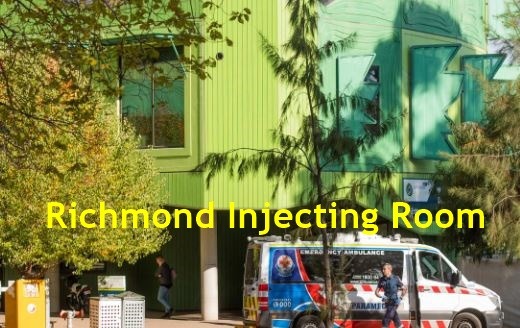
 Drug deaths researched after 18 months of operation are based on empirical data available from the Coroners Court.
That the Richmond facility saves lives has never been confirmed, but what has been confirmed is there are a more significant number of deaths in a community serviced by an injecting room than without, and Richmond is no different.
The facility’s claims are no more substantial than misleading perceptions, but proper research disproves the claims that injecting Rooms saves lives.
Addicts regularly use the facility to experiment with higher dosages or different drugs, knowing that if it goes pear-shaped, the facility will resuscitate them.
Those incidents cannot be counted as positive results by the facility as the injecting room facilitates the practice. Without the room, the addicts are less likely to experiment as the risk is well known to them.
Notably, the Premier has announced that the Yooralla Building in Flinders Street will now be developed into a wraparound service dealing with the health and well-being of not only addicts but also other socially marginalised in the City of Melbourne.
This is not dissimilar to the drug strategies published by the CAA over many years.
As laudable as this is, we caution the Premier that the Harm Minimisation brigade, which has hijacked the principle, must be kept from this initiative; otherwise, it will become a de facto Injecting room by stealth.
These proponents are the enemies of addicts and the community trying to normalise the use of illicit drugs without any effort to help addicts get clean and regain their health.
Now that the Premier has taken this step, we must now turn our attention to Richmond and look to close this facility that promotes and facilitates drug use.
All of the rationales applied to the rejection of the city room are multiples of 10, the quantum of the negative aspects of the Richmond facility that must be closed or be converted to follow the Yooralla model.
Helping addicts and users, not promoting and facilitating their addiction, is the only humane way to go.
It has also amazed us that in this litigious society, an addict has not taken action against the State for the injecting rooms encouraging their drug use.
The Government must now move to close or repurpose Richmond or be accused of applying double standards.
The CAA has long expressed concern and offered alternatives to Injecting Rooms; below is a selection of our submissions published on our website:
Drug deaths researched after 18 months of operation are based on empirical data available from the Coroners Court.
That the Richmond facility saves lives has never been confirmed, but what has been confirmed is there are a more significant number of deaths in a community serviced by an injecting room than without, and Richmond is no different.
The facility’s claims are no more substantial than misleading perceptions, but proper research disproves the claims that injecting Rooms saves lives.
Addicts regularly use the facility to experiment with higher dosages or different drugs, knowing that if it goes pear-shaped, the facility will resuscitate them.
Those incidents cannot be counted as positive results by the facility as the injecting room facilitates the practice. Without the room, the addicts are less likely to experiment as the risk is well known to them.
Notably, the Premier has announced that the Yooralla Building in Flinders Street will now be developed into a wraparound service dealing with the health and well-being of not only addicts but also other socially marginalised in the City of Melbourne.
This is not dissimilar to the drug strategies published by the CAA over many years.
As laudable as this is, we caution the Premier that the Harm Minimisation brigade, which has hijacked the principle, must be kept from this initiative; otherwise, it will become a de facto Injecting room by stealth.
These proponents are the enemies of addicts and the community trying to normalise the use of illicit drugs without any effort to help addicts get clean and regain their health.
Now that the Premier has taken this step, we must now turn our attention to Richmond and look to close this facility that promotes and facilitates drug use.
All of the rationales applied to the rejection of the city room are multiples of 10, the quantum of the negative aspects of the Richmond facility that must be closed or be converted to follow the Yooralla model.
Helping addicts and users, not promoting and facilitating their addiction, is the only humane way to go.
It has also amazed us that in this litigious society, an addict has not taken action against the State for the injecting rooms encouraging their drug use.
The Government must now move to close or repurpose Richmond or be accused of applying double standards.
The CAA has long expressed concern and offered alternatives to Injecting Rooms; below is a selection of our submissions published on our website:
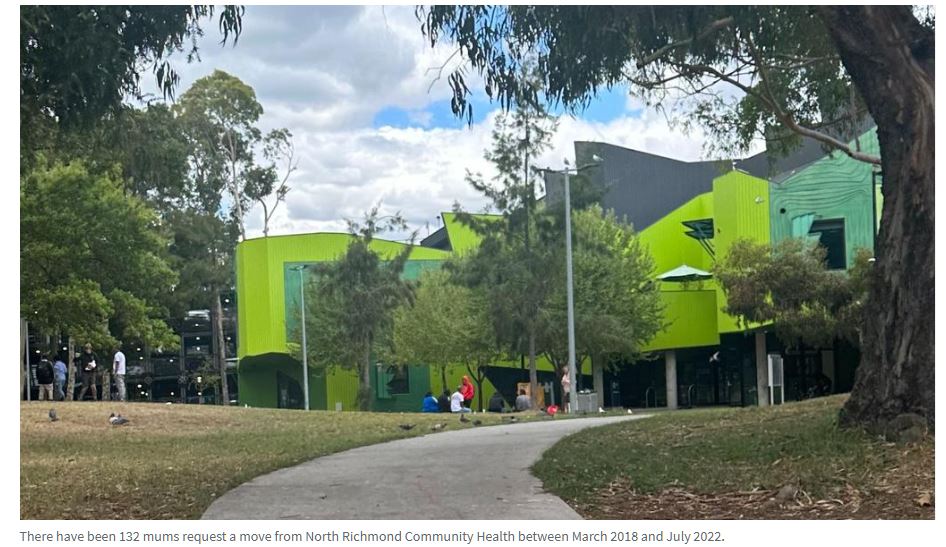











 They didn’t check the roof.