
by CAA | Jun 16, 2025 | Illicit Drugs, Victoria Police Issues
On 7 June 2025 the Community Advocacy Alliance (CAA) was given a presentation by Asssociate Professor Dr Michael Akindeju PhD CEng, RPEQ, PgD (Banking and Finance) FIChemE, FRACI, SMAIChE, MausIMM on new technology designed to detect alcohol and many other substances in a person’s system and measure their level of cognitive impairment, if any.
The CAA, as a registered charity, cannot and does not endorse any commercial product or process.
However, in the public interest, we may from time to time bring to notice anything that may potentially make our community safer.
Hereunder is information provided by Dr Akindeju,
The IntoxiSense revolutionary technology comes in two models, named “IntoxiSense 1” and “IntoxiSense 2“ and is designed to elevate safety across industries and communities.
What Makes IntoxiSense Revolutionary?
Instantaneous Onsite Detection: Saliva & sweat swabs provide real-time results.
Cognitive Impairment Measurement: Provides accurate analysis beyond substance presence.
Portable & Non-Invasive: Field-deployable, easy to use, and actionable in under 5 minutes.
Industry Adaptability: Supports law enforcement, fleet management, healthcare, aviation, construction, etc.
Aligns with and supports Standard of proof.
IntoxiSense technology provides four levels of results. Not cognitively impaired. Likely not cognitively impaired. Likely cognitively impaired. Cognitively impaired.
CAA Comment: Rather than the present ‘one size fits all’ approach, the ability to accurately measure the level of a person’s actual cognitive impairment when they test positive to alcohol or an illicit substance would be a giant step forward in the administration of justice, for police in determining what, if any, charges should be laid, and in courts determining penalties upon conviction.
Additionally, many potentially dangerous occupations would greatly benefit from knowing if those involved are fit to work safely and are not suffering from cognitive impairment.
Use of the IntoxiSense technology would obviously improve community safety across a wide range of activities.
Clearly, to be utilised in many situations enabling legislation would be required.
The CAA suggests relevant authorities, if interested, run their own trials of this important new technology, as, if successful, the potential benefits to the community in injuries avoided and lives saved cannot be overstated.
IntoxiSense Contact details:
| MKPro Group
Process Technologies, Development, Design, and Management |
| Mobile
Web:
ADDRESS |
+61 (0) 449 205 856
https://mkproengineering.com.au
Dyson Drive, Alfredton, VIC 3350
PO Box 4196, Alfredton, VIC 3350 |

by CAA | Jun 3, 2025 | Library, Uncategorized, Victoria Police Issues, Youth
The latest machinations in the Government’s so-called war on Machete crimes have become a bigger joke than ever, but nobody is laughing at this black comedy..
We haven’t said too much on this subject to date because we figured that there were enough smart people in the Government to work out belatedly that the Government response was ridiculously flawed and they would rectify it —no such luck.
The vast majority of Victorians are well aware of the folly of the current strategies, namely-
- It’s not the machete that is the problem; it is the idiot carrying or waving it around.
- Banning the sale will do nothing to stop the influx of weapons online.


We assume this is one is not covered by the legislation. At $14.37 plus free delivery, an absolute bargain for kids, it is already claimed that 1.5k of these weapons (Sorry, gardening tools) have already been sold.
The plan is that Machetes will no longer be available in retail stores. Still, they will be available online, where there is a high probability that weapons currently on the street were accessed that way anyway, defeating any ban, and retailers only need to change the weapon’s description and sell it as a tool.
The Government must recant their stance on this issue and take direct action against the perpetrators. This approach to law and order is as stupid as the other clanger, where the Police had to advertise in the newspaper before any effort to curb violent crime in public places like railway stations.
The idiocy of a police operation where search and seizure powers operate on one side of the street and not the other and the operation is only to occur at stated times allows perpetrators to cross the street or wait for the time to run out to revert to their criminal ways, is downright stupid and the Police are made to look foolish.
Effective laws are needed to empower the police to do their job.
Legislation to allow a Police member to stop and search anybody they believe, on reasonable grounds, to be carrying an edged implement capable of being used as a weapon without a lawful excuse is essential to avoid the alternative of perpetrators taking up carrying axes, swords and sythes.
The onus of the lawful excuse must rest with the defendant.
The ‘Public Place ‘ provision must not be included as the weapons are popping up too frequently in Domestic Violence incidents, and often that occurs not in a public place.
If the Government thinks the average kid who has a machete is going to surrender their status symbol and prized possession, they are less in touch with reality than we suspect. Moreover, to expect the ones that we would most like to see disarmed to go to a police station to surrender their weapon would be naive in the extreme. We doubt even a buy-back scheme would have more than very limited success.
Further, the judiciary is currently exacerbating the problem by failing to meet community expectations by granting bail to recidivist offenders.
The whole Machete issue needs a rethink urgently.

by CAA | Jun 1, 2025 | Library, Politics, Uncategorized, Victoria Police Issues
Leading Senior Constable Roland Jones was presented with the Victoria Police Medal for courage last week, the highest medal for police bravery in Victoria. Over the years, it has only rarely been granted for exceptional courage, as with Leading Senior Constable Jones.
This award recognises his courage in arresting James Gargasoulas after he drove his car through the crowded streets of Melbourne, deliberately killing six and injuring twenty-seven people in Bourke Street on the 20th January 2017.
His citation reads in part.. ‘immediate and decisive action’ by Jones. Pity, the police executive didn’t act that way in this incident.
At significant personal risk, Jones effected the arrest of Gargasoulas and wrote himself into the annals of Police history as one of the force’s true heroes.
This is a great story, but there is a cruel twist within it.
You will note that this horrible event occurred in 2017, but he was not awarded his medal until 2025. The Citation accompanying the Medal was signed in 2021.
The Gargasoulas incident was one of the darkest chapters of incompetent leadership in Victoria Police’s history and was severely compounded by the treatment of Jones, post-event.
The whole incident evolved over the two days. Police knew for that period where Gargasoulas was at all times. Still, not only did the police not take any action against the perpetrator, but they monitored his bizarre behaviour, not intervening. This meant that Police communications covered the activity; however, there did not appear to be any intervention of the Police Command in this unfolding tragedy.
It was left to the troops, bereft of leadership and therefore coordination, critical components in responding to this type of incident.
After the mayhem of the incident with dead and dying victims scattered along Bourke Street, it was Leading Senior Constable Jones and his partner who put an end to this mayhem.
Not that they were directed, as there was no command and control, but they were purely exercising their initiative.
Their actions were pure bravery, whereas many other police, including command, dithered and procrastinated and in many ways, through their failures, were responsible for the death of six innocent Victorians and injury, some very severe and life-changing, to twenty-seven others.
Thirty-three victims were caused by police leadership’s incompetence.
The bravery award recently presented to Jones was unquestionably well deserved. However, the award took eight years to be presented, and without a reasonable and plausible explanation from VicPol, the delays can only be interpreted as malicious pettiness at the most senior levels.
That is a disgraceful way to treat Force heroes, and it may go some way to explain why morale in VicPol is so low, as reflected in the decline in community confidence.
Low Police morale correlates directly to the quality of service delivery.

by CAA | May 20, 2025 | Library, Uncategorized, Victoria Police Issues
Most of the current failures are caused by a lack of understanding of some fundamental principles around service delivery and service efficiency.
An antithesis of sound policing is a current paradigm in vogue, the functional relationship (or lack thereof) the Force has with victims.
A prime example is the case set out below, without the force releasing a statement to justify their anti-victim stance, in this matter that is severely aggravated because the victim also happens to be a retired Police member.
We can only hope for all Victorians, including retired police, that the new Chief Commissioner does not ‘BEAT AROUND THE BUSH!’ on addressing the priority of a victim-centric approach to policing.
On the ‘Current Affair’ program on the 9th of May, an alarming story on the demise of ADAM SOMTAG, a recently retired Policeman who had served this State for over 20 years, was aired.
Adam apparently intervened in an incident when an illegal graffiti artist was defacing a Council sign.
Adams’ instincts kicked in, and he even went to the trouble of filming the incident on his mobile and put the incident on local social media to identify the perpetrator.
His alleged error was not reporting the matter straight away. The delay in reporting was not motivated by any sinister reason but simply to help his former colleagues by handing them the identity of the perpetrator with the report of the damage. A ‘lay down Misere; in police parlance, translates to an open and shut case.
The upshot of this exercising of a civic duty sees Adam now facing a possible criminal charge for grabbing the shirt of the perpetrator as he confronted him.
The camera footage broadcast shows a very minor altercation instigated by the perpetrator. Adams’ actions seemed defensive rather than offensive and were more instinctive self-preservation rather than aggressive.
Victoria Police, for their part, have committed an embarrassing ‘faux pas’.
The Police force has allegedly targeted the former police member instead of the perpetrator.
Disrespecting former police members is far too common. It shows that many serving members within VicPol have no perception of the police conditioning values that retired members retain, the most notable one being their Oath of Office.
The Police Act stipulates that a Police member is bound by their oath of office while a serving member of Victoria Police. Once they retire and are no longer employed by Victoria Police, they are no longer bound by their oath of office.
Well, that is what the legislation says, but most former police officers have not denounced their oath; their part of the bargain. Retired former police officers do not, as a general rule, exercise or attempt to exercise their former authority; however, they report matters, and their previous experience makes them ideal for this task.
It is not only current police who disrespect their former colleagues,
it is rife amongst non-police contractors operating the communication systems, 000. We have had a number of reports of those operators dismissing the fact that a complaint is from a former member when it should add weight to the issue.
After being a police member for many years, an oath is a way of life, imbued in their soul that is reinforced by the community, or at least that part of the community that respect Police, and retired members are continually reminded in all sorts of community interactions that they were a member of the force. It is not uncommon, nor do retired members pursue it, but they are often introduced as former police members in many social and professional situations. Moreover, it is not uncommon for individuals to seek out ex-members for advice on Police related matters.
Retired police are respected more by the community than the Force, which is very sad given that the vast majority of retirees have served the community for long periods and are still and always will be proud of their Police service.
There is a misconception, amongst serving police, that ex-police are generally bitter and twisted, but that is so far from the truth as to be a poor reflection on those who hold that view.
There is no doubt that some former Police officers are bitter and twisted, but they are a high-profile minority creating a false illusion of reality.
The phrase often quoted by former police is, ‘there is nothing more ex than an ex’, indicting the hurt and disrespect usually associated with interactions between former police and the current Force members.
Many of these former police could be a valuable resource to assist the Force in these times of austerity.
A properly constituted Force Reserve could alleviate some pressure on the serving members, reducing work-related stress and improving the Force’s Service Delivery.
It may not be to every former member’s liking or convenience, but there would be substantial numbers who would be, in the right circumstances, interested in taking up part-time positions.
The injection of experience from suitable former police and their experience in living outside the police bubble in the community would be ideal for assisting the new Chief Commissioner to help fix the broken Force.

by CAA | May 9, 2025 | Library, Media, Uncategorized, Victoria Police Issues
The appointment of former New Zealand Police Commissioner Mike Bush as Victoria’s new Chief Commissioner opens the way for a new era of back-to-basics policing.
To be effective, Mr Bush will need to exhibit an unfailing commitment to always acting with integrity.
A reputation for acting with and exhibiting integrity gains the trust of the police workforce and the trust of the public the force serves.
It is imperative that the Victoria Police change.
In June 2022, the Community Advocacy Alliance (CAA) called for a Police leader independent of the Victoria Police to implement change because the workforce and public trust in police leadership had declined dramatically.
Both police and the public have become disenchanted by the way policing has been conducted over the last twenty or more years.
Mr Bush has an impressive record of changing the then totally reactive policing method in New Zealand to a predominantly proactive crime prevention model that reduced the incidence of crime by twenty per cent in four years.
While arresting and charging offenders is a major requirement of an effective police force, preventing crime is an essential top priority.
The best policing produces no measurable result. If there is no disorder, no crime and no traffic offences, policing may be highly effective, but there is nothing to measure or do except to note the reduction in crime and disorder and the increase of faith in police by the community.
The drop in the crime rate in New Zealand under the Bush-style leadership of police is strong evidence that a new policing model can be introduced, led and managed by this appointment.
Basically, we must see a return to the nine Peelian (ethics, trust and engagement) policing principles:
- To prevent crime and disorder, as an alternative to their repression by military force and severity of legal punishment.
- To recognise always that the power of the police to fulfil their functions and duties is dependent on public approval of their existence, actions and behaviour, and on their ability to secure and maintain public respect.
- To recognise always that to secure and maintain the respect and approval of the public means also the securing of the willing co-operation of the public in the task of securing observance of laws.
- To recognise always that the extent to which the co-operation of the public can be secured diminishes proportionately the necessity of the use of physical force and compulsion for achieving police objectives.
- To seek and preserve public favour, not by pandering to public opinion, but by constantly demonstrating absolutely impartial service to law, in complete independence of policy, and without regard to the justice or injustice of the substance of individual laws, by ready offering of individual service and friendship to all members of the public without regard to their wealth or social standing, by ready exercise of courtesy and friendly good humour, and by ready offering of individual sacrifice in protecting and preserving life.
- To use physical force only when the exercise of persuasion, advice and warning is found to be insufficient to obtain public co-operation to an extent necessary to secure observance of law or to restore order, and to use only the minimum degree of physical force which is necessary on any particular occasion for achieving a police objective.
- To maintain at all times a relationship with the public that gives reality to the historic tradition that the police are the public and that the public are the police, the police being only members of the public who are paid to give full-time attention to duties which are incumbent on every citizen in the interests of community welfare and existence.
- To recognise always the need for strict adherence to police-executive functions, and to refrain from even seeming to usurp the powers of the judiciary of avenging individuals or the State, and of authoritatively judging guilt and punishing the guilty.
- To recognise always that the test of police efficiency is the absence of crime and disorder, and not the visible evidence of police action in dealing with them.
These principles define the mission: keeping law and order, reinforcing a sense of safety, and preventing crime.
Today, the principles must still guide police work and form the basis for a relationship of trust between the police and the community.
This is clearly indicative that it is time for Victoria Police to modernise its leadership and management processes and shake of decades of ineptness while retaining what is sound.
We believe that the capacity, under the leadership of Mike Bush will enable Victoria Police to address these issues.
The CAA believes that the reintroduction of programs like Blue Light, the Ropes Program, the Police in Schools program introduced in Victoria in 1989 and which ran very successfully moderating youth crime until abolished in 2006 and other proactive initiatives will receive active support from Mr. Bush as Chief Commissioner and we will see rapid and lasting improvement in combatting crime in Victoria and the restoration of respect for police that has so sadly been lost.
Mr Bush has demonstrated he is the right person to lead Victoria out of the morass into which it has descended.
Along with the CAA, I welcome Mr Bush and wholeheartedly endorse his appointment.

by CAA | Apr 29, 2025 | Illicit Drugs, Library, Uncategorized, Victoria Police Issues
New Canadian research shows a connection between heavy cannabis use and dementia, heart attacks, schizophrenia and even death.
CAA comment.
Harmless, nothing to worry about, non-addictive, just a party thing and a raft of other superlatives that have been relentlessly pushed at us by drug users justifying their use of Cannabis. The pressure on legislators from twisted lawmakers elected on the ‘Weed Ticket’ is arguing that there is no harm in cannabis, but it is, in fact, a wonder drug that can assist humanity. So persistent is this lobby that Governments in Victoria are giving the concept of legalising Cannabis for personal use some consideration.
This article dishes facts that blow the cannabis acolytes’ bubble.
If the Government is persuaded, after reading this, the next question is, how they propose to manage and avoid abuse of personal use laws, or do they not think beyond the basic premise, legalise or not?
This is an issue that once out of the bag will never be put back in, much less managed or controlled; it is sure to be a drug, free-for-all.
The question remains, will our legislators be wise and strong enough to avoid the cannabis pitfall?
“Although marijuana has never been shown to have a gateway effect, three drug initiation facts support the notion that marijuana use raises the risk of hard-drug use:
-
-
-
-
- Marijuana users are many times more likely than nonusers to progress to hard-drug use.
- Almost all who have used both marijuana and hard drugs used marijuana first.
- The greater the frequency of marijuana use, the greater the likelihood of using hard drugs later.”
Author: Andrew R. Morral, Daniel F. McCaffrey, Susan M. Paddock
Publish Year: 2002
The risks associated with the legalisation of cannabis far outweigh the arguments for it.

Six months ago, doctors in Boston began noticing a concerning trend: young patients were showing up in emergency rooms with atypical symptoms and being diagnosed with heart attacks.
“The link between them was that they were heavy cannabis users,” Dr. Ahmed Mahmoud, a cardiovascular researcher and physician in Boston, told Canadian Affairs in an interview.
These frontline observations mirror emerging evidence by Canadian researchers showing heavy cannabis use is associated with significant adverse health impacts, including heart attacks, schizophrenia and dementia.
Sources warn public health measures are not keeping pace with rapid changes to cannabis products as the market is commercialised.
“The irony of this moment is that society’s risk perception of cannabis is at an all-time low, at the exact moment that the substance is probably having increasingly negative health impacts,” said Dr. Daniel Myran, a physician and Canada Research Chair at the University of Ottawa. Myran was lead researcher on three new Canadian studies on cannabis’ negative health impacts.
Legalisation
Canada was the first G7 country to create a commercial cannabis market when it legalised the production and sale of cannabis in 2018.
The drug is now widely used in Canada.
In the 2024 Canadian Cannabis Survey, an annual government survey of cannabis trends, 26 per cent of respondents said they used cannabis for non-medical purposes in the past year, up from 22 per cent in 2018. Among youth, that number was 41 per cent.
Health Canada’s website warns that cannabis use can lower blood pressure and raise heart rates, which can increase the risk of a heart attack. But the warnings on cannabis product labels vary. Some mention risks of anxiety or effects on memory and concentration, but make no mention of cardiovascular risks.
The annual cannabis survey also shows a significant percentage of Canadians remain unaware of cannabis’ health risks.
In the survey, only 70 per cent of respondents said they had enough reliable information to make informed decisions about cannabis use. And 50 per cent of respondents said they had not seen any education campaigns or public health messages about cannabis.
At the same time, researchers are finding mounting evidence that cannabis use is associated with health risks.
A 2023 study by researchers at the University of Calgary, the University of Alberta and Alberta Health Services found that adults with cannabis use disorder faced a 60 per cent higher risk of experiencing adverse cardiovascular events, including heart attacks. Cannabis use disorder is marked by the inability to stop using cannabis despite negative consequences, such as work, social, legal or health issues.
Between February and April of this year, three other Canadian studies linked frequent cannabis use to elevated risks of developing schizophrenia, dementia and mortality. These studies were primarily conducted by researchers at the Ottawa Hospital Research Institute and ICES uOttawa (formerly the Institute for Clinical Evaluative Sciences).
“These results suggest that individuals who require hospital-based care for a [cannabis use disorder] may be at increased risk of premature death,” said the study linking cannabis-related hospital visits with increased mortality rates.
The three 2024 studies all examined the impacts of severe cannabis use, suggesting more moderate users may face lower risks. The researchers also cautioned that their research shows a correlation between heavy cannabis use and adverse health effects, but does not establish causality.
Budtenders
Health experts say they are troubled by the widespread perception that cannabis is entirely benign.
“It has some benefits, it has some side effects,” said the Boston cardiovascular researcher, Mahmoud. “We need to raise awareness about the side effects and benefits.”
Some also expressed concern that the commercialisation of cannabis products in Canada has created a race to produce products with elevated levels of THC. This main psychoactive compound produces a “high.”
THC levels have more than doubled since legalisation, yet even products with high THC levels are marketed as harmless.
“The products that are on the market are evolving in ways that are concerning,” Myran said. “Higher THC products are associated with considerably more risk.”
Myran views cannabis decriminalisation as a public health success, because it keeps young people out of the criminal justice system and reduces inequities faced by Indigenous and racialised groups.
“[But] I do not think that you need to create a commercial cannabis market or industry to achieve those public health benefits,” he said.
Since decriminalisation, the provinces have taken different approaches to regulating cannabis. But even in provinces where governments control cannabis distribution, such as New Brunswick and Nova Scotia, products with high THC levels dominate retail shelves and online storefronts.
In Myran’s view, federal and provincial governments should instead be focused on curbing harmful use patterns, rather than promoting cannabis sales.
Ian Culbert, executive director of the Canadian Public Health Association, thinks governments’ financial interest in the cannabis industry creates a conflict of interest.
“[As with] all regulated substances, governments are addicted to the revenue they create,” he said. “But they also have a responsibility to safeguard the well-being of citizens.”
Culbert believes cannabis retailers should be required to educate customers about health risks, just as bartenders are required to undergo Smart Serve training and lottery corporations are needed to mitigate the risks of gambling addiction.
“Give ‘budtenders’ the training around potential health risks,” he said.
“While cannabis may not be the cause of some of these adverse health events … it is the intersection at which an intervention can take place through the transaction of sales.
So, is there something we can do there that can change the trajectory of a person’s life?”
by CAA | Apr 11, 2025 | Library, Uncategorized, Victoria Police Issues, Youth
6000 school-based crimes and 439 carjackings, and that is just for 2024. There is no way that arrests alone will solve this problem.
The near-blind obsession with a Reactive Policing model with the Restorative Justice philosophy infecting the legal system, they have combined, and both spectacularly failed, and the figures prove it.
What a mess and the most startling thing to be presented by VicPol was reported as,
“…police are determined to quickly arrest those responsible and seek their remand, a Victoria Police statement said.”
That response from VicPol does not instil confidence that they are on top of this issue, but you can be sure that there will be many more Task Forces or Special duty teams targeting criminals as part of their solution.
Next, they will blame their ineffectiveness in preventing this crime on the community for not supplying CCTV; they already blame the community for failing to maintain security and the Courts for not locking up perpetrators.
Disturbingly, remanding perpetrators in custody, although a step in the right direction, is nothing more than a ‘band-aid’ solution as the perpetrators have not been convicted.
Taking the Task Force approach has also proved inefficient and has had minimal impact.
Each of these teams must be staffed, and those staff are drawn from the local frontline police. Reducing the frontline, so named for obvious reasons, adversely impacts prevention and strategies to maintain a highly visible Police presence to dissuade criminal activity.
No criminal ever intends to get caught; the risk of being caught is the most potent deterrent, and the lack of that deterrent is mainly due to Police strategies.
The current state of play with policing is the remaining frontline police struggle to keep up with calls for assistance. As for any patrols that will reduce crime, they are minimal at best.
Inevitably, the judiciary, thwarted from their preferred position of non-custodial sentences for juveniles by new Bail laws, will simply ratchet up the non-custodial approach when the perpetrator is presented after remand for their hearing.
So, the reprieve from crime by ‘no bail’ Remand, will be short-lived and be merely, in the eye of the perpetrator, a minor inconvenience. Remand will only provide a hiatus unless, upon conviction, the juvenile does some time, be it shorter periods than adults.
Penalties must align with “kid time”.
What is damming is that in the media reports on school crime and carjackings, there is not one mention of how VicPol proposes to stop or even dramatically reduce this blight on our community.
These two aspects of school crime and carjackings are intrinsically linked as the vast majority, if not all, of the offenders involved in carjackings went to school, so the logic would be to tackle the issue through the school system and, in that effort, mitigate the school crime at the same time giving our kids a chance to be educated without fear and distraction.
“An ounce of prevention is worth a pound of cure.”
Whether this concept will become a reality in Victoria again hinges on who is appointed the next Chief Commissioner because of the community policing philosophy. Crime prevention has all but disappeared from the force’s operational practises.
For the benefit of Victoria, the selection panel needs to ask the following questions of each applicant,
‘What will you do to reduce the crime in schools and the carjackings?’
An answer of increased patrols and the usual talking points would immediately disqualify the applicant. The only way to reduce crime is by innovative, proactive measures; any applicant worth their salt will have thought-through strategies.
‘How will you measure Commanders’ performances’?
Failure to set enforceable Key Performance Indicators (KPIs) based on performance for all managers throughout the force would be a failure.
‘How will you manage Commander’s accountability?’
Anything short of an applicant being prepared to exit their Chief’s contract voluntarily if found to be failing to perform would be unacceptable. That would be the accountability standard required of all Police leaders.
We do not want a Chief focused on or bragging about crime-solving. We want a Chief Commissioner with a vision not influenced and bound by traditional speaking points but one who can see through the fog and have a crystal-clear appreciation of the importance of reorganising the Force to positively influence the prevention model.
Preventing crime gazumps solving a crime in the first place.
Just ask crime victims which strategy they would prefer.

by CAA | Apr 5, 2025 | Library, Media, Politics, Uncategorized, Victoria Police Issues
In a hugely embarrassing turn of events, Acting Chief Commissioner Rick Nugent has announced he will not be applying for the top job after being hand-picked and parachuted into the acting role.
As disappointed as many of us are in his decision, he may well have done Victoria Police and Victoria a considerable service, highlighting and shining a light on the role and failures of Victoria Police Command, forcing the State to take a new approach to selecting its senior executives because by any measure the current process is an abject failure as history shows.
Without major surgery on this selection process, it will be like the adage of ‘doing the same thing tomorrow and expecting a different result’: the definition of insanity.
To fully understand the failure of Police Command, we need to look no further than the Police Oath of Office that all Serving Police, irrespective of rank, must take and abide by, but as history has now shown us, this oath only applies to some within the organisation when it suits them and is breached with regular monotony when it doesn’t.
The VICTORIA POLICE ACT 2013 – Schedule 2— sets out the Police Oaths and affirmations and has four key points within that oath.
The Oath commits Police to perform their duties in a particular manner,
- …without favour or affection, malice or ill-will,
- …will see and cause the peace to be kept and preserved,
- …will prevent to the best of my power all offences,
- …will, to the best of my skill and knowledge, discharge all the duties legally imposed on me faithfully and according to law.
When applying these key points to the performance of Police Command over several years, the score is abysmal and indicates many examples of wanton disregard for this Oath.
We are not suggesting that all Police commanders have been tainted over the last two decades, but the buck stops with the Chief Commissioner and the Command team. They bear ultimate responsibility for the performance and activities of the organisation, but the litany of breaches from which there have been no repercussions against those responsible is staggering. Adding to the dearth of leadership, unbelievably, many police directly involved in these issues have since been promoted.
How can we have a Police Force where poor performance is rewarded?
The following list is accompanied by the number allocated to each part of the Oath above.
- A Chief Commissioner, as the then State Disaster Coordinator, having dinner with friends while Victoria burnt and Victorians were dying. A State disaster with the coordinator missing. Deserting her post in a crisis.(4),
- A Chief Commissioner accepting free flights from an airline. (4)
- The Gobbo affair. Multiple Chief Commissioners and others created, facilitated or turned a blind eye to this issue. No police were disciplined for their roles or failures, but some were promoted to high ranks.
The severity of the poor behaviour by Police, particularly senior members, was set out by the High Court.
[Ms Gobbo’s] actions in purporting to act as counsel for the Convicted Persons while covertly informing against them were fundamental and appalling breaches of [her] obligations as counsel to her clients and of [her] duties to the court. Likewise, Victoria Police were guilty of reprehensible conduct in knowingly encouraging [Ms Gobbo] to do as she did. They were involved in sanctioning atrocious breaches of the sworn duty of every police officer to discharge all duties imposed on them faithfully and according to law without favour or affection, malice or ill-will. As a result, the prosecution of each Convicted Person was corrupted in a manner that debased fundamental premises of the criminal justice system.
That nobody was held accountable for this debacle is part of the leadership problems in the force. How can subordinate members act professionally and ethically when they see their superiors not subject to the same rules usually applied? (1), (3), (4).
- Stealing from the State. Two Politicians committed fraud on the state by falsely and unlawfully claiming accommodation travel expenses but were not prosecuted for the theft. (1), (3), (4).
- The ubiquitous Red Shirts saga in 2019 failed to see any prosecutions after blatant interference in the electoral process. It should be noted that the Office of Police Integrity (OPI) decided not to prosecute, but the head of the OPI was later appointed as Chief Commissioner. (1),(2),(3),(4).
- COVID-19 saw the worst performance of Police senior management in the force’s history, only challenged by the Gobbo Affair.
Whether it was the refusal of the Police to provide supervision of the quarantine facilities, which claimed over 800 Victorian lives, or how the community was controlled, from handcuffing a Mum in front of her children for relatively innocuous online comments, accosting old ladies sitting on a park bench, using live ammunition on people demonstrating against harsh and unrealistic restrictions, and activating ‘tea bagging’ control strategies forcing demonstrators to crowd together was the opposite of the essential medical advice for the disease. The over-the-top responses did nothing to achieve objectives other than a perverted sense of authority as displayed by the Government. The argument that the Police only applied the government health order is ridiculous. A Government cannot force a member of the Police Force to breach their Oath of Office; however, throughout the pandemic, it regularly did, and the Force Senior management chose to play along with the Government and defy and ignore their Oath of Office. No disciplinary or criminal charge was laid against breaches by the Police. Albeit that senior command neglected to follow their Oath, all police involved each had a sworn duty and should have been able to exercise their right not to breach their Oath.(1),(2),(3),(4).
- A very Senior Officer accepting a free first-class trip to America from another Government Agency aggravated by yet another Senior Executive permitting the girlfriend of the Officer, employed by VicPol in a different department, to accompany him. The conference they were slated to attend had no relevance to their roles in VicPol. An all-expenses-paid junket. (4).
- A social media troll outed as a senior officer using a non-de-plume to distribute foul material on social media aimed at colleagues. (4).
- A Senior Officer castigating a junior member on social media. (4) also berating health volunteers in public (4) and instigating a Road Rage altercation in a school car park (4). It took so long and so many indiscretions before he was advised his contract would not be renewed. That no action was taken against this senior office was a disgrace and a poor reflection on the relevant Chief Commissioners (4).
- Slug-gate was another disgraceful episode in Victoria’s policing of this state. The ongoing issue started with an alleged slug being placed in a food factory by a municipal health inspector, which closed the facility and caused 44 employees to lose their jobs. This was significant because it came to light that the alleged relationship between the CEO of the local council and the local Area Commander was very close, breaching professional norms. Still, no investigation was ever carried out to determine if that relationship had conspired to damage the food factory, a competitor of a new factory set up by the Government, of which the local Council CEO was a director. The principal Police officer was promoted, a common thread of miscreants in the Force.(1), (3), (4).
- The mishandling of the ‘Bike Boy’ incident involving the wife of the former Premier showed again how the influence over the police operations was directed not by the sworn duty of Police but by some other imperative. Senior Police should have immediately become involved to ensure proper processes were followed. We are still waiting to see who will be promoted by this Police inaction.(1), (3), (4).
What does stand out in this list is the number of Police who were involved who were promoted in what has the look of quid pro quo? Protect the guilty, and you will be rewarded; by any measure, this is corruption. This seems to be part of the reason so many incompetent Police achieve exalted ranks. It’s not how good you are at your job but how good you are at protecting individuals in high Office.
There are other incidents, but what is common is that when browsing the list, the offences of Conspiracy to Pervert the Course of Justice can be applied in nearly every case, as can Malfeasance or Misconduct in Public Office in every example, not to mention numerous disciplinary offences.
The picture painted shows the depth of criminality by senior police or, at best, the sheer incompetence of senior management in running the force. Inevitably, the applicants from VicPol will include some who have been tainted by the issue listed herein. Avoid, at all costs, ‘putting a fox in charge of the hen house’.
Poor selection processes and partisan political interference in the appointment processes have driven this.
To appoint somebody who has no direct knowledge of this particular Force and the players (knowing where the skeletons are hidden) will flounder and fail no matter how well they’re credentialed. We can only hope that the previous poor performance of former Federal officers in executive roles in VicPol will not be repeated. Federal Police leadership has very limited, if any, experience in running a community-based force. Crime prevention, central to community-based Policing, is an anathema in Federal policing. No matter how good they are in the Federal sphere, to appoint one as Chief in Victoria will be another retrograde step.
Avoiding this advice will inevitably cause political pain no matter who is in power.
The options available to the Government in the short term are that the appointment is made via a partisan arrangement, and that should be very attractive as any failures in policing can’t be sheeted back to the government; they can still revel in Police successes.
The other option is a Police Board to oversee Police operations; it must be by partisan appointments to be effective.
The current government has some electoral difficulties and can ill afford another failure at the top of VicPol.
Repairing the Force is a massive undertaking, and the successful applicant will have their work cut out and need all the support that can be mustered. Hence, the attraction to a Board comprised of former police and civilians from a broad cross-section of the community is not dissimilar to the success of the Community Advocacy Alliance (CAA), which adopted this approach and has become a powerful voice of reason.
Many Former police are attracted to these roles as they are no longer impacted by the pressure of working politics in the police environment and all the pressure for promotion. They are still morally bound by the good ethics of Policing.

by CAA | Apr 3, 2025 | Library, Police in Schools, Police Veterans in Schools, Victoria Police Issues
An insightful article in the Australian 1st of April 2025 by Natasha Bita, ‘bells the cat’ on the reality of the environment in our schools and why the academic levels are declining, and crime committed by young people continues to escalate both in frequency and severity.
https://www.theaustralian.com.au/education/police-and-psychologists-needed-in-schools-to-deal-with-rising-violence-principals-warn/news-story/23eddf73d36353595de2c6dc73acb9dc
It is clear that we will never make inroads into these critical issues plaguing our society without the intervention the author lays out.
It is evident that poor government management is responsible; however, not all the blame can be levelled at the politicians, as the two major agencies that can make a difference are Education and the Police.
The non-action in this space by both agencies suggests that a major problem of demarcation is clouding the judgement of both.
The Police clearly think these problems in the school are the responsibility of the Schools. While that is correct, but only to a degree; the overall responsibility for Law and Order remains unequivocally with the Police, and they have failed to give this aspect of crime prevention the attention it needs, leading to the lawlessness we now endure.
Consecutive Police administrations have deliberately stood in the way of developing effective Police-in-Schools Programs, even going as far as to develop a shadow of the program to divert criticism.
From the Educator’s perspective, they have failed to establish behavioural boundaries and enforce them, coupled with maintaining basic discipline with students and parents, which has led to that profession becoming a high risk for staff and students alike. This has led to a marked decrease in academic performance in the education system.
In many ways, we are sympathetic towards the educators. School Principals’ have no access to police data that accumulates around a child who has committed crimes and attends a school.
For a child to receive a caution from the Police, it must be an offence for which the child accepts guilt, but they can front up to school the next day mixing with peers, and the educators are blissfully unaware of the criminality of the student who may well pose an unacceptable risk.
Moreover, the educators have no opportunity to work towards helping the child because they just don’t know.
Further to the issue of an Official Police Caution, a myth is promoted that children who are caught by Police committing a crime go to jail.
The vast majority of young children detected by Police committing a crime receive an Official Police Caution and, on many occasions, receive multiple cautions if they continue to offend. They are only then charged and brought before the Children’s Court, which is the only one that can jail a child.
There is some community concern about placing children in custody or remand, but by the time they are at risk of remand by a Court, the overwhelming majority of young people have already been cautioned on multiple occasions but chose to ignore warnings.
The warnings now from School Principals must be heeded.
The CAA is promoting the establishment a Youth Justice Panel to explore the issue and make recommendations on how the issue of Juvenile behaviour can be modified.
The need for Police in schools has never been more important than now.

by CAA | Mar 29, 2025 | Illicit Drugs, Library, Uncategorized, Victoria Police Issues
Sweden, the U.K., and Canada all experimented with providing opioids to addicts. The results were disastrous.
By Adam ZIVO

[This article was originally published in City Journal, a public policy magazine and website published by the Manhattan Institute for Policy Research. We encourage our readers to subscribe to them for high-quality analysis on urban issues]
CAA Comment
Although we cannot locate a source, the saying, ‘A Drug addict is made by the age of six’ has resonance.
It does not suggest children are addicted at that age, although sadly, some are. It points to the environment and upbringing that will influence later behavioural traits. These factors are neither social class nor ethnic based; every child is vulnerable.
It is this vulnerability that must drive us to a solution that at least minimises the adverse addictive behaviour. Drug addiction and even experimentation are learnt traits, so the vulnerability can be unlearned or at least mitigated.
Providing drugs under the ‘Harm Minimisation’ or ‘Safer Supply’ is not the answer as it perpetuates the drug problem, as overseas experiences have shown.
The difficulty in controlling the Drug plague by the time a person is addicted is too late and generally ineffective, so to invoke policies of ‘Harm Minimisation’ and or ‘Safer Supply’ is a recipe for disaster.
Encouraging those who are addicts to become clean has all sorts of barriers apart from the drug addiction itself; most are addicted to the drug lifestyle without responsibility or accountability, so even if they are supplied with safer drugs, their behaviour will be unlikely to change.
We need to focus on the young and provide coping strategies and resilience, the ability to say ‘no’ would be a good starting point.
In these difficult fiscal times governments face, they will have to be pragmatic and withdraw funding from ‘Harm Minimisation projects’ and ‘Safer supply approaches and instead develop a uniform strategy across the entire education system and support parents in their efforts to develop coping skills for their children as they grow physically and mentally.
This effort will take time to have an impact, but it will not only help prevent children from experimenting with drugs but also create a better learning environment, improving the academic standards of all children and leading to more constructive lives.
***************************
Last August, Denver’s city council passed a proclamation endorsing radical “harm reduction” strategies to address the drug crisis. Among these was “safer supply,” the idea that the government should give drug users their drug of choice, for free. Safer supply is a popular idea among drug-reform activists. But other countries have already tested this experiment and seen disastrous results, including more addiction, crime, and overdose deaths. It would be foolish to follow their example.
The safer-supply movement maintains that drug-related overdoses, infections, and deaths are driven by the unpredictability of the black market, where drugs are inconsistently dosed and often adulterated with other toxic substances. With ultra-potent opioids like fentanyl, even minor dosing errors can prove fatal. Drug contaminants, which dealers use to provide a stronger high at a lower cost, can be just as deadly and potentially disfiguring.
Because of this, harm-reduction activists sometimes argue that governments should provide a free supply of unadulterated, “safe” drugs to get users to abandon the dangerous street supply. Or they say that such drugs should be sold in a controlled manner, like alcohol or cannabis—an endorsement of partial or total drug legalization.
But “safe” is a relative term: the drugs championed by these activists include pharmaceutical-grade fentanyl, hydromorphone (an opioid as potent as heroin), and prescription meth. Though less risky than their illicit alternatives, these drugs are still profoundly dangerous.
The theory behind safer supply is not entirely unreasonable, but in every country that has tried it, implementation has led to increased suffering and addiction. In Europe, only Sweden and the U.K. have tested safer supply, both in the 1960s. The Swedish model gave more than 100 addicts nearly unlimited access through their doctors to prescriptions for morphine and amphetamines, with no expectations of supervised consumption. Recipients mostly sold their free drugs on the black market, often through a network of “satellite patients” (addicts who purchased prescribed drugs). This led to an explosion of addiction and public disorder.
Most doctors quickly abandoned the experiment, and it was shut down after just two years and several high-profile overdose deaths, including that of a 17-year-old girl. Media coverage portrayed safer supply as a generational medical scandal and noted that the British, after experiencing similar problems, also abandoned their experiment.
While the U.S. has never formally adopted a safer-supply policy, it experienced something functionally similar during the OxyContin crisis of the 2000s. At the time, access to the powerful opioid was virtually unrestricted in many parts of North America. Addicts turned to pharmacies for an easy fix and often sold or traded their extra pills for a quick buck. Unscrupulous “pill mills” handed out prescriptions like candy, flooding communities with OxyContin and similar narcotics. The result was a devastating opioid epidemic—one that rages to this day, at a cumulative cost of hundreds of thousands of American lives. Canada was similarly affected.
The OxyContin crisis explains why many experienced addiction experts were aghast when Canada greatly expanded access to safer supply in 2020, following a four-year pilot project. They worried that the mistakes of the recent past were being made all over again, and that the recently vanquished pill mills had returned under the cloak of “harm reduction.”
Most Canadian safer-supply prescribers dispense large quantities of hydromorphone with little to no supervised consumption. Patients can receive up to 40 eight-milligram pills per day—despite the fact that just two or three are enough to cause an overdose in someone without opioid tolerance. Some prescribers also provide supplementary fentanyl, oxycodone, or stimulants.
Unfortunately, many safer-supply patients sell or trade a significant portion of these drugs—primarily hydromorphone—in order to purchase more potent illicit substances, such as street fentanyl.
The problems with safer supply entered Canada’s consciousness in mid-2023, through an investigative report I wrote for the National Post. I interviewed 14 addiction physicians from across the country, who testified that safer-supply diversion is ubiquitous; that the street price of hydromorphone collapsed by up to 95 percent in communities where safer supply is available; that youth are consuming and becoming addicted to diverted safer-supply drugs; and that organized crime traffics these drugs.
Facing pushback, I interviewed former drug users, who estimated that roughly 80 percent of the safer-supply drugs flowing through their social circles was getting diverted. I documented dozens of examples of safer-supply trafficking online, representing tens of thousands of pills. I spoke with youth who had developed addictions from diverted safer supply and adults who had purchased thousands of such pills.
After months of public queries, the police department of London, Ontario—where safer supply was first piloted—revealed last summer that annual hydromorphone seizures rose over 3,000 percent between 2019 and 2023. The department later held a press conference warning that gangs clearly traffic safer supply. The police departments of two nearby midsize cities also saw their post-2019 hydromorphone seizures increase more than 1,000 percent.
The Canadian government quietly dropped its support for safer supply last year, cutting funding for many of its pilot programs. The province of British Columbia (the nexus of the harm-reduction movement) finally pulled back support last month, after a leaked presentation confirmed that safer-supply drugs are getting sold internationally and that the government is investigating 60 pharmacies for paying kickbacks to safer-supply patients. For now, all safer-supply drugs dispensed within the province must be consumed under supervision.
Harm-reduction activists have insisted that no hard evidence exists of widespread diversion of safer-supply drugs, but this is only because they refuse to study the issue. Most “studies” supporting safer supply are produced by ideologically driven activist-scholars, who tend to interview a small number of program enrollees. These activists also reject attempts to track diversion as “stigmatizing.”
The experiences of Sweden, the United Kingdom, and Canada offer a clear warning: safer supply is a reliably harmful policy. The outcomes speak for themselves—rising addiction, diversion, and little evidence of long-term benefit.
As the debate unfolds in the United States, policymakers would do well to learn from these failures. Americans should not be made to endure the consequences of a policy already discredited abroad simply because progressive leaders choose to ignore the record. The question now is whether we will repeat others’ mistakes—or chart a more responsible course.

by CAA | Mar 17, 2025 | Library, Uncategorized, Victoria Police Issues, Youth
The CAA applauds the belated ban on edged weapons (Machetes) and, like every other Victorian, demands that the ban be immediate.
There is no plausible excuse for a delay.
That a ban was not in place a long time ago beggars’ belief; however, the belated action that will take nine months before coming into effect is absolutely ridiculous; just what are the government planners thinking?
Haven’t they worked it out? It is not the weapon that is the problem. It is the idiot holding onto it.
If they seriously think that the perpetrators who use these weapons are going to show good community responsibility and put their prized weapons and symbols of power into a bin, the government planners are delusional.
For goodness’ sake, these weapons are status symbols that will disappear under their bed, not in a government bin.
And they will be replaced by Mum’s stainless-steel carver.
The Government needs to realise that banning the products altogether will only develop black market trading in the items, playing into the current black market (organised crime) marketing strategy – identify what the market wants, and if it is illegal, go for it.
This strategy works for the crooks, creating unintended consequences, as happened with tobacco. The weapons will probably be sold under the counter from the same shops.
The solution is banning the carrying of edged weapons of every description and giving the Police additional powers to search and seize, supported by mandated penalties to force the anthropomorphic magistracy, where coincidently many of our society ills are created because of their ineptitude, to undertake their role to keep us safe.
It’s not the weapon but the environment where it is located.
Mum’s stainless-steel carver could be the weapon a person is charged with possessing.
At 2.00 am, with a group of mates, the carver is as lethal as a machete and attracts the same status.
If care is not taken, the kitchen arsenal will replace the machete, and we will be no better off. The blades may be shorter, but the victim is just as dead.
It is not anti-social to own an edged weapon, but as soon as it is carried in a public place, the rules change; it’s not the weapon; it is the intended use, intimidation, attack or defence that is the issue.
When the planners grasp that concept, then they might come up with an effective solution like reviewing current legislation and, where necessary, tweaking it to provide the Police with the capacity to properly address the issue rather than being hamstrung by nice restrictive policies sponsored by the socialist elite.
Starting to think of the Police operational necessities (where the rubber hits the road) may go a long way to solving this issue.
Viewing this matter through a political prism will be the downfall of any efforts to curb unnecessary deaths and intimidation.
by CAA | Feb 23, 2025 | Library, Victoria Police Issues
Speaking with police to try to understand the application of Proactive, Reactive, Broken Windows, or Zero tolerance policing philosophies really depends on which Police member you speak with. They will all have knowledge or an opinion, but the confusion starts when it comes to examples.
Adding to the confusion, the CAA has spoken to many senior Police, and even they can’t agree or have little understanding of the concepts, so what hope has the Constable on the street have of implementing a coherent Policing philosophy for Victoria’s Force?
On this front, the chances of the public knowing are next to zilch.
Put simply, proactive policing prevents crime, while reactive policing deals with crimes already committed.
Proactive policing
Proactive policing is often maligned and misunderstood, seen by many as the soft option and ineffective by avoiding the harsh reality of policing.
Arguably the most effective method of Policing, it cannot be successful without a Reactive function in support, not the other way around.
The assumption that Proactive policing is avoiding arrests is a long way from the reality of a good proactive strategy. A far better policing approach is needed, given the reluctance of courts to manage recidivists adequately.
The best way to understand the Proactive reactive dilemma is through examples.
One proactive strategy is instigating Police patrols in the community, which are frequent but unpredictable and highly visible. They must be conducted so that the community can become accustomed to the Police presence and can rely on the presence to become part of the community fabric. While 24-hour patrols would be challenging to manage, having frequent patrols on multiple days every week would improve community confidence. This is where proactive policing is most effective – preventing crime before it happens.
Amongst the best examples of proactive projects were the formal Police In Schools Program (PSIP), Operation New Start and the Blue Light Disco. Frontline police developed the latter two and were not top-down initiatives, which added to their success. To deal with particular children, the three initiatives work together: Operation New Start working with the local Police member in the PSIP program to ensure the child gets to school, and Blue Light providing the child with entertainment and, if necessary, funding the child’s education.
There are a plethora of other examples ranging from working and building positive relationships with children of the next generation susceptible to unlawful behaviours to forms of communication with the community to reinforce compliance with the law as opposed to the vast majority of police resources applied to the reactive function where the police are isolated from the general public, either ensconced in vehicles (many with tinted windows) or police stations. There has been a substantial reduction in Police Station opening hours, and those that are open are neither welcoming nor convenient for the public, as security has been so overdone as to take the human factor out of Police Station interactions.
As history shows, the risk to police in a Police Station is extremely low, and the security should be commensurate with the risk.
Because the security levels are not commensurate with the risks, they adversely impact Service delivery, making it a chore to try to report a crime to a local Police Station. People are encouraged to report crime on the Police Advice line 113444- service efficiency at the cost-of-service delivery.
The phoned-in crime report has to be handled multiple times rather than the police member to whom the crime is reported at a Police Station taking responsibility for investigating the crime; the centralised reporting is inefficient writ large.
Reactive Policing
A reactive vehicle or foot patrol responds to a perceived or known threat to the community. It is usually targeted at a specific criminal or anti-social activity and is maintained until that threat is passed.
It is often spasmodic but fails to imbue confidence in the community over a more extended period.
We are not suggesting that reactive patrols are unimportant because they are sometimes essential, but not at the expense of proactive community patrols.
Of the Reactive strategies, probably the most contentious is the proliferation of Task Forces and special duties units, which, by design, are clearly Reactive because some criminal event/s motivates their creation and determines their function.
We were shocked to hear one of Victoria’s most senior executives claim that task forces are proactive and absolute rubbish.
Task Forces have an essential role to play, and there will always be a need for a number, but the reality in Policing in Victoria over the last decade or so is that inept leaders have automatically opted for a Task Force to solve the operational problems they face with little thought to the impact on the overall policing by removing police from the front line to fill the Task Force positions.
There seems to be a belief in the upper echelons of the Force that on most high-profile issues, where the community demands to see action, the most visible (and most straightforward) to quell community disquiet is to establish a Task Force.
A police pragmatist would see the Task Force approach, in many, but not all cases, as an inefficient use of police resources; a better approach would be to reduce crime from happening in the first place by maintaining an adequate number of Police on the front line.
Front-line members at the various Police Stations and Criminal Investigation Units providing face-to-face Police service to the community should be untouchable for other duties, not the first point of call.
Another problem with task forces is that they have no sunset clause, so they can run on for years and, in many cases, allow prime targets to continue their criminal activity uninterrupted. Targeting a crook to charge them with more serious crimes, or the equivalent of police nirvana, is sometimes ridiculous when prosecuting lesser offences more frequently will achieve a better outcome than THE BIG ONE.
The proactive patrols will still catch and charge perpetrators.
Broken Window Theory
A lot has been written about the Broken Windows policing philosophy, which was made famous because of its effectiveness in reducing crime in New York some years ago. The theory is as relevant today as it was when it was used in the US.
This approach has police intervening in all levels of social disorder and crime, and rather than drive or walk past anti-social behaviour; the police must intervene and, where an offence has been committed, charge the perpetrator and leave the Court to resolve the matter.
In criminology, the broken windows theory states that visible signs of crime, antisocial behaviour and civil disorder create an urban environment that encourages further crime and disorder, including serious crimes.[1] The theory suggests that policing methods that target minor crimes, such as vandalism, loitering, public drinking and fare evasion, help to create an atmosphere of order and lawfulness
https://en.wikipedia.org/wiki/Broken_windows_theory
James Q. Wilson and George L. Kelling first introduced the broken windows theory in an article titled “Broken Windows” in the March 1982 issue of The Atlantic Monthly:
The role of police management is critical, liaising with the appropriate authorities to keep on top of the visible signs of crime and antisocial behaviour brought to their attention by Police on the streets.
An argument that the Courts couldn’t handle an influx of minor offences is not a police problem. However, a Constable always has the discretion to issue a warning and should have the power to issue a notice to an offender to receive an official warning at a Police Station, irrespective of age. Failure to participate would automatically see the summonses or a Court Attendance Notice issued for the alleged indiscretion.
Zero Tolerance Philosophy
Of all the theories of Policing that are touted, this is one that we vehemently reject predominantly because it removes the Common Law discretion that a sworn Police Constable has to prosecute or not.
Without discretion, Police become robotic, void of compassion and their effectiveness would be severely diminished as the community would wholeheartedly reject this approach.
The CAA hopes that the new Chief Commissioner will rapidly bring the Force into balance between the Proactive and Reactive approaches, adjusting the pendulum to favour proactive policing by a small margin.
Making this change may be resisted by the uninformed, but it will be short-lived; as the adoption of proactive strategies starts to take effect, there will be positive reactions from the members. It does take a bit of time, but many of us have seen this before, as the conversion rate from reactive to proactive became a prominent strategy. The crime rate fell dramatically as the initiatives grew from the bottom up and started to have an effect.
To implement these philosophies, the Force needs to present an authoritative stance to the community, and we encourage the Chief Commissioner to dispense with the black (Salute Blue) uniform shirts allegedly designed to make the Force look tougher and return to the lighter blue shirts more consistent with other Australian police forces.
Reintroducing the compulsory wearing of the Police cap, the symbol of authority, will give the Force stature and rebuild respect in the Force.
A respected Force is an effective one.

by CAA | Feb 17, 2025 | Library, Victoria Police Issues
By Newton Reynolds – CAA Member
In the 1930’s Victoria Police was moribund, corrupt and inefficient.
Chief Inspector Duncan from the Met “FLYING SQUAD” in London was tasked with a review.
He arrived in Melbourne on 12 October 1936 and commenced his review. Even before he presented his report, he informed the Government that the matter was urgent.
He was appointed Chief Commissioner and reformed the Force into arguably the best in the World.
Since the appointment of Nixon as Chief Commissioner, the force has been in a terminal state of decline. Alexander Mitchell DUNCAN’s appointment drew howls of protest from police and politicians: “Why not a local?” the reason was “there were none capable and incorruptible”.
Therefore, the search for a replacement Chief Commissioner of Victoria Police should go international. The current crop of Assistants and Deputy Commissioners are politically tainted. The Lawyer X, Red Shirts, the Cardinal Pell witch hunt, COVID-19 overkill, the anti-Jewish failures, the two-tiered political policing, the list goes on. They form part of a failed command. Bring back Sir Ken Jones from the UK, remember the British Bobby who was white anted by then Chief Commissioner Simon OVERLAND, known as” the LANTERN”. “Bright but had to be carried everywhere”.
A fresh approach to move to traditional policing and removing the Government’s sticky political fingers from law enforcement.
Building Taj Mahal-sized centralised Police Stations instead of smaller community Police Stations which, from a policing perspective, are far more effective, efficient and welcoming in connecting with their community. Victoria Police has lost sight of its main function, which is the protection of life and property and the prevention of crime. The force has morphed into being a reactionary arm of Government Policy
The worry is the current crop of politicians do not have the foresight or the will.
Here’s praying the next appointment will not be some POLITICAL DOG BODY more likely to also fall foul of the Force members, appointed to satisfy the equality and diversity brigade but a strong, decisive Commissioner with runs on the board in law enforcement and not tainted by recent performance in Victoria.
The immediate resignation of Chief Commissioner Shane Patton will add to the woes of VicPol and is unlikely to be the circuit breaker the Government is hoping for.
The Government needs to provide a Mea culpa on many of its poor decisions if it has any hope of even having a small influence on improving its relationship with the Police.
Rick Nugent is a good man, but that may not be good enough to turn the tide, we wish him luck.
If he has any hope of turning the tide, he will need to first rout out the rabbits of the Senior ranks, and the Government must support him in that endeavour.

by CAA | Feb 13, 2025 | Illicit Drugs, Library, Safe Injecting Rooms, Victoria Police Issues
CAA comment
This is an important article by Break the Needle and is particularly insightful in exposing our risk factors about illicit Drugs.
It highlights the folly of looking at risk factors on imports from other countries and how they may be used as a drug conduit.
Canada would be seen as a friendly neighbour to the US, which shares much in common with its northern neighbour. It is not unlike the relationship between New Zealand and Australia, so it is very possible that our border security takes less notice of imports from across the ditch than those from other Asian and friendly European countries.
Trump has cleverly used Tariffs as a weapon to have US neighbours take appropriate action against Drug and people smuggling operations.
We do not doubt that Trump would accept any adverse retaliatory action with his tariff strategy to prove that he is not bluffing.
Depending on how this strategy plays out, Australia could become the epicentre of drug use as criminal gangs unable to access or with reduced access to the US market, look further afield for a suitable market and, given the high retail price of drugs in Australia that will be where they first look.
We can only hope that our legislators are a wake-up and prepared for any onslaught because if the cat gets out of the bag, trying to rein in any influx will be extremely difficult, if not impossible.
Make our borders drug proof or we all suffer.
Trump’s tariff threat has ignited debate over Canada’s role in fentanyl trafficking. Sources say Canada is a key player.
On Wednesday, US President Donald Trump’s nominee for commerce secretary, Howard Lutnick, caused a stir when he said Canada and Mexico could avoid 25 per cent tariffs if they stop fentanyl and illegal migrants from coming into the US.
“As far as I know, they are acting swiftly, and if they execute it, there will be no tariff,” Lutnick said at a US Senate Commerce Committee hearing.
Ottawa and several provinces have launched border security initiatives to respond to the threat of tariffs. However, there is disagreement over whether fentanyl trafficking is a legitimate issue in Canada.
Data and sources paint a complex picture. While the volume of fentanyl seizures is low, some sources indicate Canada is a hub in the global fentanyl trade.
‘Massive’
In his comments about drug trafficking at the Canadian border, Trump has focused on fentanyl specifically.
“The fentanyl coming through Canada is massive,” Trump said at a Jan. 21 press conference, where he reiterated his threat to impose 25 per cent tariffs on Canadian goods.
Fentanyl claims tens of thousands of American lives each year.
In 2023, fentanyl and related drugs such as carfentanyl were responsible for an estimated 74,702 overdose deaths in the US, according to the Centers for Disease Control and Prevention.
Fentanyl is a synthetic opioid up to 50 times more potent than heroin and 100 times stronger than morphine, making even minor border seizures significant. A potentially lethal dose is just two milligrams — roughly the size of a few grains of salt.
The U.S. Border Patrol and the Office of Field Operations recorded the seizure of 19.5 kg of fentanyl along the entire US-Canada border in 2024. This is a tiny fraction of the nearly 10,000 kilograms of fentanyl seized across all US borders last year.
Of this haul, 9,600 kg was confiscated at the southern border with Mexico, where Mexican cartels are known for mass-producing the drug.
The Canada Border Services Agency seized just 4.9 kg of fentanyl between Jan. 1 and Oct. 31, 2024. Of this number, 4.1 kg was intercepted before it could be smuggled overseas, specifically toward the Netherlands, agency spokesperson Jacqueline Roby told Canadian Affairs in an emailed statement.
However, during this period, the agency seized about 21,500 kg of “other drugs, narcotics and precursor chemicals,” Roby said. Precursor chemicals refer to substances that are not explicitly identified as fentanyl but may include drugs and chemicals used in the production of fentanyl.
‘Limited to no evidence’
A spokesperson for the Ontario RCMP said Canada-produced fentanyl trafficking at the US-Canada border is not a significant issue.
“There is limited to no evidence or data from law enforcement agencies in the U.S. or Canada to support the claim that Canadian-produced fentanyl is an increasing threat to the U.S.,” the spokesperson said.
“Reports state fentanyl produced in Canada is being exported in micro shipments, most often through the mail. Micro traffickers are most often found on the dark web,” the spokesperson added.
David Asher, a former senior investigator with the US State Department, CIA and Drug Enforcement Administration’s Special Operations Division, shared a different perspective during an August 2024 interview with Canadian investigative journalist Sam Cooper.
Asher cited evidence suggesting fentanyl trafficking operations in Canada are highly organised.
“When we looked at the telephonic communications of Chinese organised criminals that DEA arrested in the US [for drug trafficking and money laundering] … there was an extraordinary amount of communication with Canada,” Asher said in the interview.
“It seemed like they were being controlled out of Canada, and I’m happy to say that on the record. We seized these people’s cell phones, ran them, and saw who they called in Canada.”
Asher also cited a lack of cooperation between Canadian authorities and US agencies in verifying the scale and operations of fentanyl trafficking networks.
“There’s very good reason to suspect that Canadian command and control continues, at least for money laundering and a fair extent of fentanyl precursor exports from Hong Kong and other parts of China,” he said.
“We’ve just not had adequate cooperation from the Canadian government.”
In 2022, the Criminal Intelligence Service Canada reported that organised crime groups had shifted from importing fentanyl-related products to sourcing chemical precursors from both international and domestic suppliers to manufacture the drug within Canada. The service is an inter-agency organisation that shares criminal intelligence between police forces in Canada.
In a 2024 report on organised crime in Canada, the intelligence service confirmed the extent of organised crime’s involvement in drug trafficking.
“Serious and organised crime remains a prominent threat to Canada’s security, contributing to thousands of deaths annually from overdoses due to illicit drugs, as well as firearms and gang violence,” the report said.
The intelligence service reported that international organised crime groups are leveraging Canada’s geographic location and borders to facilitate the illicit movement of goods — including drugs like fentanyl — between North America, Asia, Europe and Latin America.
The agency also reported an increase in dark web trafficking, which may explain the increased use of micro shipments and the role of online markets in the fentanyl trade.
Reports from the Canada Border Services Agency show a ninefold increase in fentanyl precursor chemical seizures in Canada between 2020 and 2021. In the first half of 2021 alone, the agency seized more than 5,000 kg of precursor chemicals used to produce fentanyl and other synthetic opioids, up from just 512 kg in 2020.
This transnational reach was further underscored in 2021 when Australian authorities intercepted their largest-ever illicit fentanyl shipment — more than 11 kg of fentanyl hidden in industrial equipment sent from Canada.
Nicholas Boyce, policy director at the Canadian Drug Policy Coalition, which advocates for drug policies focused on harm reduction and decriminalisation, is sceptical that border crackdowns will be effective in stopping the flow of illegal drugs and their precursors.
He pointed to the low inspection rate of sea containers at Canadian ports, often used to ship stolen cars.
A 2022 Canada Border Services Agency internal audit revealed that the agency’s target inspection rate is between just 1.5 per cent and 2 per cent. However, the agency has not met even this target in recent years. In 2021-22, the inspection rate was 1.1 per cent; in 2020-2021, it was 0.9 per cent.
“We cannot even stop stolen cars leaving the country — how can we expect to detect small packages of powders and chemicals?” Boyce said.
Editor’s note: This piece was updated to reference the 2022 report by the Criminal Intelligence Service Canada, the reports from the Canada Border Services Agency that show a ninefold increase in precursor chemical seizures, and the information about the Australian authorities’ fentanyl seizure in 2021.
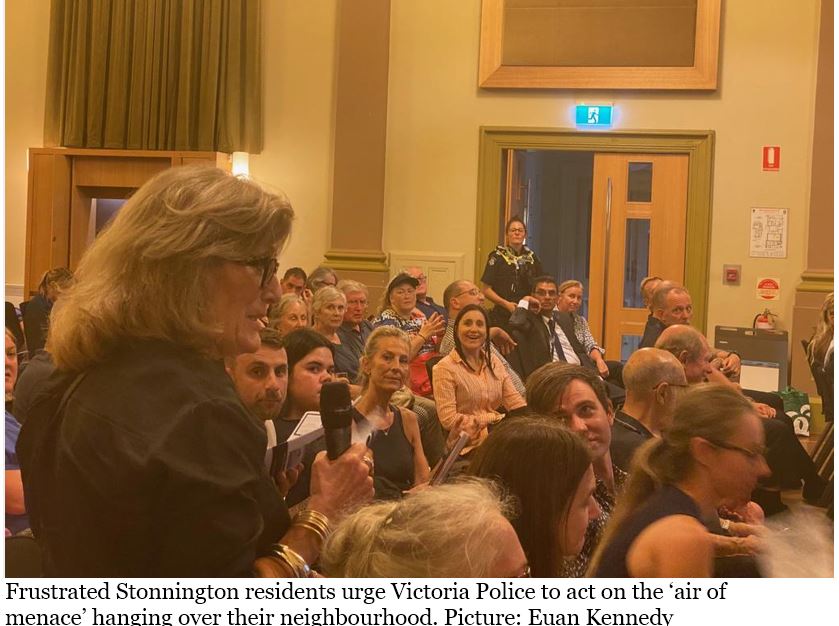
by CAA | Feb 7, 2025 | Investigations, Library, Victoria Police Issues, Youth
Police Deputy Commissioner Neil Paterson has conceded that the Police are frustrated by the leniency of the Victorian Bail Laws at a Stonington Police forum, as reported in the Herald Sun on the 7th of February 2025.
The Commissioner said that Victoria Police was advocating for change in the Court System.
It was reported that in a shocking admission by Deputy Paterson, “the force had never arrested more people for serious crimes than we have in at last 12 months.”
Nice of the Deputy to instil more fear into the community.
This admission, of course, did little to allay the community’s fears, but what is most alarming, according to the report, is that the only strategy presented to the community was the standard police line given to every such challenge of their performance.
“The policing panel announced increased foot and bicycle patrols to monitor areas including Chapel St in addition to existing initiatives to tackle crime.”
It takes a bit more than monitoring a crime hotspot, and the Zero Tolerance with the Broken Window Police strategy applied to these areas would be the most effective response.
Although a relatively short-term strategy, usually 6 months or so, the other areas of policing not reported as being discussed are proactive initiatives. The monitoring patrols, although proactive, are very limited without a broader application of proactive strategies that have a longer-term impact.
There is a major flaw in this announcement, as we have several CAA members facing similar concerns in their community and have been given the same hollow assurances. Patrols for a very limited period who do nothing more than monitor activity without enforcement, which is a ludicrous approach the community is heartily sick of.
Within a short time of these inevitably hollow assurances, the patrols diminish, while the problems persist, the police disappear completely, leaving the residents with no discernible difference in their ‘air of menace’, as one resident described the situation.
It is incredibly disappointing that the police command cannot come up with any new approaches and blaming the Courts and Bail Laws while admitting there are multiple parts to the Justice system and trying to shift all the blame on to the Justice system is disingenuous when police are clearly failing in their primary function. Preventing Crime.

by CAA | Feb 5, 2025 | Library, Media, Politics, Victoria Police Issues
Victoria can be forgiven for collectively exercising a sigh of relief at the announcement by the Allan Government about Bail Laws, Herald Sun 4th February 2025, but relief may well be premature until we see the new plans because we are not hopeful that the Government has seen the light and is proffering a solution to the worst crime rate in Victoria’s history and this may not be the silver bullet of Victoria’s hope.
The government only appears to view the problems through a narrow prism which will not lead to solutions that altering the Bail Laws is promoted to achieve.
We are not confident because the Premier has called an ‘immediate review’. Yes, that is the get-out-of-jail card so often brandished by politicians in a corner.
Pardon our scepticism, but we have seen all this before. No meaningful outcome will be achieved as the people called upon to conduct this review are the same people who advised the government on the ‘New’ crime laws passed into legislation less than six months ago that achieved little if any positive impact; at least, there is no noticeable change in the way the Courts or Police are operating that is visible.
The probability is not high that a new review by the same people and departments will expose how they got it all wrong last time.
What will happen is that the review outcome will exonerate the previous architects; the new review will see to it.
The irony is that the Premier does not even recognise the problem she is supposed to be dealing with.
There is no argument from us that the Bail Laws must be tightened, as must the judiciary’s discretion, as they will find ways to bypass possible changes to the Law.
And yes, if this is done correctly, we will see an improvement in the Law-and-Order space, but we cannot be complacent, as the crime issue will not be addressed by one magic (or not-so-magic) bullet.
All the changes in the Bail Laws may be thwarted by the judiciary, who have all seemingly overindulged in the Restorative Justice cool-aid.
The review must include how the independence of the judiciary can be retained while complying with any new strategies introduced.
Judicial accountability would be a good start.
Of equal importance is an understanding that crime prevention is the most cost-effective strategy to reduce crime. Stopping crimes happening first rather than dealing with the miscreants after they commit crimes makes absolute sense, but that does not sit well with some ideological advocates.
Seen often as the soft option, in Police parlance, Proactive policing is the only strategy shown to work.
The power of police foot patrols interacting with the community regularly is one of the most underrated weapons in the Police arsenal, but Victoria Police would instead put resources into the plethora of Task Forces and any other groups that are targeted at a particular crime after the event. We believe there are literally thousands of Police tied up in special target groups at a State and local level.
There will always be a need for some Task Force groups. Still, VicPol has become so addicted to them that they see no other alternative strategy, and there is no evidence that the Task Force approach actually works. With a rising crime rate, it is highly improbable they have any impact on the overall crime, only spasmodic impact on particular offenders who immediately get bail anyway, so the Police Task Force has been a waste of time.
Victoria has proven beyond any shadow of a doubt that recently developed strategies in combination promote /facilitate crime, not reduce it.
As we have pointed out previously, children do not enter this world with an ingrained criminal disposition; all criminal values are taught, so early intervention in a child’s development is critical, and the formative Primary School Years are the logical target area if a difference is to be achieved.
If a large percentage of police resources dedicated to Task Forces were redirected to early intervention, we would see a dramatic decline in crime.
Police performing their proper function would also see the Force attracting more recruits and retaining those they have.
The Premier would do well to ask the community what strategy they would prefer.
After all, they have to live with the consequences of whatever is implemented- this review must focus on Service Delivery as their guiding principle.

by CAA | Feb 4, 2025 | Library, Politics, Victoria Police Issues
CAA comment
This article, with comments submitted by James Basham, will be of great interest to the majority of our readers as it identifies quite clearly how the government is bereft of effective strategies to deal with terrorism and has headed down the path of a system that is loosely based on the failed Restorative Justice approach to problems in our society.
The Government really need to secure pragmatic thinkers who are not distracted by ideology to focus on how to best manage radicalisation in our society.
Critically, as this author points out, there is an absolute need for whatever system or strategy is adopted it must not bypass the current legal system, with all its flaws.
Establishing whether an individual has been radicalised based on a burden of proof of ‘the balance of probabilities’ at least gives a fair starting point to protect the wrongly accused and allow the community to defend itself.
**********************
EXTRACTS FROM THE EXECUTIVE SUMMARY OF THE AUSTRALIAN INSTITUTE OF CRIMINOLOGY (AIC) REPORT TO THE DEPARTMENT OF HOME AFFAIRS (DHA) REGARDING COUNTERING VIOLENT EXTREMISM (CVE) – AND COMMENTARY
Australian Institute of Criminology (AIC) was engaged to conduct a process and outcome evaluation of the Living Safe Together Intervention Program (LSTIP). The evaluation focused on reviewing the different models implemented in each jurisdiction, the underlying theory of change, and early indicators of positive outcomes for at-risk or radicalised individuals. The evaluation involved two principles [sic] methods—a rapid evidence assessment of effective Countering Violent Extremism (CVE) interventions and an extensive, national consultation process with stakeholders involved in the program.
THE RAPID ASSESSMENT OF ONLY POSITIVE INTERVENTIONS, TOGETHER WITH EXTENSIVE STAKEHOLDER CONSULTATIONS, ALLOWS AND PREDICTS A SERIOUSLY BIASED REPORT. IT’S UTILITY AND VALIDITY IS QUESTIONABLE… Author
When the LSTIP commenced, there was some uncertainty as to the scope of the problem and the degree to which a dedicated intervention program was required. There is an established, recognised and agreed need for the program.
THIS POINTS OUT THAT THE PROBLEM WAS ILL-DEFINED, IF AT ALL. THE LSTIP WAS A “GOOD IDEA” LOOKING FOR A PROBLEM TO SOLVE. LSTIP WAS APPLIED TO THE ILL-DEFINED PROBLEM. BUREAUCRACY IS THEN SEEKING TO JUSTIFY THE EXISTENCE AND REFINEMENT OF A SYSTEM THAT HAS AN ILL-DEFINED OR HIJACKED PURPOSE. THE LSTIP MAY DELIVER SOME COMMUNITY VALUE, BUT IT DOES NOT SQUARELY ADDRESS COMMUNITY NEEDS FOR SECURITY AGAINST RADICAL EXTREMISM – NOR SHOULD IT BE PURPORTED TO DO SO… Author
The program has become embedded within broader counter-terrorism response with the level of intervention activity commensurate to relative threat level and demand…..
FALLACY. THE PROGRAM IS NOT “…COMMENSURATE WITH THREAT…” DURING JANUARY 2025, RADICALISM IS OUTPACING AUTHORITY’S PROTECTIVE POWERS TO PREVENT COMMUNITY HARM. THE PROGRAM CAN BE EXPECTED TO CONTINUE TO FAIL TO DELIVER COMMUNITY SECURITY – EVEN IF LEGISLATED… Author
The programs are embedded as part of the broader counter-terrorism response in each jurisdiction, providing a viable alternative to arresting and monitoring at-risk individuals. All of the Intervention Coordinators can case manage clients who are referred to the program.
IF DEMONSTRATED VIOLENT RADICALISM IS THE MEASUREMENT CRITERIA, THE PROGRAM IS NOT WORKING SUCCESSFULLY – IT IS NOT VIABLE. OFFENDERS ARE FREE TO CONTINUE THEIR DAMAGING ACTIVITIES, EVEN THOUGH PERHAPS A LITTLE MORE SOCIALLY ORIENTED DUE TO THE PROGRAM. THE COMMUNITY EXPECTS AND ACCEPTS THAT OFFENDERS INVOLVED IN DRIVING UNDER THE INFLUENCE (DUI’s ) OR APPREHENDED VIOLENCE ORDERS (AVO’s) ARE ARRESTED AND/OR MONITORED. THE LAW PROVIDES FOR NUMEROUS CONTROLS TO BE APPLIED. SIMILARLY, SO SHOULD THE LAW BE APPLIED TO VIOLENT RADICALS DUE TO THEIR SERIOUSLY NEGATIVE EFFECTS ON COMMUNITIES – REGARDLESS OF AGE OR GENDER, WHICH APPEAR TO HAVE NO BEARING ON THE OFFENDING.
ALL INTERVENTION COORDINATORS ARE SAID TO HAVE THE CAPACITY TO MANAGE REFERRED CLIENTS – WHICH THAT MANAGING FOR COMPLIANCE TO THE INADEQUATE SYSTEM IS A FUTILE ACTIVITY…Author
The number of clients who have been engaged in the intervention program differs between the states and territories but appears to broadly reflect the threat level and demand in each jurisdiction.
OBVIOUSLY, THIS DOES NOT WORK TO PROTECT THE COMMUNITY BECAUSE OFFENDERS OFTEN ARE ACTUALLY REPEAT OFFENDERS – THE PROGRAM IS POWERLESS TO PROTECT THE COMMUNITY. THERE IS NO EVIDENCE OR LOGIC PRESENTED THAT SUGGESTS THAT THE PROGRAM HAS PREVENTED RADICAL BEHAVIOUR – IT’S CONSPICUOUS BY ITS ABSENCE IN THE REPORT… Author
There was broad agreement that the CVE Intervention Coordinators are committed and highly skilled individuals who have effectively established and monitored the various processes necessary for the operation of the program.
THAT’S ABOUT PROCESSES – MANAGING FOR COMPLIANCE TO THE INADEQUATE PROGRAM. IT’S NOT ABOUT OUTCOMES THAT ARE EFFECTIVE/PROTECTIVE…Author
The ability of Coordinators to form relationships with other agencies to develop referral pathways and deliver services to clients was noted as being particularly well-developed. They are proactive in identifying implementation barriers but have, at times, had limited capacity to overcome these issues.
COORDINATORS ARE PROACTIVE AND CAPABLE AT IMPLEMENTING A PARTICULARLY WELL-DEVELOPED SYSTEM – THAT SYSTEM LEAVES THE COMMUNITY VULNERABLE AND LEAVES OFFENDERS FREE TO REPEAT/RENEW THEIR OFFENDING. THE RELATIONSHIP BETWEEN THE SYSTEM/PROGRAM AND COMMUNITY SECURITY IS, AT BEST, TENUOUS..Author
…….case plans are tailored to individual needs; interventions focus on positive community integration and participation with a view to building clients’ social and emotional resilience to extremist ideologies and introducing positive influences into their social network; and access is provided to mental health services that address issues with psychopathology and antisocial traits.
WONDERFUL!!…… BUT THERE ARE NO INDEPENDENT EXTERNAL DISINCENTIVES TO DOING RADICAL COMMUNITY HARM. TOLERANCE FOR COGNITIVE DISSONANCE IS INTERNALLY CONTROLLED. SELECTIVE PERCEPTION AND CONFIRMATION BIAS HAVE PROBABLY BEEN INSTRUMENTAL IN DEVELOPING RADICALISM IN THE FIRST PLACE, AND THEY WILL CONTINUE TO APPLY TO RESIST EXPERIENTIAL LEARNING BY CLIENTS IN THE LIVING SAFE TOGETHER INTERVENTION PROGRAM (LSTIP) SYSTEM. LSTIP CLIENTS, WITH THEIR NEWFOUND SOCIAL AND EMOTIONAL RESILIENCE, MAY THEN BE EVEN BETTER EQUIPPED TO RETAIN AND CAMOUFLAGE THEIR REAL ORIGINAL VIEWS AND TO INFLUENCE OTHERS ADVERSELY… Author
However, interventions focusing on developing critical thinking and empathic skills, and those specifically focused on countering extremist ideological messaging in some way, are not being used.
THE MAJOR FOCUS OF BUREAUCRACY IS TO MAKE THE “CLIENT” FEEL LOVED [AND THEREBY ENCOURAGED TO FEEL GOOD ABOUT THEMSELVES] RATHER THAN PROVIDING THEM WITH KNOWLEDGE AND SKILLS TO FILTER INPUTS OF OTHER RADICALS AND TO UNDERSTAND THEIR IMPACT ON INDIVIDUALS AND COMMUNITY. EVEN IF THIS SERIOUS SHORTFALL WAS ADDRESSED, IT MIGHT NOT BE SUFFICIENT TO OVERCOME THE CLIENT’S TOLERANCE FOR COGNITIVE DISSONANCE [AS ABOVE]… Author
This includes improved access to mental health services, improved confidence and self-worth, forming prosocial relationships with peers, enhanced social and independent living skills, increased employability, and improved access to various government and non-government support services. There are positive signs of attitudinal change among young people with extremist views, but mixed evidence in relation to changes in behaviour and how these attitudes had manifested. ………………..there is a clear need to develop mechanisms for monitoring the progress of clients and measuring the impact of the intervention program across relevant outcome domains.
BUREAUCRACY FACILITATES/ENABLES OPPORTUNITY FOR CLIENT/OFFENDERS TO SPREAD THEIR RADICAL INFLUENCE FURTHER – AND FEEL GOOD ABOUT IT……..DESPITE HAVING “…limited data available on the impact of the intervention program”. IN THE REPORT, THIS IS HEADED AS “…promising evidence of positive outcomes….”
ACTUALLY, THE COMMUNITY IS LEFT VULNERABLE BY UNCERTAIN OUTCOMES OF A PROGRAM THAT IS NOT KNOWN TO BE EFFECTIVE.
THE EXECUTIVE SUMMARY OF THE AIC REPORT WINDS UP WITH A DAMNING STATEMENT ABOUT THE SHORTFALLS OF THE PROGRAM [LSTIP]:…Author
Among the most pressing issues are the absence of appropriate, consistent and formalised case management processes, different opinions about who should be included in the program, and concerns about the suitability of the s. 47E(d) tool, barriers to information sharing, the lack of consistent agreement about the aim of the program and definition of success, unanswered questions regarding the need for an intervention component, and concerns about the longer-term sustainability of the LSTIP.
THE LSTIP PROGRAM MAY DELIVER SOME DESIRABLE SOCIAL OUTCOMES, BUT IT IS NOT THE ANSWER TO VIOLENT EXTREMISM IN OUR COMMUNITY.
IT WOULD BE IRRESPONSIBLE TO LEGISLATE INTERVENTION ATTENDANCE BY EXTREMISTS IN THE MISTAKEN BELIEF THAT IT IS A SOLUTION TO THE SECURITY PROBLEMS THEY PRESENT.

by CAA | Jan 28, 2025 | Library, Victoria Police Issues, Youth
If we are accused of banging on about the role of Police and schools, we plead guilty as charged.
The reason is two irrefutable facts.
Firstly, all, and we mean every one of the juvenile miscreants who are terrorising our community, go through the education/schools system.
Non-attendance is the first indicator of those children who need special attention.
So it is without apology that we push for that being the place to start, ground zero of criminality, and the Police must play a critical role in this.
After much criticism of VicPol by us and others of the lack of a Police in Schools Program (PSIP), a quasi-Police Schools program was introduced. This role was added to the commitments of police, who were already overloaded. And it is the next best thing to useless in this fight. It is unfair to the members and has extremely low effectiveness in the crime fight.
The reason this pretend program won’t work is that by its nature, it is spasmodic, and children only respond to regular commitments and will only develop meaningful relationships with the Police member as a person if the relationship is stable. It is precisely the same as teaching children about mathematics learning by rote and consistency. It is also the same dynamic that builds effective families- consistency.
It should also be accepted that a contributing factor in the attrition rate of Police is the lack of proactive work being undertaken. The Police members see the impact of juvenile crime and the lack of diversion available to them to steer young people away from crime, leading to their frustration with the policing role’s effectiveness.
There can be no better example of frustration leading to the loss of a very competent Police officer than the Opposition leader, Brad Battin, who was heavily involved in Operation New Start, a police volunteer organisation partnered by teachers and Service Club Members who worked together to ensure young people got to and stayed at school.
VicPol allegedly cancelled the program on the basis that it was too labour-intensive. That the program worked very well was not a consideration. The program was scuttled. Brad had had enough and resigned from the Force.
Now mature adults who went through the original Police In Schools Program can still and often do quote the name of the Police member who helped guide them many years ago, which is an accurate measure of the effectiveness of that program.
Being at the school on the same day at the same time to deliver a structured curriculum is the key, and anything less is of seriously questionable effectiveness and rates in the category of spin, something to distract critics.
The Government, Police or even, to a lesser extent, the schools tend to overlook the inescapable reality that amid those students walking through the door for their first day of school are the future juvenile offenders who will end up wreaking havoc in our community.
The community is getting sick and tired of bureaucratic buck-passing and inaction as those responsible seemingly take no action to stem the tide.
We cannot point to one initiative the government has introduced that stems this problem.
On the contrary, the government has introduced initiatives that feed into the juvenile cohort and are irresponsible.
The raising of the age of criminal responsibility allows those children who start their life of crime at a young age to escape any sanction to modify their behaviour until they are sometimes three to four years older. By then, they are well entrenched in the criminal sphere – too late to berate or lecture because it won’t work.
Softening Bail and custodial sentences to the point of abolishing them also feeds into the rise of juvenile crime, as there are no consequences for their behaviour. Moreover, criminal enterprises, whether local or large ones, can entice young people to commit crimes on the basis that nothing will happen if they are caught.
The second irrefutable fact is the solutions are in front of them.
Having programs to ensure school attendance and building relationships between the children and the Police as the symbol of authority in the classroom and socially at Blue Light Disco’s will work.
The highly successful Police In Schools program, Operation New Start, a program that got kids to school, and Blue Light are three initiatives that need to be urgently reintroduced to arrest the rot, devastating the future of too many of our children.
It is sad that Blue Light, which started in Victoria, is thriving in every other state and territory, with many Blue Lights operating in other countries but very few operating in Victoria.
These programs fed off each other and were highly successful when they were introduced.
The Force continues to promote the notion that they are understaffed, and to a degree, this may be true. However, staffing is all about priorities and stopping crime before it happens must be rated as the primary use of resources.
Any run-of-the-mill manager can achieve more productivity with more or unlimited staff; whether they are effective is moot; it takes a leader to prioritise the way out of the imbroglio of juvenile crime.
Crowing about arrests, as is often the case, as the police executive bustle to promote their performance; sadly, catching crooks is a higher priority than stopping crime in the first place. Task Forces are prolific, but not one is dedicated to stopping crime before it happens. They are all reactive, responding to demands that have occurred.
The frontline Police know what must be done; only the Executive seem to have their heads in the sand, hoping the problem will go away instead of making the hard decisions to change the course of criminality and Force priorities.
VicPol may even slow the exodus of police from their careers if members realise that they can become involved in meaningful programs that make a difference. Simply taking the miscreants to court to be continually bailed and then at court hearing all the excuses as to why the perpetrator should not be locked up to protect the offender from themselves and the broader community is extremely frustrating for police who know that there are better ways.
Often, understated is the financial impact on all victims as they open their annual insurance bills to see substantial increases and no matter how those increases are subject to spin, the reality is that insurance companies do not lose money as they adjust their premiums to the claims. With out-of-control crime, those premiums are skyrocketing.
Crime prevention is just as, or even more critical than, arresting criminals; just ask the victims.

by CAA | Jan 26, 2025 | Library, Politics, Victoria Police Issues

CAA SUBMISSION ON PROPOSED AMENDMENTS
to the
TERRORISM (COMMUNITY PROTECTION) AND CONTROL OF WEAPONS AMENDMENT BILL 2024
The principles of this legislation are flawed.
PART 1 TERRORISM COMMUNITY PROTECTION
There is nothing in this amendment that would in any way improve or provide any Community Protection.
The concept of this Bill as a community protection initiative is absurd as it identifies at-risk individuals and invites them to volunteer for the MAP program.
And there are serious questions about the efficacy of deradicalisation programs.
As reported in the Herald Sun on 15th of Jan ’25, under the banner ‘Deradicalisation programs have mixed impact, report says’,
“Deradicalisation programs have failed to change the behaviour of high-risk individuals authorities fear could commit acts of terror in Australia or produce data on whether the initiative actually works.
Further, there have been a small number of cases where the risk associated with clients had escalated and required the involvement of law enforcement.”
The revelations come amid rising reports of antisemitism and after a spate of attacks by individuals in deradicalisation programs last year”.
This report highlights the folly of relying on bureaucratic processes to manage such an important function to protect the community instead of the legal system.
If legislation is deficient, correct it and empower the law enforcement process to manage these extremists. Courts can at least make binding orders to mitigate risk, something the bureaucracy can’t do.
We were stunned to discover two operational deradicalisation programs, LSTIP and MAPS.
Establishing a deradicalisation industry is obviously on its way, which leads to suspicion that the growth of this industry has more to do with the players involved in creating their quango rather than protecting the community, which appears to be a by-product at best.
Again, this initiative is designed to help the perpetrators, not the public. The perpetrator-first approach is the hallmark of Restorative Justice, a flawed approach to crime and/or antisocial behaviour where the perpetrator is rewarded rather than punished.
The reliance on deradicalisation is a significant flaw as there is no empirical data to suggest the likelihood of success and no reliable mechanism to guarantee that deradicalisation has been achieved; the expert consensus is that it has a hit-and-miss success rate.
To rely on such a system to protect the community is an abdication of the government’s responsibility and should something go awry. The government should be held accountable alongside the perpetrator.
How is this protection manifested? How do the Community feel protected,
The community do not know who these individuals are, where they are located and the circumstances of their radicalisation.
A family may choose to change their circumstances if they become aware of somebody close being identified as being either potentially or actually radicalised. Moreover, the employment arrangements involving the perpetrator may vary legitimately when an employer finds out an employee is on that path.
Why should the community be left in the dark? That is not community safety. It is protection for the perpetrator.
The amendments do not address these issues, leaving the government with substantial liability if things go wrong, and they fail to let people know the risks.
We live in a democracy, and nobody should be exposed to sanctions by the government bureaucracy. This is an unambiguous role of the courts. The High Court has had plenty to say about this question recently.
The volunteer nature of persons entering the MAP program leaves open the allegations of coercion to volunteer, such as” Have we got a deal for you”?
As for the perpetrator, there appears to be no effort to include protection for their rights once they are nominated as potentially or actually being radicalised. At what stage can their rights be interfered with is, or should it be a matter for a Court, not the bureaucracy?
The failure to process suspects in the normal consequence through the Courts is a failure of democracy – they are voluntarily coerced into accepting they are radicalised, and they are entirely processed administratively, losing all rights.
The high court has been clear on the application of penalties by bureaucrats and not the Courts, and no matter how much bureaucrats may pretend otherwise, MAPS and LSTIP are sanctioning.
We are not arguing against the concept of deradicalisation, but we are saying that the courts, not bureaucrats, must manage it. At least that way, the radicalisation has to be proven beyond a reasonable doubt or on the balance of probabilities, not some obscure administrative process.
If the current offences do not adequately cover these situations, new legislation must be enacted to ensure the Courts manage these people.
A parallel to understanding the folly of this approach would be to have the community advise a bureaucracy of a regular drunk driver. That driver is offered an alcoholic program but continues to drive under the influence.
A second and more current initiative is Pill Testing, where the government will test your illicit pills and give you the green light to take them. They are still illicit, and the tests only cover the pill presented, not the ones being consumed.
Their efforts, and there are more, indicate a trend where any personal accountability and responsibility is diminished and fuelled by government intervention.
The long-term result will be the diminished need or perhaps elimination of some courts as their function is demoted so that governments can control these matters through their bureaucracies. We will all then live in a Restorative Justice nirvana.
The cost of a democracy designed to manage the individuals without checks and balances the Courts would provide is horrendous, and the energy expended would be far better used to fit the suspected radicalised individual with an ankle bracelet based on a court order.
That would protect the individual from malice by false accusations and protect the community, whereas the voluntary program will not.
Part 2 CONTROL OF WEAPONS AMENDMENT BILL 2024
The Control of Weapons Bill amendments should repeal the whole Act and ensure that police have the power to do their job. This is a switch-on-switch-switch-off approach that is clearly aimed at controlling police operations without the expectation of any positive outcome, either proactively or reactively.
It is also a dangerous and direct attack on the essential independent operational function of policing.
It is ludicrous for Police to declare an area subject to exercising powers unless an improbable agreement can be made that all perpetrators restrict themselves to the given controlled area.
Controlled weapons do not gain status by being carried in a declared area, so the concept of controlled areas is absurd. They are always a controlled weapon no matter where they are carried.
The perpetrators only need to avoid the area to avoid detection – that doesn’t stop the problem; it simply relocates it. If anybody is found by Police with a weapon in the declared area, they obviously didn’t read the paper. The foolhardiness of this approach is the people who carry controlled weapons are most unlikely to read the paper or go online to the police site to check where the police operations are.
This strategy follows the line of the approach to the drug problem – providing injecting facilities – providing drug paraphernalia to addicts, and testing pills, all deliver the same message that these things are not really illegal because the government is facilitating them.
That’s how the warnings of declared areas will be interpreted.
The weapons are the same; therefore, perpetrators must be subject to the same risks of getting caught irrespective of where they are and when.
If the legislation is deficient in this area, the amendments must enhance the ability of the Police to intervene in the carriage of any controlled weapon.
Anybody carrying a controlled weapon in any place at any time must be able to be arrested and prosecuted. Police must have the power to search and seize based on reasonable suspicion. Reasonable can be tested by the courts.

by CAA | Jan 23, 2025 | Library, Victoria Police Issues, Youth
A headline in the Herald Sun on the 21st of January 2024 stated that reported crime at schools is at a 10-year high, with classroom crimes hitting 120 times a week.
While a percentage of offences have been after hours, with schools needing to suspend 90 students daily, a real problem of discipline is exposed.
Further, if anybody does not see the correlation between crime in our schools and the upsurge in juvenile crime, more generally, they have their head in the sand.
These problems can’t be reasonably palmed off as crimes by others outside school hours; there is an inescapable nexus between the school environment and after-hours crime, for the most part.
Nothing in the statistics would indicate that the students are not responsible for much of the after-hours of crime.
Schools should be a place of learning, and learning to be a criminal is not one of the skills we would embrace.
It was reported that schools can exercise discretion as to whether to report an incident to the police, and this is part of the problem leading to inconsistencies in crime responses.
Police are the only ones with the legislative power of discretion, and when a crime comes to the notice of a school, it must be reported to the police; if not a legal obligation, the school has a moral one to the whole school and general community, to which it is responsible. Protecting a student from an investigation is not the school’s role, as the investigation is how the truth will be determined; schools are not equipped to perform this function.
That this problem has reached this stage indicates that Victoria Police have had their priorities wrong and have had them wrong for nearly 15 years.
Interestingly, the CAA was established 10 years ago this year to address the issue of the Police’s failure to manage youth crime adequately.
Central to the management of youth crime is the reintroduction of the Police in Schools Program (PSIP)
The current schools program Victoria Police currently operates, is a shadow of the real program and probably no more effective than no program. You can’t expect positive results from a spasmodic ‘half-hearted’ approach. The ‘when we have time to do it’ approach will not work.
The CAA tried to establish a Police Veterans in Schools Program, and despite the best adverse efforts by the then Chief Commissioner Ashton to stymie the program, it was thwarted in the end by COVID-19. The first Police Veteran to enter a school under this program coincided with the introduction of COVID restrictions.
We recruited the first 12 schools we approached, and recruited a number of Police veterans to service them following the PSIP curriculum model.
Unfortunately, we are not well enough resourced to try it again. Still, there is no reason that VicPol could not recruit retired members to fulfil the Police in Schools Officer role, reducing the impact on other operational needs.
The argument proffered is that VicPol’s resources cannot support such a program. Still, Policing is about priorities, and when the Force has a reactive corporate mindset, proactive work to prevent crime pays the priority price.
Ironically, the Chief Commissioners in recent history who have achieved outstanding results each had the balance between proactive and reactive about right, and crime was managed. We also had a much safer State and a Police Force that was highly respected and engaged.
These shocking statistics are the responsibility of the current Chief Commissioner and the Police Executive, nobody else, and it is within their remit to resolve the matters.
The place to start is the schools. Don’t blame the parents, the legislators, or the courts, although they play a part in it. The blame is sheeted directly to the Force management. Excuses are a sign of inept managers. It is no doubt they will argue they haven’t got the resources, but they haven’t got the resources not to do it either.
We understand there is currently an internal management review in place, which would provide the opportunity for a good look at the Force’s priorities and effective management of resources.
This review must go beyond just ‘shuffling the deck chairs’ to make it look like the Force is doing something, but experience tells us unless the review addresses all the causes, nothing much will change.
One area that needs serious re-evaluation and de-prioritising is the task force groups; historically, they have been the easy go-to tool of police management, but the impact on the ability of the Force to provide adequate policing overall is adversely impacted and rarely a consideration, generally leading to more crime than the Task Forces are set to address.
There will always be a need for some Task Forces, but their establishment must be carefully managed as once established, it is very hard to invoke a sunset clause to their operation as the participants quickly gain a comfort factor in the privilege of working on a Task Force, being able to ditch their uniform in favour of a US Special Forces style dress up, generally avoiding shift work and gaining their rest days predominately on weekends, a cherished part of work-life balance not shared by Police working on stations, the real front line.
These task forces aggravate the operations of VicPol because the best and brightest, hardest workers are usually selected for these roles seen as prestigious, leaving stations void of experienced police.
It is too easy a solution to any crime outbreak to establish a task force or a targeted group by any other name. These groups are often given other titles to avoid the perception of the incorrect weighting of this type of policing.
As an example of the types of inefficiencies, a drug dealer moved into our local area and openly traded his wares predominantly on a Thursday. Lines of cars would enter the street with a line of people all carrying similar $2 candy-stripped carrier bags, obviously containing ill-gotten gains to trade for drugs.
The community reported the matter with an offer of an observation post in the house directly opposite, which was readily accepted by the Police.
This criminal activity was blatant to the degree that the transactions could be seen clearly from the observation point.
The community expected the matter to be resolved within a couple of weeks, maybe, but the activity continued for over three months, with the Police observing and the crook expanding his business to a nearby rented factory, so prolific was the activity.
A properly planned and orchestrated police operation could have netted numerous thieves and drug users on many occasions, including the primary offender, and the result would have been no less effective than dragging it out for over three months; after all, the penalty is the prerogative of the courts and all this extra work, we would argue, would not add to the severity of the sentence once the primary perpetrator was eventually arrested. However, the delay would adversely contribute to the crime statistics.
One thing is for sure: the responsible citizen who tolerated the disruption to their family by Police sitting in their front room for months on end, 24/7 will not offer that privilege to the Police again. Particularly, when technology could have achieved better quality evidence.
Alienating the citizens who hitherto supported police is not good policing by any measure.
A pragmatic measurement of this operation would demonstrate that when all matters are taken into consideration, it was inefficient and poorly managed.
The question, therefore, arises of how many other similar operations are inefficient and should have their resources redirected to proactive prevention measures and the operational front line.

by CAA | Jan 21, 2025 | Library, Victoria Police Issues, Youth
A new Magistrate appointment dedicated to dealing with repeat juvenile offenders has been announced, Herald Sun 20th of January 2025.
Does this mean the Government has lost confidence in the magistracy of this State to deal with repeat offenders, or is it nothing more than a ploy to give the appearance of doing something? Given that they haven’t addressed a primary cause, the failure of legislation, this is probably only a political spin.
As they say, the proof will be in the pudding, but we are not confident that anything will change.
When reviewing this Government approach to juvenile crime, to suggest it is ‘lacklustre’ is an understatement.
More than half the Children’s Courts across the State have been closed, and weak bail laws allow juveniles to ‘give the thumb’ to authority.
A whole cohort of juvenile offenders has been excluded from the Justice system by raising the age of criminal accountability; therefore, the younger cohort offends with impunity and avoids accountability, so no intervention can occur to steer them away from joining the ranks of the repeat offenders.
The youth crime surging to a 14-year high is only the beginning, not the end; we have more pain to come. And that is the pain suffered by the victims whilst the judiciary is immune.
If the government has not lost faith in the Magistrates of this State as this appointment indicates, the public certainly has. Young thugs, by their actions, treat the Courts, at best, as an inconvenience or, more likely, a joke.
Continually, we read how young thugs are bailed for various very serious crimes that are committed while they are on bail for equally serious charges.
It is not uncommon for thugs who have been bailed on multiple occasions, sometimes 30-50 times, to be granted bail again. And that is ridiculous and unconscionable. This is aggravated by the rising age of criminality, where there is no intervention to redirect the younger juveniles but instead teaches them there are no consequences for their criminal actions.
The Government is blind or ignoring the causes; where do they think the quantitative surge in juveniles is fed from? It is the 8-12 year olds providing the impetus.
Figures previously released to the Herald Sun revealed more than 100 kids aged between 10 and 17 years old were involved in at least 30 crimes each in 2024.
That number has tripled over the last five years.
There were just 34 youths offending at a minimum of 30 crimes a year in 2019.
The 103 repeat offenders recorded last year carried out at least 3090 crimes in 2024 alone, an average of eight offences per day.- Herald Sun.
The actual number of offences committed is doubtless very much higher.
The major problem is either the structure of legislation currently in vogue or the judiciary have steered away from convention and have embarked on ideological fantasy escapade, or both, which is our pick.
It was not so long ago; Police were reporting that 30 or so prime thugs were committing the majority of the crimes. That has now not only been debunked, but the number has tripled to 103.
How the appointment of one Magistrate will rectify the anomalies of a broken judicial process is beyond comprehension.
An outstanding omission in the Government’s response was the limited reference to Victims by the Youth Justice Minister quoted as saying,
“We know there is a group of repeat offenders driving the rise in serious crimes – that’s why we’re taking action to hold them to account while offering support to help young people turn their lives around.”
Youth Justice Minister Enver Erdogan said: “This is another important step in delivering a justice system that protects the community and rehabilitates young people”.
“We want to help victims get closure by holding young people to account and helping those heading down a wrong path realise the effects of their actions.”
Minister, if you want to help victims, helping them get closure genuinely is arrant nonsense. How about first stopping the crime and the impact on victims? How about re-introducing some of the past programs, not just paying lip service to the past programs but genuinely embracing them? Why do you want to turn lives around rather than stop them from offending in the first place, which would be the sensible approach?
The key is directing young people away from crime before, not after the fact. It is called prevention.
We are seeing disturbing reports of student misbehaviour in schools, and yet the proven Police in Schools Program, Operation New Start and Blue Light, has not been embraced to deal with this; instead, a facsimile to look like the original police school program is touted but it has not been demonstrated it works. A mere shadow of the real program.
We are unsure, but the age change to criminal liability may have completely scuttled the Police Cautioning program, the real bulwark against younger children moving through the criminal spheres to become the next generation of repeat offenders. Although it can’t be quantified accurately, the Police Cautioning Program was responsible for diverting vast numbers of young people from a life of crime.
We wish the new Magistrate well but are not hopeful that she will make a scrap of difference. At the same time, the Government fails to acknowledge and address their failures in relation to Bail, other legislative blunders and Police operational failures that feed this growing problem.
With this new Magistrate’s depth of experience, she should first be tasked with reviewing the legislation to make it effective, and then she may have something to work with. Still, as the status quo continues, she has little hope of pushing back against the Restorative Justice ideology that has infected our judiciary, one of the main causes of the judicial failures.
The Courts must follow the Law, not an ideology.

by CAA | Jan 17, 2025 | Illicit Drugs, Library, Victoria Police Issues
CAA comment
Opponents to the concept of involuntary care trot out the ‘hoary old chestnut’ of a patient’s rights, but when it comes to rights, we argue every person has a right to care appropriate to their health issue. If that means involuntary care, then we support that approach.
When a person’s acuity is so manipulated by deleterious health, then in the name of humanity, we must take care of them until they are well enough to look after themselves.
Our view is tempered in that there needs to be clear medical oversight as there must be legal oversight to ensure the patient’s rights are protected and the community, one does not outrank the other.
A mechanism to have any person taken into temporary care to be assessed and the necessary information placed before a Court to determine whether the person’s involuntary care should continue and for the accountability intervals to the Court for their continued involuntary care is the mechanism that we should aspire to develop.
Police and Ambulance first responders must be given the power to place people whose acuity is compromised into temporary care to be medically assessed.
Temporary Health Orders would be the most logical authority mechanism. They were thrown around with ‘gay abandon’ during the COVID-19 pandemic, so it should be well accepted by the community.
The imminent closure of one a Victorian jail provides an opportunity for the facility to be converted to accommodate involuntary patients, and in tight fiscal times the cost to the government in paying out on contracted services to operate the prison for many years may provide some financial benefit to the State – at least we will be getting something back including saving some lives currently wasted.
Some politicians, police and community groups argue involuntary care is key to addressing severe addiction and mental health issues
The brutal stabbing last month of a 58-year-old city employee in Nanaimo, B.C., made national headlines. The man was stabbed multiple times with a syringe after he asked two men who were using drugs in a public park washroom to leave.
The worker sustained multiple injuries to his face and abdomen and was hospitalised. As of Jan. 7, the RCMP were still investigating the suspects.
The incident comes on the heels of other violent attacks in the province that have been linked to mental health and substance use disorders.
On Dec. 4, Vancouver police fatally shot a man armed with a knife inside a 7-Eleven after he attacked two staff members while attempting to steal cigarettes. Earlier that day, the man had allegedly stolen alcohol from a nearby restaurant.
Three months earlier, on Sept. 4, a 34-year-old man with a history of assault and mental health problems randomly attacked two men in downtown Vancouver, leaving one dead and another with a severed hand.
These incidents have sparked growing calls from politicians, police and residents for governments to expand involuntary care and strengthen healthcare interventions and law enforcement strategies.
“What is Premier Eby, the provincial and federal government going to do?” the volunteer community group Nanaimo Area Public Safety Association said in a Dec. 11 public statement.
“British Columbians are well past being fed-up with lip service.”
‘Extremely complex needs’
On Jan. 5, B.C.’s newly re-elected premier, David Eby, announced the province will open two involuntary care sites this spring. One will be located at the Surrey Pretrial Centre in Surrey and the other at the Alouette Correctional Facility in Maple Ridge, a city northeast of Vancouver.
Eby said his aim is to address the cases of severe addiction, brain injury and mental illness that have contributed to violent incidents and public safety concerns.
Involuntary care allows authorities to mandate treatment for individuals with severe mental health or substance use disorders without their consent.
Amy Rosa, a BC Ministry of Health public affairs officer, confirmed to Canadian Affairs that the NDP government remains committed to expanding both voluntary and involuntary care as a solution to the rise in violent attacks.
“We’re grappling with a growing group of people with extremely complex needs — people with severe mental health and addictions issues, coupled with brain injuries from repeated overdoses,” Rosa said.
As part of its commitment to expanding involuntary care, the province plans to establish more secure facilities and mental health units within correctional centres and create 400 new mental health beds.
In response to follow-up questions, Rosa told Canadian Affairs that the province plans to introduce legal changes in the next legislative session “to provide clarity and ensure that people can receive care when they are unable to seek it themselves.” She noted these changes will be made in consultation with First Nations to ensure culturally safe treatment programs.
“The care provided at these facilities will be dignified, safe and respectful,” she said.
‘Health-led approach’
Nanaimo Mayor Leonard Krog says involuntary care is necessary to prevent violent incidents such as the syringe stabbing in the city’s park.
“Without secure involuntary care, supportive housing, and a full continuum of care from detox to housing, treatment and follow-up, little will change,” he said.
Elenore Sturko, BC Conservative MLA for Surrey-Cloverdale, agrees that early intervention for mental health and substance use disorders is important. She supports laws that facilitate interventions outside of the criminal justice system.
“Psychosis and brain damage are things that need to be diagnosed by medical professionals,” said Sturko, who served as an officer in the RCMP for 13 years.
Sturko says that although these diagnoses need to be made by medical professionals, first responders are trained to recognise signs.
“Police can be trained, and first responders are trained, to recognise the signs of those conditions. But whether or not these are regular parts of the assessment that are given to people who are arrested, I actually do not know that,” she said.
Staff Sergeant Kris Clark, a RCMP media relations officer, told Canadian Affairs in an emailed statement that officers receive crisis intervention and de-escalation training but are not mental health professionals.
“All police officers in BC are mandated to undergo crisis intervention and de-escalation training and must recertify every three years,” he said. Additional online courses help officers recognise signs of “mental, emotional or psychological crisis, as well as other altered states of consciousness,” he said.
“It’s important to understand, however, that police officers are not medical/mental health professionals.”
Clark also referred Canadian Affairs to the BC Association of Chiefs of Police’s Nov. 28 statement. The statement says the association has changed its stance on decriminalization, which refers to policies that remove criminal penalties for illicit drug use.
“Based on evidence and ongoing evaluation, we no longer view decriminalization as a primary mechanism for addressing the systemic challenges associated with substance use,” says the statement. The association represents senior police leaders across the province.
‘Life or limb’
Police services are not the only agencies grappling with mental health and substance use disorders.
The City of Vancouver told Canadian Affairs it has expanded programs like the Indigenous Crisis Response Team, which offers non-police crisis services for Indigenous adults, and Car 87/88, which pairs a police officer with a psychiatric nurse to respond to mental health crises.
Vancouver Coastal Health, the city’s health authority, adjusted its hiring plan in 2023 to recruit 55 mental health workers, up from 35. And the city has funded 175 new officers in the Vancouver Police Department, a seven per cent increase in the force’s size.
The city has also indicated it supports involuntary care.
In September, Vancouver Mayor Ken Sim was one of 11 B.C. mayors who issued a statement calling on the federal government to provide legal and financial support for provinces to implement involuntary care.
On Oct. 10, Conservative Party Leader Pierre Poilievre said a Conservative government would support mandatory involuntary treatment for minors and prisoners deemed incapable of making decisions.
The following day, Federal Minister of Mental Health and Addictions Ya’ara Saks said in a news conference that provinces must first ensure they have adequate addiction and mental health services in place before discussions about involuntary care can proceed.
“Before we contemplate voluntary or involuntary treatment, I would like to see provinces and territories ensuring that they actually have treatment access scaled to need,” she said.
Some health-care providers have also expressed reservations about involuntary care.
In September, the Canadian Mental Health Association, a national organization that advocates for mental health awareness, issued a news release expressing concerns about involuntary care.
The association highlighted gaps in the current involuntary care system, including challenges in accessing voluntary care, reports of inadequate treatment for those undergoing involuntary care and an increased risk of death from drug poisoning upon release.
“Involuntary care must be a last resort, not a sweeping solution,” its release says.
“We must focus on prevention and early intervention, addressing the root causes of mental health and addiction crises before they escalate into violent incidents.”
Sturko agrees with focusing on early intervention but emphasises the need for such interventions to be timely.
“We should not have to wait for someone to commit a criminal act in order for them to have court-imposed interventions … We need to be able to act before somebody loses their life or limb.”
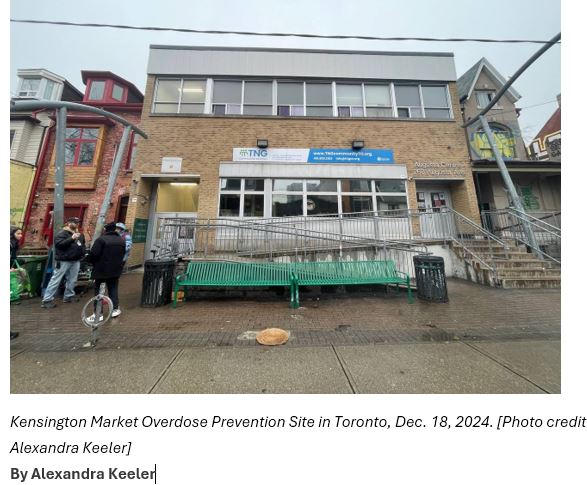
by CAA | Jan 12, 2025 | Illicit Drugs, Library, Politics, Safe Injecting Rooms, Victoria Police Issues
CAA Comment
This is another insightful article in this important series, dealing with the inevitable pushback from the pro-drug injecting room lobby.
What is not addressed is the weight that should be given to this group and do they have a vested interest.
The argument is over establishing Homelessness and Addiction Recovery Treatment (HART) Hubs in lieu of safe injecting rooms.
A very similar concept to the position of the CAA.
As a society, we would not tolerate accepting that a person with any sort of health issue was not treated, but rather, their affliction or disease was just managed, and the causes were actively facilitated when cures were available.
We will be closely watching the legal ramifications of the options to close and modify Injecting Rooms and convert them to Hart Hubs. Altogether a sound strategy from which addicts may recover from their illness rather than the addiction being fed.
The operator of a Toronto overdose prevention site is challenging Ontario’s decision to prohibit 10 supervised consumption sites from offering their services.
In December, Neighbourhood Group Community Services and two individuals launched a constitutional challenge to Ontario legislation that imposes 200-metre buffer zones between supervised consumption sites and schools and daycares. The Neighbourhood Group will be forced to close its site in Toronto’s Kensington Market as a result.
In its court challenge, the organization is arguing site closures discriminate against individuals with “substance use disabilities” and increase drug users’ risk of death and disease.
The challenge is the latest sign of growing opposition to Ontario’s decision to either shutter supervised consumption sites or transition them into Homelessness and Addiction Recovery Treatment (HART) Hubs. The hubs will offer drug users a range of primary care and housing solutions, but not supervised consumption, needle exchanges or the “safe supply” of prescription drugs.
Critics say the decision to suspend supervised consumption services will harm drug users and the health-care system.
“We’re very happy that the HART Hubs are being funded,” said Bill Sinclair, CEO of Neighbourhood Group Community Services. “They’re a great asset to the community.”
“[But] we want HART Hubs and we want supervised consumption sites.”
‘Come under fire’
On Thursday, the Ontario government announced that nine of the 10 supervised consumption sites located near centres with children would transition into HART Hubs. The Neighbourhood Group’s site is the only one not offered the opportunity to transition, because it is not provincially funded.
Laila Bellony, a harm reduction manager at a supervised consumption site at the Parkdale Queen West Community Health Centre in Toronto, says she is worried that drug users may avoid using HART Hubs altogether if they do not facilitate the use of drugs under the supervision of trained staff.
Data show this oversight can prevent deaths by facilitating immediate intervention in the event of an overdose.
Bellony is also concerned the site closures will increase the strain on other health-care services. She predicts longer wait times and bed shortages in hospital emergency rooms, as well as increased paramedic response times.
“I think the next thing that will happen is the medical or health-care system is going to come under fire for being sub-par. But it’s really all starting here from this decision,” she said.
She questions how the HART Hubs will meet demand for detox and recovery services or housing solutions.
Parkdale Queen West Community Health Centre and its sister site, the Queen West Site, serve hundreds of clients, Bellony says. By contrast, Ontario’s HART Hub rollout plan indicates all 19 hubs will together provide 375 new housing units across the province.
“The HART Hub model is not a horrible model,” said Bellony. “It’s the way that it’s being implemented that’s ill-informed.”
In a response to requests for comment, a media spokesperson for the Ontario Ministry of Health directed Canadian Affairs to its August news release. That release lists proposals for increased safety measures at remaining sites, and a link to a HART Hub “client journey.”
On Dec. 3, the Auditor General of Ontario, Shelley Spence, released a report criticizing the health ministry’s “outdated” opioid strategy, noting it has not been updated since 2016.
National data show a 6.7 per cent drop in opioid deaths in early 2024. But experts caution it is too soon to call it a lasting trend. Opioid toxicity deaths in 2023 were up 205 per cent from 2016.
“We concluded that the Ministry does not have effective processes in place to meet the challenging and changing nature of the opioid crisis in Ontario,” the auditor general’s report says.
“The Ministry did not … provide a thorough, evidence-based business case analysis for the 2024 new model … [HART Hubs] to ensure that they are responsive to the needs of Ontarians.”
 ‘Ill-informed’
Ontario has cited crime and public safety concerns as reasons for blocking supervised consumption sites near centres with children from offering their services.
“In Toronto, reports of assault in 2023 are 113 per cent higher and robbery is 97 per cent higher in neighbourhoods near these sites compared to the rest of the city,” Ontario Health Minister Sylvia Jones’ office said in an Aug. 20 press release.
The province has also cited concerns about prescription drugs dispensed through safer supply programs being diverted to the black market.
Police chiefs and sergeants in the Ontario cities of London and Ottawa have confirmed safer supply diversion is occurring in their municipalities.
“We are seeing significant increases in the availability of the diverted Dilaudid eight-milligram tablets, which are often prescribed as part of the safe supply initiatives,” London Police Chief Thai Truong said at a Nov. 26 parliamentary committee meeting examining the effect of the opioid epidemic and strategies to address it.
But Bellony disputes the claim that neighbourhoods with supervised consumption sites experience higher crime rates.
“Some of the things that [the ministry is] saying in terms of crime being up in neighbourhoods with safe consumption sites — that’s not necessarily true,” she said.
In response to requests for information about the city’s crime rates, Nadine Ramadan, a senior communications advisor for the Toronto Police Service, directed Canadian Affairs to the service’s crime rate portal.
The portal shows assaults, break-and-enters and robberies in the West Queen West neighbourhood have remained relatively stable since the Queen West supervised consumption site opened in 2018.
In contrast, crime rates are higher in some nearby neighbourhoods without supervised consumption sites, such as The Junction.
“While I can’t speak to perceptions about a rise in crime specifically around supervised consumption sites, I can tell you that violent crime is increasing across the GTA,” Ramadan told Canadian Affairs. She referred questions about Jones’ statements about crime data to the health minister’s office.
Jones’ office did not respond to multiple follow-up inquiries.
Mixed feelings
In July, Canadian Affairs reported that business owners in the West Queen West neighbourhood were grappling with a surge in drug-related crime.
Rob Sysak, executive director of the West Queen West Business Improvement Association, says there are mixed feelings about their neighbourhood’s site ceasing to offer safe consumption services.
“I’m not saying [the closure] is a positive or negative decision because we won’t know until after a while,” said Sysak, whose association works to promote business in the area.
Sysak says he has heard concerns from business owners that needles previously used by individuals at the site may now end up on the street.
Bellony supports the concept of HART Hubs, offering addiction and support services. But she says she finds the province’s plan for the hubs to be unclear and unrealistic.
“It seems very much like they kind of skipped forward to the ideal situation at the end,” she said. “But all the steps that it takes to get there … are unaddressed.”
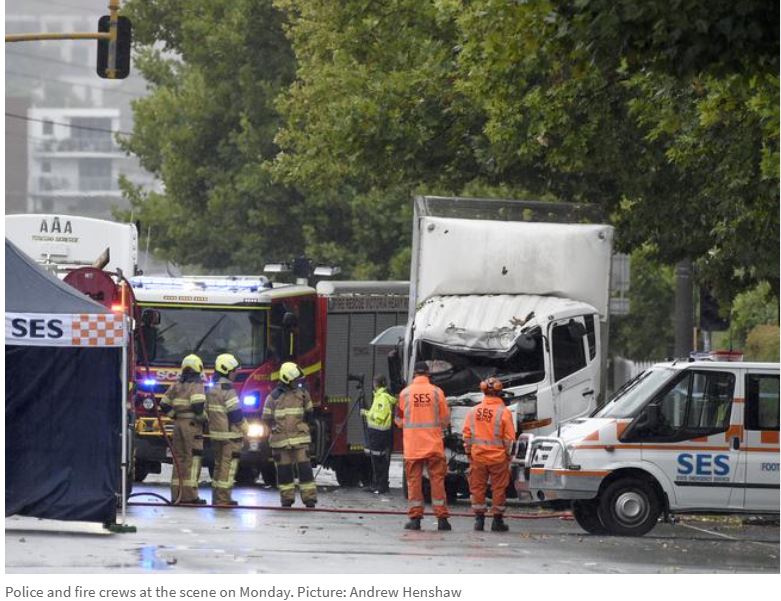
by CAA | Jan 8, 2025 | Investigations, Library, Media, Politics, Road Safety, Victoria Police Issues
A 67-year-old male driver lost his life when his small car was destroyed by a speeding truck.
The truck was allegedly stolen, and Police had failed to stop it using ‘stop sticks’.
Apart from the ‘stop sticks’ being old problematic technology, we need to look further as to why this life was wasted and what systematic failures contributed to the death.
The ability of police to intercept dangerous vehicles safely must be addressed, and new technologies capable of stopping a vehicle must be legitimately explored.
The CAA has long advocated for the introduction of the G-Tag (see https://caainc.org.au/the-g-tag-a-new-…community-safety/) to give Police the ability to disable a vehicle that poses an unacceptable threat to the occupants or the public more generally. Additionally, it will also reduce the danger to the police themselves, and that has to be a significant positive.
This technology will also play a critical role in any upsurge in terrorism.
Of equal importance, the circumstances of this crash and waste of life can be put squarely on the shoulders of the judiciary. Not the government but the judiciary.
It was reported that,
“A 40-year-old Deer Park man, who police allege was driving the truck, was taken to hospital with non-life-threatening injuries.
It was later revealed he was on bail for previous car theft and drug possession crimes and was due to face court in February after police charged him with another car theft, unlicensed driving and possessing drugs in November.”
If this life lost is not to be in vain, the establishment of nothing less than a Royal Commission to examine the role of the judiciary in these matters is well justified.
The accountability of the Judiciary is the point to be questioned, noting that in the lower courts, and in particular bail hearings, the presiding judicial officer is never named by the media. In contrast, the higher court Judges are regularly named as a matter of course. A legitimate form of accountability is lacking in the lower jurisdictions.
This lack of accountability, where the presiding officers can remain anonymous, must change so the public can know which judiciary members are responsible for bad outcomes.
The judiciary generally seems to hide behind the government, claiming they are only working within the laws the government provides. This is nonsense.
They must interpret the laws relevant to the circumstances of the matters before them.
An inquiry would expose the folly of the infection of the judiciary by the failed theoretical strategy called ‘Restorative Justice’ and given the regular failure of courts to hold perpetrators to account and protect the public, that infection has reached epidemic proportions, and people are dying as a result.
The pendulum has swung too far in favour of the criminals, and the rest of the community is indeed paying a very high price – with their lives.
The CAA invites the Government and the Opposition to urgently meet with the CAA to explore the G-Tag issue.
It is now a matter of life and death.