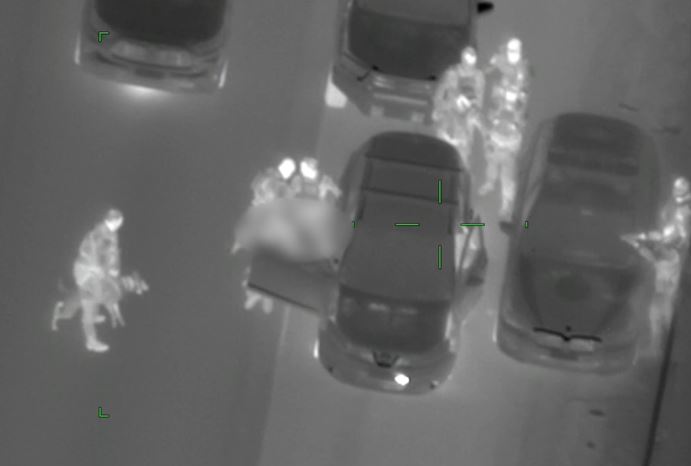
by CAA | Feb 11, 2026 | Library, Politics, Uncategorized, Victoria Police Issues, Violence, Youth Crime
Herald Sun Pic.
The Herald Sun article, 9th of February 12026, highlights the shocking statistics recently released by Victoria Police on this crime trend.
The numbers are important, but what matters most is the real impact on the victims.
Tough new laws introduced by the Government in 2016 have had no positive effect.
It is clear now that the habit of certain politicians making announcements without any intent of the problem being addressed or resolved. It is now turning out to be the mantra of the most recent decade of political leaders, as more and more announcements turn out to be just hollow rhetoric designed to impress the electorate, a veil for inaction.
These politicians who are highly shortsighted will pay a steep price for their recklessness.
It is now evident that hollow political policy announcements are a form of obfuscation. Exposed with regular monotony in the daily news over a wide spectrum of social issues lately. Carjacking is just another subject in a long line of false undertakings.
Politicians must be accountable, and not just at the ballot box.
And while politicians may revel in their effectiveness in deceiving the electorate, the number of victims keeps racking up as rapidly as the effectiveness of the courts decline.
The view that the problem is a Policing one is shallow and ill-informed. Although there are actions the Police can take, the real cause of the upswing in this crime is the Courts’ mismanagement of the perpetrators and the Government’s failure to hold the Courts to account and ensure that perpetrators suffer real consequences sufficient to discourage further offending.
Until the Courts accept, or are directed to accept, accountability for the problems predominantly caused by Juvenile offenders, then and only then will we see improvements in the management of this and other serious Juvenile crime.
The Government has many levers at its disposal and must start to use them.
All the sentencing initiatives are of no use if the judiciary can find ways to circumvent them.
Until the Judiciary starts to put the community and the victims first, we will see no meaningful change, yet the Government has the power to legislate the hierarchy of considerations in sentencing as an adjunct to the sentencing guidelines.
Unfortunately, the guidelines have morphed into instructions that may not reflect the will of the legislators but can be used by Jurists to administer the law in a manner conducive to their social reform agenda.
Putting the welfare of an individual perpetrator ahead of the community at large and the victims is an anathema to good jurisprudence.
The solution is not easy and does not rest solely with the Courts, although their role is pivotal; there is a pressing need to identify mechanisms to engage with the criminal cohort to raise awareness of the risks they face from their behaviour and to promote change.
Although no criminal will commit a crime knowing they will be caught, even with the chances of being caught extremely high, there is no accounting for stupidity, ignorance, or both.
The cost to the community and Government of this crime is horrendous, so spending on communicating and promoting a clear and consistent message that crime doesn’t pay will have a positive impact.
Particularly, if the perpetrators are belittled for their behaviour in the view of their peers by a simple slogan. “Don’t be a bloody idiot”, promoted by the media and the Courts.
Language they would understand and a label they would abhor.
The Community Advocacy Alliance (CAA) is funded by the members and the generous donations from the public. Please consider donating to help us continue to work for you. Simply click on the button below. Thank you - your generosity is very much appreciated.

by CAA | Feb 10, 2026 | Library, Uncategorized, Victoria Police Issues, Violence
Picture Herald Sun
This heading says it all.
This is the only reasonable explanation for the wanton danger Police are placed in by the Governments and Police Administrations.
Shocking photos emerged today, the 10th of February 2026, in the Herald Sun, of the violent clash between police and demonstrators in New South Wales.
Whilst the reports indicate that the Victorian demonstrations were less violent, it was nevertheless clear that they infringed Victorians’ rights by blocking access to infrastructure and impeding free movement throughout the city.
The police seemed powerless to address such a large number.
But the major issue is why police administrations and Governments continue to fail to provide the necessary legislation, supported by the Courts, and the equipment for Police to effectively control crowds, irrespective of the crowd’s collective cause.
We are sick and tired of watching reports of Police being pummelled with many ending up in hospital as a result of criminal elements attending these demonstrations.
Politicians and Police administrations wringing their hands and talking tough do not heal Police bruises or mend broken bones.
Let’s hope our advocacy yields results before a member does not return to their family after a demonstration.
The CAA has long advocated the introduction of Water Cannons to take the load and minimise the risk to police who are there doing their job for all citizens.
These vehicles are used effectively not only to dampen demonstrators’ enthusiasm but also to move them on, where required, with minimal risk to police on foot.
It is very disappointing that the Police Associations in Australia have remained largely silent, at least publicly, on the dangers their members face.
In any other sector of a workplace where the safety of the workers was not paramount, and the dangers were not mitigated, there would be ‘hell to pay’, with immediate industrial action and a string of cases before WorkCover.
In this case, Police lodging WorkCover claims would clog the system for years.
The provision of suitable water cannons, which should be capable of being built in Australia, supporting local manufacturing, with the already-proven Bushmaster modified for crowd-control use, would fit the bill.
The key to using these smaller, highly manoeuvrable, and robust vehicles, rather than the larger-capacity vehicles used overseas, is to operate them in tandem so one can be refilled while the other continues to respond.
The presence of two of these vehicles near gatherings would be an effective and cheap deterrent, as the number of police deployed could be substantially reduced.
Many people who appear in media reports would respond positively to the sight of these vehicles in the vicinity and avoid a confrontation.
Prevention is the ultimate Policing weapon.
But we are still at a loss as to who is blocking the equipping of the Police and continually causing Police to be put into danger.
Those responsible should stand alongside the Police at the next demonstration and be exposed to the challenges the Police must continually contend with.
Australia used to have this equipment, and speaking with a former head of an interstate Police Force, who disposed of their Water Cannon and did so on the basis that they were maintaining kit that was never used.
Perhaps because they had the kit, the deterrent effect did the job, preventing police officers from becoming victims of violence.
The Community Advocacy Alliance (CAA) is funded by the members and the generous donations from the public. Please consider donating to help us continue to work for you. Simply click on the button below. Thank you - your generosity is very much appreciated.

by CAA | Dec 8, 2025 | Family Violence, Library, Uncategorized, Victoria Police Issues, Violence
A recent article we published by Bettina Arndt shines a light on a subject that police administrations have avoided for a very long time, from three critical perspectives.
Primarily, the adverse impact on genuine victims of domestic violence and secondly, the effect on police themselves, plus the overall impact on the community that suffers from reduced police capacity to deal with many other community issues that are far more serious than two people working through a period of acrimony.
The first change that must be made is to categorise these conflicts as a two-tier response.
For disputes involving violence, and the police can establish evidence to support any claims of Domestic Violence (DV), then that is a Level 1 issue. If there is no corroborating evidence of violence, then the matter is Domestic Acrimony (DA) Level 2. Only in exceptional circumstances is an incident reported to the Police to be categorised as Level 1 without some mitigating evidence.
There needs to be an urgent change in the language around these matters so that valuable Police resources are not wasted.
Police who are sworn to do their duty can exercise discretion in all matters and must therefore be able to decide the category of the incident under investigation. Unless there is compelling and additional evidence forthcoming after the police’s on-scene classification, that classification must not be altered by administrative processes.
This interference in the front-line Police function must not occur.
The problems we as a community face with these issues start with the title ‘Domestic Violence’ or DV.
This has now morphed into any dispute between any individuals in a domestic setting. The ‘Violence’ part of the title is the problem and creates the false illusion that every dispute involves Violence, and that is an abhorrent manipulation of the facts.
It has also created a false narrative around the problem, leading to preconceived perceptions treated as fact, unchallenged and therefore untested, resulting in poor justice outcomes for all parties.
Amongst the most detrimental aspects to actual victims of violence is that allegations in the domestic setting are accepted, and whatever the complainant states is taken as fact without challenge.
When it is obvious to attending Police that there are doubts about the allegations (lack of supporting evidence of the claims made), they should be able to exercise their discretion and downgrade the call to the Domestic Acrimony (DA) in the initial stage of Police intervention.
The police function is to preserve the peace and bring criminals before the courts. Not applying sanctions to individuals on untested allegations, which the current approach requires.
Police are cognisant of the Law and the legal framework they work within/requiring them to perform their task in accordance with protocols that effectively deny them the ability to investigate a matter before applying sanctions on the alleged aggressor, is counterintuitive.
Unless there is evidence to support the claims made by either party alleging Violence, the guilt requiring any sanction must be resolved by the Courts on the evidence, not by the Police.
If that means introducing a 24/7 Family Court system in the interest of Justice, this must be done.
There are many nuances to the issue of responsibility and function of policing, resolving Domestic conflict should not be one of them. We don’t expect police to repair a car that is stolen or a window broken by criminal activity, nor should they act as counsellors.
The function of conciliation, or resolving a dispute, is within the purview of other professionals who are trained and capable of achieving an outcome for the parties involved.
The current approach of referrals, etc, does little to help resolve the issues between the parties. The clinicians are operating in a void, lacking important information, only gained by dealing with these people at the time of the conflict, not days or weeks later, when both parties have had the chance to convince themselves of their role and ingrain the acrimony that exists, from their perspective, which may differ from the facts.
There has been an industry that has evolved to serve the needs of individuals involved in domestic issues. It is time that those in the industry ventured outside their offices and attended the scenes of Domestic dispute calls when they are happening, so they may have a better chance of understanding the reality. Their early intervention will lead to better outcomes for the participants.
There are serious doubts that the current system is working in the best interest of the parties and the community.
The following actions will help improve the current situation.
- Instigate a 24/7 Family Court system available to Police to refer matters they are dealing with for Court-imposed directions and sanctions.
- Family Courts must have the capacity, within certain circumstances, and where warranted, issue a direction that an electronic monitoring device be worn by the alleged aggressor (Ankle bracelets).
- If a party declines to follow the court-imposed rules, the courts can upgrade the case to Level 1 and, with that, apply more restrictive sanctions.
- Add the title of Domestic Acrimony (DA) as a level 2 event as opposed to Domestic Violence (DV), a level 1 priority.
- Review the administration required by the Police for a level 2 incident, and only the essential components applied.
- In all Domestic incidents, Police must only complete the administration that is relevant to the Police function, and if other agencies require information, then they must collect it.
- As a matter of course, where a complainant provides false evidence in reporting an incident, they must be prosecuted for ‘making a false report’. A warning must be issued about this possibility before any action is taken.
- The issue of domestic violence or acrimony involving Police members must be reviewed. The dispute, when private and not Police-related, should be treated as any other private incident.
- Critically achieve early intervention by professionals.
- Calls to Police for assistance must be triaged by professionals into either of the two categories to give the Police a chance to respond according to need.
- Develop an advertising campaign to inform people of the consequences of domestic disputes getting out of hand or becoming violent. (Currently, no effort is made regarding prevention.)
- Introduce DART (Domestic Acrimony Response Teams). A response capacity following the very effective CATT teams model used by Psychiatric Units in hospitals throughout Melbourne. Achieving a DART response would reduce the likelihood of Level 2 Incidents from escalating to Level 1.
- Require agencies working in the domestic space to provide resources to create a 24/7 Domestic Acrimony Response Team (DART).
- The priority for DART is to attend any domestic situation where children are present to minimise the impact on the children and ensure their safety.
Anybody who has witnessed CATT in action will attest to the successes in their ability to de-escalate people suffering psychotic episodes, and there is no question that in a highly charged domestic situation, the participants in a Domestic dispute can be having a psychotic episode without necessarily suffering from a Psychiatric disorder. Therefore, there may be a crossover with the CATT function.
The CATT Teams achieve better outcomes for patients and their families than the Police can ever hope to, or be expected to accomplish in the psychiatric space, and those outcomes would flow over to the Domestic space.
Police can’t be trained up to perform the tasks that the professionals have mastered over many years, and neither should they, as the normal scope of Police work, enforcing the Law, is not conducive to a conciliation function.
The function of the Police in separating or reducing physical violence as it happens is a counterintuitive skill set compared to conciliation.
Victoria Police attend over 100,000 family violence incidents annually, with the most recent data showing 102,082 incidents were recorded in the 12 months ending December 2024.
This equates to police attending a family violence incident around every six minutes in Victoria. Or about 300 per day, which equates to approximately 600 police taken from other duties per day, but this does not include the many hours the members must undertake to follow up on administrative work post-event.
The number of reported incidents has been steadily increasing over the past decade, partly due to increased public awareness and improved police recording practices ( which translates into a growth of paperwork of questionable necessity).
The issue revolves around the Police role and the unnecessary (for policing) functions foisted on them. If there is no risk or minimal risk of violence, then the Police should get out of the way and let professionals do their job.
Box-ticking administration serves no good purpose and is not a good use of Police resources; these tasks can probably be done over the phone by another agency. Police can forward the participant’s phone number to the attending agency for attention.
Activists involved in this area have been agitating for the police to undertake more de-escalation and other psychiatric training to handle domestic situations.
When fists are flying, de-escalation is moot.
We would argue that the Police need to stick to their knitting, and that all the experts and others who make up the support industry for Domestic incidents get out of their cushy nine-to-five work environments, to get where the rubber hits the road, and take the load off the Police.
This will have an enormously positive impact on the frequency and seriousness of Domestic violence incidents and improve the overall community compliance with the Law.
More importantly, it will have a very positive influence on the ability to achieve a settlement of the acrimony amongst parties between the ‘blow up’ and the attempt at resolution; time is the greatest enemy.
The chances of a resolution, or at least a workable peace, deteriorate rapidly as the parties’ attitudes become entrenched over time; early intervention is essential.
Circumstances for violent offenders do not change, with the exception that they can be brought before a Court much earlier than would be the case in other circumstances. Dealing with these individuals early also reduces the risks to the victim.
We are aware of a number of incidents where false allegations against Police in their Domestic setting have ended careers and seen innocent parties sanctioned severely without any recourse.
The number of Police officers who become involved in their own Domestic Acrimony is minuscule when viewed from the overall numeric size of the community (Over 100,000 DV incidents reported per annum), which raises an important question that demands action to review the status quo.
Comparing the number of Police falsely accused of violence to the number of civilians who have been processed for DV would suggest that the number of civilians who have been processed and sanctioned who are innocent must be truly staggering.
“It is better that ten guilty persons escape than one innocent suffer”
– Sir William Blackstone
The underlying principle is that convicting an innocent person is considered a far greater injustice than failing to punish someone who is guilty.

by CAA | Nov 30, 2025 | Family Violence, Illicit Drugs, Library, Politics, Uncategorized, Victoria Police Issues, Violence, Youth, Youth Crime
For many years, the issue of when a child can commit a crime has been quietly ticking away, but now the Government has stepped in, as they always do, and changed a system that had flaws; instead of fixing them, they have exacerbated them.
In 2024, the Government lifted the age of criminal responsibility, Doli Incapax, to 12 years, meaning children aged 10 and 11 could no longer be held criminally responsible.
Now the chickens have come home to roost with an 11-year-old armed with a kitchen knife, an edged weapon, and an imitation firearm, entering another classroom at a Primary School and injuring an 8-year-old child and a teacher with the knife. As reported in the Herald Sun, 29th of November 2025.
The 11-year-old apparently stormed a grade 1 classroom, making threats.
If that is accurate, it is tough to argue that the 11-year-old didn’t know his action was criminal.
The aggravating factor is that the 11-year-old was carrying a kitchen knife, so he was undoubtedly intending to storm another class, demonstrating an element of planning and premeditation well before the incident.
This was not some schoolyard tiff that got out of hand, but a deliberate, thought-out attack.
The problem is not as narrow as dealing with a young child, but rather that the Courts need to play a role to ensure that the child is put on the right path.
Simply sending a child who has committed what would otherwise be a crime on their way without a hint of a sanction is tantamount to giving them a free ticket, rewarding bad behaviour.
In these circumstances, not only is the 8-year-old a victim, but so is the 11-year-old, a victim of a poor legislative approach to the handling of juvenile crime.
There is a desperate need, at a minimum, to revert to the age provisions previously in place, whereby children between 10 and 14 can only be charged if they understand the criminality they have committed, and if they do not, ask why not?
Removing the 10-year-old limit would be very positive for the child as well as society. Removing the lower restrictions to allow the courts to decide, on a case-by-case basis, and on the evidence, and independently resolve whether the doctrine of Doli Incapax applies in that particular case. This resolves the flawed one-size-fits-all approach.
This would allow the court to make orders to protect the child, if necessary, as well as test whether the child knew what they were doing was criminal.
There was once a provision for dealing with children who were likely to lapse into a life of vice or crime. It might be a good time to resurrect such a provision.
The development of our younger generation now makes them better informed and more mature than that of their peers 20 years ago, but we are raising the age of criminality rather than lowering it, which would be more practical.
Allowing anybody of any age, but particularly young people, a free ride to flaunt the law and commit heinous crimes, which this 11-year-old did, is a recipe for disaster, promoting the idea that crime is free from sanctions, which therefore loses its deterrent effect.
The chance of this 11-year-old ending up on the end of a machete is real; it will be sheer luck which end he ends up on.
We need to remember that a child of any age can swing an edged weapon – the weapon does not discriminate by age.
The legal concept of Doli Incapax is surely outdated. Ten-year-olds should have had four or five years of schooling. If they have not received education on the evils of criminal behaviour by then, it is a sad indictment of their parents and particularly of the education system.

by CAA | Nov 5, 2025 | Library, Uncategorized, Victoria Police Issues, Violence, Youth, Youth Crime
In our most recent article, “The 300 Club Phenomenon” at https://caainc.org.au/the-300-club-phenomenon/, the CAA has outlined the issues with the current approach to juvenile crime and what needs to be done to address them.
Setting out what drives the youth phenomena, the article identifies major causes and who is responsible for failures.
Fundamental to this piece is the impact of social cohesion failure.
Over the last 20 years, our society has been ruptured, changing it from a society that respects the variety of cultures and ethnicities of its population to one that is fractured along tribal lines.
Respect for the family is continually undermined by governments hell-bent on destroying the fabric of the family, as if it competes with it.
Respect has all but evaporated, and that is founded in the application of the laws of this State and overzealous governments creating cultural divisions by promoting individual tribes, blatantly for political reasons rather than what is best for our society, coupled with overt support for fringe groups not representative of the overall community but focused on small sectors of it. These highly visible and vocal activist groups are not representative of the community as they would have you believe, but are an anathema to it.
Australia, and in many ways, Victoria led the way in creating a cohesive society where new and old groups were treated with respect. However, today, state leaders are pitting one group against another, and this manifests most vividly in our Youth.
We have lived in harmony with other cultures, but today that harmony is being eroded from all directions, and it is worsening.
In the future, we predict that the fundamental building blocks of our society will continue to erode.
Among the areas under siege, the Courts are the most obvious and most vulnerable.
This vulnerability has been created from within the Court system itself, where activist justices work to erode the court’s power, all the while ignoring the realities of society and the victims.
Failing to read the room will be the Court’s demise.
The effect of these jurist activists is to render the legal system so ineffective that the Government will have no choice but to create more restrictive laws regarding the freedom and independence of the Courts, or otherwise, anarchy will prevail.
Further, the Courts have sidelined not only the victims in criminal matters but also the perpetrator’s family, abdicating them of any responsibility.
This is a critical failure, particularly in the management of juvenile criminals.
Most of the strategies favoured by activists is to attack the family, who must be cultivated to perform the critical task of guiding and or disciplining young people away from a life of crime. They see the family as the vulnerability, to destroying society.
There are, of course, families who nurture crime by either overt actions or sheer indifference; however, legislators must enact a penalty structure for parents whose children commit crimes. Hitting them in the hip pocket will be the most effective way to focus their minds on the parenting task.
Whether that is through reformation, distinct penalties, or a combination of both is moot; something must be done.
To rectify the issue, or at least put us on a path to recovery, we must rely on those justices who the activist agenda has not swayed to show leadership and, by example, highlight the weaknesses and or activism of their fellow judges by issuing penalties that highlight the failures of others; Leadership by a new, higher standard.
We, however, fear that until we have a government that focuses on governing for everyone rather than pet projects based on ethnicity (and votes), we are unlikely to see improvements anytime soon.
Activism is not confined to the Courts but high-profile, unlawful, and violent demonstrations on our streets in pursuit of an activist agenda is a standout act of insurrection.
There is little hope of reigning in uncontrollable activities – without taking back control of our streets.
The government’s inaction on this issue is tantamount to acquiescing to the lawlessness, something a government cannot and should not do under any circumstances.
This is not about the content of any demonstration, as peaceful demonstrations are a right we all possess; it is about the lawlessness that must be given no quarter.
Unfortunately, and we would argue deliberately, the Public Service appears to be a hotbed of alternative activist activity, and the concept of providing impartial advice to government ministers on policy matters has been lost; the Public Service has morphed into an arm of the government’s ideological agenda without a discernible gap to support the separation of powers concept and foundational to our democracy, which is fast becoming a myth.
Another area impacting our youth is education.
Schools are failing in their function to educate, and they cannot claim otherwise when they routinely send children home (with or without parental knowledge) rather than addressing any indiscretions by pupils in school, as was historically the case.
Moreover, the Schools are, as a matter of course, sidelining parents in the development of their children.
They have claimed a mantle of knowing what is best for a particular child or children in general and acting accordingly, often to the deliberate exclusion of parents. This approach aligns with the activist agendas in several social areas.
Children as young as the Preparatory year are being exposed to socially divisive issues as deliberate conditioning—a manipulation of young minds who should be educated, not manipulated, on an activist community construct.
The real damage, however, is the harm to the family cohesiveness, where the views imposed on young children may conflict with those of their parents, either culturally or otherwise.
Parents have little hope of influencing the development of children when the schools act as influences on activist agendas. This is particularly true of some ethnic families, aggravated by English not being their first language or the Australian culture being dissimilar to their own.
It is no wonder that there is an overrepresentation in the crime statistics of cultures, as arrivals in Australia in recent years have had their parental role subordinated..
The combination of these factors has eroded the concept of accountability within social cohesion, and inaction every day deepens the demise of the State and its residents.
Addressing all these issues is now a matter of urgency.

by CAA | Oct 23, 2025 | Library, Politics, Uncategorized, Violence
Recently, the CAA was invited to see the new scanning device for edged weapons being considered for introduction into the Police arsenal.
The ‘Weapon Wand’ is compact, seems easy to use, and comes with a holster for the Police Utility belt. More on that later.
The device is impressive and does not require the operator to bring it into contact with the person being scanned.
When it detects metal, it subtly warns the operator to avoid embarrassing the person scanned with non-target metal objects.
With the high number of edged weapons in the community, particularly circulating amongst youths, this piece of kit is essential.
When they are introduced, the announcement must not quote numbers of units, and nominating specific locations will also be counterproductive to the deterrent effect the existence of the wands may achieve.
The idiocy of advertising geographical locations where the Police had more powers for specific times was the sort of foolish strategy that either showed the designers’ ignorance and incompetence or was deliberately set up to fail.
Perpetrators are generally spontaneous in many of their criminal endeavours, so rigid controls over a police response defy logic. Waiting for a newspaper advertisement to announce a police operation, rather than giving police the flexibility to respond as required, is plain stupid.
The second aspect of these new devices relates to their actual use by the Police.
Over a number of years, based on perceived and some real threats, Police in this State have been continually equipped with paraphernalia allegedly designed to equip them better to do their job or protect themselves and the community.
The reality of Policing is that you cannot eliminate risk; you can only reduce it.
The problem with the overload of equipment that the police must carry has reached the stage where even the fittest police member would start to tire and be less effective from simply carrying all their gear.
The Police utility belt is festooned with equipment, some of it essential, and some that will be highly likely never be used, but has to be carried just in case.
Adding the ‘Weapon Wand’ exacerbates the problem.
Perhaps the Weapon Wand can be assigned to vehicles, not the member, unless they are on specific duty. In that case, pepper spray and O/C spray could be shelved for some members in a foot patrol detail, and the “Weapon Wand” could be assigned to a member.
However, these are operational issues and, following the new Chief Commissioner’s philosophy, the decisions regarding the deployment of these devices must be left to the front-line Supervisor. This is essential so that, as circumstances frequently change in an operation, the supervisor on the ground is best placed to make decisions.
We are advocating that these wands are not necessary for all police, but they are required in sufficient numbers to handle any operation or patrol managed by Section Sergeants.
The Force does not have to go into internal conniptions, writing new and detailed instructions on the parameters of their application and how they are to be deployed, tying up Police executives to prepare, when the best decisions are made at the sharp end.
However, legislation to employ wands without restriction at the discretion of the police is essential.
The Force will have to get used to this approach as the new CCP trims the executive function of the Force, forcing more decisions down where they should be.