by CAA | Nov 30, 2025 | Family Violence, Illicit Drugs, Library, Politics, Uncategorized, Victoria Police Issues, Violence, Youth, Youth Crime
For many years, the issue of when a child can commit a crime has been quietly ticking away, but now the Government has stepped in, as they always do, and changed a system that had flaws; instead of fixing them, they have exacerbated them.
In 2024, the Government lifted the age of criminal responsibility, Doli Incapax, to 12 years, meaning children aged 10 and 11 could no longer be held criminally responsible.
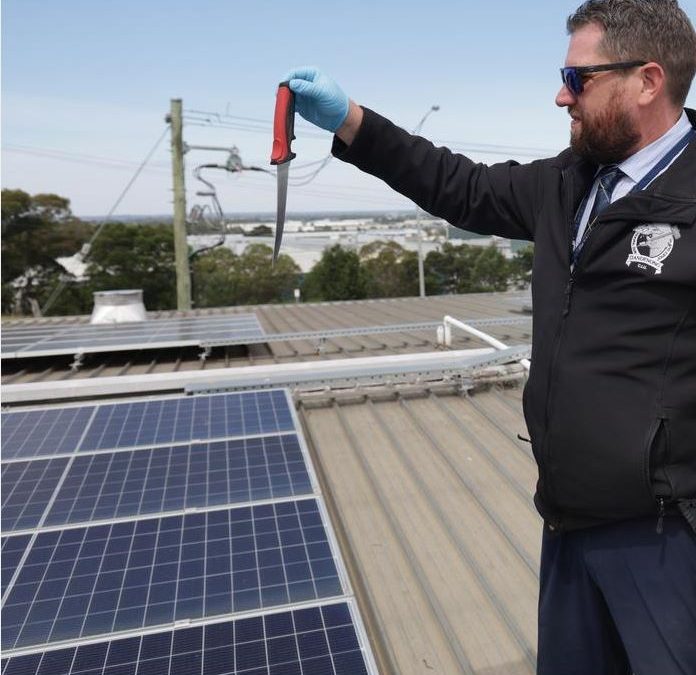
Now the chickens have come home to roost with an 11-year-old armed with a kitchen knife, an edged weapon, and an imitation firearm, entering another classroom at a Primary School and injuring an 8-year-old child and a teacher with the knife. As reported in the Herald Sun, 29th of November 2025.
The 11-year-old apparently stormed a grade 1 classroom, making threats.
If that is accurate, it is tough to argue that the 11-year-old didn’t know his action was criminal.
The aggravating factor is that the 11-year-old was carrying a kitchen knife, so he was undoubtedly intending to storm another class, demonstrating an element of planning and premeditation well before the incident.
This was not some schoolyard tiff that got out of hand, but a deliberate, thought-out attack.
The problem is not as narrow as dealing with a young child, but rather that the Courts need to play a role to ensure that the child is put on the right path.
Simply sending a child who has committed what would otherwise be a crime on their way without a hint of a sanction is tantamount to giving them a free ticket, rewarding bad behaviour.
In these circumstances, not only is the 8-year-old a victim, but so is the 11-year-old, a victim of a poor legislative approach to the handling of juvenile crime.
There is a desperate need, at a minimum, to revert to the age provisions previously in place, whereby children between 10 and 14 can only be charged if they understand the criminality they have committed, and if they do not, ask why not?
Removing the 10-year-old limit would be very positive for the child as well as society. Removing the lower restrictions to allow the courts to decide, on a case-by-case basis, and on the evidence, and independently resolve whether the doctrine of Doli Incapax applies in that particular case. This resolves the flawed one-size-fits-all approach.
This would allow the court to make orders to protect the child, if necessary, as well as test whether the child knew what they were doing was criminal.
There was once a provision for dealing with children who were likely to lapse into a life of vice or crime. It might be a good time to resurrect such a provision.
The development of our younger generation now makes them better informed and more mature than that of their peers 20 years ago, but we are raising the age of criminality rather than lowering it, which would be more practical.
Allowing anybody of any age, but particularly young people, a free ride to flaunt the law and commit heinous crimes, which this 11-year-old did, is a recipe for disaster, promoting the idea that crime is free from sanctions, which therefore loses its deterrent effect.
The chance of this 11-year-old ending up on the end of a machete is real; it will be sheer luck which end he ends up on.
We need to remember that a child of any age can swing an edged weapon – the weapon does not discriminate by age.
The legal concept of Doli Incapax is surely outdated. Ten-year-olds should have had four or five years of schooling. If they have not received education on the evils of criminal behaviour by then, it is a sad indictment of their parents and particularly of the education system.

by CAA | Nov 5, 2025 | Library, Uncategorized, Victoria Police Issues, Violence, Youth, Youth Crime
In our most recent article, “The 300 Club Phenomenon” at https://caainc.org.au/the-300-club-phenomenon/, the CAA has outlined the issues with the current approach to juvenile crime and what needs to be done to address them.
Setting out what drives the youth phenomena, the article identifies major causes and who is responsible for failures.
Fundamental to this piece is the impact of social cohesion failure.
Over the last 20 years, our society has been ruptured, changing it from a society that respects the variety of cultures and ethnicities of its population to one that is fractured along tribal lines.
Respect for the family is continually undermined by governments hell-bent on destroying the fabric of the family, as if it competes with it.
Respect has all but evaporated, and that is founded in the application of the laws of this State and overzealous governments creating cultural divisions by promoting individual tribes, blatantly for political reasons rather than what is best for our society, coupled with overt support for fringe groups not representative of the overall community but focused on small sectors of it. These highly visible and vocal activist groups are not representative of the community as they would have you believe, but are an anathema to it.
Australia, and in many ways, Victoria led the way in creating a cohesive society where new and old groups were treated with respect. However, today, state leaders are pitting one group against another, and this manifests most vividly in our Youth.
We have lived in harmony with other cultures, but today that harmony is being eroded from all directions, and it is worsening.
In the future, we predict that the fundamental building blocks of our society will continue to erode.
Among the areas under siege, the Courts are the most obvious and most vulnerable.
This vulnerability has been created from within the Court system itself, where activist justices work to erode the court’s power, all the while ignoring the realities of society and the victims.
Failing to read the room will be the Court’s demise.
The effect of these jurist activists is to render the legal system so ineffective that the Government will have no choice but to create more restrictive laws regarding the freedom and independence of the Courts, or otherwise, anarchy will prevail.
Further, the Courts have sidelined not only the victims in criminal matters but also the perpetrator’s family, abdicating them of any responsibility.
This is a critical failure, particularly in the management of juvenile criminals.
Most of the strategies favoured by activists is to attack the family, who must be cultivated to perform the critical task of guiding and or disciplining young people away from a life of crime. They see the family as the vulnerability, to destroying society.
There are, of course, families who nurture crime by either overt actions or sheer indifference; however, legislators must enact a penalty structure for parents whose children commit crimes. Hitting them in the hip pocket will be the most effective way to focus their minds on the parenting task.
Whether that is through reformation, distinct penalties, or a combination of both is moot; something must be done.
To rectify the issue, or at least put us on a path to recovery, we must rely on those justices who the activist agenda has not swayed to show leadership and, by example, highlight the weaknesses and or activism of their fellow judges by issuing penalties that highlight the failures of others; Leadership by a new, higher standard.
We, however, fear that until we have a government that focuses on governing for everyone rather than pet projects based on ethnicity (and votes), we are unlikely to see improvements anytime soon.
Activism is not confined to the Courts but high-profile, unlawful, and violent demonstrations on our streets in pursuit of an activist agenda is a standout act of insurrection.
There is little hope of reigning in uncontrollable activities – without taking back control of our streets.
The government’s inaction on this issue is tantamount to acquiescing to the lawlessness, something a government cannot and should not do under any circumstances.
This is not about the content of any demonstration, as peaceful demonstrations are a right we all possess; it is about the lawlessness that must be given no quarter.
Unfortunately, and we would argue deliberately, the Public Service appears to be a hotbed of alternative activist activity, and the concept of providing impartial advice to government ministers on policy matters has been lost; the Public Service has morphed into an arm of the government’s ideological agenda without a discernible gap to support the separation of powers concept and foundational to our democracy, which is fast becoming a myth.
Another area impacting our youth is education.
Schools are failing in their function to educate, and they cannot claim otherwise when they routinely send children home (with or without parental knowledge) rather than addressing any indiscretions by pupils in school, as was historically the case.
Moreover, the Schools are, as a matter of course, sidelining parents in the development of their children.
They have claimed a mantle of knowing what is best for a particular child or children in general and acting accordingly, often to the deliberate exclusion of parents. This approach aligns with the activist agendas in several social areas.
Children as young as the Preparatory year are being exposed to socially divisive issues as deliberate conditioning—a manipulation of young minds who should be educated, not manipulated, on an activist community construct.
The real damage, however, is the harm to the family cohesiveness, where the views imposed on young children may conflict with those of their parents, either culturally or otherwise.
Parents have little hope of influencing the development of children when the schools act as influences on activist agendas. This is particularly true of some ethnic families, aggravated by English not being their first language or the Australian culture being dissimilar to their own.
It is no wonder that there is an overrepresentation in the crime statistics of cultures, as arrivals in Australia in recent years have had their parental role subordinated..
The combination of these factors has eroded the concept of accountability within social cohesion, and inaction every day deepens the demise of the State and its residents.
Addressing all these issues is now a matter of urgency.

by CAA | Oct 27, 2025 | Library, Uncategorized, Victoria Police Issues, Youth, Youth Crime
It has been estimated that around 300 young people in this state are responsible for the overwhelming majority of violent crimes, particularly in Melbourne.
While some estimates refer to just 50, that only refers to the very worst and prolific offenders in the 300 group.
The ability to accurately quantify criminals is fraught, as by the nature of criminal activity, it can wildly fluctuate, and different measurements throw up seemingly contradictory assertions.
Suffice to say, and on this issue, there is one overriding consensus: Victoria is faced with a severe crime problem, the like of which has never been seen before.
And while our politicians equivocate over whether we have a crime problem or not, there are well over 300 victims who can attest from lived experiences, except some who are no longer with us, that there is a crime epidemic.
The problem we are now facing is that those who exercise influence over our lives see the solution in pouring resources into the 300 group to change their ways and gain respite for the community, well-intentioned, but a totally wrong-headed solution that will see us reporting on the 400 club in 12 months.
The wrong focus will increase the recidivist population, not reduce it.
To change these perpetrators, the first thing needed is a desire for criminals to change for the better, but that just isn’t going to happen because the life they currently lead is better, in their minds, so why would they change? Add to that the lack of an effective deterrent for criminal behaviour, and hope for change is an anachronism.
The battle some would rage is lost without firing a shot.
The reality is that we will inevitably encounter incorrigible criminals in the youth space, regardless of what we do. Hence, strategies to reduce are the best we can hope for; it is worth noting that during the late 1970s, the Turana Youth detention centre held 200 youths. So the Youth problem is not really new.
The difference then is that most of the recidivists were in detention.
A large proportion of those went on to become career criminals, and many did not survive to make old bones, many at the hands of their contemporaries.
Comparisons between those in detention and those in the 300 group must be based on objective care; however, the trends are irrefutable.
As of the June quarter 2024, an average of just 88 juveniles were in detention overnight in Victoria, see,
Australian Institute of Health and Welfare https://www.aihw.gov.au
This may go some way toward explaining why we have such a vast number of incorrigibles on our streets, creating mayhem.
With Turana holding, in 1979, 200 youths out of a state population of about 3.5 million. Today, with 278 juveniles averaging just 88 in detention per night and a population of 7.1 million, the trend is evident.
We should be looking at somewhere north of 4-500 youths in detention to account for population growth.
The figure of 300 incorrigibles doesn’t look that bad except that they are on our streets creating more mayhem rather than being incarcerated to protect the citizens.
A popular theory amongst some is that inside every thug is a decent human being; all we need to do is tap into that being.
No scientific or practical experience supports this, unless you count the thugs growing out of the phase in a few years—if they live that long—which is wishful thinking; unfortunately, that does nothing for the thugs’ victims until they do.
The reason we have ‘the Club’ is that the Courts have generally taken the view that the rehabilitation of the worst is possible and that putting these criminals in jail will make them worse, but the question that is never answered is: worse than what?
They are already violent murderers, machete-wielding assailants and gang leaders.
The reality is there will and always has been a hardcore of juvenile offenders who continually run amok until a Judicial officer with wisdom decides to protect the community and lock them up.
The government must couch legislation to direct the Judiciary in this endeavour.
It is not just refusing bail but handing out severe penalties to remove their power base.
There is no magic-bullet solution to this problem, no matter what is pontificated; the only practical and effective way to minimise the mayhem caused is to take the hardcore off the streets and reduce the number of younger children who are ‘feeders’ that maintain the power base of the club members.
That should be our total focus: prevention.
Understanding what motivates these thugs is essential,
- Notoriety and bragging rights, fed by the Justice revolving door or justice without accountability.
- Exercising leadership and cohesive control over other youths who should be our target. Young people are aspirational, wanting to emulate those people whom they judge as heroes or role models. Harmless enough unless that hero is a thug, so attacking the thugs, notoriety must be a primary strategy.
- The buzz and excitement, another harmless trait; however, when boredom evolves, the excitement of a more challenging activity becomes a magnet, and crime provides that outlet.
- Being free to choose whatever and whenever they want to do it. Freedom is reasonable but needs to be tempered with accountability for behaviour that affects others. Young people not being held to account is a Justice failure, promoting more antisocial behaviours.
- A sense of achievement. Aspirational achievements can be a good thing for youth and promote personal development, but essentially, where that manifests as criminal behaviour, it is essential to demonstrate to the youth that they have failed, not achieved. Walking from the court without a penalty feeds the negative aspect of this trait.
- Answering to no one, this is sometimes a myth that young people exploit because if they are not complying with society’s rules, there is no doubt they will be answering to other members of the criminal fraternity.
- Exercising power over victims, A very worrying behaviour if detected in a
relatively minor crime, it is a good indicator that this trait will evolve over time to become violent. Victims usually can’t fight back, so young thugs are motivated to exercise control by fear, and when that no longer works, a gradual increase in the severity of the violence to satisfy their power lust is inevitable.
- Beating the system plays an important role; thumbing their nose at the legal system reinforces all the other traits with their peers. Irrespective of what the adjudicating jurist may say or what the legal intricacies are of a court appearance by a thug, as they walk out the door, they have beaten it. The Jurist may not see it that way, but that doesn’t matter, as the Court has provided the power to the thug. The lectures from the bench given to thugs are just white noise and serve no practical purpose other than to enhance the bragging rights of the thug and perhaps gain some notoriety in tomorrow’s paper for the Jurist.
Restorative Justice is a major driver of this failure, as it has been allowed to infect the Judiciary, and the latest instructions to magistrates hearing bail applications show just how unhinged this concept is.
The ‘Bail Bench Book’, updated by the Judicial College of Victoria on October 3, instructs decision makers that they should continue to “impose the minimum intervention required” on accused young offenders.
The guide states: “A child, especially an Aboriginal child, should be released on bail, with conditions, wherever possible.
“Of course, there is a risk this will not succeed, or worse, but it can be a risk worth taking in the name of community safety via recovery and rehabilitation in the long run.”
What is outrageous in these instructions is the apparent laissez-faire attitude the Judicial College has towards the victims these youths prey on.
How dare they presume that the ‘risk worth taking’ to the potential victims is acceptable?
That is not justice by any stretch, and it is noteworthy that it is not the authors of this guidance who are taking the risk, it is the community..
What can be done to redress the issue?
The way we have dealt with youth thus far is an abject lesson in what not to do.
Role of the Courts – The Courts must return to their intended role and not try to be social engineers. In other words, stick to their kitting, which they are capable of doing very well.
Role of Schooling –What is absolutely beyond reproach is that young people who remain at school are far more likely to succeed and avoid a life of crime than those who do not.
The argument that granting bail enables the kids to attend school is an absolute rubbish argument. One of the primary reasons the child is in trouble in the first place is school non-attendance.
Schools must change their ways – When we have schools that would rather send the kids home to avoid dealing with behavioural issues, in the flawed belief that homeschooling is somehow beneficial.
Inevitably, those misconceptions dramatically increase our crime rate and the loss of those valuable assets as future contributors to our community —the kids.
The last thing that should happen is that they are sent home from school because most parents have to work to survive, and children not under supervision will not conform.
If that is not a receipt from crime, I don’t know what is.
This practice must stop, and schools must devise ways to discipline children within the school space. It wasn’t that long ago that schools did precisely that, so the solution needs to be resurrected.
The community first, not the thug. – Children who commit serious and persistent crimes must be incarcerated to protect the community and teach the child accountability for their behaviour.
The detention centres must focus on education so that children who are incarcerated cannot avoid structured education.
The argument is often that locking kids up will make them worse; however, the institution must address this issue and find innovative ways to manage juveniles – a reward-for-good-behaviour rather than a reward-to-achieve-good-behaviour philosophy should underpin its management philosophy.
Employment for juveniles – Rather than kids marking time at school, our young people entering the workforce must be revised.
The aspiration of parents for their children to achieve higher academically than they did is not a harmful trait; however, the pendulum has swung too far, creating unrealistic social pressure on families, particularly the children.
To succeed in life, education levels are only part of the equation and are not a panacea for success.
Whether a child is capable of joining the workforce is a matter that the market can determine entirely. An employer will not employ even a junior if they are not confident they can make a valuable contribution to the enterprise.
The minimum age must be reduced considerably.
The practice of raising the ages of accountability or other age-related restrictions must be pragmatically reviewed, and there is a strong argument for lowering them.
A young person of today is far more socially and physically developed than their counterpart of 30-40 years ago, when many of these restrictions were imposed. Just one metric—the average height of young people today—is a strong indicator that there has been a change.
A 12-year-old was historically too young to be employed. Still, today, they are generally better able to contribute to the workforce—a better alternative than wasting time at home (if they stay there) when they could be learning productive life skills and gaining practical experience, earning a wage. This concept would be applied on a case-by-case basis, determined by the market, as an employer is unlikely to hire someone who cannot provide a return on investment.
Youth initiatives – Traditionally, when we talk of new initiatives to manage youth, the perennial issue of boot camps is always at the fore.
We would oppose such a strategy because it is reactive and feeds into the thugs’ psyche, allowing them to use the experience not to mend their ways but to exacerbate them —bragging rights.
If a youth is so criminally misbehaved that they should go to a boot camp, they should be incarcerated, which should be the ultimate Boot Camp..
The most effective initiatives must be based on empirically measurable outcomes, and the most effective methods have not yet been devised, or if they were, have been discontinued.
There is a desperate need for all programs and youth initiatives to be identified and evaluated to avoid the wasteful use of resources and to promote and expand the effective ones.
The Parents
The role of parents when their children break the law creates a conundrum and has therefore never truly been debated.
Our view is that parents must accept responsibility, and that responsibility should be related to the child’s age. The younger the child, the more responsibility a parent or parents must assume.
Courts, on conviction of a Juvenile, must be given the role to determine reparation for the victims.
Moreover, the Courts must attach a value to the crime. A car stolen worth $2000 should be considered relevant in determining a thief’s penalty, to a car worth $100,000. That either car is, or is not, insured is irrelevant as the cost is borne not by the perpetrator but the community at large.
The liability to provide the determined amount must fall on the youth and their parents. if the youth is below working age.
Changes to Victoria’s child employment laws apply from 1 July 2023. … The Act applies to the employment of children under the age of 15.
In Victoria, the minimum age to work is generally 11 for certain delivery jobs, with most other work starting at 13 in retail and hospitality, though an employer must obtain a Child Employment Permit for anyone under 15.
Employment would be a good option for many delinquents, but the discipline to undertake work (Getting out of bed in the morning) is generally lost with many young people from a combination of weak family discipline, weak or no accountability for crime by the courts, and schools opting out of responsibility; the send-home policy.
Although much discussion is needed to come up with a definitive strategy around these issues, the introduction of reformation and accountability for parents will focus the minds of many parents when their child’s adverse behaviour hits their hip pocket.
The role of the Police –
Victoria Police historically had an enviable and proud record of proactive policing with a focus on youth; however, over the last decade or so, that record has been shattered by a series of Chief Commissioners who were incapable of seeing the larger picture, instead focusing nearly exclusively on reactive policing.
Although there has always been a commitment to youth and resources applied, most of the police work falls into the reactive side, much of it masked as proactive, indicating that police leaders didn’t understand the difference.
The strategies of Chief Commissioner Mike Bush translate into targeting young people effectively before they join the 300 club.
And that is precisely what needs to happen.
We are confident that Chief Commissioner Bush may turn out to be the leader who corrects the freefall into anarchy we are currently facing, not just in policing.
Conclusion
Like the educators, corrections, the judiciary, and the Police, all need to be creative and not too proud to resurrect initiatives that have been discarded, perhaps for ideological reasons or because managers want to be different.
Don’t spend wasted time reinventing the wheel; perhaps just modify it.