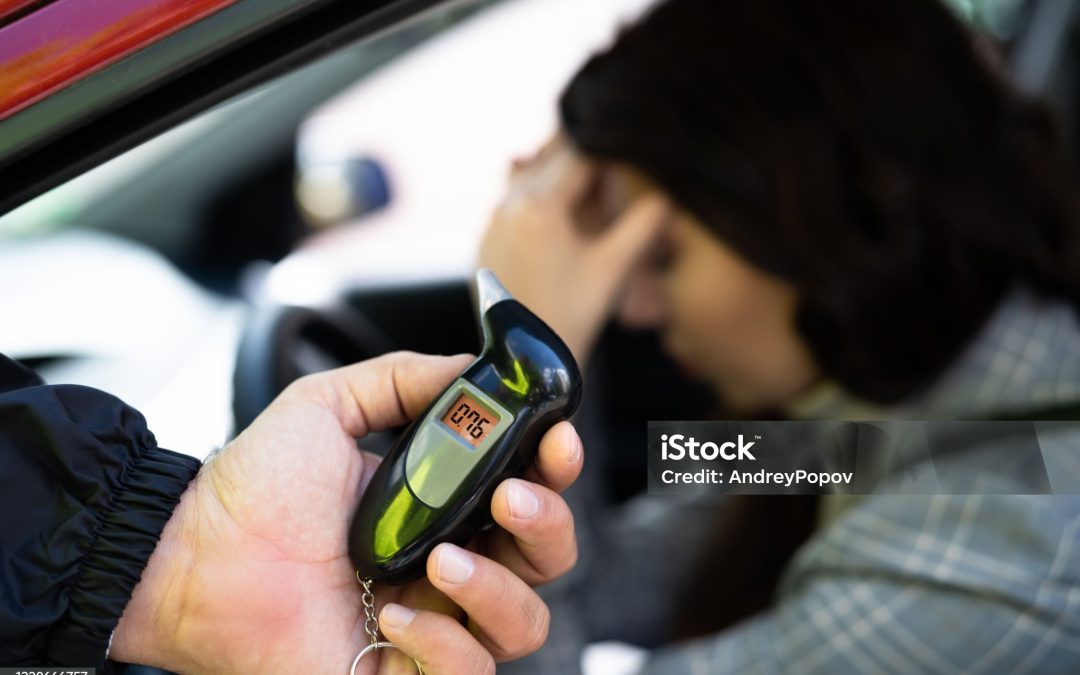
The Victorian Government’s decision not to test drivers for cocaine or heroin has sparked significant public concern and criticism, as reported in the Herald Sun on July 11, 2025.
The move comes despite rising community awareness and concern about drug-impaired driving, especially involving substances like cocaine.
The government has defended its stance by citing technical limitations in current roadside drug testing technology, whatever that means. These technical problems apparently do not exist or were overcome in other States that undertake the testing, which makes it sound suspiciously like a cop out.
Unlike cannabis, methamphetamine, and MDMA, which are detectable with existing saliva tests, cocaine and heroin require more complex and costly saliva testing. While this testing is commonplace in other States, Victoria remains the outlier.
Officials argue that expanding the testing regime would require substantial investment and legislative changes, which they claim are not currently feasible.
Perhaps the data they are relying on has a glaring anomaly. If they are not testing drivers involved in road crashes or randomly on drivers using our roads, then how do they know the problem doesn’t exist? Have they looked at the experience of other States?
An experienced Police Officer was quoted in the article as saying, “You’ve basically got to crash the car.” That member said the use of the drug was booming, as he was reminded on a recent night out at a licensed venue. “There were people snorting cocaine in a toilet cubicle next to me,” he said.
The lack of willingness to test for cocaine may well be motivated because that drug is the go-to choice for the fashionable elites, and of course, you cannot get busted driving home, as it is common knowledge that police can’t test for it.
Furthermore, the same non-testing regime exists for Heroin, and we have the ludicrous situation where a government-sponsored Heroin injecting facility in Richmond attracts addicts from all over Melbourne, and many of them drive to the facility.
What is alarming is that they return to their vehicle after shooting up in the facility and drive away. Police are ill-equipped to deal with this issue.
Without the ability to test those drivers, the risk to the community is unacceptable.
Critics, including road safety advocates and opposition politicians, assert that this decision weakens efforts to cut drug-related accidents and sends the wrong message about enforcement priorities. They highlight data showing an increase in cocaine use, especially among younger groups, and call for urgent updates to testing protocols to keep up with changing drug trends.
This refusal to facilitate testing of drivers for Cocaine and Heroin is another example of the Government being blind to the unintended consequences.
Can we really be surprised with the lawlessness with no consequences going on this state?
Be “nice” and you will get re-elected … the majority of public are simply flat out surviving to pay any serious attention to all that stuff mounting up in the Too Hard Basket 🧺 … you can’t even fight your way into the laundry to realise that surviving is a challenge because the ironing backlog is the reason the government has your shirt … it’s fashionable!
This is all very much part of the normalisation agenda of pro-drug activists who now control the levers of drug policy and public safety policy interpretation and implementation.
First you trivialise substance use. Then add to that misused manipulative and coercive speech codes that prevent any challenge to drug using behaviour, to the point of shutting down reporting of such totally in the public square.
Once the public voice is gagged, you then continue with your ‘consensus manufacturing’ agenda of rolling out the pro-drug activists on talk-back radio spewing the same rhetoric on failed ‘war on drugs’ (which we have not had in this country since 1985 – rather we have a War FOR Drugs). The well-worn memes numbs the sensibiliites of the uniformed masses.
With this, the entrenched perception of ‘normal’, then becomes a self-fulfilling prophecy, as people use an addictive substance with impunity, only further fuelling the usage pattern.
Now, we call for decriminalisation!
It would appear ‘everyone is doing it’ and no real legal action is being taken on those who do, so now let’s not bother to detect substance us in our drivers, or in the workplace or… Just let it be, and attempt to ‘manage the damage’ whilst we protecting those all-to-often ‘prominent people in high places’ from censure for their substance using activities.
Next step of course is legalisation! Let’s legalise, regulate and tax!
This experiment with cannabis has failed spectacularly, if you get beneath the well-crafted pro-pot/pro-drug headlines that so much of the media are happy to collaborate with, you see this abysmal failure and an ever-deepening public health and safety crisis that only digs deeper (not repairs) the budget hole of such reckless policies.
So, now we have addictive substances used to ‘party’ or ‘just feel something different’, tomorrow be damned!
Health – Wellbeing – Public Health – Safety – Short- and Long-Term Harms all now no longer considered in the equation of best practice for society, community and their families, just the ‘felt need’ demands of an increasingly broken culture.
So, who is really driving this new ‘permission model’ free for all?
We have gone the completely opposite direction with tobacco. A legal, socially acceptable (once) drug that never caused car wrecks that kill families – never caused a man to beat his partner to death with his fists – never caused a hospital to be shut down due to drug fuelled insanity – never cause a terrorist to set off a bomb! Yet, this is the norm when it comes to the use of illicit psychotropic toxins, very much including High THC cannabis, hallucinogens and stimulates like Cocaine and Meth!
So, again, who is steering this public health and safety policy train wreck?
The answer is not hard to find – in fact it is in plain sight, but who, with a genuine profile voice in the public square, will call it out and be listened too?
Who will risk being ‘cancelled’ by the pro-drug propaganda machine?