by CAA | Nov 8, 2025 | Blue Light, Library, Uncategorized, Victoria Police Issues
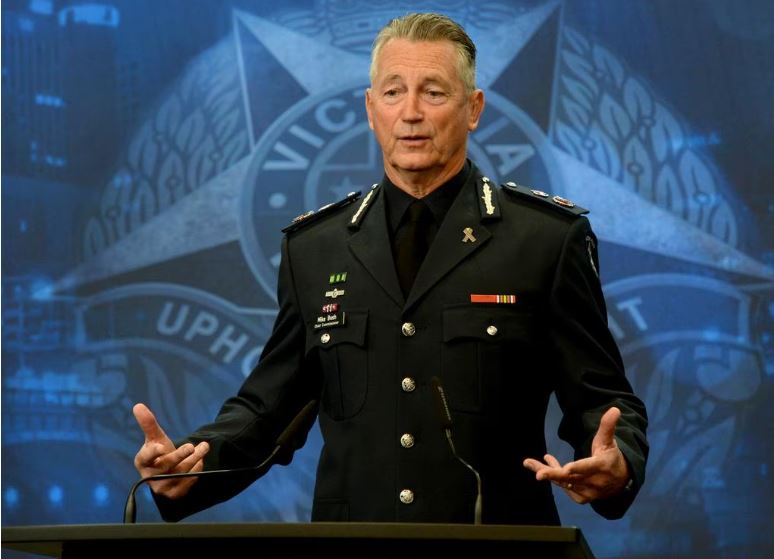
Starting where the rubber hits the road, Chief Commissioner Bush has implemented a Force-wide edict reversing a policy that has not worked and has been persevered with for years without empirical data to support its retention, exacerbated by the current lack of Force numbers.
The Minimum Police Station staffing policy, we suspect, was conceived within the upper echelons of the Force, far removed from the practical, real-world policing issues faced by police daily and the operational variables between one police station and any other.
An adverse byproduct of a bloated bureaucracy and a clear demonstration of why the one-size-fits-all approach is a failure.
Exposing these types of policy decisions gives an insight into the organisational failure that has plagued VicPol for years.
Running the ‘Oh my god’, ‘Close a Police Station?’ is an alarmist mantra that is not helpful without understanding the reality of policing and the history of how this once great organisation has declined due to poor management at the highest level.
The Chiefs’ edict does not necessarily translate into mass Station closures; it is more about moving decision-making to the level that is best equipped, where managers can make sound calls to serve the community better.
The Chief has previously indicated his interest in using former Police to assist the organisation, and the role of manning the public face of a police station could well fall within that concept.
The value of a long-serving experienced police member would not only provide better service delivery but also provide a role model function for junior police at a station.
The Local Area Commander (LAC) is the key person best placed to make resource allocation decisions within their span of control in consultation with Station or Unit Commanders.
The LAC benefits from local knowledge and an understanding of the strengths and weaknesses of the resources under their command.
To be most effective, the move to loosen the bridle on LACs and give them flexibility will undoubtedly come with additional accountability for the performance of the area under their Command. This, in turn, will also require subordinate managers within this structure to take responsibility for the performance and accountability of their units.
Suppose a Police Station is not managing the prevention and detection of crime to the standard set by the LAC for their area of responsibility. In that case, the manager should be mentored and, if necessary, receive additional training. If that fails, they should find an alternative position they are capable of managing.
The same rules should be applied equally to all managers in the hierarchical linear system, including LACs.
Properly implemented, this move will free up managers and their support staff further up the Totem pole to be redeployed as their functions diminish.
The bloated hierarchy resulted from creating and throwing another Command and all the ancillary Command support staff at a problem to fix it, rather than pragmatic management strategies.
Examples of unnecessary Executive Commands, like the four Regional Commands, can be rationalised.
If LACs are working correctly, then one Regional and one metropolitan are all that are required. State and Emergency Command can be addressed by the regional Commander where the Disaster is occurring.
That alone would free up a large number of Police and support staff, sworn and unsworn, to reallocate to operations and operations support at a Station level.
The Family Violence Command requires a coordination Office only, not a Command, and serious work to identify non-police functions in this space will free up countless police.
There are a myriad of other areas that need severe pruning or reorganisation because subsequent executives lost sight of the Police role – serving the community, not a corporate monolith, and not creating poor justifications for perceived weaknesses in the Force’s performance by establishing more bureaucracy or more Police Quangos.
It seems Bush is on the right track.
Thankfully, the Rotation management system has been largely consigned to the WPB, where it should have always resided. However, the damage caused will linger for years as the generation of officers who were blooded in that process and deprived of a real opportunity to learn and showcase their capabilities move through the system.
Whether many of them can regain their Mojo is, unfortunately, moot.
A serious consideration of reintroducing the prerequisite for all Officers to complete the Officers Training College as a live-in training facility would be a good step, allowing for a course restructuring to train all Officers in the rebuilding of a positive Police culture.
As a live-in course, the students gain insight into their peer’s experiences and develop career-long bonds that will serve them well as they progress. Having the opportunity to evaluate their own capability compared to peers’ develops an essential skill-set for future leadership roles.
Reviewing the approach to Officer Training would equip the Force for the next millennium, producing a modern, capable team of Officers who can apply the Peelian principles in a contemporary environment. A tendency to move training to a more academic, university-style model has not served the Force or the State well.
It would be unrealistic to expect all Officers to embrace the concept of effective policing and its accompanying accountability component, given the conditions they experienced under various flawed management models and the equally flawed application of them.
Additional training would be a very reasonable approach.
Focusing on the LACs first for retraining would hasten the benefits to frontline members, where the need for change is most critical, for their benefit and the community, where improvements in Force service delivery will be felt most keenly.
by CAA | Aug 27, 2025 | Blue Light, Library, Uncategorized, Victoria Police Issues
As the whole community reels from the shocking news of the wanton slaughter of two of Victoria’s finest and the severe wounding of their colleague at Porepunkah, in Northeast Victoria, there is substantial disquiet on social media about the Police Force’s media response.
The operational response from Victoria Police after the tragedy was as expected, and while the devastating news impacts everybody in the State and wider Australia, one group does it substantially harder: other Police.
The new Chief Commissioner, Mike Bush, spoke well to the media; however, it was questionable protocol that the Secretary of the Police Association, Wayne Gatt, should have also been given that privilege. Putting the Union Boss on the same level as the Chief Commissioner will have its critics and drawbacks as Bush evolves into the Chiefs’ role.
Accompanying the Chief Commissioner should have been the Officer in Charge of the operation. As there were ten members assigned, some planning would have been necessary, given that risks were already perceived, hence the necessity of swearing out and justifying the issuing of a warrant by a judicial officer. The local Area Commander, who should be in charge of such operations in the area, should have been present. A large portion of responsibility may rest with that officer.
The Commander didn’t need to speak, given the emotional impact of losing members under their command and their responsibility; however, it would be far more appropriate than the Union Boss, who has no operational responsibilities in this circumstance.
With social media abuzz with criticism of Gatt’s appearance, particularly from former members, it was a tactical error on the part of the Chief to allow this; it diluted his role.
All former Police will be disappointed that the Chief did not include them; however, the fact that the Union Boss didn’t include them either was not surprising given the Police Association’s long antipathy towards former members. The Chief, however, needs to be cut some slack; it is a horrific issue to deal with, as he is probably only just coming to terms with his new role.
Gatt, however, should have had the maturity and experience to hold his own press conference.
Again, the Force has failed to acknowledge the thousands of former Police officers who are just as impacted as the serving officers, some more so, particularly those who were involved in similar incidents during their service in the past.
The Shire of Mansfield, in their press release, were the only one, so far, to acknowledge former Police and the impact on them. Not surprising for Mansfield, as it is the only Town in Australia that has built a monument to fallen police in the town’s centre.
Ironically, Mansfield, also in the North-East of the State, had three police officers shot on the 26th of October 1878, in an ambush, but none survived.
The substantial monument in the centre of Town that everybody arriving and leaving must circumnavigate is a testament to the view that the community holds of the Police, both serving and former.
As the saying goes in Police parlance, ‘There is no more ex than an ex’ is a truism that the Force must deal with.
The silence that has fallen over the Force, referred to by Bush and Gatt, does not stop at the Police Station’s front door but extends into the former police community just as strongly.
One day, we can only hope that a Police executive will realise the value that the former Police continue to serve in the community long after they have handed in their batons.
There is a high degree of probability for all the rhetoric that the Force has espoused over the years about the value of a Police career and the bond of policing, it does not complete the circle, as once Police leave the Force, they are discarded, something not explained to new aspirational applicants who want to join the Force; callously you are only looked after when they need you.
Proud former Police, and that is by far the majority, do not hide from their former career and therefore are often sought out within their social groups and their community for advice on Police-related matters. Former police are overrepresented in leadership roles in the community, giving them significant influence.
Although their Oath of Office no longer binds them, the removal of that obligation is legislative and does not account for a career spanning 20-40+ years of living by that standard.
‘You can take a police officer out of policing, but you can’t take the policing out of police.’
At this time of grieving, it is opportune that the Force be reminded of the whole of the Police family and act accordingly.

by CAA | Nov 24, 2024 | Blue Light, Current, Drunk, Library, Police in Schools, Police Veterans in Schools, Privacy, PTSD, Road Safety, Tobacco, Uncategorized, Vietnam Vets
The reports in the Herald Sun 24th November ‘24 about the escalation of violent crime by juveniles, some as young as ten, is a rude awakening for a Government that is by and large responsible.
We can expect platitudes and lame excuses, but action is improbable, and anything the Government does will skirt around the reality that they have made some major ‘faux pas in managing the youth issues.
First and foremost, the Bail Laws are a significant contributor.
The definition of insanity can be easily applied to the Victorian Government’s posture on youth crime matters.
‘Doing the same thing tomorrow and expecting a different result.’
How many of the brainiacs within the Government could have concluded that arresting a child for a crime and putting them immediately back into the same environment that caused them to offend in the first place was a brilliant idea? This is beyond reasonable comprehension.
Those responsible must be removed from their roles.
It is akin to saving a drowning child, only to throw them back in the water.
It looks eerily like the Government is focused on deliberately guiding our society towards a lawless state; we can only assume some misguided ideological plan to destroy the community fabric for an obscure reason has overtaken them, guiding them towards a catastrophe of violent crime we have never before been subject to.
The second and equal act of insanity was raising the age of criminal intent from ten to twelve years, so all the upcoming young thugs are taught crime has no consequences and they can be just like their older peers enjoying the criminal lifestyle.
This crime apprenticeship scheme must be reversed.
The major flaw in this initiative was that no thought was applied to what was to be done with the younger juveniles, as their path to criminality is well laid before they come into contact with the courts.
To make a start, the Government must undertake a ‘mea culpa’; although that concept would be foreign to them, they might wrest back some respect from the community.
There is no shame in admitting a mistake if it was done with the best intentions.
However, there is not only shame but damnation to know an error has been made and ignore it, particularly when the damage is wreaked not only on the community but also on the children the laws were supposed to protect.
There is a third flaw that contributes significantly to the crime tsunami of juveniles, perhaps more important than the others, and that is the performance, or lack thereof, of those in the Government employ (the Government’s own people) who are charged with delivering youth services.
We have seen multiple reports of this systemic failure of this Government’s function, with children who are put into care receiving nothing of the sort.
Poorly supervised and allowed to come and go as they please, no doubt to be told they are naughty, but get to keep their phones and their freedom, albeit their behaviour is outrageously dangerous to the community and themselves.
And finally, the role of the courts must not be overlooked. This lack of holding criminals to account, a concept apparently not applicable to children, can be sheeted home to the judiciary, who, by any measure, have failed in their role, particularly in relation to children.
It is the role of the courts to administer the law, not be social engineers—a social experiment by the courts that has been a miserable failure.
Placing a child in detention to protect the community and the child is in an environment the courts are not comfortable with; is not their prerogative. The Government is responsible for providing sufficient secure services for juveniles to support the Courts.
It would help if some accountability was applied to jurists.
This would not challenge the independence of the courts but may make the jurists more focused on their role and its effectiveness.
Rather than closing jails, which will incur huge ongoing costs to the State, why not convert them into juvenile facilities? After all, it is just a building; what happens inside makes it a jail or a juvenile facility.
All the contracts to operate jails slated for closure are in place and will cost a bomb to extricate from, so it makes real sense to modify rather than close them and the savings for the state will be substantial in real terms, both social and fiscal.
It won’t be long before our litigious community starts acting against the Government for the Government’s failure, resulting in the deaths and trauma inflicted by juveniles on their loved ones.
That could be a good thing, forcing the government to act.
Unfortunately, the only consequence will be a more significant financial burden on the community settling claims against the Government and the other social and financial imposts the juvenile problem imposes on all of us while the Government continues to ‘wash its hands’ of the problem, doing their ‘Pontius Pilate’ impersonation.

by CAA | May 21, 2024 | Blue Light, Library, Police in Schools, Youth
If we want to save our children, we must learn quickly, and Victoria’s Police must prioritise proactive measures to reduce crime.
In an environment where police resources are stretched, it will take strident and clever management to achieve the balance between detecting crime and stopping it in the first place; the latter is the only way to effectively reduce crime in the long term.
The Chief Commissioner’s greatest challenge is achieving effective balance and allowing VicPol to walk and chew gum at the same time.
A recent article in the Herald Sun, BULLYING REVEALED AS TOP REASON KIDS ARE SKIPPING SCHOOL by Susie O’Brien (13th May 2024), raises an argument based on empirical evidence produced by Monash University that supports the hypothesis of the CAA article ‘YOUTH CRISIS SOLUTION’, which sets out what must be done if we want to address the problem.
In other words, bullying is a significant contributor to absenteeism from schools.
Identifying truancy and its primary cause explains, in part, why we have a severe decline in academic levels. This correlates directly to the lack of discipline in schools and contributes substantially to community antisocial and criminal activity. Most crime at this level is relatively minor; however, it is the precursor for a child to live a life of crime.
We cannot expect teachers to solve this problem alone. After years of entrenched poor discipline, the reality is that some students and parents will oppose the new paradigm of discipline. This puts educators in a precarious, perhaps, dangerous position, so their role in achieving and maintaining school discipline must be supported.
As part of the Police Force charter, it must prevent crime. Using police to augment the role of Teachers is a practical and essential method of reducing discipline breaches and antisocial behaviour. Protecting students and staff from aggression is a vital police responsibility that cannot be abrogated.
The Teacher’s authority ends at the school gate, but the problems generally extend well beyond that; therefore, the solution is to use integrated Police specifically trained to deal with these matters.
Nearly half of all Victorian students are regularly truant.
‘High school students are now missing a month a year on average, adding up to more than a full year of lost classes throughout 13 years of schooling.’ -Herald Sun Suzie O’Brien
And the impact on our children is also recognised internationally.
‘Australia’s bullying rate is three times the international average and has been highlighted as a “major issue of concern” by the OECD’. -Herald Sun Suzie O’Brien
The figures, when broken down, are alarming.
‘Overall, just 62 percent of Victorian students from years one to ten are meeting attendance benchmarks, compared to 79 percent in 2015 – a 17 percent drop.
This means 340,000 students out of 895,000 are regularly missing school.
Students in year nine are the most disengaged, with only 50 percent going to school 90 percent of the time or more.
This compares to 70 per cent of students in 2015, the first year the Australian Curriculum, Assessment, and Reporting Authority collated the figures.-Herald Sun Suzie O’Brien
It is worrying that 340,00 students regularly miss school, raising an important question of what do these children do when not at school.
Most of them will not be diligently working at their academic furtherance, but too many contribute to the crime rate or develop social skills that will manifest as life outside the law and community norms.
‘Idle hands are the devil’s workshop and idle lips (or minds using social media) are his mouthpiece’.
Although we acknowledge the importance of this article in highlighting this problem, the Police themselves recognised these issues many years ago. However, supposedly enlightened Police Commissioners decided that the strategy and effort were not warranted, and even in light of empirical data that the initiative worked, they cancelled the essential programs.
Police In Schools – a curriculum-based (as opposed to recent iterations) program that could be measured and was found to be effective by Monash University.
New Start – is an innovative program that connects police and teachers to ensure children attend school.
Blue Light – Although Blue Light has survived, it is a shadow of its former self, due directly to efforts by VicPol to close it down. Incentives for police to give up their own time to operate the discos were removed, as was any other support for this program.
We acknowledge the difficulty the Police administration has in diverting Police from reactive roles to the cause of proactive ones, where the problems are avoided before they manifest. Rather than police picking up the pieces of shattered lives of victims caused partly by this problem faced by management.
This conundrum boils down to leadership and the strength of that leadership to make the necessary adjustments to deal with the long-term effects caused by the failure to address these problems at the core. Unfortunately, they must look past the quick-fix arrest solution because we all know that for most social issues, Police cannot arrest their way to solving the problem.
History will always examine an organisation’s performance in light of its leader’s effectiveness, which is no different for policing.
We can only hope that the current Chief Commissioner will leave a legacy not of sameness and incompetence, as some of his recent predecessors displayed, but one of authentic leadership by holistically handling the issue of Policing and putting in place measurable proactive initiatives that make a difference, addressing the issues before problems arise.
It is argued that:
‘We cannot afford the police resources to do it, but we cannot afford the consequences of not acting proactively’.
VicPol has the ability to walk and chew gum.