
by CAA | Jun 30, 2025 | Current, Drunk, Investigations, Library, Media, Police in Schools, Police Veterans in Schools, Politics, Road Safety, Safe Injecting Rooms, Victoria Police Issues
PLAN 100.4 – 2025 – Summary
The document outlines the Community Advocacy Alliance’s strategic plan for improving service delivery and addressing law enforcement issues within Victoria Police by 2025.
Leadership and Accountability in Victoria Police
The Community Advocacy Alliance (CAA) emphasises the need for improved leadership and accountability within Victoria Police to restore public trust and enhance service delivery. The current structure is criticised for being bloated and ineffective, with senior officers often avoiding accountability for their actions.
- The CAA has submitted multiple plans since 2018 to address law and order issues in Victoria.
- Senior police officers have been allowed to evade accountability despite evidence of misconduct.
- The organisation suffers from poor command decision-making and a culture of disrespect for the law.
- A significant reduction in executive ranks (30-40%) is proposed to streamline operations and improve accountability.
- Decision-making should occur at the lowest possible level to enhance responsiveness and effectiveness.
Service Delivery as a Priority
Service delivery has been identified as the most urgent issue facing Victoria Police, with a significant deficit in understanding and execution over the past decade. The CAA argues that efficiency should not overshadow the importance of effective service delivery.
- Service delivery has deteriorated, with little evidence of improvement in the last ten years.
- Senior officers often confuse service efficiency with service delivery, leading to ineffective strategies.
- Initiatives to improve efficiency have often compromised service delivery, creating a “them and us” mentality.
- The effectiveness of policing is directly related to its relationship with the community it serves.
Measuring and Improving Service Delivery
The CAA proposes several strategies to measure and enhance service delivery, emphasising the need for modern, qualitative measurement techniques. Feedback from the community is crucial for understanding the effectiveness of services.
- Implement modern qualitative measuring techniques for service delivery.
- Establish a feedback line for the public to report their experiences with police services.
- Set benchmarks for response times to ensure accountability in dispatch and arrival.
- Extend the emergency activity map to include police incidents for better community awareness.
- Introduce a protocol for phone contact to ensure professionalism and accountability.
Structural Reforms for Effective Policing
The CAA recommends significant structural reforms within the Victoria Police to address inefficiencies and enhance service delivery. This includes reducing the number of executive positions and reintroducing intermediate ranks.
- The current executive structure is bloated, with a 16% increase in Deputy Commissioners since 2019.
- A reduction of 30-40% in executive ranks is recommended to improve decision-making and accountability.
- Reintroducing ranks like Chief Superintendent and Chief Inspector can enhance local decision-making.
- The promotion process should be competency-based to eliminate nepotism and improve morale.
Cultural Change and Community Engagement
A positive organisational culture is essential for effective policing, and the CAA highlights the need for cultural reforms to rebuild trust and respect within the community. Engaging with retired members and honouring fallen officers can strengthen this culture.
- The culture of Victoria Police has declined, leading to issues like media leaks and mistrust.
- On-the-spot discipline notices can address minor infractions and improve accountability.
- Engaging retired members can provide valuable insights and foster respect within the organisation.
- Building a culture of respect and professionalism starts with the police uniform and leadership example.
Addressing Mental Health and Well-being
The CAA emphasises the importance of addressing mental health issues within the police force, particularly regarding the impact of disciplinary actions and investigations on officers’ well-being.
- Research is needed to explore the correlation between investigation techniques and PTSD among officers.
- Every member subject to disciplinary action should have an independent advocate to ensure fair treatment.
- The culture of respect and support must be reinforced to prevent adverse mental health outcomes for officers.
Recruitment and Selection Process Improvements
The recruitment process for the Victoria Police must prioritise both mental and physical robustness to ensure that candidates can handle the demands of policing. A multi-level probation system and careful assessment of applicants’ suitability are essential to maintain the integrity and effectiveness of the force.
- Recruits should be assessed for mental and physical fitness to perform police duties.
- A multi-level probation period of four years is proposed to ensure ongoing evaluation of recruits.
- Non-performing members should be offered transfers to alternative roles rather than remaining in policing.
- Emphasis on character and resilience in candidates to prevent PTSD and ensure operational readiness.
Enhancing Foot Patrol Effectiveness
Foot patrols are a critical aspect of community policing that requires improved training and situational awareness among officers. The proper execution of foot patrols can enhance public safety and foster better community relations.
- Officers should patrol independently to maintain situational awareness and reduce risks.
- Engaging with the community through eye contact and acknowledgment builds trust and confidence.
- Current foot patrol practices often lack focus, with officers distracted by conversations or mobile devices.
Leveraging Technology for Policing
The integration of advanced technology, such as AI and GPS, can significantly enhance policing efficiency and effectiveness. However, it is crucial to implement these technologies thoughtfully to avoid potential risks.
- AI-driven facial recognition and CCTV can provide real-time information on suspects.
- The G-Tag initiative aims to reduce car theft and enhance community safety by allowing police to disable stolen vehicles.
- GPS technology should be managed to prevent misuse by criminals.
- Mobile technology must be standardised for all officers to improve communication and documentation.
Management and Operational Efficiency
Improving management practices within Victoria Police is essential for enhancing operational efficiency and accountability. A focus on performance metrics and resource allocation can lead to better service delivery.
- Backfill police stations to authorized personnel levels to ensure adequate staffing.
- Downgrade the influence of statistics in decision-making, allowing commanders to focus on operational needs.
- Implement bi-weekly progress reports for commanders to track performance against KPIs.
- Establish a Reserve Unit to manage underperforming members and maintain operational readiness.
Youth Engagement and Community Programs
Strengthening youth engagement initiatives is vital for fostering positive relationships between police and young people. Programs like “Police in Schools” can have a significant impact on youth behaviour and community safety.
- Introduce a dedicated Youth Command to oversee youth-related initiatives and strategies.
- Re-establish the “Police in Schools” program to build trust and educate children about law enforcement.
- Support existing programs, such as Blue Light Victoria, and explore the establishment of Police Citizens Youth Clubs.
- Develop partnerships with community organisations to enhance youth engagement efforts.
Transparency and Media Relations
Improving transparency and media relations is crucial for rebuilding public trust in Victoria Police. A strategic approach to media management can enhance communication and community confidence.
- Appoint a high-ranking officer with operational experience as Media Commander to oversee information dissemination.
- Ensure operational members can speak to the media without fear of criticism.
- Address media leaks by focusing on the underlying issues rather than punishing whistleblowers.
Addressing Drug Issues with a New Approach
A shift from harm minimisation to a four-pillar approach (Health, Law Enforcement, Education, Rehabilitation) is necessary to address drug-related issues in society effectively. This comprehensive strategy aims to reduce drug use and its associated harms.
- Implement health orders allowing police to take individuals affected by drugs into care for treatment.
- Establish secure facilities for drug treatment and triage to address addiction issues.
- Focus on street-level drug dealers and users rather than high-profile offenders to disrupt the drug trade.
Legal System Reforms for Victims
Reforming the legal system to prioritise victims’ rights and streamline processes is crucial for enhancing justice outcomes. Abolishing the committal process and enhancing victim support can lead to a more efficient legal framework.
- Abolish the committal for the trial process to reduce delays and trauma for victims.
- Provide legal representation for victims of major crimes to advocate for their rights and interests.
- Implement enforceable compensation orders for victims to ensure accountability from offenders.
- Construct purpose-built facilities for victims to give evidence remotely, enhancing their safety and comfort.
Community Engagement and Policing Strategies
Effective community engagement is crucial for fostering trust and enhancing perceptions of police effectiveness. Strategies should focus on improving community interaction and local ownership of policing efforts.
- Realign crime trend analysis to measure community attitudes towards police effectiveness.
- Expand the Neighbourhood Watch program to foster community involvement in crime prevention.
- Review patrol systems to allow officers more time for direct community interaction.
- Dispense with the “Super Station” concept to refocus on local community policing.
Mental Health Support for Police Officers
Enhancing mental health support for police officers is crucial for their well-being and operational effectiveness. Continued efforts are needed to address the mental health challenges faced by serving and retired members.
- Maintain and improve programs like The Hub to support the mental health of officers.
- Legislate indemnity for officers acting in good faith to encourage proactive policing.
- Reintroduce the practice of gazetting positions to stabilise the organisation and improve morale.
Retirement and Reservist Programs for Officers
Developing a reservist program for retired officers can provide valuable support to current members while maintaining their sense of identity and purpose. This initiative can enhance community policing efforts and provide mentorship.
- Allow retired officers to retain their police identity and serve in a reserve capacity.
- Implement a system to recognise the service and contributions of retiring officers.
- Utilise retired officers for non-frontline duties to relieve operational pressures on current members.
FOR THE FULL VERSION OF PLAN 100.4, click on the link below:

by CAA | Apr 3, 2025 | Library, Police in Schools, Police Veterans in Schools, Victoria Police Issues
An insightful article in the Australian 1st of April 2025 by Natasha Bita, ‘bells the cat’ on the reality of the environment in our schools and why the academic levels are declining, and crime committed by young people continues to escalate both in frequency and severity.
https://www.theaustralian.com.au/education/police-and-psychologists-needed-in-schools-to-deal-with-rising-violence-principals-warn/news-story/23eddf73d36353595de2c6dc73acb9dc
It is clear that we will never make inroads into these critical issues plaguing our society without the intervention the author lays out.
It is evident that poor government management is responsible; however, not all the blame can be levelled at the politicians, as the two major agencies that can make a difference are Education and the Police.
The non-action in this space by both agencies suggests that a major problem of demarcation is clouding the judgement of both.
The Police clearly think these problems in the school are the responsibility of the Schools. While that is correct, but only to a degree; the overall responsibility for Law and Order remains unequivocally with the Police, and they have failed to give this aspect of crime prevention the attention it needs, leading to the lawlessness we now endure.
Consecutive Police administrations have deliberately stood in the way of developing effective Police-in-Schools Programs, even going as far as to develop a shadow of the program to divert criticism.
From the Educator’s perspective, they have failed to establish behavioural boundaries and enforce them, coupled with maintaining basic discipline with students and parents, which has led to that profession becoming a high risk for staff and students alike. This has led to a marked decrease in academic performance in the education system.
In many ways, we are sympathetic towards the educators. School Principals’ have no access to police data that accumulates around a child who has committed crimes and attends a school.
For a child to receive a caution from the Police, it must be an offence for which the child accepts guilt, but they can front up to school the next day mixing with peers, and the educators are blissfully unaware of the criminality of the student who may well pose an unacceptable risk.
Moreover, the educators have no opportunity to work towards helping the child because they just don’t know.
Further to the issue of an Official Police Caution, a myth is promoted that children who are caught by Police committing a crime go to jail.
The vast majority of young children detected by Police committing a crime receive an Official Police Caution and, on many occasions, receive multiple cautions if they continue to offend. They are only then charged and brought before the Children’s Court, which is the only one that can jail a child.
There is some community concern about placing children in custody or remand, but by the time they are at risk of remand by a Court, the overwhelming majority of young people have already been cautioned on multiple occasions but chose to ignore warnings.
The warnings now from School Principals must be heeded.
The CAA is promoting the establishment a Youth Justice Panel to explore the issue and make recommendations on how the issue of Juvenile behaviour can be modified.
The need for Police in schools has never been more important than now.
by CAA | Nov 24, 2024 | Blue Light, Current, Drunk, Library, Police in Schools, Police Veterans in Schools, Privacy, PTSD, Road Safety, Tobacco, Uncategorized, Vietnam Vets
The reports in the Herald Sun 24th November ‘24 about the escalation of violent crime by juveniles, some as young as ten, is a rude awakening for a Government that is by and large responsible.
We can expect platitudes and lame excuses, but action is improbable, and anything the Government does will skirt around the reality that they have made some major ‘faux pas in managing the youth issues.
First and foremost, the Bail Laws are a significant contributor.
The definition of insanity can be easily applied to the Victorian Government’s posture on youth crime matters.
‘Doing the same thing tomorrow and expecting a different result.’
How many of the brainiacs within the Government could have concluded that arresting a child for a crime and putting them immediately back into the same environment that caused them to offend in the first place was a brilliant idea? This is beyond reasonable comprehension.
Those responsible must be removed from their roles.
It is akin to saving a drowning child, only to throw them back in the water.
It looks eerily like the Government is focused on deliberately guiding our society towards a lawless state; we can only assume some misguided ideological plan to destroy the community fabric for an obscure reason has overtaken them, guiding them towards a catastrophe of violent crime we have never before been subject to.
The second and equal act of insanity was raising the age of criminal intent from ten to twelve years, so all the upcoming young thugs are taught crime has no consequences and they can be just like their older peers enjoying the criminal lifestyle.
This crime apprenticeship scheme must be reversed.
The major flaw in this initiative was that no thought was applied to what was to be done with the younger juveniles, as their path to criminality is well laid before they come into contact with the courts.
To make a start, the Government must undertake a ‘mea culpa’; although that concept would be foreign to them, they might wrest back some respect from the community.
There is no shame in admitting a mistake if it was done with the best intentions.
However, there is not only shame but damnation to know an error has been made and ignore it, particularly when the damage is wreaked not only on the community but also on the children the laws were supposed to protect.
There is a third flaw that contributes significantly to the crime tsunami of juveniles, perhaps more important than the others, and that is the performance, or lack thereof, of those in the Government employ (the Government’s own people) who are charged with delivering youth services.
We have seen multiple reports of this systemic failure of this Government’s function, with children who are put into care receiving nothing of the sort.
Poorly supervised and allowed to come and go as they please, no doubt to be told they are naughty, but get to keep their phones and their freedom, albeit their behaviour is outrageously dangerous to the community and themselves.
And finally, the role of the courts must not be overlooked. This lack of holding criminals to account, a concept apparently not applicable to children, can be sheeted home to the judiciary, who, by any measure, have failed in their role, particularly in relation to children.
It is the role of the courts to administer the law, not be social engineers—a social experiment by the courts that has been a miserable failure.
Placing a child in detention to protect the community and the child is in an environment the courts are not comfortable with; is not their prerogative. The Government is responsible for providing sufficient secure services for juveniles to support the Courts.
It would help if some accountability was applied to jurists.
This would not challenge the independence of the courts but may make the jurists more focused on their role and its effectiveness.
Rather than closing jails, which will incur huge ongoing costs to the State, why not convert them into juvenile facilities? After all, it is just a building; what happens inside makes it a jail or a juvenile facility.
All the contracts to operate jails slated for closure are in place and will cost a bomb to extricate from, so it makes real sense to modify rather than close them and the savings for the state will be substantial in real terms, both social and fiscal.
It won’t be long before our litigious community starts acting against the Government for the Government’s failure, resulting in the deaths and trauma inflicted by juveniles on their loved ones.
That could be a good thing, forcing the government to act.
Unfortunately, the only consequence will be a more significant financial burden on the community settling claims against the Government and the other social and financial imposts the juvenile problem imposes on all of us while the Government continues to ‘wash its hands’ of the problem, doing their ‘Pontius Pilate’ impersonation.
by CAA | Jan 29, 2024 | Library, Police Veterans in Schools, Youth
30th Jan 2024
Youth crime is out of control in Victoria. What is the Government and the Courts doing to curb the current crime pandemic? Absolutely nothing.
The Community Advocacy Alliance Inc. (CAA) warned of this almost nine years ago. Sadly, our warning was ignored.
People in Victoria do not feel safe from youth gangs and young, aggressive, violent, offenders. Violent home invasions, carjackings and theft of cars in endemic and serious assaults, often involving knives, have become commonplace.
How can this blight on society be curbed?
Firstly, the idiocy of raising the age of criminality to fourteen must be abandoned. It is ideology overriding common sense.
Secondly, the Judiciary must adopt a more realistic regime on penalising youth criminal behaviour. Repeatedly bailing young offenders without imposing strict, enforced conditions is lunacy. Curfews and electronic tracking must be immediately introduced. Prohibiting contact with co-accused is also necessary to break the cycle of peer pressure. Home detention instead of jail is a viable option with an exception to allow attendance at school which must be mandatory.
Thirdly, a proactive regime of crime prevention is required. Making arrests is reactive not proactive.
Victoria Police, as part of its mandate, is required to fight, reduce and prevent crime.
In 1989 Victoria Police introduced a Police in Schools (PISP) Program.
This program was delivered by police trained for the purpose.
PISP – The aims of the program were:
- to reduce the incidence of crime in society;
- to develop a better relationship between police and youth in the community;
- to create in young people an understanding of the police role in the structure of society;
- to extend the concept of the crime prevention into the Victorian school system;
- to equip young people with the necessary skills to avoid dangerous and threatening situations.
Along with these specific aims, behavioural objectives were set, and after participation in the program, young people were able to:
- demonstrate the values, responsibilities and obligations current society deems valuable;
- state the consequences of a person’s actions regarding unlawful behaviour;
- demonstrate sufficient self-esteem and skill to avoid or reduce and delay the uptake of illicit drugs and resist engaging in anti-social behaviour;
- engage in positive interactions and consultation with police members:
- state the basic role of police and the legal system in Victoria.
In order to achieve the above aims and objectives, the program delivered a core structure of seven themes, namely:
- the role of police in society;
- the legal system;
- rights, rules and responsibilities;
- consequences of our actions;
- keeping ourselves and others safe;
- drug and alcohol education;
- personal development.
In a reintroduced PISP there should be three further themes added:
- anti-bullying strategies;
- domestic violence avoidance;
- road traffic safety;
All of these ten themes would closely interlink with the school curriculum thus enhancing the relevance of the program to the school community and the learning of the young people concerned.
Students, following their participation in the PISP, were able to:
- demonstrate the values, responsibilities and obligations current society deems valuable;
- state the consequences of a person’s actions regarding unlawful behaviour;
- demonstrate sufficient self-esteem and skill to say no to drug abuse and other antisocial behaviour;
- engage in positive interactions and consultation with police members;
- state the basic role of police and the legal system in Victoria;
- develop a better understanding between police and youth in society;
- gain an understanding of the police role in the structure of society;
- be equipped with the necessary skills to avoid dangerous and threatening situations.
The PISP was a resounding success as confirmed by an academic review conducted by Monash University, the results released in 2004.
Where the PISP operated there was a sharp reduction in graffiti, other acts of vandalism, petty crime and anti-social behaviour. Violent home invasions, carjacking and serious assaults were unknown or very rare.
Many teachers reported that those in their charge were more respectful of them, each other, and were better behaved in class and easier to teach. Many teachers also reported that they felt safer in the school environment.
Curbing disruptive behaviour in classes also ensured the education of students wanting to learn was not interfered with. This was and is an important consideration. The current youth lawlessness also contributes to the drop in literacy standards in our education system, as this lawlessness inevitably seeps into schools.
In 2006 the then Chief Commissioner, Nixon, in an act of proactive policing vandalism, abolished the program after an internal review reported the program was producing excellent results but was poorly managed.
The CAA demands the Government immediately address the youth crime issues by:
- Abandoning the move to raise the age of criminality.
- Requiring the Judiciary to adopt a more realistic regime on penalising youth criminal behaviour.
- Requiring the Victoria Police to reintroduce a PISP and properly resource this Program.
If no action is taken, it will be inevitable police will have to be stationed in schools to maintain law and order, enabling schools to function. A reintroduced PISP is by far the better option as part of the education process.
We, the citizens of Victoria, have had enough of juvenile crime.

by CAA | Dec 22, 2023 | Library, Police Veterans in Schools, Youth
Youth Crime is now at epidemic proportions, and our leaders are indulging in severe hand-wringing while applying Statistical interpretation spin trying to deflect blame.
A byproduct of this problem is a 12-year-old has murdered her carer. That murder is a direct consequence of ideological values trumping pragmatic actions – the 12-year-old should have been in secure care.
The girl had run away 275 times in three years, and nobody was clever enough to put her in secure care to protect her.
The CAA has long been warning of this totally predictable outcome, first identified by the CAA nearly a decade ago. Our so-called leaders are unashamedly changing the measuring parameters to cover their ineptitude.
Different labels will not modify behaviour.
The missing link in this issue, as with others, is Leadership. Without competent leadership, this, like many other problems, will not be addressed in any meaningful way – they can just blame the parents, a motherhood statement to deflect from their ineptitude.
As reported in the Melb. Age 22/12/23, data released by the Crime Statistics Agency on Thursday shows crimes committed by minors have reached a nine-year high, with those aged 10 to 18 overrepresented in robberies, burglaries, and theft.
The strategy, it seems, is that raising the age of criminal responsibility will solve the problem because children under 14 are too young to understand they are breaking the law. Technically probably true, but they certainly know right from wrong.
Of course, this strategy will solve the problem (statistically) overnight.
The Statistics Agency will produce glowing figures for the seat polishers to crow about, having achieved a dramatic fall in youth-related crime offending. Statistics don’t lie, but when it comes to statistics, there are lies, damn lies and statistics.
This strategy is cold comfort for Victims of a home invasion, as categorising young miscreants’ actions as not criminal is only a label and will not drive behavioural change. However, more than likely it will increase the offending because young people will know, there are no consequences. “If I break into a house, I can’t get into trouble.”
Expert advice quoted in the article says it all,
“It was ‘ludicrous’ to think that a 12-year-old could be held legally responsible for their actions.”
This is the type of ideological rubbish ‘Expert advice’ that has got us to where we are now.
Children of this age know right from wrong; however, they may not fully understand the consequences of their actions, which is a far cry from not understanding what actions are criminal (wrong).
From a very young age, we teach children not to do things, explaining and sometimes by controlled demonstration, the consequences if they ignore our advice. Don’t put your hand close to the fire, or you will get burnt. Do not cross the road without looking, etc. By the time a child is about 6, they have grasped right from wrong in a rudimental sense.
So, we are prepared and accept that teaching children life skills is acceptable and desirable, but we want to give them a free pass regarding criminality.
Children are taught through consequences that they understand. Still, often, no more is needed than a reprimand to achieve complaint behaviour that is in their best interest. A Police caution, for example.
This leads to a major part of the solution – education.
Children’s criminality is a learned phenomenon, not a lack of understanding of right from wrong. There are simple solutions if we are serious about making changes and saving many young lives from being wasted.
Behaviour is taught, not hard-wired into their cognisance.
Essentially, support parents rather than blame them by introducing a formal learning program to address and correct the cognisance of young people using the group learning approach only available within the school system.
The calls for more support services are just that, calls, and are the same calls echoed every time the statistics on youth offenders are released year in and year out.
Simply changing the age of criminal responsibility will not change or reduce any criminal behaviour. The children will still commit robberies (Home invasions), burglaries (Home invasions when nobody is home), and theft (Predominantly from other children).
So, education is first, and the second part is to introduce appropriate consequences.
Police say a “core group of 207 recidivist offenders” are responsible for most of the crimes, with officers arresting 82 youth offenders more than 10 times over the reporting period.
The second part of a strategy to dramatically reduce offending is to prioritise proactive work rather than worry about diversions after they are caught.
The courts have a major role to play, and the above paragraph clearly demonstrates the Court’s failure to contribute to modifying the status quo.
How can anybody expect a juvenile to stop offending if they are arrested over 12 months more than 10 times? When does the penny drop, they are currently incorrigible.
After once, twice or thrice, there is an irrefutable argument that they need to be secured to,
- Protect them from themselves.
- Demonstrate that their actions come with consequences.
- Protect potential victims.
- Stop rationalising their behaviour.
There is an argument for a mandatory three-strike rule if the Judiciary declines to show leadership and facilitate consequences rather than threats.
Diversions for repeat offenders mean they are not working, so why persist with them?
The argument that the CAA has proffered for those who succumb to drug problems can be transposed into the youth area.
It is not how long they are in detention, but the fact that they are, is the key.
All the negative arguments put forward in opposition to detention are based on the assumption of the impact of months or years; we propose weeks of structured detention, not a week-long party doing nothing, their favourite pastime, apart from committing crimes.
What is misunderstood and not considered is that time for young people moves at a far slower pace than it does as we age, so we cannot properly transpose issues to young people measured in adult time or values.
A week or two in detention will achieve the desirable outcome. They will not be hardened into criminality but will cause a hiatus in their social networking that forms part of their criminal activity.
They can also be exposed to discipline.
No ability to connect with peers for a week or so will cause the peers to move on, and the perpetrator has broken the nexus, enabling them to shake bad behaviour and influences, one of the big drivers of juvenile crime.
In two weeks, the average social network of a young person can change multiple times.
The CAA implores those of influence to change course for the good of young people and focus on education and developing appropriate consequences if there is any hope of achieving a breakthrough to reduce destroying young lives, let alone the lives of some of their victims.
All current efforts have failed and discontinuing the Police in Schools program a decade or more ago removed one of the key pillars, education.
The other major contributor is applying the failed theory of Restorative Justice to the juvenile sector. A concept that rewards bad behaviour and moves responsibility to the victims.
As a senior Police executive was quoted as saying,
“When population is considered, Victoria still has its second-lowest crime rate at any point over the past decade”.
That statement, ‘weasel words’, perhaps says it all, considering the population, it seems, is only an afterthought, where they should be a critical consideration in prioritising action to resolve the problem. It is deeply worrying that the population is so poorly considered as a priority by the Police.
No more ‘weasel words’, but identifiable and realistic actions.
It is time to show the mettle, not the hollow, repetitive words and statistics currently in vogue.
Acknowledge and fix the problem.

by CAA | Mar 24, 2021 | Library, Police Veterans in Schools, Uncategorized
24th March 2021
Victoria; do not underestimate the importance of the announcement by Chief Commissioner Patton of a Police in Schools Program (PISP) (Herald Sun 24/3/21).
This change in the policing approach is very significant and will have a positive impact on the lives of us all.
The failure of former Police Chief Commissioners to re-implement this important Policing strategy is in no small part responsible for the increased crime rates in past years, particularly in serious crimes committed by juveniles.
The reintroduction of a structured PISP has been the cornerstone and the basis for the formation of the Community Advocacy Alliance Inc. (CAA) which I have the privilege to chair.
As a group we have worked for six years for this outcome and we unreservedly congratulate Chief Commissioner Patton for reintroducing this program.
It is ironic that this program originated in Victoria and was so successful it was taken up and continues to operate in all other States and Territories.
Former Chief Commissioner Nixon shut the PISP down and every Chief Commissioner that followed her failed to grasp the importance of the program with former Chief Commissioner Ashton actively engaging in trying to thwart attempts by the CAA to establish a PISP using Police veterans.
There were many other very encouraging strategies announced by CCP Patton today. The engagement that CCP Patton has established with the CAA will now ensure that many other strategies both proven from the past and new will be ventilated and considered by him.
Through the CAA the community now has a much louder voice.
We are now entering a new phase of Policing that serves the people of Victoria with a service that the people can influence.
The nirvana of policing.
Kelvin Glare
Kelvin (Kel) Glare AO APM
Chair, Community Advocacy Alliance.
by CAA | Aug 23, 2019 | Library, Police Veterans in Schools, PTSD, Uncategorized
23rd of August 2019
The news of four deaths in a week is by any stretch a pandemic of epic proportions, and it is very unlikely that this will be the end of it, it could get much worse.
Today there have been apprehensions expressed echoing what concerns the CAA, that Judicial Personnel Management (JPM) is at the core of many of these unfortunate outcomes, and has left many other Police in a very unhealthy and perilous mental state.
JPM is describing a procedure whereby Judicial processes are used to remove any member who for whatever reason is perceived to be a problem. It is too common that very weak poorly investigated disciplinary or criminal Briefs are, ’given a run’, through internal disciplinary processes or courts where a conviction is not the major objective, but the removal of the member is.
Like every other member or veteran, we are very dismayed at the terrible blight that is descending on Policing. There is no doubt this has been some years in the making hence our concern it will get worse.
The CAA, although having some trained Peer Support Officers in the group, has at least a number of very senior retired police who have substantial experience. The independence from VicPol and the very nature of the former members in the group may be able to help members.
The CAA appeals to any current or former members who are struggling with mental health issues to contact us.
We were never established as a welfare unit, nor do we intend to be one, but as we would expect of every other member to reach out to a distressed colleague, so should we.
“We would rather sit with you for as long as it takes to listen to what you’re going through than fifteen minutes listening to your eulogy.”
If you need to contact us via Facebook, LinkedIn or via caainc.org.au we are here.
by CAA | Jun 14, 2019 | Library, Police Veterans in Schools, Uncategorized
14th June 2019
The Community Advocacy Alliance (CAA) is developing a volunteer Police Veterans in Schools Program (PVISP) similar to the discontinued Police In Schools program (PSIP).
We are inviting expressions of interest from former members of Victoria Police who would like to be considered for this project.
Although previous classroom and PSIP experience are desirable, it is not essential as we will be developing a training program for volunteers and our curriculum is well into development and should be completed in the coming weeks.
It is anticipated that Veterans would only need to dedicate one or two half days a week, and their times and commitments would be negotiated directly with the School/s.
We are confident that the experience of life and Policing that Veterans uniquely posses are a valuable resource that can make the future for children and the community more harmonious.
We propose to have a pilot up and running for the later terms of this school year. Every effort will be made to connect Veterans with schools in their local area.
The PSIP program was one of the most rewarding and enjoyable functions of Policing, and few members left the program unless unavoidable.
You can now enjoy that experience and contribute to community safety again.
For further information and your eligibility, or to express interest, contact Ivan Ray CEO, CAAInc on ivan@caainc.org.au

by CAA | Jun 13, 2019 | Library, Police Veterans in Schools, Uncategorized
13th June 2019
The PVISP has ticked off on several issues and progression is excellent.
We now have volunteers coming on board to ensure the success of the program.
Project evaluation
Dr Ray Shuey has volunteered to manage the measuring of the project as it develops, ensuring we can as necessary adjust the program to achieve maximum benefits.
Fiscal management
Michael Grosvero JP FCPA will manage the finances of the project to ensure compliance and best practice. Working with Dr Shuey, they will develop budgets and projected income demands to ensure the ongoing viability of the project.
Charitable status
The ACNA has accepted the CAA for Registration as a Charity.
Tax Status
The Australian Tax Office has issued the CAA with a Notice of Endorsement for Charity tax concessions effective from the 22nd of August 2019.
Fund sourcing
To date, the CAA has operated primarily on funds donated by the Board members, however, to augment this we have launched a Go-Fund-me page that has already started to attract donors, and although we do not anticipate that this will be our major funding source, it will provide basic funding in the development stage of the project. Future funding will be sourced by developing partnerships with appropriate entities. Such entities will be carefully screened before accepting their support.
Curriculum and associated matters
As previously announced Peter Jarvis, MOET, Dip Ed, B.Arts, Dip Police Studies, Dip Management, has joined us as our Educational Adviser and he is well on the way to completing the Curriculum and associated material for the project including the training of PVISP Operatives. He is confident that the completion of the necessary material is imminent.
Project Coordination
We welcome to the Board retired Detective Superintendent Frank Byrne and retired Chief Inspector Robin Bailey. These two appointees are critical to the project. They are both well qualified and experienced in this type of project and will work closely with our Educational Adviser to get the program off the ground. With one based in Geelong and the other in the East, they can coordinate over wider areas. These members will also be involved in the selection process for suitable former Police members to deliver the program.
School Participation
All 1900 Primary Schools have been invited to submit expressions of interest to be considered for the PVISP program. This exercise will determine the size of the market we need to service, and although the invitations were only circulated on the 13th of June Replies have already started.
Former Police participation
Locating and inviting former Police to participate is somewhat more difficult as there is no reliable database available so we will be initially relying on social media but as soon as we have sufficient funds we propose to run advertisements in print media to let the former members know of the project. We have already secured several volunteers, but we are realists and understand that we need many more.
Insurance
We are currently negotiating to Insure the volunteers as ‘Voluntary workers’ We expect that currently, we will not be able to cover this cost which we would anticipate is substantial, however, the Policy will be negotiated to a stage so that it can be activated at short notice.
Identity/ branding
The identity and branding of this project for uniforms etcetera is currently under consideration by a partner organisation, and as soon as this matter is resolved, advice will be provided, and the design and style of a uniform will be undertaken.
Project Launch
The Project will be launched at a time to be determined, but it will be when we are at a stage that a tangible function of the project can be demonstrated.
by CAA | Aug 6, 2017 | Library, Police Veterans in Schools, Uncategorized
6th August 2017
“The Hub”, is a designated building designed to house several Police related Not for Profit organisations and critically to provide a purpose-built base for the operation of the Retired Police Peer Support Program.
The Retired Police Association (RPA) Peer Support Program (PSP) has only been operating for less than two years and has cobbled together sufficient funds to train up 41 Retired (PSP) staff who operate purely on a voluntary basis throughout Victoria and also cover their own and clients out of pocket expenses.
In this very short time frame, the group are looking after 400 ex-police varying in need from the company to serious mental health issues including depression, PTSD and addictions to gambling, drugs and alcohol.
The group are finding the same experience as the Department of Veterans Affairs where issues, particularly of PTSD, are manifesting later in life.
The CAA has recruited the recently Retired Deputy Commissioner of Veterans Affairs Mike O’Meara who has extensive experience in administering the Psych services of Defence to advise the CAA on the administration of these initiatives and to assist the RPA.
Based on world practises, we can assume that fifteen per cent of ex-members will need some assistance with mental health issues after they cease employment with VicPol.
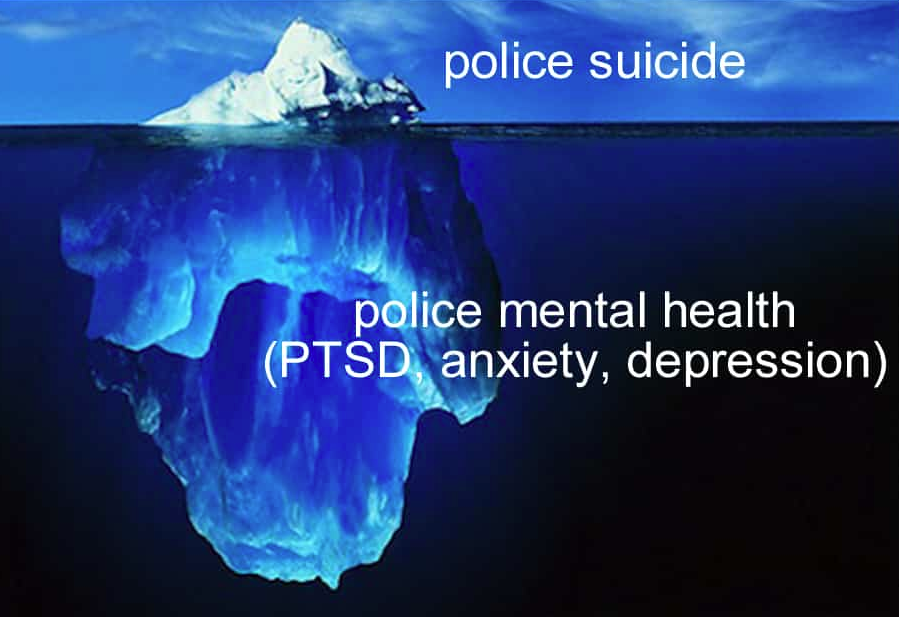
This probably is replicated with other emergency services, particularly the Ambulance Service. To say that the RPA has seen but the tip of the iceberg is a statement made in fact. It is not unreasonable to warn the Government of a tsunami of mental health issues for ex-police that is not far away and the early intervention of a Peer Support Program may lessen the impact and cost when it arrives.
Funding is a pressing necessity with the program only having sufficient funds to see them through to mid-2017. Apart from the meagre funds of the RPA, the group have received funding from the Police Association to assist with training however the financial viability of the program for the long term must be addressed relatively urgently to allow the practitioners to get on with the job rather than worrying about funding. I am at a loss as to how PSP has been so successful to date given that they have achieved their success on such a minuscule budget and what they have achieved and is testament to the dedication and ingenuity of the Retired members running the program.
Of a much more pressing necessity is the establishment of ”The Hub” facility which ideally will provide suitable accommodation for the PSP operatives and their administrative support but also house Clinicians to back up the program and act as a referral for some of the more dire cases handled by the PSP.
One of the problems is the stigma either real or perceived that people suffering mental health issues experience.
To that end, we propose to establish a commercial coffee shop as the front door of the services. A space people needing help can attend without fear of stigma. I am important that the Coffee shop is a commercial venture catering for the public to assist with the anonymity of people to access the resources.
The PSP has identified the security of the PSP operatives as a major concern as they are not permitted to attend private dwellings and currently their only option is to meet at local coffee shops. This is proving unsatisfactory by not offering the clients some confidentiality but also by the lack of security should a client have an episode.
We have identified a surplus Government building on the corner of Coventry and StKilda Road, South Bank, adjacent to Victoria Barracks. The building has been vacant for many years and originally housed the Department of Veterans Affairs Outpatients Psych Service.
We understand that the building has either been or is in the process of being transferred from the Commonwealth to the State ownership and we understand that part of the ownership process is a condition that the Veterans Art created as part of the rehabilitation within DVA has a permanent display gallery.
We have not inspected the building, but it is highly probable that the needs of the “The Hub” could co-exist with the Gallery. Until we have access to the building, we will not know the suitability.
The concept of “The Hub” requires the ability to develop a commercial coffee shop so location is important, good public transport and car access is essential and sufficient room to provide administration for RPA PSP, Blue Light Vic., CAA, Blue Ribbon, Police Legacy, Operation New Start, Police in Schools, Police Games Administration and clinical services to support RPA PSP.
We would be interested in accessing any alternate surplus Government Buildings preferably reasonably close to but not necessarily in the City.
Bringing all of these organisations together will have the bonus of improving their capacity to perform their various NFP functions and also add to the anonymity of ex-members going to the facility to seek help or undergo treatment.
It will also allow for easier access to these organisations by VicPol and the Government.
We would be pleased to discuss any options in relation to this initiative.