
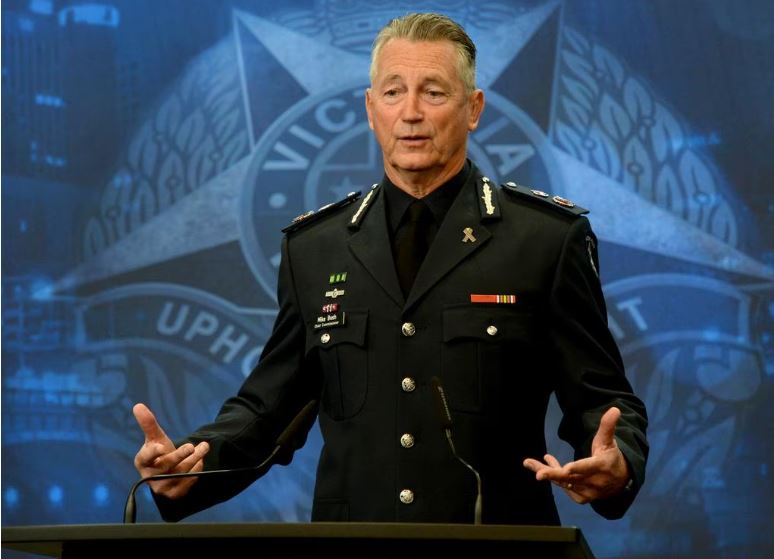
Starting where the rubber hits the road, Chief Commissioner Bush has implemented a Force-wide edict reversing a policy that has not worked and has been persevered with for years without empirical data to support its retention, exacerbated by the current lack of Force numbers.
The Minimum Police Station staffing policy, we suspect, was conceived within the upper echelons of the Force, far removed from the practical, real-world policing issues faced by police daily and the operational variables between one police station and any other.
An adverse byproduct of a bloated bureaucracy and a clear demonstration of why the one-size-fits-all approach is a failure.
Exposing these types of policy decisions gives an insight into the organisational failure that has plagued VicPol for years.
Running the ‘Oh my god’, ‘Close a Police Station?’ is an alarmist mantra that is not helpful without understanding the reality of policing and the history of how this once great organisation has declined due to poor management at the highest level.
The Chiefs’ edict does not necessarily translate into mass Station closures; it is more about moving decision-making to the level that is best equipped, where managers can make sound calls to serve the community better.
The Chief has previously indicated his interest in using former Police to assist the organisation, and the role of manning the public face of a police station could well fall within that concept.
The value of a long-serving experienced police member would not only provide better service delivery but also provide a role model function for junior police at a station.
The Local Area Commander (LAC) is the key person best placed to make resource allocation decisions within their span of control in consultation with Station or Unit Commanders.
The LAC benefits from local knowledge and an understanding of the strengths and weaknesses of the resources under their command.
To be most effective, the move to loosen the bridle on LACs and give them flexibility will undoubtedly come with additional accountability for the performance of the area under their Command. This, in turn, will also require subordinate managers within this structure to take responsibility for the performance and accountability of their units.
Suppose a Police Station is not managing the prevention and detection of crime to the standard set by the LAC for their area of responsibility. In that case, the manager should be mentored and, if necessary, receive additional training. If that fails, they should find an alternative position they are capable of managing.
The same rules should be applied equally to all managers in the hierarchical linear system, including LACs.
Properly implemented, this move will free up managers and their support staff further up the Totem pole to be redeployed as their functions diminish.
The bloated hierarchy resulted from creating and throwing another Command and all the ancillary Command support staff at a problem to fix it, rather than pragmatic management strategies.
Examples of unnecessary Executive Commands, like the four Regional Commands, can be rationalised.
If LACs are working correctly, then one Regional and one metropolitan are all that are required. State and Emergency Command can be addressed by the regional Commander where the Disaster is occurring.
That alone would free up a large number of Police and support staff, sworn and unsworn, to reallocate to operations and operations support at a Station level.
The Family Violence Command requires a coordination Office only, not a Command, and serious work to identify non-police functions in this space will free up countless police.
There are a myriad of other areas that need severe pruning or reorganisation because subsequent executives lost sight of the Police role – serving the community, not a corporate monolith, and not creating poor justifications for perceived weaknesses in the Force’s performance by establishing more bureaucracy or more Police Quangos.
It seems Bush is on the right track.
Thankfully, the Rotation management system has been largely consigned to the WPB, where it should have always resided. However, the damage caused will linger for years as the generation of officers who were blooded in that process and deprived of a real opportunity to learn and showcase their capabilities move through the system.
Whether many of them can regain their Mojo is, unfortunately, moot.
A serious consideration of reintroducing the prerequisite for all Officers to complete the Officers Training College as a live-in training facility would be a good step, allowing for a course restructuring to train all Officers in the rebuilding of a positive Police culture.
As a live-in course, the students gain insight into their peer’s experiences and develop career-long bonds that will serve them well as they progress. Having the opportunity to evaluate their own capability compared to peers’ develops an essential skill-set for future leadership roles.
Reviewing the approach to Officer Training would equip the Force for the next millennium, producing a modern, capable team of Officers who can apply the Peelian principles in a contemporary environment. A tendency to move training to a more academic, university-style model has not served the Force or the State well.
It would be unrealistic to expect all Officers to embrace the concept of effective policing and its accompanying accountability component, given the conditions they experienced under various flawed management models and the equally flawed application of them.
Additional training would be a very reasonable approach.
Focusing on the LACs first for retraining would hasten the benefits to frontline members, where the need for change is most critical, for their benefit and the community, where improvements in Force service delivery will be felt most keenly.
The organisation is way too top heavy and lacks the freedom and agility to provide an efficient and effective Police service. Officer selection appears to be based on the “woke” political mandates set down by the current socialist Government. Leaders must be selected purely on merit and demonstrated ability – not gender, nepotism and political orientation. The Police Fore is just that – a force, it must be well disciplined, well led and free to uphold the law without political interference. The strategic use of precious resources is a matter for Police command, none else.
The era of people not having a car to report a criminal offence or other matters is past. Any matter can be reported if willing to drive to a manned Police Station.
The current Transfer and Promotion system is flawed in the way that promoting a person into a position of supervision because they can write a good resume, tell
A board how good they are, but have no experience doing the job. This system is very subjected and open to corruption. People giving jobs, not to the best applicant, but the applicant that has demonstrated that they can be manipulated,
Nailed it.
There is a wealth of experience and knowledge that is held by retired members who would gladly man a Police station counter for a few days a week, as a 49 year, retired, veteran, my hand would immediately be raised for such a position.
I can see some very real benefits in this model. The re-employment of ex-members in an administrative capacity would also ensure that the public visiting stations are getting sound and experienced advice when seeking it.
But it would also dampen down the frequent attendance of these time-wasters and woke people that spend so much time tying up less experienced Watchouse members who don’t have the people skills or experience yet to dispense with this nonsense and time-wasting element in a timely manner.
But the real benefits are that having ex-members in this capacity provides good strong role models for less experienced members and gives them practical demonstration of experienced and effective communication skills and methods. And practical examples of accountability and decisive action on matters. Like the saying goes “you can’t put an old head on young shoulders”.
This would provide more progressive on the job experience and up-skill new members in many areas of policing more rapidly and comprehensively. And it would also give them go-to unsworn members for advice and support that they know understand their issues. Who will give them sound and practical advice.
I can see no significant negatives in this approach and I truly believe that many ex-members would truly enjoy the chance to re-engage with serving members and pass on their experience in a practical way in an ongoing capacity. It could possibly even re-invigorate the workplace in some stations to a degree also.
Of course, there will always be those that believe that ex-members are ex-members for a reason, but they will soon see the benefits of a move in this direction if they are honest with themselves. Obviously, the screening process would need to be rigorous for very clear reasons.
And I also think that the public attending Watchouse counters with real concerns would welcome speaking with an experienced ex- member who has the time to handle their enquiry. This over a young inexperienced member who is frustrated by being assigned to Watchouse duties and would rather be actively policing out on the road. But all members still need to be regularly rotated through a Watchouse alongside these potential ex-members. This experience can never be replaced.
A win-win for all I believe.
Peel’s principles are as valid now as they ever were. Preventing crime and disorder relies on the willing cooperation of the community. The public have to approve of police policies and behaviours The over the top Covid responses did not help and respect needs to be regained, ultimately the ideal social responses is a community that voluntarily observes the laws. If police are seen as an “adversary” or adopt that stance respect will diminish and levels of violence and anti-authoritarianism increase. Policing is a people business, the public need to be able to approach and talk with the police. Enforcing the law without politics, fear, favour affection or I’ll will in a fair and just manner will enhance the respect and reputation of police. Explaining why certain actions have to be taken or were taken will increase understanding. A more visible interactive level of service is required. Get police back into the community and community events. Volunteers in policing, crime stoppers and neighbourhood watch programs need faces up front. Police need to be seen physically in communities ( not driving by in cars) police on the beat as it were, labour intensive yes, but valuable. Local events organised by the police PCYC need to be more proactive. School visitations and interactions with youth can create relationships and valuable intelligence if done well. Local community hubs adequately manned can also help, simple things like bike patrols provide greater access to face to face policing. Some of these strategies are not always “ efficient” or cost effective, it’s not about the money it’s about safety or the perception of it and law and Oder in the community for the community with the community, pride in the police encourages better behaviour at all levels.
Disgraceful
Our police station and police officers are to protect us that pay our taxes.
This closing stations down are similar to our supermarkets and their self serve registers.
Where is our taxpayers money going???
This is about our ID surveillance, cameras, drones doing the work of cops and about government control not about our protection or security within our communities..,just look at our crime rate and immigration influx. Bring back the real people’s police force
Our very capable and experienced CCP must have located the”old chestnut cabinet” within the VPC. It’s the folder titled “Local Priority Policing.” That passed away quietly without an obituary.
I wish Mr. Bush all good fortune in managing an organisation dealing with a two billion dollar budget cut. Increasing operational staff may be an impossible task without a government back-flip in funding policy. However, we seem to have a good leader doing his best.
Yes, we are all in favour of increased foot patrol in our neighbourhoods. However, for members on the foot patrol to be effective, they have to possess the necessary communication skills. In our multicultural society police have to be trained to communicate across languages and cultures. Members on foot patrol who converse only amongst themselves, as often is the case, are useless when it comes to forging positive relations with the community. They have to become the visible and integral part of the community they serve. Like the English “bobby.”
In the good years of policing in Victoria, bi-lingual members wore a language tag on their uniform identifying the language they spoke. That was one of the important strategies in pro-active, community involved policing.
The more well trained police on foot patrol, the better. Clerical jobs so often performed by police may easily be done by retired police! Let us be flexible and open minded about this. We have to think outside the square!! We have to do something pretty quickly otherwise our beautiful state of Victoria will fall into anarchy.
The era of people not having a car to report a criminal offence or other matters is past. Any matter can be reported if willing to drive to a manned Police Station.
I agree totally with your comments on live-in training for Officers. The Force should definitely move away from the trend to academic- university style training abd concentrate (once again) on discipline and law enforcement. As Alex mentioned, it is The Victoria Police FORCE. Care must be taken when selecting/appointing Instructors at all levels of training.