
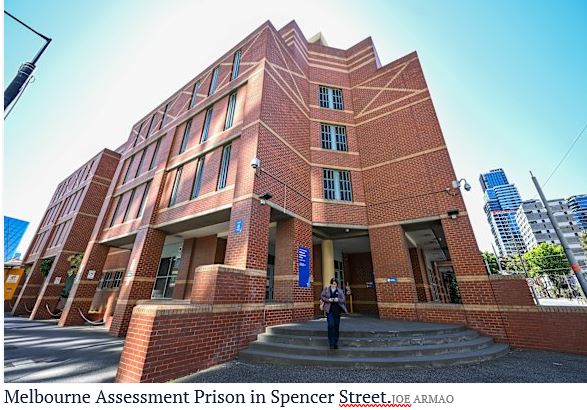
‘Decanting’ is the name given to the process of shuffling prisoners on remand around Police stations to avoid exceeding the 14-day holding limit for each prisoner. With over 300 prisoners being shuffled between Police cells, as reported in The Age on the 24th of February 2026, this is an absolute disgrace on multiple fronts. Foremost is the unnecessary use of Police time being absorbed, not only the physical movement of prisoners, but the wasted time police spend on accompanying paperwork. Additionally, the greatest risk to the safety of Police and Prison staff is when prisoners are being moved, and the risk of escape or violence is most likely to occur; therefore, prisoner movements must be discouraged, not extended.
But back to the ‘Decanting’. How is it that the Force can breach the detention days by shuffling prisoners? They are still in detention, and the police are being used to breach the intention of the Prisoner management rules – how legal is that? The strategy of this process allows the police to ‘reset the clock’ to avoid breaching regulations. That is not how a problem like this should be dealt with, breaking the rules, and a proper solution needs to be determined as a matter of urgency before a hapless police member is caught up in an incident with a Prisoner during the transport that sees the member injured or charged.
If something happens, you can bet the hierarchy will see the blame at the frontline, not the administration’s failure to facilitate a solution to an obvious, avoidable problem. We have lost hundreds of Police from the street whose job it is to protect us, but we have police tied up ‘defending prisoners’ rights, how is that justified? Facilitating the police to break the rules is a disgrace. We expect our Police to set an example for the rest of the community, but in this case, the Force accepts/requires breaches to occur, although the problem was not caused by the Police.
Charging criminals and opposing bail for the safety of the community is their real job. We accept that prisoners on remand are not convicted of the alleged crimes, and that a Court has determined they should be remanded pending the hearing to determine the outcome of the charges. Ensuring the prisoner returns to Court and that the community’s safety is protected are essential considerations. The prisoner’s welfare or cultural issues should play no part in the Court’s decision, as all prisoners should be treated equally before the Law. The solution is mind-bendingly simple. For a Prisoner to be held on remand, they have the same physical and administrative resource needs no matter where they are located. And the Prisoner on remand or a Prisoner serving a sentence should have the same basic rights and restrictions.
The label on the door is the only thing that changes from one cell to another. That the prisons are full is hardly an excuse, given that they were closing down a Jail in Victoria and building additional capacity in the juvenile justice space. Some creative management should solve this problem overnight, and a Prisoner on remand in the same facility as Prisoners serving sentences, though separated, must and could well be accommodated.
Remember, the label on the cell door determines the status of the person behind it. The management of Prisoners is a corrections issue, not a police one, and given the egregious level of lack of safety the public is experiencing, it is essential that police used in this process be returned to general duty (making us safe) as an absolute priority. This problem dates back to at least 1987. After almost forty years, it cannot be said that the Government has been taken by surprise.
The Community Advocacy Alliance (CAA) is funded by the members and the generous donations from the public. Please consider donating to help us continue to work for you. Simply click on the button below. Thank you - your generosity is very much appreciated.

Had to laugh. Like so many other issus left to fester over the years, I vividly recall this ‘decanting’ going on when I was Watchhouse Keeping at Flemington back in the 80’s. Nothings changed!
Where is the TPA!!!!?there only by name and a labour puppet. Happy to collect funds and that is about it. Huge disappointment.
Great, now give us a solution! The problem you are highlighting is already known.
The solution is blindingly obvious. The Government must direct funding to providing adequate facilities for accommodating prisoners on remand. Spending billions on digging a hole from Cheltenham to Box Hill has bankrupted the State. However, Governments over the past 40+ years have also ignored the problem.
Yes round we go
This problem surfaces every now and then , no one cares and it go’s away. It should be illegal the police should raise the bar and refuse to do it.