
by CAA | Nov 6, 2025 | Library, Media, Politics, Uncategorized, Victoria Police Issues
There is a lot of faux bluster and wringing of hands over the use of the Police Chopper by the Chief Commissioner Mike Bush in recent times, his trip to Tasmania and now a flight from Avalon to the Victoria Police Centre (VPC).
It has now been reported that he allegedly took his wife on a flight and committed the most grievous sin of allegedly laughing about the brouhaha of the Tasmania flight.
In the scheme of things, these issues are nothing but white noise, but there is an underlying sinister overtone.
At worst, the Chiefs’ use of the aircraft could be argued as him having a ‘tin ear’.
The last accusation of using an aircraft to return from Avlon was perhaps expedient, and it matters little whether the Chief was in the back seat of his Car or the helicopter for the return. Both vehicles had to return to Melbourne.
The most serious issue that must attract the greatest focus is the report of the alleged laughing by the Chief Commissioner in a group about the Tasmanian flight.
There could be a million reasons for jocularity, but that of itself is incidental.
What is most egregious is that this was reported to the media, which can only be described as a bona fide undermining of his position.
The other airwing use could have been leaked by any number of people, but this latest alleged reaction could only reasonably have been done by his inner circle, indicating where all the leaks emanated.
It goes to the heart of the solidarity of the Command of VicPol and is very worrying, highlighting the difficulties that exist at that level in the Force.
There is obviously a rat in the ranks.
In an organisation where the average Police member would be hung, drawn and quartered for even a misspoken word to the media or anybody else outside the Force, but those in the upper echelons feel they have the right of free rein to attack the Chief.
The Herald Sun reported:
“Some police staff are understood to be fuming over the undeclared flights, with one describing his wife’s trip as nothing more than “a joy ride”.
“People are really annoyed he has misled them,” a source said.
“He is taking the public, and his staff, for fools … It’s about integrity.”
Sources also claimed that Mr Bush and a few of his colleagues had further upset staff by “laughing about Choppergate” since his apology on October 22.
They added that it was particularly galling at a time when positions were being reviewed as part of a force restructure.
“Everyone is really scared about their jobs,” they said.
To that statement, we add – the ‘Source and some Police staff ‘ ought to grow a backbone and talk to the Chief about their concerns, that would be integrity. But only after the Source has a chat with the psych unit about their insecurities.
Double standards cause poor leadership and management at any level.
The Chief underestimated the nature of the VicPol hierarchy by announcing his intent to streamline the upper command and release many staff and other managers from unnecessary Command Units, returning them to the frontline, where the priority lies.
The NIMBY (Not In My Back Yard) principle has been applied by incumbents being forewarned of the austerity target, and somebody or some people in these higher positions are so insecure that they see themselves as being part of the austerity target, so feel the need to discredit the Chief and, in turn, sabotage his intent.
As far as we are concerned, the person or persons responsible for the leaks should be the first to go. Fulfilling their own insecurities. Check their phones.
It makes one wonder whether the use of the Airwing was a decision by the Chief or whether he was receiving advice to set him up for criticism.
Perhaps his biggest failure was to underestimate the narcissism that is created by being part of the VicPol executive command, and that he must now be extremely diligent, as this latest issue may, in fact, be the start of an orchestrated campaign to discredit him.
Most danger will come from those who have worked hard to be close and gain his trust.
Ironically, a trust not reciprocated.
by CAA | Oct 16, 2025 | Industrial Action, Library, Media, Politics, PTSD, Uncategorized, Victoria Police Issues
Herald Sun, October 15, 2025.
“In a move that has sent shockwaves through the Force, lawyers have successfully argued against any State liability because police officers are sworn officers, not employees.
The argument has been upheld in a number of recent decisions in the County Court that have prompted calls for the Allan government to urgently reform existing legislation that has become a barrier to claims by psychologically injured officers.”
In knocking out the claim, the County Court held that there was no basis for the imposition of a duty of care in favour of the officer.”
Resulting from this legal decision, the indemnity of the State from liability to compensate police injured on duty or who later suffer from PTSI is deplorable. The issue of vicarious liability was also discussed, but faced the same fate for the Police.
“The issue of vicarious liability being owed to injured officers has drawn comparisons by the court to a recent High Court decision, known as Bird v DP, that held that institutions could not be held liable for sexual abuse if an offending priest or member of an institution was not in an employment relationship.”- HS
All of these legal manoeuvres to avoid liability by the government have not been happening behind closed doors, or in a vacuum, so the Government must have been aware of what was being foisted on the Police, and, for that matter, every other sworn person employed or otherwise in the State who are not covered by specific legislation.
Which brings us straight to the Premier, who surely would have been briefed on the risks of these legal findings posed.
Having considered the risk, I wonder if the Premier will be bothered to walk outside and have a friendly chat with her own personal security detail.
The conversation might be along the lines of;
“Hi, guys. You may have read about the court’s finding that you are not covered, should you take a bullet for me? The mental anguish is not covered, but rest assured, we will do something about it at some time.”
“You can at least take heart that should the unthinkable happen and you make the ultimate sacrifice, I will very much appreciate it, and your family has your super, and we promise to leave that alone (at this stage), apart from taxes”.
The State does not owe you a duty of care, but I care; No, I mean I really, really, really do care, believe me, now back to work”.
Equally inane in this legal debacle is that the Judiciary also relies on the police for their safety. Although for obvious security reasons it is not public knowledge, there is no doubt that in certain high-risk proceedings, the jurists are provided with close personal security. We wonder how those Police feel now.
It was also reported in the same article that;
“Australian Lawyers Alliance Victorian President, Susan Accary, on Wednesday called for urgent reforms”.
“Recent court decisions that have allowed Victoria Police to avoid responsibility for injuries to police officers do not reflect the general understanding of the employment relationship between the police force and its officers,” she said”.
“Police officers are employed by the state and are engaged in critical, dangerous and sometimes, traumatic, work.”
“It is unfortunate that the law as it currently stands allows the state to avoid their obligations to their officers.
“Police officers, who often work in a high-risk environment for the benefit of the community, should be able to rely on the state to provide them with the support they need if they are injured at work.”
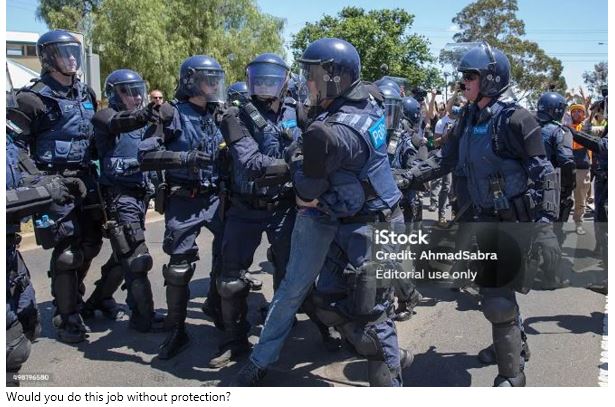
The risk of more police industrial action is real, as no police member would want to or should be forced to go to work without protection, so it is somewhat interesting that the Police Association is not pursuing a mass walkout of Police.
It is ironic that the last Police strike in 1923 occurred just before the Spring Racing Carnival. The Victoria Police force at the time was understaffed, poorly paid compared to other State police forces, and lacked an industry pension. Although the Police now have Superannuation, the rest of the similarities have a certain Déjà Vu ring.
To follow the illogical legal argument proffered in the courts, the relationship between any sworn person and their employer is a relationship without a ‘duty of care’.
The list of people who are now exposed is extensive, but not limited to,
Clergy, Municipal Office bearers (Mayors), all politicians, the Governor, all Judges and other jurists, even your local scout master, in fact, anybody that takes an oath as part of their employment, paid or otherwise, would seem to immediately exclude their employer from any ‘duty of care’.
If this logic is followed, the employee ceases to be an employee in the usual sense of the word, making it equally outrageous.
This could only happen in Victoria.

by CAA | Jun 30, 2025 | Current, Drunk, Investigations, Library, Media, Police in Schools, Police Veterans in Schools, Politics, Road Safety, Safe Injecting Rooms, Victoria Police Issues
PLAN 100.4 – 2025 – Summary
The document outlines the Community Advocacy Alliance’s strategic plan for improving service delivery and addressing law enforcement issues within Victoria Police by 2025.
Leadership and Accountability in Victoria Police
The Community Advocacy Alliance (CAA) emphasises the need for improved leadership and accountability within Victoria Police to restore public trust and enhance service delivery. The current structure is criticised for being bloated and ineffective, with senior officers often avoiding accountability for their actions.
- The CAA has submitted multiple plans since 2018 to address law and order issues in Victoria.
- Senior police officers have been allowed to evade accountability despite evidence of misconduct.
- The organisation suffers from poor command decision-making and a culture of disrespect for the law.
- A significant reduction in executive ranks (30-40%) is proposed to streamline operations and improve accountability.
- Decision-making should occur at the lowest possible level to enhance responsiveness and effectiveness.
Service Delivery as a Priority
Service delivery has been identified as the most urgent issue facing Victoria Police, with a significant deficit in understanding and execution over the past decade. The CAA argues that efficiency should not overshadow the importance of effective service delivery.
- Service delivery has deteriorated, with little evidence of improvement in the last ten years.
- Senior officers often confuse service efficiency with service delivery, leading to ineffective strategies.
- Initiatives to improve efficiency have often compromised service delivery, creating a “them and us” mentality.
- The effectiveness of policing is directly related to its relationship with the community it serves.
Measuring and Improving Service Delivery
The CAA proposes several strategies to measure and enhance service delivery, emphasising the need for modern, qualitative measurement techniques. Feedback from the community is crucial for understanding the effectiveness of services.
- Implement modern qualitative measuring techniques for service delivery.
- Establish a feedback line for the public to report their experiences with police services.
- Set benchmarks for response times to ensure accountability in dispatch and arrival.
- Extend the emergency activity map to include police incidents for better community awareness.
- Introduce a protocol for phone contact to ensure professionalism and accountability.
Structural Reforms for Effective Policing
The CAA recommends significant structural reforms within the Victoria Police to address inefficiencies and enhance service delivery. This includes reducing the number of executive positions and reintroducing intermediate ranks.
- The current executive structure is bloated, with a 16% increase in Deputy Commissioners since 2019.
- A reduction of 30-40% in executive ranks is recommended to improve decision-making and accountability.
- Reintroducing ranks like Chief Superintendent and Chief Inspector can enhance local decision-making.
- The promotion process should be competency-based to eliminate nepotism and improve morale.
Cultural Change and Community Engagement
A positive organisational culture is essential for effective policing, and the CAA highlights the need for cultural reforms to rebuild trust and respect within the community. Engaging with retired members and honouring fallen officers can strengthen this culture.
- The culture of Victoria Police has declined, leading to issues like media leaks and mistrust.
- On-the-spot discipline notices can address minor infractions and improve accountability.
- Engaging retired members can provide valuable insights and foster respect within the organisation.
- Building a culture of respect and professionalism starts with the police uniform and leadership example.
Addressing Mental Health and Well-being
The CAA emphasises the importance of addressing mental health issues within the police force, particularly regarding the impact of disciplinary actions and investigations on officers’ well-being.
- Research is needed to explore the correlation between investigation techniques and PTSD among officers.
- Every member subject to disciplinary action should have an independent advocate to ensure fair treatment.
- The culture of respect and support must be reinforced to prevent adverse mental health outcomes for officers.
Recruitment and Selection Process Improvements
The recruitment process for the Victoria Police must prioritise both mental and physical robustness to ensure that candidates can handle the demands of policing. A multi-level probation system and careful assessment of applicants’ suitability are essential to maintain the integrity and effectiveness of the force.
- Recruits should be assessed for mental and physical fitness to perform police duties.
- A multi-level probation period of four years is proposed to ensure ongoing evaluation of recruits.
- Non-performing members should be offered transfers to alternative roles rather than remaining in policing.
- Emphasis on character and resilience in candidates to prevent PTSD and ensure operational readiness.
Enhancing Foot Patrol Effectiveness
Foot patrols are a critical aspect of community policing that requires improved training and situational awareness among officers. The proper execution of foot patrols can enhance public safety and foster better community relations.
- Officers should patrol independently to maintain situational awareness and reduce risks.
- Engaging with the community through eye contact and acknowledgment builds trust and confidence.
- Current foot patrol practices often lack focus, with officers distracted by conversations or mobile devices.
Leveraging Technology for Policing
The integration of advanced technology, such as AI and GPS, can significantly enhance policing efficiency and effectiveness. However, it is crucial to implement these technologies thoughtfully to avoid potential risks.
- AI-driven facial recognition and CCTV can provide real-time information on suspects.
- The G-Tag initiative aims to reduce car theft and enhance community safety by allowing police to disable stolen vehicles.
- GPS technology should be managed to prevent misuse by criminals.
- Mobile technology must be standardised for all officers to improve communication and documentation.
Management and Operational Efficiency
Improving management practices within Victoria Police is essential for enhancing operational efficiency and accountability. A focus on performance metrics and resource allocation can lead to better service delivery.
- Backfill police stations to authorized personnel levels to ensure adequate staffing.
- Downgrade the influence of statistics in decision-making, allowing commanders to focus on operational needs.
- Implement bi-weekly progress reports for commanders to track performance against KPIs.
- Establish a Reserve Unit to manage underperforming members and maintain operational readiness.
Youth Engagement and Community Programs
Strengthening youth engagement initiatives is vital for fostering positive relationships between police and young people. Programs like “Police in Schools” can have a significant impact on youth behaviour and community safety.
- Introduce a dedicated Youth Command to oversee youth-related initiatives and strategies.
- Re-establish the “Police in Schools” program to build trust and educate children about law enforcement.
- Support existing programs, such as Blue Light Victoria, and explore the establishment of Police Citizens Youth Clubs.
- Develop partnerships with community organisations to enhance youth engagement efforts.
Transparency and Media Relations
Improving transparency and media relations is crucial for rebuilding public trust in Victoria Police. A strategic approach to media management can enhance communication and community confidence.
- Appoint a high-ranking officer with operational experience as Media Commander to oversee information dissemination.
- Ensure operational members can speak to the media without fear of criticism.
- Address media leaks by focusing on the underlying issues rather than punishing whistleblowers.
Addressing Drug Issues with a New Approach
A shift from harm minimisation to a four-pillar approach (Health, Law Enforcement, Education, Rehabilitation) is necessary to address drug-related issues in society effectively. This comprehensive strategy aims to reduce drug use and its associated harms.
- Implement health orders allowing police to take individuals affected by drugs into care for treatment.
- Establish secure facilities for drug treatment and triage to address addiction issues.
- Focus on street-level drug dealers and users rather than high-profile offenders to disrupt the drug trade.
Legal System Reforms for Victims
Reforming the legal system to prioritise victims’ rights and streamline processes is crucial for enhancing justice outcomes. Abolishing the committal process and enhancing victim support can lead to a more efficient legal framework.
- Abolish the committal for the trial process to reduce delays and trauma for victims.
- Provide legal representation for victims of major crimes to advocate for their rights and interests.
- Implement enforceable compensation orders for victims to ensure accountability from offenders.
- Construct purpose-built facilities for victims to give evidence remotely, enhancing their safety and comfort.
Community Engagement and Policing Strategies
Effective community engagement is crucial for fostering trust and enhancing perceptions of police effectiveness. Strategies should focus on improving community interaction and local ownership of policing efforts.
- Realign crime trend analysis to measure community attitudes towards police effectiveness.
- Expand the Neighbourhood Watch program to foster community involvement in crime prevention.
- Review patrol systems to allow officers more time for direct community interaction.
- Dispense with the “Super Station” concept to refocus on local community policing.
Mental Health Support for Police Officers
Enhancing mental health support for police officers is crucial for their well-being and operational effectiveness. Continued efforts are needed to address the mental health challenges faced by serving and retired members.
- Maintain and improve programs like The Hub to support the mental health of officers.
- Legislate indemnity for officers acting in good faith to encourage proactive policing.
- Reintroduce the practice of gazetting positions to stabilise the organisation and improve morale.
Retirement and Reservist Programs for Officers
Developing a reservist program for retired officers can provide valuable support to current members while maintaining their sense of identity and purpose. This initiative can enhance community policing efforts and provide mentorship.
- Allow retired officers to retain their police identity and serve in a reserve capacity.
- Implement a system to recognise the service and contributions of retiring officers.
- Utilise retired officers for non-frontline duties to relieve operational pressures on current members.
FOR THE FULL VERSION OF PLAN 100.4, click on the link below:
by CAA | May 9, 2025 | Library, Media, Uncategorized, Victoria Police Issues
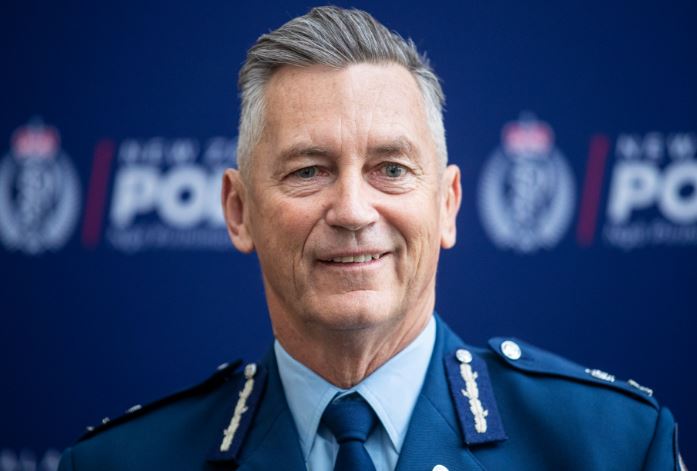
The appointment of former New Zealand Police Commissioner Mike Bush as Victoria’s new Chief Commissioner opens the way for a new era of back-to-basics policing.
To be effective, Mr Bush will need to exhibit an unfailing commitment to always acting with integrity.
A reputation for acting with and exhibiting integrity gains the trust of the police workforce and the trust of the public the force serves.
It is imperative that the Victoria Police change.
In June 2022, the Community Advocacy Alliance (CAA) called for a Police leader independent of the Victoria Police to implement change because the workforce and public trust in police leadership had declined dramatically.
Both police and the public have become disenchanted by the way policing has been conducted over the last twenty or more years.
Mr Bush has an impressive record of changing the then totally reactive policing method in New Zealand to a predominantly proactive crime prevention model that reduced the incidence of crime by twenty per cent in four years.
While arresting and charging offenders is a major requirement of an effective police force, preventing crime is an essential top priority.
The best policing produces no measurable result. If there is no disorder, no crime and no traffic offences, policing may be highly effective, but there is nothing to measure or do except to note the reduction in crime and disorder and the increase of faith in police by the community.
The drop in the crime rate in New Zealand under the Bush-style leadership of police is strong evidence that a new policing model can be introduced, led and managed by this appointment.
Basically, we must see a return to the nine Peelian (ethics, trust and engagement) policing principles:
- To prevent crime and disorder, as an alternative to their repression by military force and severity of legal punishment.
- To recognise always that the power of the police to fulfil their functions and duties is dependent on public approval of their existence, actions and behaviour, and on their ability to secure and maintain public respect.
- To recognise always that to secure and maintain the respect and approval of the public means also the securing of the willing co-operation of the public in the task of securing observance of laws.
- To recognise always that the extent to which the co-operation of the public can be secured diminishes proportionately the necessity of the use of physical force and compulsion for achieving police objectives.
- To seek and preserve public favour, not by pandering to public opinion, but by constantly demonstrating absolutely impartial service to law, in complete independence of policy, and without regard to the justice or injustice of the substance of individual laws, by ready offering of individual service and friendship to all members of the public without regard to their wealth or social standing, by ready exercise of courtesy and friendly good humour, and by ready offering of individual sacrifice in protecting and preserving life.
- To use physical force only when the exercise of persuasion, advice and warning is found to be insufficient to obtain public co-operation to an extent necessary to secure observance of law or to restore order, and to use only the minimum degree of physical force which is necessary on any particular occasion for achieving a police objective.
- To maintain at all times a relationship with the public that gives reality to the historic tradition that the police are the public and that the public are the police, the police being only members of the public who are paid to give full-time attention to duties which are incumbent on every citizen in the interests of community welfare and existence.
- To recognise always the need for strict adherence to police-executive functions, and to refrain from even seeming to usurp the powers of the judiciary of avenging individuals or the State, and of authoritatively judging guilt and punishing the guilty.
- To recognise always that the test of police efficiency is the absence of crime and disorder, and not the visible evidence of police action in dealing with them.
These principles define the mission: keeping law and order, reinforcing a sense of safety, and preventing crime.
Today, the principles must still guide police work and form the basis for a relationship of trust between the police and the community.
This is clearly indicative that it is time for Victoria Police to modernise its leadership and management processes and shake of decades of ineptness while retaining what is sound.
We believe that the capacity, under the leadership of Mike Bush will enable Victoria Police to address these issues.
The CAA believes that the reintroduction of programs like Blue Light, the Ropes Program, the Police in Schools program introduced in Victoria in 1989 and which ran very successfully moderating youth crime until abolished in 2006 and other proactive initiatives will receive active support from Mr. Bush as Chief Commissioner and we will see rapid and lasting improvement in combatting crime in Victoria and the restoration of respect for police that has so sadly been lost.
Mr Bush has demonstrated he is the right person to lead Victoria out of the morass into which it has descended.
Along with the CAA, I welcome Mr Bush and wholeheartedly endorse his appointment.

by CAA | Apr 5, 2025 | Library, Media, Politics, Uncategorized, Victoria Police Issues
In a hugely embarrassing turn of events, Acting Chief Commissioner Rick Nugent has announced he will not be applying for the top job after being hand-picked and parachuted into the acting role.
As disappointed as many of us are in his decision, he may well have done Victoria Police and Victoria a considerable service, highlighting and shining a light on the role and failures of Victoria Police Command, forcing the State to take a new approach to selecting its senior executives because by any measure the current process is an abject failure as history shows.
Without major surgery on this selection process, it will be like the adage of ‘doing the same thing tomorrow and expecting a different result’: the definition of insanity.
To fully understand the failure of Police Command, we need to look no further than the Police Oath of Office that all Serving Police, irrespective of rank, must take and abide by, but as history has now shown us, this oath only applies to some within the organisation when it suits them and is breached with regular monotony when it doesn’t.
The VICTORIA POLICE ACT 2013 – Schedule 2— sets out the Police Oaths and affirmations and has four key points within that oath.
The Oath commits Police to perform their duties in a particular manner,
- …without favour or affection, malice or ill-will,
- …will see and cause the peace to be kept and preserved,
- …will prevent to the best of my power all offences,
- …will, to the best of my skill and knowledge, discharge all the duties legally imposed on me faithfully and according to law.
When applying these key points to the performance of Police Command over several years, the score is abysmal and indicates many examples of wanton disregard for this Oath.
We are not suggesting that all Police commanders have been tainted over the last two decades, but the buck stops with the Chief Commissioner and the Command team. They bear ultimate responsibility for the performance and activities of the organisation, but the litany of breaches from which there have been no repercussions against those responsible is staggering. Adding to the dearth of leadership, unbelievably, many police directly involved in these issues have since been promoted.
How can we have a Police Force where poor performance is rewarded?
The following list is accompanied by the number allocated to each part of the Oath above.
- A Chief Commissioner, as the then State Disaster Coordinator, having dinner with friends while Victoria burnt and Victorians were dying. A State disaster with the coordinator missing. Deserting her post in a crisis.(4),
- A Chief Commissioner accepting free flights from an airline. (4)
- The Gobbo affair. Multiple Chief Commissioners and others created, facilitated or turned a blind eye to this issue. No police were disciplined for their roles or failures, but some were promoted to high ranks.
The severity of the poor behaviour by Police, particularly senior members, was set out by the High Court.
[Ms Gobbo’s] actions in purporting to act as counsel for the Convicted Persons while covertly informing against them were fundamental and appalling breaches of [her] obligations as counsel to her clients and of [her] duties to the court. Likewise, Victoria Police were guilty of reprehensible conduct in knowingly encouraging [Ms Gobbo] to do as she did. They were involved in sanctioning atrocious breaches of the sworn duty of every police officer to discharge all duties imposed on them faithfully and according to law without favour or affection, malice or ill-will. As a result, the prosecution of each Convicted Person was corrupted in a manner that debased fundamental premises of the criminal justice system.
That nobody was held accountable for this debacle is part of the leadership problems in the force. How can subordinate members act professionally and ethically when they see their superiors not subject to the same rules usually applied? (1), (3), (4).
- Stealing from the State. Two Politicians committed fraud on the state by falsely and unlawfully claiming accommodation travel expenses but were not prosecuted for the theft. (1), (3), (4).
- The ubiquitous Red Shirts saga in 2019 failed to see any prosecutions after blatant interference in the electoral process. It should be noted that the Office of Police Integrity (OPI) decided not to prosecute, but the head of the OPI was later appointed as Chief Commissioner. (1),(2),(3),(4).
- COVID-19 saw the worst performance of Police senior management in the force’s history, only challenged by the Gobbo Affair.
Whether it was the refusal of the Police to provide supervision of the quarantine facilities, which claimed over 800 Victorian lives, or how the community was controlled, from handcuffing a Mum in front of her children for relatively innocuous online comments, accosting old ladies sitting on a park bench, using live ammunition on people demonstrating against harsh and unrealistic restrictions, and activating ‘tea bagging’ control strategies forcing demonstrators to crowd together was the opposite of the essential medical advice for the disease. The over-the-top responses did nothing to achieve objectives other than a perverted sense of authority as displayed by the Government. The argument that the Police only applied the government health order is ridiculous. A Government cannot force a member of the Police Force to breach their Oath of Office; however, throughout the pandemic, it regularly did, and the Force Senior management chose to play along with the Government and defy and ignore their Oath of Office. No disciplinary or criminal charge was laid against breaches by the Police. Albeit that senior command neglected to follow their Oath, all police involved each had a sworn duty and should have been able to exercise their right not to breach their Oath.(1),(2),(3),(4).
- A very Senior Officer accepting a free first-class trip to America from another Government Agency aggravated by yet another Senior Executive permitting the girlfriend of the Officer, employed by VicPol in a different department, to accompany him. The conference they were slated to attend had no relevance to their roles in VicPol. An all-expenses-paid junket. (4).
- A social media troll outed as a senior officer using a non-de-plume to distribute foul material on social media aimed at colleagues. (4).
- A Senior Officer castigating a junior member on social media. (4) also berating health volunteers in public (4) and instigating a Road Rage altercation in a school car park (4). It took so long and so many indiscretions before he was advised his contract would not be renewed. That no action was taken against this senior office was a disgrace and a poor reflection on the relevant Chief Commissioners (4).
- Slug-gate was another disgraceful episode in Victoria’s policing of this state. The ongoing issue started with an alleged slug being placed in a food factory by a municipal health inspector, which closed the facility and caused 44 employees to lose their jobs. This was significant because it came to light that the alleged relationship between the CEO of the local council and the local Area Commander was very close, breaching professional norms. Still, no investigation was ever carried out to determine if that relationship had conspired to damage the food factory, a competitor of a new factory set up by the Government, of which the local Council CEO was a director. The principal Police officer was promoted, a common thread of miscreants in the Force.(1), (3), (4).
- The mishandling of the ‘Bike Boy’ incident involving the wife of the former Premier showed again how the influence over the police operations was directed not by the sworn duty of Police but by some other imperative. Senior Police should have immediately become involved to ensure proper processes were followed. We are still waiting to see who will be promoted by this Police inaction.(1), (3), (4).
What does stand out in this list is the number of Police who were involved who were promoted in what has the look of quid pro quo? Protect the guilty, and you will be rewarded; by any measure, this is corruption. This seems to be part of the reason so many incompetent Police achieve exalted ranks. It’s not how good you are at your job but how good you are at protecting individuals in high Office.
There are other incidents, but what is common is that when browsing the list, the offences of Conspiracy to Pervert the Course of Justice can be applied in nearly every case, as can Malfeasance or Misconduct in Public Office in every example, not to mention numerous disciplinary offences.
The picture painted shows the depth of criminality by senior police or, at best, the sheer incompetence of senior management in running the force. Inevitably, the applicants from VicPol will include some who have been tainted by the issue listed herein. Avoid, at all costs, ‘putting a fox in charge of the hen house’.
Poor selection processes and partisan political interference in the appointment processes have driven this.
To appoint somebody who has no direct knowledge of this particular Force and the players (knowing where the skeletons are hidden) will flounder and fail no matter how well they’re credentialed. We can only hope that the previous poor performance of former Federal officers in executive roles in VicPol will not be repeated. Federal Police leadership has very limited, if any, experience in running a community-based force. Crime prevention, central to community-based Policing, is an anathema in Federal policing. No matter how good they are in the Federal sphere, to appoint one as Chief in Victoria will be another retrograde step.
Avoiding this advice will inevitably cause political pain no matter who is in power.
The options available to the Government in the short term are that the appointment is made via a partisan arrangement, and that should be very attractive as any failures in policing can’t be sheeted back to the government; they can still revel in Police successes.
The other option is a Police Board to oversee Police operations; it must be by partisan appointments to be effective.
The current government has some electoral difficulties and can ill afford another failure at the top of VicPol.
Repairing the Force is a massive undertaking, and the successful applicant will have their work cut out and need all the support that can be mustered. Hence, the attraction to a Board comprised of former police and civilians from a broad cross-section of the community is not dissimilar to the success of the Community Advocacy Alliance (CAA), which adopted this approach and has become a powerful voice of reason.
Many Former police are attracted to these roles as they are no longer impacted by the pressure of working politics in the police environment and all the pressure for promotion. They are still morally bound by the good ethics of Policing.

by CAA | Feb 5, 2025 | Library, Media, Politics, Victoria Police Issues
Victoria can be forgiven for collectively exercising a sigh of relief at the announcement by the Allan Government about Bail Laws, Herald Sun 4th February 2025, but relief may well be premature until we see the new plans because we are not hopeful that the Government has seen the light and is proffering a solution to the worst crime rate in Victoria’s history and this may not be the silver bullet of Victoria’s hope.
The government only appears to view the problems through a narrow prism which will not lead to solutions that altering the Bail Laws is promoted to achieve.
We are not confident because the Premier has called an ‘immediate review’. Yes, that is the get-out-of-jail card so often brandished by politicians in a corner.
Pardon our scepticism, but we have seen all this before. No meaningful outcome will be achieved as the people called upon to conduct this review are the same people who advised the government on the ‘New’ crime laws passed into legislation less than six months ago that achieved little if any positive impact; at least, there is no noticeable change in the way the Courts or Police are operating that is visible.
The probability is not high that a new review by the same people and departments will expose how they got it all wrong last time.
What will happen is that the review outcome will exonerate the previous architects; the new review will see to it.
The irony is that the Premier does not even recognise the problem she is supposed to be dealing with.
There is no argument from us that the Bail Laws must be tightened, as must the judiciary’s discretion, as they will find ways to bypass possible changes to the Law.
And yes, if this is done correctly, we will see an improvement in the Law-and-Order space, but we cannot be complacent, as the crime issue will not be addressed by one magic (or not-so-magic) bullet.
All the changes in the Bail Laws may be thwarted by the judiciary, who have all seemingly overindulged in the Restorative Justice cool-aid.
The review must include how the independence of the judiciary can be retained while complying with any new strategies introduced.
Judicial accountability would be a good start.
Of equal importance is an understanding that crime prevention is the most cost-effective strategy to reduce crime. Stopping crimes happening first rather than dealing with the miscreants after they commit crimes makes absolute sense, but that does not sit well with some ideological advocates.
Seen often as the soft option, in Police parlance, Proactive policing is the only strategy shown to work.
The power of police foot patrols interacting with the community regularly is one of the most underrated weapons in the Police arsenal, but Victoria Police would instead put resources into the plethora of Task Forces and any other groups that are targeted at a particular crime after the event. We believe there are literally thousands of Police tied up in special target groups at a State and local level.
There will always be a need for some Task Force groups. Still, VicPol has become so addicted to them that they see no other alternative strategy, and there is no evidence that the Task Force approach actually works. With a rising crime rate, it is highly improbable they have any impact on the overall crime, only spasmodic impact on particular offenders who immediately get bail anyway, so the Police Task Force has been a waste of time.
Victoria has proven beyond any shadow of a doubt that recently developed strategies in combination promote /facilitate crime, not reduce it.
As we have pointed out previously, children do not enter this world with an ingrained criminal disposition; all criminal values are taught, so early intervention in a child’s development is critical, and the formative Primary School Years are the logical target area if a difference is to be achieved.
If a large percentage of police resources dedicated to Task Forces were redirected to early intervention, we would see a dramatic decline in crime.
Police performing their proper function would also see the Force attracting more recruits and retaining those they have.
The Premier would do well to ask the community what strategy they would prefer.
After all, they have to live with the consequences of whatever is implemented- this review must focus on Service Delivery as their guiding principle.
by CAA | Jan 8, 2025 | Investigations, Library, Media, Politics, Road Safety, Victoria Police Issues
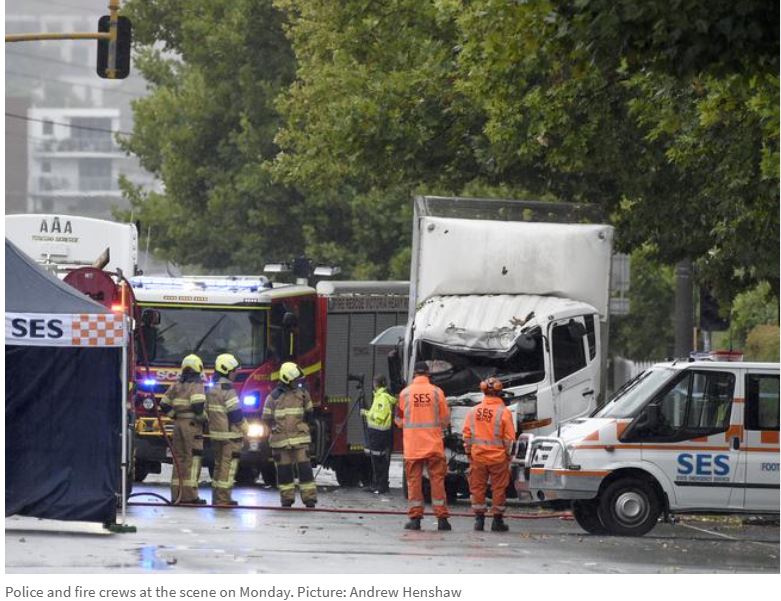
A 67-year-old male driver lost his life when his small car was destroyed by a speeding truck.
The truck was allegedly stolen, and Police had failed to stop it using ‘stop sticks’.
Apart from the ‘stop sticks’ being old problematic technology, we need to look further as to why this life was wasted and what systematic failures contributed to the death.
The ability of police to intercept dangerous vehicles safely must be addressed, and new technologies capable of stopping a vehicle must be legitimately explored.
The CAA has long advocated for the introduction of the G-Tag (see https://caainc.org.au/the-g-tag-a-new-…community-safety/) to give Police the ability to disable a vehicle that poses an unacceptable threat to the occupants or the public more generally. Additionally, it will also reduce the danger to the police themselves, and that has to be a significant positive.
This technology will also play a critical role in any upsurge in terrorism.
Of equal importance, the circumstances of this crash and waste of life can be put squarely on the shoulders of the judiciary. Not the government but the judiciary.
It was reported that,
“A 40-year-old Deer Park man, who police allege was driving the truck, was taken to hospital with non-life-threatening injuries.
It was later revealed he was on bail for previous car theft and drug possession crimes and was due to face court in February after police charged him with another car theft, unlicensed driving and possessing drugs in November.”
If this life lost is not to be in vain, the establishment of nothing less than a Royal Commission to examine the role of the judiciary in these matters is well justified.
The accountability of the Judiciary is the point to be questioned, noting that in the lower courts, and in particular bail hearings, the presiding judicial officer is never named by the media. In contrast, the higher court Judges are regularly named as a matter of course. A legitimate form of accountability is lacking in the lower jurisdictions.
This lack of accountability, where the presiding officers can remain anonymous, must change so the public can know which judiciary members are responsible for bad outcomes.
The judiciary generally seems to hide behind the government, claiming they are only working within the laws the government provides. This is nonsense.
They must interpret the laws relevant to the circumstances of the matters before them.
An inquiry would expose the folly of the infection of the judiciary by the failed theoretical strategy called ‘Restorative Justice’ and given the regular failure of courts to hold perpetrators to account and protect the public, that infection has reached epidemic proportions, and people are dying as a result.
The pendulum has swung too far in favour of the criminals, and the rest of the community is indeed paying a very high price – with their lives.
The CAA invites the Government and the Opposition to urgently meet with the CAA to explore the G-Tag issue.
It is now a matter of life and death.

by CAA | Feb 7, 2024 | Current, Library, Media, Politics
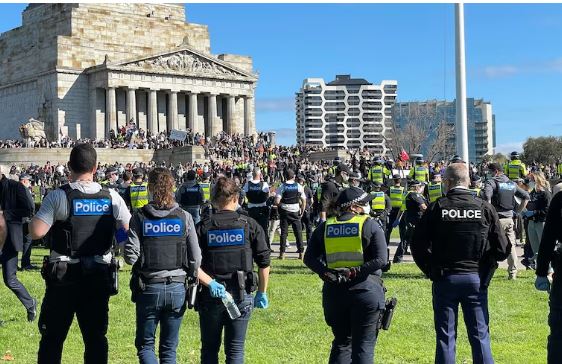
To see police involved in a fracas at the recent Pride march is deplorable. This outcome was inevitable, and police should never have put themselves in this position.
Irrespective of who was the instigator of the melee, the Police, instead of performing the police function to solve a social problem, were part of it.
The seeds for this outcome were sown some twenty years ago when the Police moved from policing the event to being part of it.
The CAA logo features Lady Justice, who is depicted as blindfolded, showing Justice is blind.
The meaning is profound and forms the basis of our Justice system, which includes the Police.
Police must never become part of the issue and remain independent to exercise their powers in a dispassionate way, not showing favouritism or bias to the problems they are policing.
Being part of this march destroys impartiality and undermines the fundamental role of the Police.
We also noticed Police uniforms adorned in trinkets supporting the pride genera. These displays, supporting a particular cause, would be irreverent to many and detract from the impartiality that Police should project and preserve.
These displays must not be worn on uniforms or, for that matter, any clothing while a police member is on duty. It is a matter of professional pride.
It also could be argued that this police activity is in breach of their Oath of Office.
…that I will well and truly serve our Sovereign as a police officer in Victoria in any capacity in which I may be appointed, promoted, or reduced to, without favour or affection, malice or ill-will for the period of [ insert period ] from this date, and until I am legally discharged, that I will see and cause the peace to be kept and preserved, and that I will prevent to the best of my power all offences, and that while I continue to be a police officer I will to the best of my skill and knowledge discharge all the duties legally imposed on me faithfully and according to law.
This issue has nothing to do with the personal preferences exercised by any member of the Force in their private lives. That is their business, and if they want to march, they have every right to participate, just not in uniform.
In many ways, this clash was inevitable.
According to reports, there has been anti-police sentiment for a long time, and leadership should have been taken to avoid the inevitable confrontation.
In this event, participants dress up gregariously, as is their right; however, by high-level participation by the Police, they are relegating the uniform to fancy dress.
There are always huge risks when police favour one particular group, and we are confident that the Police Command would not tolerate uniformed Police marching in solidarity with Black Lives Matter, anti-COVID, Union movement, anti-government, environmental or the myriad of other special interest groups.
The test may again come as those who support Palestine become more vociferously anti-Israel as that war drags on.
Police, like all Australians, are entitled to exercise their right to lawful assembly, just not in uniform.
We encourage Victoria Police, in the interest of fair justice for all, to issue a direction that police on or off duty cannot participate in any demonstrations or cause in uniform.
Demonstrating a bias for or against any particular interest group is counterintuitive to effective policing.
by CAA | Dec 3, 2023 | Library, Media, Politics, Victoria Police Issues
The breaking down of law and order in Victoria has been evident for some time, but recently, this concept has accelerated to a very worrying level.
The past is only relevant to identify patterns; the future is the worry, as it seems nothing is being done to arrest the decline.
Currently, the situation where demonstrators, seemingly with impunity, do whatever they can to intimidate another sector of the community, instilling gross fear on any part of the community, is unacceptable on so many levels.
Worryingly, is that the intimidation is so vitriolic it is only a ‘hair’s breadth’ away from violence.
The seriousness of the situation cannot be downplayed, and yet the Police, who are responsible for maintaining law and order, seem ineffective through bias.
This is not the Australian way.
The bias by Policing has been developing for some time, and we suggest it has a lot to do with the failure of the principle of the ‘Separation of Powers’[i], a long-held presumption that has been eroded, and the management of public order is where it most obviously manifests.
The failure of this principle, where the decisions and responses to public order are tainted by Political bias, is a two-way street.
The blatant direct involvement of politics in decision-making has become far less obvious, but we are sure it still occurs; what has evolved is a far more insidious, unconscious bias. A will to please political masters or those who support the government without direct interaction.
The Police have no role in allowing partisan views to influence responses but must respond on the basis of maintaining law and order, and that includes protecting vulnerable groups and all citizens; the issues and reasons for disquiet must never influence the operational response.
Some of the disquiet in police ranks that has provoked industrial action recently has been attributed to the Forces’ obvious bias.
This move toward partisanship with the government of the day has been an attempt by Governments to own police powers and have a far greater say in the operations of Policing, a repugnant concept that might seem fine in theory, but, as we have seen, makes Policing ineffective.
The current demonstrations against Israel by pro-Palestinian groups supporting Hamas are a case in point.
The basis of the demonstrations is those allegedly opposed to Israel’s response to the attacks, hostage-taking and murders committed by Hamas. The role of Victoria Police must not be influenced by the reasons for the demonstration but by providing a Police response to maintain Law and order and should be as concerned with protecting the abused Jews as they should be for those who identify as Pro-Palestinian.
The accusation of police bias is a ‘hot button’ issue sure to raise the ire of Police executives. Be that as it may, the matter is immensely serious, and the issue of the breakdown of the ‘Separation of Powers’ and biase must be corrected.
To ignore the issue will be a blight on the capacity of Police Senior management as this issue lies at their feet.
The following list of incidents indicates beyond doubt that bias is at play and must be addressed.
- Black Lives Matter – passive police response acting as spectators.
- COVID-19 – aggressive police response including use of firearms on demonstrators – aggressive role extending over numerous occasions for two years, including chasing and dispersing demonstrators using defensive weapons like pepper spray as an attack weapon. Tea bagging protestors to make them breach the COVID rules.
- Sundry environmental demonstrations – passive police role acting as spectators.
- Pro-Palestine (Hamas) demonstrations -passive police response acting as spectators.
We do not support unnecessarily aggressive responses but demand the Police apply the law without fear or favour, malice or ill will, absolutely, irrespective of the issue at hand.
Following this principle will rapidly improve and rebuild the image and confidence that the community had in its Police, and the police members will be able to return to the non-partisan positions they once were able to hold in their professional capacity, improving the morale within the organisation so that the workplace again becomes non-partisan.
We acknowledge, however, that the government has a lot to answer for by diluting the Police power to manage these issues by repealing the ‘move on’ Laws.
It has seriously diminished police authority to perform their task.
By removing those powers, the closest analogy is a law to remove the ability of doctors to carry a stethoscope when working in Emergency Rooms (ER).
The Victoria Police can and must do better operationally, free from Government pressure and interference.
[i] In Australia, the power to make and manage laws is shared between the Parliament, the Executive and the Judiciary. The separation of powers avoids any person or group having all the power. https://peo.gov.au/
by CAA | Dec 29, 2019 | Library, Media, Uncategorized
A video presentation of the launch of the Police Veterans in Schools Program produced by Board member Frank Caridi is presented for those that were unable to attend.
![PVISP Newsletter]()
by CAA | Dec 17, 2019 | Library, Media, Uncategorized

Welcome to the first edition of the Community Advocacy Alliance, Police Veterans in Schools Newsletter.
Chairman’s Message 
This first Police Veterans in Schools Newsletter is an historic moment in the life of The Community Advocacy Alliance Inc’s history following our successful launch of the Program on 23 November 2019.
I acknowledge the enormous amount of work done by all concerned with special thanks to our CEO, Ivan Ray.
The need for police to have good relationships with young people, particularly before they become offenders, is so blatantly obvious that it is difficult to understand what is holding the Victoria Police back from becoming totally involved. After all, it is clear current policing practices have failed miserably in preventing youth crime.
Using the successful Police in Schools Program introduced to Victoria in 1989 as a guide, it is obvious that the PVISP will have a significant impact in keeping many young people out of trouble to the benefit of the community at large. The workload of overworked rank and file police can only diminish as a result.
I am extremely confident that our PVISP will go from strength to strength.
The agreement of former Member, Ron Fenton, to act as our roving Ambassador and adopting his ‘service dog, Yogi’ as our Mascot is a reminder of the danger of police service and I thank Ron for his involvement.
My message to the Government and the Victoria Police is to take your collective heads out of the sand and get involved. Young people deserve help, and the community demands more significant action to curb youth crime and anti-social behaviour.
I thank all members of the CAA Board and all our supporters for their enthusiastic support.
Merry Christmas and a safe and Happy New Year to all.
Kelvin (Kel) Glare AO APM
CAA Chair
PVISP Launch
After the recent successful launch at the Box Hill RSL on Saturday the 23rd of November,
we are now hard at work going through the initial phase of linking Veterans to their schools. Rita Panahi was our guest of honour tasked with officially launching our program. Over sixty invited guests joined veteran volunteers and the CAA Board at the event where the program was laid out for all. Rita expressed her amazement that this task should fall to the retired Police who were receiving no official support practical or otherwise. Rita emphasised the point that the program was a ‘No Brainer’ and she was astounded at the response from Vitoria Police as it defied logic. She also referred to, the fact that should not be overlooked, that Retired Police were so motivated by current in-action they felt it necessary to step up, and that says it all.
New Mascot 
Yogi and Ron have become our mascot and Ambassador, you can work out which is which. Ron a Police Veteran severally injured in the line of duty protecting Victorians, who to this day suffers as a result of being shot in the head by a deranged criminal, has Yogi as his guardian angel. Yogi is trained to warn Ron when difficulties start to manifest and he has improved Ron’s quality of life dramatically. Ron still carries shrapnel that cannot be removed from his head and has suffered the consequences of the damage by those fragments. The damage done by the bullet has required Ron to learn to walk and talk again and regain mobility a challenge in its self. Medicine has done as much as it can for Ron but it has been Yogi that has provided the missing link.
Ron will be visiting schools and introducing Yogi to the children in support of the schools Veteran Officers. We are confident that Yogi will embrace his new role and acquit himself with his new skill of breaking down barriers with young people. Incidentally, having a real live Police hero in the classroom may also help.
School Expressions of interest
*All schools should have a Veteran allocated by the start of the school year
*Additional schools are currently under consideration
| School |
Veteran |
| Camberwell Primary School |
TBA |
| Cheltenham College |
TBA |
| Bannockburn P12 |
TBA |
| Stenevsville Primary School |
Ross Whittingham |
| St Leonards College |
TBA |
| Karingal Primary School |
TBA |
| Wallan Primary School |
Roger Sanders |
| St Francis Xavier College |
TBA |
| Kerrimuir Primary School |
TBA |
| |
|
| |
|
| |
|

by CAA | Nov 9, 2019 | Library, Media, Uncategorized
10th of November’19
Popular Herald Sun journalist and Sky News presenter Rita Panahi will be launching the Police Veterans In Schools Program (PVISP) later this month. Rita with a reputation of, telling it like it is, is a natural fit for the Community Advocacy Alliance (CAA) who are equally committed to, telling it like it is, albeit, like Rita, we are not appreciated in some quarters.
The proposal for a PVISP program is already attracting retired Police Veteran volunteers who understand the importance of educating children on the role of police and how to deal with the social challenges they face.
With the many years of police service, the veterans have experience many current serving Police member have yet to gain, so are brilliantly equipped to educate and provide guidance for our young Victorians.
The program has also attracted a number of schools who are very enthusiastic about having a PVISP Veteran join their school community. Already local government is pushing to have the program introduced in their municipality so the growth of the program is ensured.
As the inquiry level increases, the CAA is gearing up for the increased demand both from the schools, and the Police Veterans wanting to participate.
by CAA | Mar 20, 2019 | Media, Uncategorized
by CAA | Mar 12, 2019 | Media
by CAA | Mar 10, 2019 | Media, Uncategorized
by CAA | Feb 20, 2019 | Media, Uncategorized
by CAA | Feb 14, 2019 | Media
by CAA | Jan 20, 2019 | Media