
Victoria Police’s announcement in the Herald Sun on the 6th of November is, in a sense, a seminal moment acknowledging the wrong-headed police crime strategy feeding the Victorian crime wave.
The key to the error is the statement attributed to a Deputy Commissioner,
“We’re bringing together the proven tactics of Operation Trinity with the proactive approach of Operation Phoenix to create a stronger response to serious and violent crime.”
This statement exposes what CAA has argued for years and forms the basis of the failure to rein in crime over the last two to three decades.
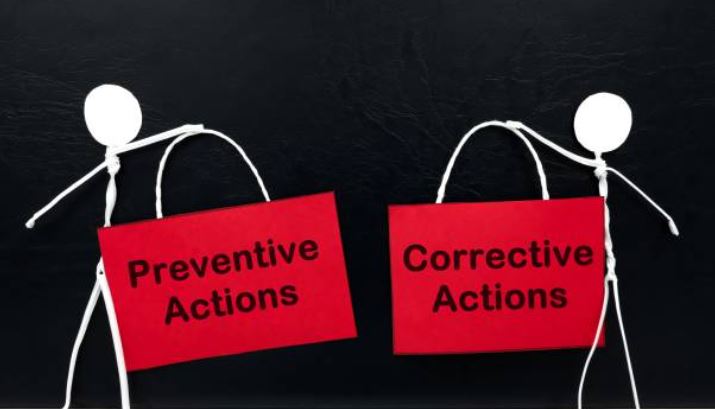
A failure of executive police, in particular in understanding the primary police roles of Reactive and Proactive Policing, regularly attaches the concept of Proactive (Crime prevention) to reactive police work.
While the executive fails to understand the difference, a false narrative that VicPol is seriously engaged in proactive policing is being fabricated.
The political class supports this view, as effective proactive policing does not provide the quick fix politicians aspire to deliver to the electorate.
The above statement does not argue that Operation Trinity is reactive policing, but claiming that Operation Phoenix is proactive shows that the false narrative is being fed at the highest level, exposing that the Force has it wrong.
To better clarify the differing roles, a regular foot patrol of a given location over an extended period could well be argued as proactive, but if foot patrols are detailed at various locations in response to perceived shifts in criminal activity, after the fact, which is clearly reactive – reacting to a perceived need.
In the area where regular foot patrols are occurring, the absence of crime and therefore charges laid is seen as a negative and a waste of resources, but the absence of crime is a policing success, a concept that many do not understand.
The absence of crime and social unrest is the benchmark by which effective policing must be judged, not the number of arrests, as high numbers indicate a policing failure.
To wallow in self-gratification by the quantum of arrests is an admission of policing failure – the crimes are being committed, not avoided; ask any victim, and they will attest to the need for reduced crime in the first place, as a preference to arrests as a result of crime.
We are not advocating that a strong proactive strategy should be diminished; however, a stronger and more effective impact on crime than merely moving police around in vain attempts to stop crime, operating after the fact rather than before, is not a substitute for effective proactive policing.
The reactive strategy has been growing in popularity in policing for a long time and is the single most significant contributor to the inability of police to manage crime.
Until the Force understands their functions properly and applies resources and strategies in line with the priorities as identified by Sir Robert Peel, the crime rate is going to continue to escalate.
With no signs of abatement, police are further entrenching their strategies without community cooperation, and the principle of proactive policing is being depleted to the point of being unworthy of mention.
Giving reactive policing the moniker of proactive avoids management having to deal with the more complex issue of proactive policing, which takes skills perhaps lacking in executive command and elsewhere in the Force.
To understand the conundrum causing the problem, we need to reflect on the words of Sir Robert Peel, the acknowledged father of policing in the modern era.
Sir Robert’s philosophy was that the police should prevent crime and maintain public order through public approval and cooperation, rather than through fear or force.
The Nine Peelian Principles
- The basic mission for which the police exist is to prevent crime and disorder. (the primary function above all others)
- The ability of the police to perform their duties depends upon public approval of police actions.
- Police must secure the willing cooperation of the public in voluntary observance of the law.
- The degree of public cooperation diminishes proportionately to the necessity for the use of physical force.
- Police should seek and preserve public favour not by catering to public opinion, but by demonstrating impartial service to the law.
- Police should use physical force only when persuasion, advice, and warning are insufficient to obtain public cooperation.
- Police should maintain a relationship with the public that reflects the principle that “the police are the public and the public are the police.”
- Police should direct their actions strictly toward their functions and never appear to usurp the powers of the judiciary.
- The test of police efficiency is the absence of crime and disorder, not the visible evidence of police action in dealing with it.
Mr Hill was reported as saying in the Herald Sun article that teenagers already on the unofficial payroll of organised crime and bikie gangs were also recruiting their mates at school.
We have also argued for a long time that the key to the Crime Tsunami rests with the approach of the Force to children before they enter a life of crime.
Targeted proactive effort, particularly in primary schools, will go a long way to curtailing the crime issues before they occur, rather than playing ineffective catch-up now, as we are saddled with the ‘crime-as-a-service ‘ phenomenon.
We are aware that police make some effort in schools, but it is less than effective and has morphed into a ‘when we can’ approach rather than a properly structured program, so it’s not surprising that it has little effect.
The days of trying to shift blame, a common strategy certainly applied internally, must be stamped out, and the Force needs to focus on what they can do rather than trying to pass off responsibility to others and that includes, amongst others, the children’s parents, the courts and other Government departments.
The mantra of blame shifting projected in Social media would see every function move to where the proponents claim the responsibility should lie.
Until and when the Force takes its role seriously and exercises professionalism, the blame shifting is counterintuitive.
And it all starts with senior management’s lack of understanding of proactive vs. reactive policing.