
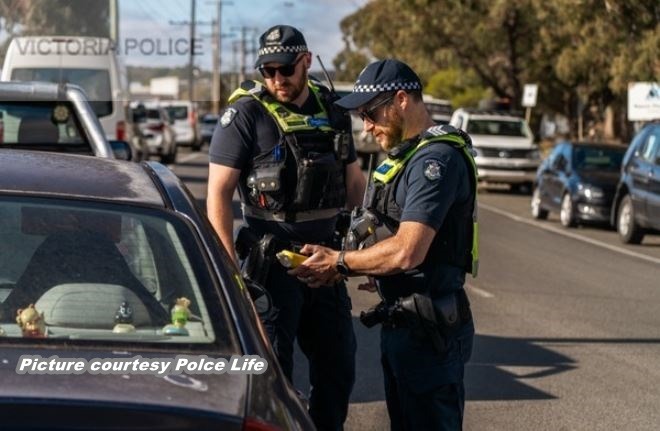
The annual Police Community Survey has opened, but you need to be quick as it closes at the end of this month. See https://engage.vic.gov.au/vicpol-2026
The strategy for these surveys has been carefully crafted so that there is a guaranteed minimal response, the important questions are omitted, and there is very little marketing of the Survey’s existence. You may find out about it if you are in the know, but it’s hardly a reliable strategy to monitor community sentiment.
The 2025 Survey only attracted measly 7,600 responses, a number not far from less than half the overall strength of the Force and with a population served by the Force of 7 million people, the best they can do is this meagre amount. a number so small that it is statistically useless.
Although equally useless, it would have looked better if the whole Force had taken the survey.
We are not suggesting that the Police themselves provided all the answers, but it certainly looks like they may have had substantial input; they knew of its existence.
Outside of the Police employees, the reach would have been very limited.
With Law and Order, such a topical issue in the community, this response number is embarrassingly pathetic.
The 2026 survey is the 4th annual one, and it is generally a waste of time and money. Money that could be well spent elsewhere.
The same top two priorities from the initial 2023 survey have remained consistent every year. The top 5 issues raised by respondents in 2025 are the same as those in 2024, and surveying and achieving results that are already, or should already be, bleeding-obvious, is also an embarrassment and the next best thing to pathetic.
An extract from the report on the 2025 survey reinforces the issues raised in this piece.
Key safety concerns (2025 survey)
‘Safety in public places’ and ‘safety of my property and possessions’ have remained the top two safety concerns for Victorians since 2023. The top five safety concerns in 2025 remained the same as those reported in 2024.
Victorian residents have told us their top five safety concerns in 2025 are:
-
-
- Safety in public places
- Safety of my property and possessions
- Drugs and alcohol
- Road safety
- Serious and organised crime
-
Your ideas
Respondents were given the opportunity to share their ideas on how to make them feel safer. (Putting the responsibility on the community, diverting from the Force is weakness personified) The top theme that emerged from these comments relates to visible policing, including a desire for increased foot patrols, night patrols, 24/7 station staffing, and more Protective Services Officers on various types of transport and at community locations. Other themes that emerged relate to judicial and legislative reform, community engagement, road policing, and infrastructure improvement.
See https://engage.vic.gov.au/vicpol-2025.
But what did the Force do with all these ideas, and what was the success or community feedback?
Although we are not privy to the relationship or consultation that occurs between VicPol and Engage Victoria, the Government quango responsible for the survey, it might be an idea to have a statistician represent the Force in the design of a decent survey to make it more meaningful.
Additionally, the way the Survey is marketed seems aimed squarely at Police apparatchiks, making its data output highly questionable.
We have not seen the use of general media to reach the broader community (yes, paid ads); however, what is a huge embarrassment for VicPol is that, in their 4th year, nothing has improved.
There are quite a few waffle words on the website implying success, but we all know that there has been little improvement, but rather deterioration in how safe we feel.
Do not, however, assume that this is the fault of the Police altogether, as we have a Chief Commissioner with a Herculean task of bringing a demoralised and deteriorated Force up to an adequate standard, and this sort of garbage survey doesn’t help him or the Force.
A fundamental tenet of any survey should be to help guide the organisation toward effectiveness.
So why were there no questions about Service Delivery?
Why wasn’t the role of other agencies that influence community safety measured?
Why wasn’t the role of the Courts included?
There is a plethora of other issues that should be measured; however, the whole exercise should have one focus, and that is to identify mechanisms to implement measuring techniques of Force outputs, Members’ and Management performance at all levels measured against a process of benchmarking all aspects of the Force’s functions.
Catching crooks is not the only role of policing, but it is the easiest to measure, hence things like Eudaemony in the community are ignored and in part seen as not a police function; arrant rubbish, preventing crime is far more desirable for the community than the alternative, ask them.
And when you start measuring the organisation’s performance, an adage comes to the fore:
‘What gets measured gets done’.
As is our normal practice, when we solicit, we always provide solutions for consideration.
If you want to build community trust, you need to engage.
For many police officers, unless they are dealing with a crook, to some extent, engaging with the community can take a long time to master and can be very difficult. You cannot assume successful engagement is automatic. However, there is an easy and extremely effective way to bring the community on board.
Design a series of one-page B5 handouts on how to make your house, your car, and your family safe.
Provide them to Stations to be handed out by foot patrols or left with retailers for distribution.
As important as simple content is, the design must be capable of attracting the reader. The flyer also needs a phone number that citizens can call to reach their local Police Station for further advice.
To further benefit Policing overall, the newly recruited Reserve Force members should be deployed alongside Probationary Constables to deliver the flyers.
This has the benefit of experienced reserve members with their community knowledge and experience imparting to newbies engagement techniques, as well as issues around their personal safety in the public space.
Members who are used in this exercise need to be given ownership of the area they are allocated, which allows easy and accurate measuring of the program so that it can be modified if necessary to improve efficiency, and the bonus is that the probationer can devote any of their spare patrol time to their community.
This program provides Probationers with the opportunity to begin learning job satisfaction, an outcome for the community that they can own and be proud of. This will serve them well when they face the less-than-savoury matters the police must deal with during their careers.
This is called Crime Prevention, Community Engagement, or whatever title somebody sees fit; however, one thing is for sure: it will work with minimal impact on resources.
All the Force has to do is manage the nay-sayers within.
This survey doesn’t need to be a secret, but a useful tool if done properly.
