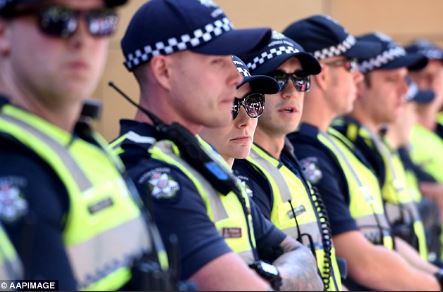
Victoria’s New Chief Commissioner, Mike Bush, has announced a major restructure of Victoria Police in an effort to make inroads into the burgeoning crime rates.
Although we may not know the full extent of this restructure, what has been reported is extremely good news.
Good news for those of us who favour effective policing based on the community’s needs.
The CAA has advocated these changes for over a decade, through the tenure of five Chief Commissioners who couldn’t or didn’t want to witness the flawed process of ineffective Reactive policing.
Coupled with their lack of leadership skills, the current crime imbroglio was inevitable.
The legacy left behind is that a number of Police officers who were promoted under the flawed reactive model will have difficulty adjusting to the new and modern policing methodology.
They should seriously consider their future and perhaps step aside.
For those who won’t accept the change and take the honourable option, Chief Commissioner Bush has no other choice but to take decisive action to prevent these members from tainting the Police workforce as they adopt this critical change.
The broad principles of freeing up desk-bound police to bolster the proactive function of the force are long overdue.
Similarly, reducing a top-heavy structure that has, for years, consumed both resources and hindered decision-making, drawing decisions up to the hierarchy, far removed from the issue, has effectively diminished the Force’s effectiveness rather than enhancing it.
Solutions to challenges by successive Chiefs Commissioners have led to the creation of more bureaucracies, resulting in more Police being promoted to executive roles and their staff being drawn from the frontline.
The vision by Bush is laudable, focusing on reducing crime before it happens is not a soft option, as some Police hardheads will argue. Their views on reactive (lock ’em up) policing as the way to curb crime have been a failure over the last decade, and it is refreshing to talk about a renaissance of good policing.
It is reported that the Force is facing a mass exodus, which may turn out to be a blessing for the Force and the State.
Some serving members eyeing retirement to escape the fundamentally flawed Police strategy of the last decade may be persuaded to change their minds upon seeing the new direction. Hopefully, many of the hardheads will exit rather than try to adapt to the proactive model.
That would be a significant win for Policing in this state, as many of the ranked members are entrenched in the reactive model and were promoted on this basis.
Their future promotion or retention looks bleak.
The announcement that former or retired Police officers will be offered positions to relieve operational members of administrative duties is not only very sensible but also highly desirable for the benefit of the Force and the Community.
As many of these former members served the Force when it was focused on prevention, they will be an excellent role model to convert sceptical members who have never had that experience.
There are many ex-members who are not so old but resigned for family reasons. Now, as their families grow older, they may relish a return to the Policing fold to restart their careers, given that many of them served before the Force became reactive.
This recruiting cohort could provide the Force with the numbers boost needed to strengthen the proactive model implementation.
The key will be the flexibility and attractiveness of the employment offer.
We hope that this new direction includes a proper Police In Schools Program, which supports Secondary Schools from which most of our juvenile cohort emerge. Not only will this divert many from crime, but it will also create fertile ground for recruiting young people to pursue relevant studies that will equip them to join the Force after leaving school.
We also hope that the Blue Light Disco project is reinvigorated to provide direct interaction between youth and Police aimed at developing long-term positive influences with our youth.
To round out this particular trilogy, the Force needs to take a fresh look at Operation New-Start, designed to keep children in school and off the streets.
Recently published figures on school attendance are abysmal, likely due to schools simply sending problematic children home. Hence, the contribution by this cohort of bored children to the crime epidemic.
Probably a product of the Super School concept, where young people are lost in the system, the only way to improve the situation is to make the necessary legislative adjustments so these children can find employment.
If school doesn’t work for them, joining the workforce at a young age will equip them with life skills for the future, rather than sitting around wasting their life and being drawn to crime.
The current VCAL option is education-focused rather than career-focused and fails troubled kids.
Idle hands are the devil’s workshop.
By adopting this strategy, the net benefit to the State would be immeasurable as opposed to the impact of them committing crimes.
Each of these projects works well in isolation but are highly successful when worked as a trilogy.
This strategy will be far more effective and cheaper than the much-vaunted boot camp concept.
In this “And Why Is That?” Podcast interview, Francis Galbally—a Melbourne businessman, former barrister, and descendant of one of Victoria’s most distinguished legal families—speaks candidly about law and order, judicial culture, immigration, and political decay in Victoria. The discussion paints a grim portrait of a state in moral and institutional decline, and a political class indifferent to citizens’ safety. Watch now: https://www.youtube.com/watch?v=DxmN2opbWkQ&t=24s
Legal heritage and background
Galbally opens by tracing his family’s long association with law and politics. His grandfather, Sir Norman O’Brien, and his uncle were Supreme Court judges. His father, Frank Galbally, was one of Melbourne’s most celebrated criminal lawyers, while his uncle Jack Galbally was both a barrister and Labor parliamentarian. Though raised in a Labor household, his father later defected to the Liberal Party under Malcolm Fraser, frustrated with Gough Whitlam’s economic mismanagement. Francis notes that his father played a key role in establishing the SBS network and migrant support services. Proudly Irish-Catholic and a lifelong Collingwood supporter, Galbally represents a lineage of civic engagement and public service.
Lawlessness and the erosion of order
The interview’s central thread is the perceived collapse of law and order. Galbally responds to the brutal murder of two Sudanese-Australian boys in Melbourne’s west, describing it as emblematic of societal decay. He blames government failure, weak policing, and soft judicial culture for creating conditions in which violent youth gangs and organised crime flourish. “We have a government out of control,” he says, accusing Premier Jacinta Allan of ignoring lawlessness in the construction industry and broader community. Public safety—the most fundamental responsibility of government—has, he argues, been abandoned.
Galbally fears a drift toward vigilantism, recalling incidents where citizens have fought back against carjackers. While understanding the impulse, he warns that this path would lead to “a total breakdown of society, a law of the jungle.” Instead, he urges government leadership, cultural renewal within the police force, and stronger judicial resolve. The new police commissioner, he says approvingly, is “a hard-ass” from New Zealand who may finally restore discipline, but entrenched culture will take years to fix.
Judicial accountability and community safety
Galbally’s sharpest criticism is reserved for the judiciary’s handling of bail and repeat offenders. Police morale, he argues, is crushed when offenders are repeatedly released. He calls for tougher bail laws and for magistrates and judges to “respect the community.” Judicial independence must not mean judicial detachment. Parliament, reflecting public expectation, should clarify the law to remove excessive discretion in youth and violent cases.
He also urges parental responsibility: parents of minors who commit crimes should face financial penalties for damages. This, he believes, would reshape attitudes in households where children drift into crime. He also calls for adult sentencing of violent offenders over 14, echoing recent Queensland reforms: “If you knife somebody at 14, you should be tried as an adult.”
While acknowledging a few positive judicial examples—such as the judge’s reasoning in Victoria’s “mushroom poisoning” case—Galbally insists systemic leniency has destroyed deterrence. Yet he is careful to defend the institution of the judiciary, praising Victoria’s judicial appointments process as merit-based and free from political interference, unlike the partisan U.S. Supreme Court.
Government distraction and media complicity
The hosts and Galbally agree that serious crime stories vanish quickly from news coverage, replaced by “shiny distractions.” He accuses the government and compliant media of deliberately shifting attention away from violence, using the announcement of new Indigenous treaty initiatives as an example of political deflection. The Premier, he says, has failed even to meet the families of slain children: “She has no interest. It’s indecent.” For Galbally, this symbolises moral cowardice and misplaced priorities in Victoria’s leadership class.
He broadens this critique to the “crisis of leadership” generally. Citizens, he argues, now march in the streets over overseas issues while ignoring violence at home. “Where is the outrage?” he asks. “We are frightened in our own streets.” He describes personally carrying defensive tools when walking in Melbourne, reflecting widespread insecurity.
Culture, patriotism, and social cohesion
Galbally sees this insecurity as part of a larger erosion of civic identity. He contrasts Australia’s cultural ambivalence with America’s unapologetic patriotism—its ubiquitous flags and sense of unity. Australia, he laments, now regards flag-waving as “fascist,” while tolerating terrorist symbols like Hamas or ISIS flags: “That’s rubbish. People flying a terrorist flag should be jailed.” Burning the national flag, he adds, should also be a criminal offence, as it “insults every citizen.”
Turning to technology and governance, Galbally dismisses the government’s “e-safety” agenda as a distraction from real threats. He warns that such programs risk morphing into surveillance and censorship, arguing that digital regulation is futile when technology evolves faster than government oversight.
Crime, commerce, and fear in the city
Galbally describes how rising urban crime has hollowed out Melbourne’s retail life. Luxury retailers in Collins Street, he says, have seen foot traffic fall by 40% post-pandemic because customers feel unsafe. CCTV footage shows regular smash-and-grab attempts, scaring both staff and patrons. As a result, consumers stay home and shop online, eroding civic life. He points to U.S. examples—New York under Giuliani and Eric Adams—where heavy police presence restored safety and revived urban life. “Zero tolerance works,” he insists.
Immigration, integration, and the economy
Galbally supports immigration but warns that poor management of volume and composition can strain housing and cohesion. He recounts Australia’s long history of migrant waves—from Irish and Italians to Vietnamese—each facing early suspicion before integrating successfully. Problems arise mainly with second-generation youths who feel detached from both cultures. Migration, he insists, is essential to Australia’s prosperity, but must be tied to housing capacity and clear vetting standards: “This is not the White Australia policy; it’s about realism.”
Leadership and political decline
In closing, Galbally laments the absence of true leadership in Australian politics. Both major parties, he argues, are structurally incapable of renewal. Labor is dominated by “union hacks” and career professionals with no real-world experience; the Liberals, conversely, are inward-looking, male-dominated, and disconnected from working Australians. Smart, capable people avoid politics altogether. “Why would anyone want to go into politics today?” he asks. “It’s ugly, brutal, and unrewarding.” His prescription is radical but simple: Australia needs a new political movement built on integrity, civic pride, and competence.
Conclusion
The interview paints Francis Galbally as a tough-minded realist alarmed by Victoria’s moral and institutional decay. His central thesis is that public safety is the foundation of civilisation—without it, no social policy or moral vision can stand. He believes leadership, judicial clarity, and civic pride must be restored before Australia loses confidence in its own laws and values. For Galbally, law and order are not partisan issues but existential ones—the cornerstone of a functioning democracy.
It was reported in the Herald Sun on the 6th of October 2025 that “Magistrate Carolyn Burnside late last month warned corrections officials and police they were ‘in contempt of court’, effectively for not bringing a prisoner to court, in defiance of a ‘jail order’ requiring them to do so.
It would seem that in making an internal political administrative point, it is acceptable to publicly disregard evidence and ignore community safety issues, which the magistrate has failed to consider.
Once under the control of Corrections, it is their task to convey prisoners to courts, not the job of the police.
The Prisoner, a lifetime heroin addict, was tossed out on the street by the magistrate, trying to make an internal point over the inconvenience to her Court.
With the judicious use of technology, prisoners would not be required to attend court for procedural matters or, for that matter, their Trial.
While the vast majority of us have a great deal of admiration and respect for Judges, Magistrates and other jurists, our collective community attitude and trust in the court system is severely damaged by intemperate comments from a member of the bench who is obviously an outlier.
It is an absolute disgrace that a Prisoner who has not been found guilty of any offence, only charged, must wait so long to have his matter resolved.
Ms Burnside apparently invited prisoners to start applying for bail and said she would find it a “very attractive” proposition to release them.
Without considering the consequences of each case, this pronouncement is tantamount to contempt of all the courts that have refused bail for prisoners.
These prisoners she refers to are not your Sunday School types, but generally the worst of the worst, an unacceptable risk.
The Government must take action to ensure this Magistrate does not implement her threat, so we do not have at-risk prisoners free to roam and commit other crimes.
The current imbroglio of the impact of youth and other criminals has the community firmly pointing the finger at the Courts, highlighted by the recent granting of bail to a recidivist offender to go on an overseas holiday.
The reality is that in a democracy, the government of the day must respond to community concerns about lenient sentencing and the manipulation of bail laws by Courts, or face electoral consequences.
Although they might not want to, the Government has to respond positively or face the backlash, which means more than just ‘tightening’, a euphemism for, fiddling around the edges, to fix the legal system failures and then exercising the dark art of trying to convince the electorate they are doing something and hoping to get away with spin instead of adequately addressing the problem.
We wonder if it’s the role of the Government to fix the issue or whether the Courts themselves should be held accountable for the current malaise.
It is perhaps time that the administrators of Justice in this State take responsibility and take some action to ensure continuity in proper jurisprudence.
If the administrators do not take decisive action, the government will inevitably be compelled to intervene, which will further erode the independence of the judges.
The Magistrate responsible for allowing a recidivist to continue on bail so he could travel overseas on a family holiday, irrespective of what excuse can be conjured up, is outrageous and totally unacceptable, reinforcing in the mind of the child that his offending is not serious. He goes on an overseas holiday while the victims are left to stew in their damaged emotions.
The family would have had to cancel the trip if their son had been bailed – there was always a simple and obvious option for the Magistrate – refuse bail, problem solved.
The bureaucracy of the Court administration is culpable for not immediately transferring this Magistrate to an administrative position; that action would send a message to all members of the bench.
As jurists make more inappropriate decisions, the only ones hitting the headlines are the most outrageous. However, every day, poor choices that work against the law’s objective of maintaining community safety are flaunted mercilessly by unaccountable jurists. And we wonder why crime is escalating?
Their independence will be further eroded as the public demands that the government take action, and that action will, by necessity, restrict jurists’ independence even further.
We are not convinced that it is necessarily a good thing, in the long term, because it won’t address poor oversight, training, and management of the judiciary.
The jurists must learn to ‘read the room’ and listen to the community or face the consequences.
The second and equally important issue that Court administrators face is the inordinate delay in bringing miscreants to court to be held to account for their behaviour. ‘Justice delayed is justice denied, ’ an ancient legal maxim attributed to William Ewart Gladstone,circa 1868, is regularly ignored by Victorian Courts.
Whether it is poor administration of Court lists, poor performance and failure to meet KPI’s by Jurists, delaying or exacerbating proceedings, or they are overloaded, the latter an administrative failing, we don’t know, but what we do know is the Courts have focused entirely on the perpetrator, and that is not the absolute role of the Courts.
Continually overlooked in the legal process is the impact of Court decisions and delays on the sector of the community that is the INNOCENT; the victims, a cohort to proceedings continually overlooked by the Courts.
The victims not only have to suffer the financial and or physical consequences of a crime, but, to rub salt into the wound, many of which are very deep, they also suffer the indignity of not being considered appropriately in the court process, with their convenience not a consideration.
We never hear of a Court rejecting a procedural delay in proceedings, such as a bail application, due to the unfair impact on a victim, which would drag the case out and penalise the victim further.
The Courts are guilty of facilitating these delays and punishing the victims.
The failure of courts to ensure reparation for victims, whether the perpetrator has the capacity to provide reparation to the victim or not, should not be a court consideration.
The level of reparation should be based entirely on the facts of the case and be commensurate with the damage done. The recovery of the reparation should be referred to the Sheriff for action. If an offender is unable to pay and has that debt hanging over their head, they might think twice before committing further crimes, which is an effective deterrent.
It is well past time that a Royal Commission be established to examine the Courts’ processes, the accountability and application of the law by Judges, and critically, the treatment of victims.
A shocking 296,000 unsolved criminal cases were reported in The Herald Sun on October 1, and we are only two-thirds of the way through the year, so we can brace for more bad news before year’s end.
Any objective assessment of these numbers would suggest that, with the warmer months imminent, the seasonal uptick in crime will result in this number growing to over 400,000 for the year.
For Victorians, there is no solace in these numbers, and to add to our woes, it appears that there is no plan in place to address the issue.
The State does not seek an apology, as apologies have become so common nowadays that they have lost their sincerity, but rather a plan and action on that plan to solve the problem is what the community wants.
The community is well aware of the resource problems in VicPol; they see it every time they drive past a closed Police Station, so excuses won’t wash.
Moreover, the actual number of victims this creates who have suffered from criminal activity seems to be overlooked; however, the numbers would far exceed the headline number.
This catastrophic problem will need an inventive solution, and time is not on the side of the Government to solve it. We also doubt their ability to address the problem successfully.
Although many of the solutions may prove unpopular with some police, bringing back some equity in the policing industry would be the first step.
Why do non-operational members gain the same entitlements as operational members?
Over an extended period, the conditions for the Police have been improved, as viewed through the lens of operational members. We do not dispute any of those improvements in conditions; however, a blatant inequity has emerged in the process.
Addressing the inequities will lead to a dramatic improvement in the availability of Police resources on the frontline, as well as enhancing morale.
Police who work in a non-operational position should have their award altered so that they lose the additional three weeks’ annual leave, which covers public holidays and provision for the 38-hour week.
Both of those benefits can be exercised within their non-operational function.
This will provide incentives for non-operational members to seek operational positions, as they will also receive attractive allowances.
Members who opt for the operational option should have their non-operational position filled by a non-sworn Police employee.
If this process aggrieves a member, they can be transferred to the Public Service and continue in their position.
A move by 100 sworn members would result in the release of 12,000 additional hours for operational duties, leading to 1,500 additional operational shifts per annum.
That would have an impact on the number of unsolved crimes.
However, this advice comes with a warning not to focus solely on arrests to solve this problem, as that can be counterintuitive and lead to more reported crime, rather than less.
Structural reform
The CAA has long argued that the Force desperately needs an Inspectorate Function to assist the Chief Commissioner in managing the Force.
Relying on other Senior officers alone runs the real risk of unintended and intended bias. The NIMBY principle can thwart changes that are in the best interest of the Force.
An Inspectorate staffed by the brightest and best can provide unbiased advice to the Chief. This unit would also serve as the repository for future command personnel.
This could also facilitate the rationalisation of senior Commissioned Officers, freeing up these positions for operational frontline positions.
Areas that could be inspected are,
Ensuring the most efficient deployment of scarce resources to achieve the Corporate Plan.
Monitoring the cost-effectiveness of Task Forces.
Exploring innovations, both technical and staffing.
Creating a direct link between the Chief and members at the coal face.
Providing advice to the CCP on strategies to improve policing effectiveness
Replace the proliferation of committees with their functions covered by the Inspectorate.
Review the efficacy of training as to whether in-house or in-service training is the most efficient and effective strategy.
Examine the collection of data in the operational area and ensure it is necessary for police purposes, not merely convenient for other agencies.
Identify tasks that the Police are expected to undertake that are the responsibility of another agency.
As crucial as arrests are, it is better for the community if the crime does not happen in the first place.
Therefore, a focus on crime prevention is essential, and as things stand, we get the impression that the pressure on members to make arrests has diverted resources from prevention.
To some degree, this is understandable. A Station Commander faced with the decision of putting a Divisional Van on the road or having members attend a community gathering (proactive policing) is, unfortunately, often an easy choice; the Van takes priority (reactive policing).
If there is any hope of making an impact on these horrific numbers, creative solutions must be found, and an Inspectorate would create the opportunity for that to occur.
“This paper accepts the original manifesto for policing of Sir Robert Peel and reinforces the need for the Victoria Police to become more engaged with the community.
This is not occurring, and this must change.
Policing in Victoria is moving back to the dark ages, and it seems a fortress mentality is emerging where VicPol is becoming more and more disengaged from the community, particularly youth.
This is at a time when engagement with the community in general and youth in particular has never been more important, particularly given that terrorist acts are often perpetrated by youth.”
2015 – Crime Tsunami, predicted by the CAA 10 years ago, becomes a reality
The concern of the CAA is now realised with the crime figures rising to the highest ever. The theory of a crime tsunami became a reality, and it seemed that the CAA was the only voice in the community aware of the fate that was to befall the State.
The CAA Blueprint was ignored ( https://caainc.org.au/https-caainc-org-au-wp-admin-post-phppost3483actioneditclassic-editor/)and every effort was made to convince the Police executive and the Government that urgent action was required. The concept of a Plan has been continually updated, now in its 4th iteration, but only minimal efforts by the Force have resulted in only incremental elements of the Plan being adopted. The concepts, however, have never been challenged.
The Police executive derided us, and the Government just ignored us, treating us as irrelevant, which spurred us on.
With 300 years of Policing experience in our group, we were not prepared to be ignored.
Those responsible for the lack of action to ensure the safety of our community have never been held accountable for their inaction.
The CAA set about doing something that we knew would have a major and positive impact on the skyrocketing crime rates.
We began the mammoth task of designing and building a Police school-based program, utilising police veterans to deliver it in as many schools as possible, with as many volunteers as we could attract.
The task took us three years; despite Victoria Police actively trying to thwart our project, we built the Police Veterans In Schools Program, PVISP.
The then Police Chief Commissioner Ashton wrote to every school that welcomed our project, warning them against involvement with the PVISP and issued an instruction to all Police Stations that if the CAA or PVISP made contact, the matter was to be immediately reported to a senior officer, and no assistance was to be provided.
A small number of schools that were initially keen on the PVISP withdrew from the program.
2019 -The Police Veterans In School Program was Launched.
Despite the hostility to the program from VicPol, the launch late in 2019 was successful.
Our intention was to start small at the beginning of the 2020 School Year and build from there, but the spectre of COVID-19 began to rise, and uncertainty loomed.
The COVID restrictions were launched in early 2020, and the first of the schools to welcome their new PVISP had to have the program cancelled.
The CAA continued to lobby for change but was again ignored. However, when Chief Commissioner Patton met with the CAA in 2024 and listened to our views, he agreed that the program would be positive and intended to reintroduce it.
Patton was warned he could face pushback from within the Force, and perhaps even politically.
We will probably never know the details of the machinations over this issue that Patton faced, but suffice it to say, apart from creating a shadow of what was really required, the Schools Engagement Model, a Police in Schools Program, was never implemented.
We believe Patton’s commitment to reintroduce the PISP was genuine, but those within the Force who opposed it worked against it, introducing a program in name only to thwart any criticism.
2025 – A new era of police enlightenment appears to be imminent.
With the appointment of a new Chief Commissioner, Mike Bush, we are confident that there will be a change and those within the Force who cannot see beyond ‘Arrests’ as the only solution to crime will lose any influence over the Force’s direction.
For our current crime disaster, it is true that the Courts and the Government have a lot to answer for, but they were warned on multiple occasions, backed up by solutions they chose to ignore.
While we are hopeful VicPol will regenerate a real Police in Schools Program, rather than wait for the ‘system’ to do something constructive, the CAA has dusted off the files and started looking at restarting the Police Veterans in Schools Program.
We are undertaking a review of the Curriculum, all Lesson Plans and our Insurance status to enable the program to be restarted.
We are intending to link in with Blue Light, another very successful program whose support from the Force was generally withdrawn at the same time as the Force discarded other proactive programs.
There is also Operation New Start, which could be revitalised to be part of a resurgence of Proactive efforts to correct the behaviours of our most precious possession as a society, our kids.
We can bleat all we like about the lack of performance by the Government, the Courts, or Police, but the bottom line is that unless we address the cause, the prognosis for fixing the youth crime problem is bleak.
If a school is interested or you are a former police member, and want to be part of something significant, expressions of interest are now open and can be lodged with,
PVISP Executive Director Frank Byrne at 0401224124.
The latest figures on Victorian crime make for a difficult read, and without any hint of a silver lining, things are going to get worse.
A comparison between 2015 and 2025 highlights the increase in crime, but even more worrying is the dramatic increase in the 2025 figures. The increases are reaching warp speed, and there is no strategy or even visible effort to rein in the problem.
Key drivers included the cost-of-living crisis and an increase in repeat offending, particularly among young people. The year ending in June saw 497,116 criminal offences, an 8% increase on the previous year. The rate of offences per 100,000 people also rose by 13.8%.
And that was 2015 – 10 years ago.
Now in Victoria, for the 12 months to March 2025, there was a 17.1% rise in recorded offences to 638,640. The crime rate also increased by 15.2% per 100,000 people.
This surge was driven by a 20.1% increase in criminal incidents and a 19.4% rise in alleged offender incidents, with significant increases noted in various areas, including theft, family incidents, and offences involving Aboriginal and Torres Strait Islander people.
Responsibility for this monumental failure lies with just three key pillars of our society: the Government, the Judiciary and the Police. The social justice brigade doesn’t count, as they are generally ineffective and often led by ideology rather than pragmatism.
The 2025 figures are disgraceful by any measure, but as in 2015, the incumbents responsible just kept following the same ineffective strategies without being held to account, and we will look back in another ten years, wringing our hands over how much worse things have become. The future looks grim.
‘The worst performance in Crime management in this State’s History.’ The rhetoric from the Police and the Government, in 2015, déjà vu, 2025.
The adage of ‘Doing the same thing tomorrow and expecting a different result’ holds true in crime management, but until some accountability is meted out, things will not improve.
The Government is at the top of the list for a smack.
Victoria Police also appeared to have taken a swipe at the State Government, claiming the “crime rate can be reduced when there is strong accountability for offending”.
Police minister Anthony Carbines conceded, “The latest crime statistics are unacceptable”.
But speaking with the Chief Commissioner about targeted disruption of organised crime seems the best the Government can do, and the Minister sees that as ‘a significant focus’; really?
That is the best the Government can come up with, ‘A significant focus’ while the state populace lives in fear.
That strategy has been employed for over a millennium, and see where that has got us?
Yes, strong accountability for offending will help, but that is not guaranteed to be acceptable to our woke judiciary, which has become unacceptably ineffective.
However, while the Government ducks and weaves, claiming the figures, as yet, don’t reflect the Government’s strong stance, it is an admission that the Government’s approach has had no deterrent effect and reveals just how ineffective the Government’s strategies are, resulting in a nil-all draw.
The electorate should be reminded that it was this government that weakened the Bail Laws, so it is somewhat disingenuous to talk about their reintroduction as being strong; more like a realisation that they got it monumentally wrong.
It was further reported that the Minister went on to claim ‘… the expectation of the government is that we continue to provide Victoria Police with every resource it needs to drive crime down,” he said.’
Isn’t this the same government that has applied austerity measures to prevent expanding police budgets for improved crime fighting? Talk about spin?
As for the Police, they cannot crow too much when they appear to be following the same unsuccessful strategies they were using in 2015.
All this hairy-chested rubbish about targeting organised crime when they know only too well that months and sometimes years of effort are required to lay a glove on the Mr Bigs of crime, if at all, but this strategy has shown it doesn’t work to reduce crime.
The best way to get promoted in a criminal gang is to have the police arrest the leader.
The Victoria Police also deserve a smack.
They have been stuck in a rut, not only for the last ten years, but for closer to twenty.
There have been two major problems: an obsession with Task Force Policing, Special Duties, and the Special Group Policing, which has depleted the frontline police necessary to handle the crime problem.
A former Chief Commissioner once told the CAA that the problem with policing is that recruits break their necks to get into a police uniform and, within a very short period, desperately try to get out of it, preferring to dress up, imitating US Special Forces.
A common sight of police dressed in mufti but wearing their weapons and accoutrements externally with ballistic vests with Police emblazoned on them makes a mockery of wearing plain clothes and is actually counterintuitive.
The other problem is that, whether it is driven by weak managers or government spin doctors, probably an element of both, announcing a Task Force to address a particular crime or cohort of criminals makes for a good headline, but whether they are effective or not remains moot.
Tony Mockbel is a case in point. The alleged mastermind behind the Methamphetamine trade reported in the news that his local TAB turnover peaks every time he comes in. The question is, if he is gambling big, where does he source his wealth, or is he laundering the proceeds of a crime?
His Tracking device has been removed, so all the money spent on the Mokbel prosecution was for nothing. The methamphetamine trade hasn’t stopped, and he returned to his normal life.
The cost to the community of the Purana Task Force that focused on Mokbel has been astronomical, and yet we are unaware of any empirical data that supports that this task force or for that matter, any one of the myriad others, works in reducing crime.
It would have been far more effective to dismantle Mokbel’s empire by targeting the lower-tier figures in his organisation, as that could have led to a much cheaper and more successful outcome, albeit not a headline grabber.
Task Force strategies distract Police from dealing with the problem at the sharp end, and reward for any Task Force effort rarely pays a dividend like reduced crime rates. As with all criminal enterprises, there is always a line of second, third, and probably fourth Mr Bigs waiting for their chance to take over.
Making arrests of themselves doesn’t necessarily solve a crime problem, but preventing crime in the first place always trumps arrests.
With a rationalisation of the Force’s priorities, the greatest chance we have of bringing crime under control is to allocate resources as a priority to Police Stations, bring them up to full strength, and then charge the Station Commanders with reducing crime in their defined areas. Giving ownership and responsibility for a patch is the key.
If that means that fewer Mr Bigs are charged, so be it, the current strategy is not reducing crime anyway.
The Station Commanders would know best how to deal with their particular community, and being connected with the community will go a long way towards the Police’s objective of reducing crime.
The Station Commander is the most responsible position in the Force, and offering some flexibility to engage with their communities will bring benefits. This flexibility must come with accountability, so to retain command, they must achieve established KPI’s – results do matter.
This approach will ensure that only the best and most capable Police Station Commanders are selected as future leaders of the Force.
The headline in today’s Herald Sun,Thin blue line: Police exodus exposed, 24th September 2025, is not good news, particularly for a State where crime is rampant and the safety of all of us is severely compromised.
With over 1,000 job vacancies at the Victoria Police, it is no wonder that the tolerance for criminals needs adjustment, but without the necessary resources, the chances are next to zero.
It is time to apply some lateral thinking to the issue, because doing nothing is as criminal as the problem that needs addressing.
Closing Police Stations is not the answer, and the negative impact on communities in the closures has a profoundly adverse effect on the communities they are designed to serve.
It is often said in police parlance that the visible police presence is one of the most effective anti-crime strategies available, but it extends just as strongly to the cop on the beat as to the cop at the station.
A closed station sends the message that there are no police present.
The reality is that police are still generally engaged in mobile patrols and other policing activities, but this doesn’t sit well with a victim trying to report a crime or seeking refuge in a police station, which is seen as both a symbolic and real safe haven in times of crisis.
It is like having a hospital in your neighbourhood. Even if you don’t use it, it’s nice to know it is there. If it were removed, it would leave a vacuum in your healthcare.
Perhaps more critically, anybody with substantial experience with the crooks in our society will tell you that overall, they are not the ‘sharpest tools in the shed’, and this is multiplied dramatically with juveniles, our worst offending cohort.
The dots incorrectly joined by this cohort when a Police Station is closed is that there are no Police working, any deterrence evaporates, leaving in their minds a free kick, often to some poor victim’s head.
But how do we fix this problem and reduce the pressure on the Police trying to do their job in a Force that is so poorly manned, while also addressing the exodus of police to the North and the lack of service capacity here?
Improving conditions for the approximately 18,000 members in this State is not the solution. Victoria Police have one of the best employment conditions in Australia, and we would argue that this likely compares favourably internationally.
Having achieved all these conditions, there is little, if any, effort to promote just how good they are.
The current state of IR with Victoria Police is akin to the Hawthorne experiment by Psychologist Elton Mayo, but applied force-wide.
Known as the Hawthorne effect, Mayo demonstrated that merely improving physical conditions was not itself the primary factor in increasing productivity and, in turn, job satisfaction.
The studies highlighted the importance of social factors, teamwork, and improved communication in motivating employees; shifting focus from purely physical or financial incentives to the socio-psychological aspects of work was the key.
There is, however, a broad spectrum of suitable people who could be used to relieve the pressure on members, enhancing the one thing that industrial action cannot achieve: job satisfaction.
The final thing to consider is a lowering of standards and the negative impact this could and will have on the workforce. Creating a dual approach to standards and driving a substantial wedge between those who achieved the standards and those who joined via a lowered standard.
Any missteps professionally or socially within the Force by members who joined when standards are lowered will have an immediate and negative impact on the member. ‘You were not good enough.’
Long-term pain for short-term gain is never a good strategy and reflects poorly on police management, which is unable to fix the problem.
The lowering of standards has a negative effect, even if subtle, on all former and serving members who have achieved the normal high standard. They are very proud of this, but it has been undermined by management’s inability to address the problem.
There is also a risk that members who join at a lower standard could be spurned by those who meet the higher standard, a second-grade Force.
The answer to this issue lies not just with effective recruiting to attract new members but with utilising the vast resource of former members who, for whatever reason, left the Force.
And they are not all geriatrics.
There would be a very large number of former Police Officers who resigned for family reasons, and now that their children are old enough, they would love to return to the Force in a limited capacity.
The advantages are substantial.
These applicants would only need limited retraining to update.
Their life experiences outside the Force bubble will make them better equipped for interpersonal public contacts.
A substantial number of these re-appointees could offer the Force a substantial increase in resource capability and flexibility, relieving operational members from tasks of low risk for public order responses.
The influx of these re-appointees could have a dramatic and positive effect on the public perception and the Force’s perception of the negative impact of increased job vacancies.
What is hidden from the Public, and perhaps not acknowledged by senior Police administrators, is the number of patrols that are not provided due to resource deficiencies.
The current imbroglio, rampant and climbing crime rates, substantial police exodus from the Force and poor recruiting, based on quantitative rather than qualitative principles, must be addressed as a major threat to the Force’s administration.
The Force cannot just cry poor to avoid addressing this problem. With over 1,000 current vacancies, those positions must be funded, or they wouldn’t be vacancies, but Force staffing reductions.
A cynic may suggest that the current situation is nothing more than a ‘clever way’ for the Government to reduce expenditure, irrespective of the adverse impact on the community.
With other public service jobs being slashed, there may well be an increased pool of suitable applicants for the Victoria Police.
The CAA calls on the Government to immediately implement a highly public recruiting drive to bring the Victoria Police staffing numbers up to authorised strength.
We live in hope that in this country we will not stoop to such ridiculous levels to justify criminal behaviour.
There is no sound justification for allowing Drug users to be part of the solution when they are the problem. It’s like handing over the problem of alcoholism to alcoholics. A free grog policy is inevitable.
These hair-brained strategies are often argued to be a solution, perhaps a solution like solving the speeding problem by eliminating speed limits, solving shop stealing by legalising the removal of items from a shop, the list goes on.
The endgame is a complete breakdown of law and order, chaos in all our lives.
Having users and addicts designing and implementing drug policy can never succeed, especially when those groups are in denial. Ask any drug addict or alcoholic if they are addicted, and the answer is, by and large, emphatically, “No, I could give it up at any time”.
What is often overlooked in the entire drug addiction debate is the real victims of this vile trade—not the addicts themselves, but their families and all the innocent people affected by the crimes committed to sustain their addiction. All the resources spent on their self-inflicted dependency and treatment come at our expense. Yet, that is never acknowledged by the progressive “harm reduction” advocates, who seem hell-bent on normalising the behaviour and creating a society based on a Drug nirvana, all while they are high on the drugs they are supposed to manage.
Instead of the harm reduction approach, drug use or addiction must be excluded as a mitigating factor in criminal prosecutions and sentencing, with a focus on the offence and the perpetrators’ culpability.
The bottom line is that very few of the many thousands of addicts were forced to take the drugs they became addicted to. Equally, they never sought help, but addicts taking responsibility is very rare indeed.
Canada’s policy of deferring to the “leadership” of drug users has proved predictably disastrous. The United States (and Australia) should take heed.
Progressive “harm reduction” advocates have insisted for decades that active users should take a central role in crafting drug policy. While this belief is profoundly reckless—akin to letting drunk drivers set traffic laws—it is now entrenched in many left-leaning jurisdictions. The harms and absurdities of the position cannot be understated.
While the harm-reduction movement is best known for championing public-health interventions that supposedly minimise the negative effects of drug use, it also has a “social justice” component. In this context, harm reduction tries to redefine addicts as a persecuted minority and illicit drug use as a human right.
This campaign traces its roots to the 1980s and early 1990s, when “queer” activists, desperate to reduce the spread of HIV, began operating underground needle exchanges to curb infections among drug users. These exchanges and similar efforts allowed some more extreme LGBTQ groups to form close bonds with addicts and drug-reform advocates. Together, they normalised the concept of harm reduction, such that, within a few years, needle exchanges would become officially sanctioned public-health interventions.
The alliance between these more radical gay rights advocates and harm-reduction proponents proved enduring. Drug addiction remained linked to HIV, and both groups shared a deep hostility to the police, capitalism, and society’s “moralising” forces.
In the 1990s, harm-reduction proponents imitated the LGBTQ community’s advocacy tactics. They realised that addicts would have greater political capital if they were considered a persecuted minority group, which could legitimise their demands for extensive accommodations and legal protections under human rights laws. Harm reductionists thus argued that addiction was a kind of disability, and that, like the disabled, active users were victims of social exclusion who should be given a leading role in crafting drug policy.
These arguments were not entirely specious. Addiction can reasonably be considered a mental and physical disability because illicit drugs hijack users’ brains and bodies. But being disabled doesn’t necessarily mean that one is part of a persecuted group, much less that one should be given control over public policy.
More fundamentally, advocates were wrong to argue that the stigma associated with drug addiction was senseless persecution. In fact, it was a reasonable response to anti-social behaviour. Drug addiction severely impairs a person’s judgment, often making him a threat to himself and others. Someone who is constantly high and must rob others to fuel his habit is a self-evident danger to society.
Despite these obvious pitfalls, portraying drug addicts as a persecuted minority group became increasingly popular in the 2000s, thanks to several North American AIDS organisations that pivoted to addiction work after the HIV epidemic subsided.
In 2005, the Canadian HIV/AIDS Legal Network published a report titled “Nothing about us without us.” (The nonprofit joined other groups in publishing an international version in 2008.) The 2005 report included a “manifesto” written by Canadian drug users, who complained that they were “among the most vilified and demonised groups in society” and demanded that policymakers respect their “expertise and professionalism in addressing drug use.”
The international report argued that addiction qualified as a disability under international human rights treaties, and called on governments to “enact anti-discrimination or protective laws to reduce human rights violations based on dependence to drugs.” It further advised that drug users be heavily involved in addiction-related policy and decision-making bodies; that addict-led organisations be established and amply funded; and that “community-based organisations. . . increase involvement of people who use drugs at all levels of the organisation.”
While the international report suggested that addicts could serve as effective policymakers, it also presented them as incapable of basic professionalism. In a list of “dos and don’ts,” the authors counselled potential employers to pay addicts in cash and not to pass judgment if the money was spent on drugs.
They also encouraged policymakers to hold meetings “in a low-key setting or in a setting where users already hang out,” and to avoid scheduling meetings at “9 a.m., or on welfare cheque issue day.” In cases where addicts must travel for policy-related work, the report recommended policymakers provide “access to sterile injecting equipment” and “advice from a local person who uses drugs.”
The international report further asserted that if an organisation’s employees—even those who are former drug users—were bothered by the presence of addicts, then management should refer those employees to counselling at the organisation’s expense. “Under no circumstances should [drug addicts] be reprimanded, singled out or made to feel responsible in any way for the triggering responses of others,” stressed the authors.
Reflecting the document’s general hostility to recovery, the international report emphasized that former drug addicts “can never replace involvement of active users” in public policy work, because people in recovery “may be somewhat disconnected from the community they seek to represent, may have other priorities than active users, may sometimes even have different and conflicting agenda, and may find it difficult to be around people who currently use drugs.”
The messaging in these reports proved highly influential throughout the 2000s and 2010s.
In Canada, federal and provincial human rights legislation expanded to protect active addicts on the basis of disability. Reformers in the United States mirrored Canadian activists’ appeals to addicts’ “lived experience,” albeit with less success. For now, American anti-discrimination protections only extend to people who have a history of addiction but who are not actively using drugs.
The harm reduction movement reached its zenith in the early 2020s, after the COVID-19 pandemic swept the world and instigated a global spike in addiction. During this period, North American drug-reform activists again promoted the importance of treating addicts like public-health experts.
Canada was at the forefront of this push. For example, the Canadian Association of People Who Use Drugs released its “Hear Us, See Us, Respect Us” report in 2021, which recommended that organisations “deliberately choose to normalise the culture of drug use” and pay addicts $25-50 per hour.
The authors stressed that employers should pay addicts “under the table” in cash to avoid jeopardising access to government benefits.
In 2024, British Columbia’s top doctor even called for the legalisation of all illicit drugs (“non-medical safer supply”) primarily on the basis of addict testimonials, with almost no other supporting evidence.
For Canadian policymakers, deferring to the “lived experiences” and “leadership” of drug users meant giving addicts almost everything they asked for. The results were predictably disastrous: crime, public disorder, overdoses, and program fraud skyrocketed. Things have been less dire in the United States, where the harm reduction movement is much weaker.
But Americans(and Australians) should be vigilant and ensure that this ideology does not flower in their own backyard.
The insightful article and Opinion piece in the Herald Sun on the 16th of September 2025 by Shannon Deery really throws down the gauntlet to those in power or with influence to lift their game in addressing Crime Prevention.
No longer can the quiet majority sit by and watch our once vibrant State deteriorate further.
The CAA has been somewhat guilty of the apathy sin and, since its inception over ten years ago, has doggedly stuck to its policy of non-aligned political views.
This needs to be modified.
As honourable as that stance may be, and given the rapid and accelerating deterioration of Law and order in this State, we have now come to the realisation that we cannot temper our advocacy work by tempering our comments, on the basis that we would like to minimise allegations of political bias.
We cannot think of a better descriptor for the current malaise of Law and Order than the one penned by Deery, the Pothole Strategy.
Just as with the Pothole Strategy on our roads, there is little effort to address Crime beyond temporary fixes.
These fixes often prove ineffective, with the pothole reappearing within a week or so, and there are many examples of potholes being filled on multiple occasions.
Similarly, the Law-and-Order space is experiencing a similar lack of effort.
But in the Law-and-Order space, there aren’t even temporary fixes; it is like the Government wishes it away, or even worse, is prepared to accept the crime tsunami as a necessary sacrifice to other Government priorities.
Whether the Government priorities align with the community expectations is moot.
It would be too kind to suggest they don’t have the mental acuity or ability to address the issue, irrespective of funding.
It appears that one significant failing of some governments is that they often throw seemingly buckets of money at an issue, claiming to have fixed it, rather than identifying the problem, developing a sound strategy, considering preferred options, and then securing the necessary funding.
That must be followed up with accountability and monitoring the effectiveness of the funded strategy to ensure the funding has completed the purpose for which it was allocated.
The allocation of funding is not the end of the problem, as it appears we are required to accept, but it is the start of the process.
We are expected to accept without question that the Crime Tsunami is merely collateral damage necessary for the greater good, as per the government’s stance.
The CAA is strongly inclined to the view that this government’s strategy is deliberate to avoid focus and scrutiny on other significant projects or processes.
When a government cries poor, we have to start looking and questioning their management of the economy, an area where the Opposition seems not to fulfil its role.
As Deery points out with just one example,
“The Allan government is spending more per day detaining young offenders than any other state in the country.
Each detainee costs Victoria more than $2.8m a year to lock up – more than double what NSW pays, and more than four times last year’s investment in crime prevention spending.”- Herald Sun.
By any measure, those figures are outrageous.
Whether this disparity is due to incompetence or criminal activity within the Juvenile Detention system must be resolved as a matter of urgency, as this is just one area where the funding for a new paradigm could be achieved.
A new Paradigm? It is urgently needed because the current one is severely broken or unserviceable, the kinder term.
Perhaps we could start by sorting out the Commissioners for Youth.
We have them, but given the failure of Law and Order, particularly in the juvenile cohort these Commissioners operate in, there needs to be a chapter and verse review of their functions. We never hear what they do; perhaps it’s a secret.
Acting Principal Commissioner Meena Singh?
She is currently the Commissioner for Aboriginal Children and Young People in Victoria, a role in which she advocates for the voices of Aboriginal children and young people to be heard in the decisions made about them in the child protection and criminal law systems, and for systemic improvement in both systems.
Liana Buchanan recently vacated the position of Principal Commissioner.
The Principal Commissioner’s role is to promote issues that regularly affect victims of crime in the justice system and advocate to the government on ways in which the justice and victim support systems can be improved for the benefit of victims.
Moreover, many of these so-called Commissioners are part-time only, and earn high-level salaries, so some accountability for their performance is well overdue because these are the people who should be monitoring and guiding the various instruments of Government to achieve positive results for the citizens who pay their stipend.
The problems faced in this Juvenile space seem insurmountable, and we do not suggest that the solutions are easily achieved, nor will they take effect in a short time.
However, we desperately need leadership to start to pull the levers of Government together to address the atrocious situation that not only destroys the victims but also the lives of the Juveniles.
This Crime tsunami requires prioritisation and the highest focus, as all other government functions and initiatives are subordinate and cannot operate effectively in a criminal environment, which Victoria now is.
The capability of policing has been severely impacted by the recent industrial settlements, and we do not begrudge the advancement the Police have received. However, the Police budget must be quarantined against the fiscal impacts of these decisions on service delivery, and the Forces’ quantum must be elevated rapidly to ensure the same level of service in the overall Policing of the State is not diminished.
We would argue that VicPol must be rapidly expanded by at least 2000 members to address the crime tsunami, and urgent funding must be provided to attract former Police back to the Force to cover non-frontline positions, freeing up the operational members to ‘take back the streets’.
The CAA, however, is prepared to work with either side of the political divide to achieve solutions to what is a crime epidemic of mammoth proportions, and the longer the problem is allowed to fester, the more severe the infection and the likelihood of becoming incurable.
Do we Victorians want to live in the environment created by lawlessness?
Each and every Victorian citizen, all visitors and business owners are Victims of crime.
Each and every citizen deserves and should demand that they live and work in safety and freedom with respect and without fear.
Each and every person in our communities deserves and should demand that the Government provide for that safety through prompt, efficient, effective, equitable and fair enforcement and justice.
Victoria is experiencing a crime wave, a tsunami and a plague of social breakdown, why?
We, the ordinary citizens, the workers, the families, people of all ages and all backgrounds, you and I, are confronted with murders, horrendous assaults, home invasions and car thefts. Our shopping centres are no longer safe places. The murders of police officers bravely going about their duty, slain in the most violent of ways. Young kids were hacked to death, and infants were sexually abused.
People addicted to dangerous illegal drugs with unknown long-term mental health issues and a continuing reliance on crime and welfare. We are the true victims.
What is the Government doing? Where is the Opposition’s grand plan?
Where are the crime prevention strategies of the Government? They are certainly not preventing crime through consequences.
Where are the consequences for the offenders, and where are the prevention strategies?
The consequences for all of us are the huge increases in insurance premiums, the fear, and the additional cost of security and safety. Have a look at your car and home insurance, and have a look at the emergency services TAX.
Do you get that anxious, frightened feeling either at home or when leaving home, or just parking your car and dropping off the kids?
Where is the advertising campaign against crime? Where are the educational campaigns highlighting the damage that drugs do?
Exceeding the speed limit by 5 km/h results in an immediate fine. However, these so-called safety cameras only detect speeders and don’t alert police to stolen cars on our roads until we, the victims, receive the fine.
We all know the impact of having our car stolen and then getting speeding fines a couple of weeks later. What a missed opportunity.
How much more is your insurance? How much are you spending on security? How much more are you paying for everyday items because our shops employ security guards against marauding gangs of youths who know there are no consequences for stealing?
How much more are you paying for the alarm, the CCTV, the car lock, the big dog and the baseball bat?
How much are you paying for the medication, the treatment? How are your kids dealing with this?
How many burnt-out shops do you see in your local area, the shops that were once the life of small business owners and families, rammed and set fire to, and the consequences of death to innocent people? Driving past a burnt-out shop that was, once a tobacco, vape and convenience store, now a burnt-out shell, but also the medical centre, the chemist and other neighbouring businesses next door also burnt out.
Or is that acceptable collateral damage? Organised crime is rampant in this State, and while the police do everything they can to bring the perpetrators to justice, what efforts are being made to prevent this crime?
Our inner city, our railways, and roadsides are awash with graffiti and rubbish, often offensive to communities. Our once delightful communities ruined, who pays? We do.
How often do you see victims get compensation, while the offenders get free legal aid? If the Government is the victim, the fines are huge and large business establishments pay, then we pay again. [6. Victims of Crime Assistance Tribunal (VOCAT), Annual Report, 2022.]
Gang and other attacks are all too common. Who pays for the injuries or sees the ambulances, emergency departments, and police stretched or overwhelmed by this tsunami of crime, and a Government doing nothing tangible or effective?
What is the Judiciary doing? Because they are a significant part of the problem, they need to be held to account, no more jobs for life, no more Government appointments, let the community select those with so much power, no more legal garbage, the truth and not just the proof, put the victim first.
It is often argued that putting people in jail creates more criminals; Hello, aren’t they already criminals?
It is the Government’s duty to ensure that we are protected and that offenders are rehabilitated, preventing them from reoffending. Jail isn’t the total solution, but it is certainly part of it. Remember the Office of Corrections. What have they corrected? Perhaps their executives should be employed on a performance-based basis.
Why is this happening? Is multiculturalism an issue?, There is a plethora of unreported crime. Are you afraid of opening anything on your computer for fear of scammers?
These people are the lowest of the low, absolute trash. They are home invaders, thieves and deceptive scum. Targeting the elderly, the vulnerable, and our kids. We are pushed to go online for services, and then we’re constantly warned about thieves and lowlifes.
Perhaps the companies and authorities pushing us to use online services for their convenience should be accountable for losses incurred, and then watch the security ramp up very rapidly.
People are now isolated and in fear, especially the elderly, often getting calls on their mobiles and often being tricked, conned, deceived and robbed.
Well, at least the politicians got a pay increase, and some will be retiring on huge pensions, indexed for life.
CRIME PAYS. YES, YOU PAY and pay and pay
Jail costs money, rehabilitation costs money, and deportation costs money, but the consequences might be a safer, fairer, and better Community, State, and Country.
This headline screamed in the Herald Sun, 8th of September 2025, suggesting a rift has been triggered between the Government and the Police.
It is a pity that the reality escaped the journalist because in this instance, a Detective Inspector gave a press statement expressing his professional view, and that should be encouraged, not pilloried.
We do not see a rift, breaking ranks or anything resembling that. What we do see, however, and it is very pleasing, is the Police exercising the separation of powers.
The Politicians are entitled to express their views, and because the Police Force is an independent authority, they should be able to express theirs.
Something we have failed to see for over a decade, as consecutive Police Commissioners gagged Police members.
It does not help us at all to have the Government, the Judiciary and the Police collaborating on communication to the people who employ them, us.
An independent approach is much healthier for the community and the State overall, as it will highlight where the problems exist and make the various Pillars of Law enforcement accountable; they can’t hide behind each other.
If the Judiciary, the Government, or the Police are not performing to community expectations, it is incumbent on the professionals within these branches of law enforcement to expose the truth. Law enforcement will benefit, as will the community.
We may now see many more members of the Force who express their professional views, like Detective Inspector Graham Banks.
There will be several major benefits in this shift away from gagging the Police.
A better-informed community will therefore pressure the areas of Law enforcement that are failing to perform to their expectations, and we accept that on occasions this will impact the Force; however, exposing factual information about police failings makes for a better Police Force.
A former Chief Commissioner, the late Mick Miller, once told me that praise for the work of the Police was welcome, albeit warm and fuzzy, but the real benefit came from the Force critics that bring about improved performance.
The Force has no hope of improving without positive feedback.
For too long, the Force has operated under a cone of silence, hoping that any failings will go unnoticed and unexposed by the Police themselves.
The immediate and positive consequence of this change will be a dramatic improvement in the satisfaction levels and confidence the community has in their Force.
This change will also have a dramatic and positive effect on Police morale. Seeing their leaders demonstrate leadership is very healthy, and it gives confidence to all Police that others are not manipulating them. This approach also ensures that the views of the police are being heard.
It behoves all former Police to make themselves heard on this issue in support of Banks and the Chief Commissioner.
The experiences the Police were exposed to during the COVID-19 Pandemic at times were akin to stormtroopers, and had a deleterious effect on all members, current and former, and most of the impact resonates to this day, having perhaps irreparably damaged the relationship between the Police and the community.
Seeing the Police Force used as an instrument of Government must never happen again.
To avoid repetition, more Police leaders like Banks should stand up to express their professional views, making the force healthier.
There have been far too many good former Police officers who lost their careers because they spoke out, making this change even more refreshing, if not bittersweet.
The New Chief Commissioner, Mike Bush, can proudly accept the plaudits for this change under his regime and leadership.
We have national days to mark and remember significant bodies of people important to our identity and culture.
There are several notable days of remembrance: Remembrance Day on the 11th of November, ANZAC Day on the 25th of April, and Police Remembrance Day on the 29th of September. All of these institutions are rightly and properly observed.
But there is another group of people who should be remembered and acknowledged in a similar way; people who are usually overlooked by the criminal justice system, supposedly set up to protect them, and all of us.
These are the people who have been killed in the course of crimes, whether that be by (for example) deliberate murder, criminal assaults in their own home or on the street, or at the hands of hooligan divers who care nothing for the lives of others.
We should acknowledge these folk, and remember them – if only because any of us could be the next to become one of them.
At CAA we know of too many cases in which the courts and judicial system in general treat victims, and their survivors, usually their family, as inconveniences – to be tolerated but not respected as central to the issues facing those organisations.
We know only too well that victims of crimes, and their survivors, often become re-victimised by the system.
Could we not have one day set aside and marked to remember those whom society has failed to protect – a National Crimes Victims’ Remembrance Day? A day that would spur us on to do better?
The CAA welcomes former Homicide Squad Senior Sergeant Charlie Bezzina to our organisation – Charlie has a very high media presence and his views align very well with those of the CAA. Charlie will be the media face of the CAA.
CAA Guest
Aaron Violi MP, the Federal member for Casey, joined the meeting to discuss items of particular interest, Firearms and Tobacco wars.
CAA’s concern over the registration and management of Firearms and an Australia-wide approach was well ventilated.
As was the Tobacco Wars, with contributions from most members. CAA highlighted the reality where the Government’s approach has been an own goal as far as organised crime is concerned.
Main items raised:
Tobacco/Alcohol wars
Tobacco
This issue is really getting ridiculously out of hand, and governments and their advisers, protected in their political cocoon, are sitting on their hands. At the same time, the criminal cartels grow and increase their power.
Some realities are being ignored;
Without urgent enforcement, the situation will deteriorate even further
The only agencies that can make a meaningful impact in enforcement are the police, State and Federal.
Trying to recruit non-police for the task, given the Bikie Organised crime role, will fail
Who is going to inspect a property for Excise compliance when criminal enforcers could confront you without the resources of a Police Force behind you?
Claims that lowering the excise to make the trade for criminals less profitable or not worth the effort are based on the spurious argument that the excise reduces smoking.
The only measurement that can be based on is the legal sales of tobacco through Licensed Tobacco outlets.
We all know anecdotally by the ever-growing proliferation of illegal outlets populating our shopping precincts and the regular traffic the stores enjoy. Still, if these stores were not profitable, they wouldn’t be expanding at the current rate. So much for smoking declining; it is in fact, on a dramatic increase as the illegal aspect adds to the mystique, drawing people in.
The reality is that excise tax take on tobacco, has and continues to be in a downward spiral.
And now Alcohol.
Criminal gangs are already moving into the very lucrative alcohol market; however, they are unlikely to target retail outlets like tobacco, but instead focus on licensed venues. As a result, OMG-Esque standover tactics will likely be employed against restaurants, licensed clubs, including your local Football Club or RSL, Hotels, and Bottle shops.
The consequences of this development,
A new surge in firebombing and the risk to the community will soon be evident.
Landlords will be loath to lease to any business involved in the alcohol trade.
Insurance, if a business can in fact get any, is faced with exorbitant premiums, which are likely to increase even further when the crime gangs infiltrate the alcohol market. Still, all businesses involved in the Alcohol trade can anticipate premiums skyrocketing.
And guess who pays – us.
We urge the Government to manage and protect the distributors and manufacturers of alcoholic products and impose any excise much earlier in the system, where the criminals are unlikely to gain access. Remove excess at the retail end and impose a reasonable excise on the components.
Clever use of excise can improve the alcohol industry, enabling it to avoid relying on imports, create additional employment, and strengthen the National budget.
Boosting the homegrown alcohol industry has many advantages.
Victims
The issue of Victims and the lack of support they have in our judicial system was discussed at length.
It was identified that the well-known and effective Victim Representative, Victims of Crime Assistance League (VOCAL), has long since vanished from Victoria.
It was resolved that the CAA should establish and build a Victim representative group to try to bring some balance to the Criminal Justice system and give Victims a voice.
There was substantial discussion about who should lead this initiative, and it was resolved unanimously that the CAA approach former Chief Commissioner Shane Patton to inquire about his interest in becoming involved.
Issues like automatic Reparation, avoiding the necessity of Victims having to re-live their trauma by having to instigate litigation to gain any Restitution. Which can take multiple forms:
Restitution: Restoring victims to their original state.
Compensation: Financial payments for losses.
Rehabilitation: Medical or psychological support.
Satisfaction: Public apologies or memorials.
Guarantees of Non-Repetition: Institutional reforms to prevent future harm.
Garnishee: or other instruments to be imposed on convicted criminals.
Youth strategy: Parents required to take responsibility for crimes committed by their children under 18, with the rules of restitution applying to the children’s parents as if they had committed the crime themselves.
Parents taking responsibility for their children is a strategy sure to reduce the crime rate dramatically.
The CAA invites any person of good character to join our organisation or donate to our GoFundMe appeal and help us make a difference.
The CAA currently has over 40 members and over 40K followers. While we would like to encourage more retired Police Officers to join the organisation, it is not an exclusive former police club, and currently, non-police outnumber former police officers.
The CAA has had reports from concerned citizens that when they reported a crime in progress, the police refused to accept the report of a crime or respond to an incident.
They were told the offence was not committed on the caller, and it was up to the victim to contact the police.
We have now had the practice confirmed by Nick McGowan, a Member of Parliament, and consider the act a total abdication of the police role, by Police Force policy.
Based on the rationale of this strategy, it means that if a victim is unable to report the crime, perhaps because they are comatose as a consequence of criminal activity, any responsible citizen reporting the matter, not being the victim, would not have the report accepted or responded to.
Contrast that approach to the Police response to the home invasion experienced by Mick Malthouse, who fought off three perpetrators. Mick had nothing but praise for the police response, but isn’t he fortunate that his wife (also a victim) made the call to the Police and not a neighbour?
Mick was fortunate to avoid serious injury, but as with all these incidents, he was only a hair’s breadth away from serious injury from the crowbar-wielding crooks and took a blow to the arm rather than the head and narrowly avoided being seriously stabbed with a screwdriver.
The comparisons between McGowans’ and Malthouse’s experiences are hypocrisy writ large, or more accurately, seriously flawed policy.
We call on the Chief Commissioner to publicly apologise to McGowan and advise the public that the policy of rejecting a Police response on matters reported by non-victims is overturned. Vicpol will respond as soon as they can to all calls for help.
A cynic may suspect this is nothing more than some idiot trying to reduce the crime rate. If so, it is not the first time, and at the highest levels..
Oregon and British Columbia neglected to coerce addicts into treatment
CAA Comment.
There is, however, only one course of action now available to Governments to reduce the number of wasted lives and premature deaths of addicts and the burgeoning crime rates associated with the Drug scourge.
It is all a matter of will, as the cost to dramatically reduce the problem will be cost-neutral. Drug abuse and use are directly connected to the criminal disposition (or non-compliance with the law) of the user. All the other excuses trotted out are white noise intended to give the drug industry credibility, and the victims, well, they don’t count, whether they are the victims of the addiction or the crime and social cost burden on all law-abiding citizens.
To achieve meaningful impact on the issue, there is no quick fix, but a need to develop a strategy where all children are educated through their formative years to equip them with the resilience capacity to avoid the temptation and excitement built around defying the laws and experimenting with drugs.
A campaign built around the ‘Say no to drugs’ message coordinated through every level of the education process is the only method by which meaningful change can occur. This effort must also be replicated in all media similar to the successful ‘Quit ‘ campaign.
The argument that there is no room in the current crowded curriculum to include the delivery of this strategy is ignorant nonsense, as making no effort to educate children in the education system about the perils of drug use is a gross failure by that system. The adverse consequences of the current approach include the loss of lives and the victimisation of the community, the antithesis of what education is supposed to be all about. Oddly, we all thought the goal of ‘Being Educated’ was to improve lives, but that improvement does not include one of the worst scourges of our society.
With minimal resources, the CAA is trying to address this issue, where nobody else is really trying, and certainly, there is no coordination of effort.
We are currently working towards the establishment of the CAA Youth Justice Panel, with expressions of interest from organisations, dedicated professionals, and individuals to work to develop a coordinated strategy to address the problem.
Expressions of interest should be emailed to the CEO@caainc.org.au.
[This article was originally published in City Journal, a public policy magazine and website published by the Manhattan Institute for Policy Research]
Ever since Portugal enacted drug decriminalisation in 2001, reformers have argued that North America should follow suit. The Portuguese saw precipitous declines in overdoses and blood-borne infections, they argued, so why not adopt their approach?
But when Oregon and British Columbia decriminalized drugs in the early 2020s, the results were so catastrophic that both jurisdictions quickly reversed course. Why? The reason is simple: American and Canadian policymakers failed to grasp what led to the Portuguese model’s initial success.
Contrary to popular belief, Portugal does not allow consequence-free drug use. While the country treats the possession of illicit drugs for personal use as an administrative offence, it nonetheless summons apprehended drug users to “dissuasion” commissions composed of doctors, social workers, and lawyers. These commissions assess a drug user’s health, consumption habits, and socioeconomic circumstances before using arbitrator-like powers to impose appropriate sanctions.
These sanctions depend on the nature of the offence. In less severe cases, users receive warnings, small fines, or compulsory drug education. Severe or repeat offenders, however, can be banned from visiting certain places or people, or even have their property confiscated. Offenders who fail to comply are subject to wage garnishment.
Throughout the process, users are strongly encouraged to seek voluntary drug treatment, with most penalties waived if they accept. In the first few years after decriminalisation, Portugal made significant investments into its national addiction and mental-health infrastructure (e.g., methadone clinics) to ensure that it had sufficient capacity to absorb these patients.
This form of decriminalisation is far less radical than its North American proponents assume. In effect, Portugal created an alternative justice system that coercively diverts addicts into rehab instead of jail. That users are not criminally charged does not mean they are not held accountable. Further, the country still criminalises the public consumption and trafficking of illicit drugs.
At first, Portugal’s decriminalization experiment was a clear success. During the 2000s, drug-related HIV infections halved, non-criminal drug seizures surged 500 per cent, and the number of addicts in treatment rose by two-thirds. While the data are conflicting on whether overall drug use increased or decreased, it is widely accepted that decriminalisation did not, at first, lead to a tidal wave of new addiction cases.
Then things changed. The 2008 global financial crisis destabilised the Portuguese economy and prompted austerity measures that slashed public drug-treatment capacity. Wait times for state-funded rehab ballooned, sometimes reaching a year. Police stopped citing addicts for possession, or even public consumption, believing that the country’s dissuasion commissions had grown dysfunctional. Worse, to cut costs, the government outsourced many of its addiction services to ideological nonprofits that prioritised “harm reduction” services (e.g., distributing clean crack pipes, operating “safe consumption” sites) over nudging users into rehab. These factors gradually transformed the Portuguese system from one focused on recovery to one that enables and normalises addiction.
This shift accelerated after the COVID-19 pandemic. As crime and public disorder rose, more discarded drug paraphernalia littered the streets. The national overdose rate reached a 12-year high in 2023, and that year, the police chief of the country’s second-largest city told the Washington Post that, anecdotally, the drug problem seemed comparable to what it was before decriminalisation. Amid the chaos, some community leaders demanded reform, sparking a debate that continues today.
In North America, however, progressive policymakers seem entirely unaware of these developments and the role that treatment and coercion played in Portugal’s initial success.
In late 2020, Oregon embarked on its own drug decriminalization experiment, known as Measure 110. Though proponents cited Portugal’s success, unlike the European nation, Oregon failed to establish any substantive coercive mechanisms to divert addicts into treatment. The state merely gave drug users a choice between paying a $100 ticket or calling a health hotline. Because the state imposed no penalty for failing to follow through with either option, drug possession effectively became a consequence-free behaviour. Police data from 2022, for example, found that 81 per cent of ticketed individuals simply ignored their fines.
Additionally, the state failed to invest in treatment capacity and actually defunded existing drug-use-prevention programs to finance Measure 110’s unused support systems, such as the health hotline.
The results were disastrous. Overdose deaths spiked almost 50 per cent between 2021 and 2023. Crime and public drug use became so rampant in Portland that state leaders declared a 90-day fentanyl emergency in early 2024. Facing withering public backlash, Oregon ended its decriminalization experiment in the spring of 2024 after almost four years of failure.
The same story played out in British Columbia, which launched a three-year decriminalization pilot project in January 2023. British Columbia, like Oregon, declined to establish dissuasion commissions. Instead, because Canadian policymakers assumed that “destigmatising” treatment would lead more addicts to pursue it, their new system employed no coercive tools. Drug users caught with fewer than 2.5 grams of illicit substances were simply given a card with local health and social service contacts.
This approach, too, proved calamitous. Open drug use and public disorder exploded throughout the province. Parents complained about the proliferation of discarded syringes on their children’s playgrounds. The public was further scandalised by the discovery that addicts were permitted to smoke fentanyl and meth openly in hospitals, including in shared patient rooms. A 2025 study published in JAMA Health Forum, which compared British Columbia with several other Canadian provinces, found that the decriminalization pilot was associated with a spike in opioid hospitalisations.
The province’s progressive government mostly recriminalized drugs in early 2024, cutting the pilot short by two years. Their motivations were seemingly political, with polling data showing burgeoning support for their conservative rivals.
The lessons here are straightforward. Portugal’s decriminalisation worked initially because it did not remove consequences for drug users. It imposed a robust system of non-criminal sanctions to control addicts’ behaviour and coerce them into well-funded, highly accessible treatment facilities.
Done right, decriminalisation should result in the normalisation of rehabilitation—not of drug use. Portugal discovered this 20 years ago and then slowly lost the plot. North American policymakers, on the other hand, never understood the story to begin with.
As the whole community reels from the shocking news of the wanton slaughter of two of Victoria’s finest and the severe wounding of their colleague at Porepunkah, in Northeast Victoria, there is substantial disquiet on social media about the Police Force’s media response.
The operational response from Victoria Police after the tragedy was as expected, and while the devastating news impacts everybody in the State and wider Australia, one group does it substantially harder: other Police.
The new Chief Commissioner, Mike Bush, spoke well to the media; however, it was questionable protocol that the Secretary of the Police Association, Wayne Gatt, should have also been given that privilege. Putting the Union Boss on the same level as the Chief Commissioner will have its critics and drawbacks as Bush evolves into the Chiefs’ role.
Accompanying the Chief Commissioner should have been the Officer in Charge of the operation. As there were ten members assigned, some planning would have been necessary, given that risks were already perceived, hence the necessity of swearing out and justifying the issuing of a warrant by a judicial officer. The local Area Commander, who should be in charge of such operations in the area, should have been present. A large portion of responsibility may rest with that officer.
The Commander didn’t need to speak, given the emotional impact of losing members under their command and their responsibility; however, it would be far more appropriate than the Union Boss, who has no operational responsibilities in this circumstance.
With social media abuzz with criticism of Gatt’s appearance, particularly from former members, it was a tactical error on the part of the Chief to allow this; it diluted his role.
All former Police will be disappointed that the Chief did not include them; however, the fact that the Union Boss didn’t include them either was not surprising given the Police Association’s long antipathy towards former members. The Chief, however, needs to be cut some slack; it is a horrific issue to deal with, as he is probably only just coming to terms with his new role.
Gatt, however, should have had the maturity and experience to hold his own press conference.
Again, the Force has failed to acknowledge the thousands of former Police officers who are just as impacted as the serving officers, some more so, particularly those who were involved in similar incidents during their service in the past.
The Shire of Mansfield, in their press release, were the only one, so far, to acknowledge former Police and the impact on them. Not surprising for Mansfield, as it is the only Town in Australia that has built a monument to fallen police in the town’s centre.
Ironically, Mansfield, also in the North-East of the State, had three police officers shot on the 26th of October 1878, in an ambush, but none survived.
The substantial monument in the centre of Town that everybody arriving and leaving must circumnavigate is a testament to the view that the community holds of the Police, both serving and former.
As the saying goes in Police parlance, ‘There is no more ex than an ex’ is a truism that the Force must deal with.
The silence that has fallen over the Force, referred to by Bush and Gatt, does not stop at the Police Station’s front door but extends into the former police community just as strongly.
One day, we can only hope that a Police executive will realise the value that the former Police continue to serve in the community long after they have handed in their batons.
There is a high degree of probability for all the rhetoric that the Force has espoused over the years about the value of a Police career and the bond of policing, it does not complete the circle, as once Police leave the Force, they are discarded, something not explained to new aspirational applicants who want to join the Force; callously you are only looked after when they need you.
Proud former Police, and that is by far the majority, do not hide from their former career and therefore are often sought out within their social groups and their community for advice on Police-related matters. Former police are overrepresented in leadership roles in the community, giving them significant influence.
Although their Oath of Office no longer binds them, the removal of that obligation is legislative and does not account for a career spanning 20-40+ years of living by that standard.
‘You can take a police officer out of policing, but you can’t take the policing out of police.’
At this time of grieving, it is opportune that the Force be reminded of the whole of the Police family and act accordingly.
Royal Commissioner Natasha Stott Despoja urges South Australia to end ‘double standard’ on parents smacking children, Herald Sun, 20th August 2025.
“Smacking should be outlawed to stop parents abusing their children under the guise of discipline, according to a landmark inquiry into family violence in South Australia.
Children have told of being beaten or kept like prisoners by parents or carers who argue it is necessary to “correct” their behaviour.
Now Royal Commissioner Natasha Stott Despoja, who heard their heartbreaking stories, has called for an end to this “double standard”.
Interestingly, a poll of 3528 voters was asked, “Do you support a smacking ban?”
19% said, “Yes”, and 81% said, “No”.
In Victoria, there are already a plethora of rules and legislation preventing any form of corporal punishment in a vast range of circumstances where children need to be disciplined, with one common denominator: corporal punishment cannot be delivered to a child unless by a parent or carer.
Common law permits only “reasonable” physical punishment, meaning:
The child must be capable of understanding what they did wrong.
The force used must not be excessive or unjustifiable.
If the punishment crosses into abuse or causes injury, it may be prosecuted under existing assault legislation.
The current laws are adequate and have stood the test of time. The exposure during this South Australian Royal Commission highlighted not a flaw in the legislation but in those who administer it.
Reportedly, there were shocking incidents of child abuse presented to the Royal Commission, but if they were as bad as alleged, then why weren’t the perpetrators prosecuted?
The risk of this move by the Royal Commissioner risks colliding with another legal principle, as young children cannot be reasonably assumed always to tell the truth or understand the possible consequences of untruths. Without some form of corroboration, there is a need for caution.
Within a domestic dispute situation, it cannot be ruled out that the corporal punishment issue will not be weaponised, with coaching from one or the other of the domestic combatants.
A move for legislation to be inserted in the parent-child relationship exposes the community to another legal principle.
It is better that ten guilty persons escape than one innocent suffer – William Blackstone, 1760, English jurist.
This principle is one of the cornerstones of democracy as we know it, and any interference must be viewed through that prism.
There is no question that children must be protected, and as a general principle, must be listened to; however, as with most criminality, the accuser must be supported by corroborative evidence.
Again, the problems appear to be with those who administer the law, not the law itself.
However, the major flaw in taking this approach is that the defences that currently exist for corporal punishment work as a deterrent; the future without these guiding principles could have the opposite effect to that intended.
Parents who exercise corporal punishment outside the principles are not likely to comply with the legislation when they lose their temper, or are under the influence of alcohol or drugs, or are just belligerent in disciplining their children. The legislation in its current form is adequate to deal with these issues; it is more about how the law is administered, not the law itself.
We hear continually the whining of those in authority that the problem with miscreant children committing significant criminal offences, often against innocent victims, is parent-blaming. Perhaps the lack of discipline as a young child has a lot to do with it.
The courts, by not ensuring consequences for illegal behaviour, are a major contributor to the no consequence principle and, therefore, adverse outcomes for children and young people.
An unintended consequence of this move will remove any vestige of consequences for inappropriate behaviour, leading to more pain inflicted on the child as they grow to live in the real world without understanding that indiscretions come with sometimes very unpleasant consequences.
The ability for a child or young person to ‘Think twice’ before acting is lost.
The removal of the ability of a parent to physically discipline a child will sentence the child to convoluted lectures and verbal assaults, potentially causing much more damage to them than an appropriate tap on the backside to correct behaviour.
The psychological harm that is inflicted on young children can be more damaging than any smack, and a parent without parenting skills can cause irreparable damage by the use of verbal or non-verbal discipline incorrectly.
An experience where a mother in a supermarket with a misbehaving child entered into a rationalisation diatribe with the two-year-old to correct behaviour is a case in point. If that is the standard, the parent who adopts it will do more harm than good over the medium term.
The child was too young to understand, and being lectured to is highly probable a common experience with little weight given the child’s lack of reaction. Of course, the real shame is that the parent’s performance was perhaps more theatre for those around her, and the child suffers.
Perhaps removing the only method a parent can exercise within the given legal parameters of ‘reasonableness’ to discipline their child is the real hypocrisy, not the comparison with adult dysfunction.
FAFO Parenting has surfaced as a new weapon in child-parent relationships to benefit both the child and the parent.
In an article in The Herald Sun on Sunday, the 17th of August 2025, by Susie O’Brien, reporting on ‘Not Gonna Lie’ podcaster, and outspoken mother-of-four, Kylie Kelce has unleashed a new parenting style on parents everywhere.
‘It’s called FAFO parenting, which stands for F**k Around and Find Out’.
However, the concept is not new; our family was exposed to it over 40 years ago. But it didn’t have the attention-grabbing title it now has.
Parental micromanagement is the obverse of FAFO, a deleterious method of parenting which, in times past, was often the subject of conversation by mothers congregating at the Primary School gate at pick up time. A time when mothers walked to the school (they didn’t have a spare car, and with most families, one car was the option) and had conversations rather than sitting in their cars.
The conversations went along the lines of, “Mrs Whomever is at it again, smothering her poor child”. The congregation offered scorn on the mother and pity for the smothered child, as it was believed smothered children would lead miserable lives and not make old bones.
Those parents of the past would never have heard of the now fashionable term micromanagement, but their descriptor of smothering was more accurate.
Podcaster and mother of four, Kelie Kelce, relates a number of her experiences that are not dissimilar to examples provided to us when our child entered kindergarten by a child psychologist at a parent training night organised by the kinder.
Kelce’s three-year-old wouldn’t wear a jacket, so she decided not to force her.
When Kelce felt she was not getting anywhere, she said her husband “nailed it” when he asked Elie to go out to the front porch to find out how cold it was. The girl was outside for less than a minute. “Then guess what, she put her jacket on,” Kelce said. FAFO.
Our family experience was at a supermarket checkout. Our two-year-old son (now over 50) threw a severe tantrum, thrashing around on the floor as his mother loaded groceries on the checkout conveyor belt, demanding something or other. His mother warned him that if he didn’t get up, she would leave him there. An older lady next in line was most disturbed, having a shot that, as a mother, she had no right to talk to the child like that. Unperturbed, his mother finished, loading her trolley and walking away. The two-year-old was up like a flash, running after his mother, who had only gone a meter or two, and clamping onto her leg. No more tantrums from then on. FAFO.
His older brother, not to be outdone, developed a very annoying habit of not getting out of bed early enough in the morning to get to school. The problem was solved when his mother took him by the arm and put him out the front door to go to school, in his PJs. As the door was shut, the realisation struck, and tears began to flow. FAFO. Consequences avoided any repeats.
A mother on TikTok, Janelle, said she decided her son could “FAFO” when he refused to wear a jacket during a rainstorm at a Scouts camp.
“They f*** around, they find out, they get the natural consequences and get to find the way through them,” Janelle said in a clip that has been viewed half a million times.
Her son got to decide for himself when he’d had enough, with Janelle saying that, unless there’s a safety issue, this is how she raises him. FAFO.
As a child grows, the strategies for FAFOneed to evolve with two overriding factors: the strategy must be age and developmentally appropriate, and safety must trump all other efforts.
Educational psychologist Clare Rowe said it was important not to “rob kids of the very experiences that develop resilience, problem-solving skills, and a sense of personal responsibility”.
“Natural consequences don’t require yelling, punishment, or endless lectures; they’re simply letting reality do the teaching,” she said.
“Of course, it’s about safety and age-appropriateness. We don’t let toddlers ‘find out’ by touching a hot stove. But for older children, allowing them to misjudge, stumble, and correct themselves is valuable. It’s not cruel- it’s how they build the judgement they’ll rely on for the rest of their lives,” Ms Rowe said.
At the Kinder parental training session, an older (than us) parent related his experience with two unruly children in the back seat of their car, travelling to see relatives 150 km up the Hume Highway. The trip was a regular nightmare for the parents until one day the father stopped the car on a long stretch of road, ordered the kids out, and drove off. A threat that had been levied but never acted upon before. The parent related how difficult it was, and both parents were glued to the rearview mirror as the children began to shrink in the distance. Having briefly lost sight of the kids, the parent turned around and drove back to pick up the distraught kids.
Behaviour from then on was resolved. FAFO.
FAFO was so effective that when a new addition was added to the backseat, some years later, the newbie started trying to cause mayhem and was told by the father that he would be put out of the car if he didn’t behave. The other two children chimed in, reinforcing that the threat was not idle. Problem solved.FAFO+.
Most parents can relate to similar experiences, but unfortunately, formal education rarely includes the essential lessons that every parent and parent-to-be needs.
And that brings us to the current imbroglio, juvenile crime.
It seems the simplest of strategies to rein in Juvenile Crime is being ignored in favour of misguided, ideologically based processes.
The strategies, FAFO, developed for small children remain the same until they reach adulthood. The only difference is a more sophisticated approach by parents as the child grows.
Consequences learned through self-taught methods are the most effective; however, parents (and the judiciary) must be prepared to create consequences for the young person who has erred.
If a 10–13-year-old commits a crime, the argument is that they do not know the behaviour was wrong. In most cases, and by that age, that is generally rubbish, and acceptance of the legal principle “Doli incapax”, a legal principle meaning incapable of understanding wrong, which evolved from medieval times when it may have been fair enough, but applied today by Government raising the age for “Doli incapax”, is the complete antithesis of what the principle was supposed to achieve.
At the expense of our children and us, the Government makes the statistics look better.
Raising the age is counterintuitive; it should be lowered to reflect societal development and the reality of young people’s development. It also promotes the notion that children today have less knowledge of accountability, right from wrong, than their forebears hundreds of years ago.
The access to life skills, particularly by electronic means, that children have today makes a mockery of the current use of the archaic “Doli incapax” principle. It highlights the ineptitude of legal reformists.
The other side of the equation is the behaviour of the Judiciary failing to find strategies to have young children and juveniles exposed to the consequences of their behaviour, whether that behaviour is unacceptable or unlawful.
The popular lecturing handed out seemingly as punishment by jurists is nothing more relevant than flapping the gums because the young people have an inbuilt meter that shuts down reception of babble of no interest to them.
The stark reality of the failure of the judiciary can be seen in the appalling tsunami of statistics for juvenile crime, which must directly reflect on their ineptitude.
Unfortunately, many jurists still pursue the principles of Restorative Justice.
The Restorative Justice principles introduced and favoured amongst the legal elite have well and truly fallen over into the parallel elite of fashionable bureaucracy.
What is disgusting is that the proponents pursue an ideologically failed philosophy with no consideration of the impact on children.
How can we state with absolute certainty that Restorative Justice has failed?
We can look to the crime statistics over the last decade or so and see without equivocation the failure writ large.
It is time the Government started listening to the pragmatic majority with lived life experiences for guidance rather than the elites, earlier referred to, who predominantly live in a cocoon, surviving on the ideological air pumped into their habitat, removing any ability for independent and pragmatic thought.
Things must change for the benefit of society and children in particular.
The CAA is proposing a Juvenile Justice Panel and is open to expressions of interest forwarded to ceo@caainc.org.au.
As the CAA prepares for a meeting with the new Chief Commissioner, we ponder the circumstances that the Force now finds itself in.
As we reflect on the machinations that led to the appointment of Mr Bush, we cannot help but be concerned for the future of Policing in this State.
Without negative inflection on the current or former Chief Commissioner, the process, however, leads to some very grave concerns.
According to the Government, Shane Patton was removed because of a vote of no confidence by the membership.
Now, four Victorian Chief Commissioners of Police have faced votes of no confidence by police members, a worrying trend:
Reg Jackson (1971–1977)
Jackson faced a vote of no confidence during his tenure, but remained in the role until his retirement. The specific reasons for the ballot are less documented, but it did not result in his removal.
Mick Miller (1977–1987)
Like Jackson, Miller also faced a no-confidence vote but survived it and continued to serve until the end of his term.
Kel Glare (1987-1992)
Although Kel Glare faced a Vote of no confidence during his tenure as Chief Commissioner, the vote was defeated.
Shane Patton (2020–2025)
In early 2025, 87% of the 14,571 Police Association members who voted expressed no confidence in Patton’s leadership. The vote was primarily driven by dissatisfaction over a prolonged pay dispute, staffing shortages, and rising crime rates.
Amongst those Chiefs that faced off with the membership, organised by the Police Association, Miller was arguably one of the longest serving Chiefs in recent history.
The no-confidence vote in Patton was driven by:
A prolonged and unresolved pay dispute between the Police Association and the State Government, which had led to multiple stop-work actions and dissatisfaction among officers. ( A Government-controlled issue.)
Concerns over leadership and morale, with police members feeling unsupported and frustrated by systemic issues such as resource shortages and repeat offending. (The repeat offending is primarily driven by the Courts and the Government’s lack of decisive legislative action.)
Political pressure, with some Opposition figures suggesting Patton was used as a scapegoat for broader government failures in law and order, cannot be dismissed. (A not unreasonable assumption given the woeful efforts of the Government to provide a strong legislative base for effective policing.)
In each of these challenges, we would argue that although the number of members voting was substantial, the police members were led by the Bears within the organisation.
Now we have a new Chief Commissioner, Mike Bush, whom we hope will provide the leadership and direction that VicPol and the State so desperately need.
But our most significant concern is the precedent that the Government has established by sacking a Chief Commissioner on what seem to be spurious political grounds.
When analysing the causes of the Police discontent, the Government has not addressed the problems but kicked the can down the road, and members are no better off today than when they rose to challenge Patton.
All that effort for a sum-zero game.
And what is more alarming is that there does not appear to be any action on the horizon to address the members’ concerns.
It should be noted that Patton was not sacked for the unsatisfactory crime rates, or the burgeoning crime and the juvenile crime surge. The lack of safety the community experiences or the Road toll.
Neither was he sacked for the lack of prosecutions of those, particularly of high rank, who allegedly committed criminal acts surrounding the Gobbo Affair, which has left a sour taste with all former and serving Police officers of good character, a significant factor in Police disquiet.
He was, however, sacked because the Rank-and-File lost confidence, so it was their fault he was sacked, not the Government.
Now, where does that leave Mr Bush and other Chief Commissioners following him?
The Police Association now has a weapon to use against the Government, expecting any further votes of no confidence will see the sacking of the incumbent Chief Commissioner, and/or the Police leadership. It all comes down to whether the Bulls or the Bears hold sway within the Police Association Executive.
It is also concerning that this action by the Government opens the door for other industrial action of a similar nature by other Emergency Services at a minimum.
With their current action, the Government has substantially reduced their bargaining position and depleted the authority of the Chief Commissioner, which is likely to create more industrial friction rather than settle the disquiet.
You can bet that now, every time the Association comes to loggerheads with the Government or the Chief Commissioner, the threat of a vote of no confidence will be writ large.
We can foresee troubling times ahead, and ultimately, the concerns of the members that precipitated this vote will be left unaddressed; the Government will simply appoint a new Chief Commissioner.
To outsmart the poor treatment of Police members, the smart move will be for the Bears and the Bulls to support the New Chief.
A successful Chief, in the main areas of public concern, is far less vulnerable to the machinations of any Government. It empowers the Chief into a stronger negotiating position with the Government, to the benefit of all members and the community.
Reports in the Herald Sun on the 13th of August 2025, relate to a double murder in Mount Waverley, where a neighbour had the misfortune to find the deceased couple in a horrific crime scene.
The murders were allegedly committed by a 34-year-old male, who was reportedly homeless and destitute.
What is concerning is the rush to defend the horrific actions, implying mental issues.
The unfortunate neighbour was quoted as saying,
“It’s always ‘justice system this, punish them harder, that’. The guy who did this is a mentally ill homeless man who fell through the cracks.
“You don’t prevent this thing by punishing any harder. People like that need help.”
A not unreasonable position, probably shared by many.
However, it does highlight the failure of the ‘System’ within this State.
If this case is a matter of somebody falling through the cracks, the bureaucrats responsible will no doubt paper over their failings as they have in the past and will continue to do so in the future to protect their fiefdom.
How long will we continue to tolerate a systemic failure of unaccountability within the State bureaucracies?
Tolerating and indulging mediocrity will sentence this community to face more horrific incidents.
The problem that we as a State are currently faced with, across a broad tranche of bureaucratic performance, is the ethos they are aligned to.
They are, and have for many years been, captured by the ‘serve yourself first,’ coupled with an ‘unhealthy political bias.’
They have lost the concept of ‘service to the State’ in a morass of political alliances and self-indulgent practices.
The argument that there is seperation between the bureaucracies and the government has long been a fallacy, and the role of the bureaucrats to provide fearless independent advice to the Government has evaporated.
And that is why there are ‘cracks’ for individuals to fall through?
This recent tragedy, in which three lives were lost, including that of an unborn child, has once again exposed the dangerous cracks in our public systems. If it is established that the alleged perpetrator was known to authorities and yet allowed to fall through these ‘cracks’, then the leadership responsible must be held to account.
It is not enough to express regret or to claim that no system can anticipate every eventuality. That defence, while convenient, is unacceptable. The role of public administrators and executives is precisely to foresee, manage, and mitigate risk, especially when lives are at stake. When they fail in this duty, consequences must follow.
The Chief Executive of the responsible agency must either offer their resignation or be replaced. Leadership is not merely a title; it is a responsibility. And when that responsibility is abdicated, the public deserves more than apologies – they deserve action.
As for the alleged offender, while there may be indications of a psychotic component to his behaviour, this must not be used to diminish the severity of his actions. Accountability must apply equally to individuals and to the systems that failed to prevent this tragedy.
The system should be capable of identifying people at risk or at risk of harming others. Early intervention is essential.
The Community Advocacy Alliance calls for a full, transparent investigation and for immediate steps to ensure that such systemic failures are not repeated. We owe it to the victims, their families, and the broader community to demand better and to ensure that justice is not only done, but seen to be done.
It would be interesting to know if the weapon/s used were supposed to be in the Machete bin?
The petition of certain citizens of the State of Victoria draws to the attention of the Legislative Council that many current and former Police and Emergency Services members are suffering from post traumatic stress injury (PTSI). The science is irrefutable. Providing assistance dogs to many sufferers is a cost-effective means of alleviating many of the adverse effects of PTSI.
A former police officer succumbed to PTSI after being shot in the head. The officer was provided with an assistance dog, Yogi. The officer’s medication requirements reduced dramatically, vastly improving their general and mental health.
Sourcing and training assistance dogs is expensive. New South Wales allows prisoners to work with dogs until they become fully trained working assistance dogs. In Victoria, at Tarrangower Prison, inmates train greyhounds to be assistance dogs. Benefits are twofold: inmates’ rehabilitation is assisted by having the responsibility of caring for and training these dogs, giving them a sense of purpose and boosting their self-esteem and confidence and fully trained dogs are available.
There is an urgent need to acquire and deliver assistance dogs to Police and Emergency Service workers suffering from PTSI. Substantial savings to the health system would be an additional benefit.
The petitioners therefore request that the Legislative Council call on the Government to immediately introduce an assistance dog acquisition and training program in selected prisons to provide assistance dogs to current and former Police and Emergency Service workers suffering from post traumatic stress injury (PTSI) and initiate funding to finance this program by adding one or two dollars to the cost of dog registrations across Victoria to be specifically reserved for this purpose.
There is a serious lack of Justices of the Peace (JPs) in Victoria. JPs provide an invaluable service to Victorians. All act in an Honorary capacity, saving the State millions of dollars.
JPs provide official certification of copies of documents for:
Birth Certificates. Immunisation School docs. Driver’s Licence – certified copy. Certified copies of student records. Statutory Declarations re Intent to Marry. Witnessing documents relating to loans. Certified copies of a plethora of other documents relating to job applications, professional registrations, affidavits, divorce documents, powers of attorney, advanced care directives, voluntary assisted dying, death certificates, probate and the list goes on. Providing a service from the cradle to the grave.
JPs sign about 2.4 million documents each year, help about 600,000 people, volunteer more than 625,000 hours of their time and save the community an estimated $39 million in real costs.
A lack of JPs is imposing a burden on overworked police, and it is estimated freeing up police from things JPs could do would release the equivalent of 415 police per annum.
Taking the number of JPs in each State in 2025, Victoria has 3,500. New South Wales has 75,800, Queensland has 80,000, South Australia has 7,000, Western Australia 2,000 and Tasmania 700.
Victoria’s Honorary Justice System is teetering on the edge of collapse. The Government seems utterly indifferent to the looming crisis and is doing nothing to ensure such a valuable and essential service continues. No new JPs are being appointed.
The time for action is NOW.
The Community Advocacy Alliance calls on the Government to immediately appoint sufficient new JPs to ensure this essential service can survive and prosper in the interest of all Victorians.
While this headline may confuse some who are not culturally literate, the meaning relates to fairness, and the colloquialism highlights what we should be offering our new Chief Commissioner: support.
After his appointment was announced, the reactions from many within Policing and those external to the genre were mixed. Generally, they came down in favour of the Force having an opportunity to reset with a leader not restricted by harmful biases, a new broom.
Mike Bush was appointed Chief Commissioner of the Victoria Police on the 27th of July 2025. He had previously served as the Commissioner of Police in New Zealand.
He has been in the chair 29 days, and rumblings of discontent are spreading both within and outside the Force.
These rumblings are grossly unfair and misguided in light of the realities of being Chief.
We have no idea of the knowledge of this State or its police force, the new Chief possesses, but it must be understandably limited, not only professionally but culturally (hence the title of this piece may need interpretation for him). It is a huge leap to lead one of the largest police forces in this country.
Just establishing who he can trust within the organisation is a huge and critical function.
Since he was appointed, even with all his personal adjustments, moving to a new country, albeit just across the ditch, the new chief has hit the role at full pace. He really hasn’t had a chance to unpack his bags.
His other major challenge is the culture at VicPol. We have been accustomed to Chief Commissioners being appointed from within Australia. Christine Nixon, who came from New South Wales, went on to attack the force’s culture with very mixed results. Two others came from the Australian Federal Police with little or no community policing experience.
The folly of appointing an outsider is always fraught with difficulty, and it is far too soon to cast comparisons of the new chief, although early signs are encouraging.
Much of the criticism has been about his lack of media appearances, something those same critics conversely levelled at several recent Chiefs who were employed as nodding heads behind political leaders, designed to show the citizens that politicians are in charge, effectively overriding the Force’s operational independence and demonstrating its subservience to the political masters.
Appearances are everything.
Moreover, the use of police chiefs in this way is akin to the school yard bully who always arranged to have the biggest and strongest kid behind them in any confrontation as a backstop to project power and control.
Our view is that if the politicians want to front the media, that’s their prerogative, but please, do away with the “Noddies”.
It is often said that the most dangerous place to be is between a media camera and a politician; they will bowl you over (physically and metaphorically).
However, the idea of joint press conferences must be abolished.
If the situation requires the Chief Commissioner or the Force members more broadly to address the community, they should hold their own press conference.
To all the current critics, rather than criticising the Chief, you might be better off asking where the rest of the Command is?
They are conspicuously absent, with a rare exception, from the media, suggesting an interesting dynamic.
Rather than supporting their New Chief and ‘cutting him a break’, they are ‘keeping their heads below the parapet’, and for many of them, a very wise move, albeit the parapet will not protect their performance or lack of it, but rather than worrying about their careers, they should be worrying about the Force and support the new CCP.
The core of the issue, according to the critics, is just what this new Chief has been doing in his 29 days.
He has been visiting Stations and workplaces, talking with members to gain an understanding of the status quo and identify their issues. He has also been meeting individually with all the Force’s senior personnel, both sworn and unsworn, and there are a lot of them numerically, a major problem with VicPol. He has familiarised himself with all the major Police complexes. He has attended a police funeral and attended the scenes of a number of major incidents during this period.
On some of these, he has attended in plain clothes so as not to be seen to be taking over, but to observe and support.
By any measure, he has been doing what a new Chief Commissioner should be doing, and there should be no argument that what he is doing is what is expected of him.
Speak to any former Chief Commissioner, and even those promoted internally, and they will tell you it takes 3-4 months to get a good grip on the organisation from the perspective of the Chief Commissioner role. Furthermore, if you talk to any of the former Victoria Police who were fortunate enough to lead other Police Forces in Australia, the bedding-in period was more like 4-6 months.
For the good of this State and the Force, premature criticism is ill-placed.
Let’s give this guy a ‘fair suck of the sav’, there will be plenty of time to throw bouquets or bricks at his performance going forward.
Let us all get behind him and give him ‘afair go’, that is the Aussie way.
To provide the best experiences, we use technologies like cookies to store and/or access device information. Consenting to these technologies will allow us to process data such as browsing behavior or unique IDs on this site. Not consenting or withdrawing consent, may adversely affect certain features and functions.
Functional
Always active
The technical storage or access is strictly necessary for the legitimate purpose of enabling the use of a specific service explicitly requested by the subscriber or user, or for the sole purpose of carrying out the transmission of a communication over an electronic communications network.
Preferences
The technical storage or access is necessary for the legitimate purpose of storing preferences that are not requested by the subscriber or user.
Statistics
The technical storage or access that is used exclusively for statistical purposes.The technical storage or access that is used exclusively for anonymous statistical purposes. Without a subpoena, voluntary compliance on the part of your Internet Service Provider, or additional records from a third party, information stored or retrieved for this purpose alone cannot usually be used to identify you.
Marketing
The technical storage or access is required to create user profiles to send advertising, or to track the user on a website or across several websites for similar marketing purposes.