In a new documentary, Port Coquitlam, teens describe how safer supply drugs are diverted to the streets, contributing to youth drug use.
CAA comment;
Victoria is inching towards the concept of ‘Safer Supply’ for drug users supposedly aimed at reducing the harm of the illicit drug trade, however as Canada is experiencing this strategy is a failure as it promotes drug use, particularly among teenager’s hood winked by the ‘Safer’ reference in the strategy – no drugs are safe.
There is pattern developing where governments are blind to the consequences of fashionable strategies when they are just playing into the hands of the drug cartels by promoting ‘Safe’ as a part of the illicit products.
There is little doubt that every drug pusher in the country can leverage off the Government ‘Safer supply’ mantra as a means of encouraging vulnerable young people to experiment.
The Video ‘The invisible Girls’ should be compulsory viewing for every politician in this State to ensure we do not follow any further the Canadian error that costs young people their lives and helps promote illicit drug use.
Madison was just 15 when she first encountered “dillies” — hydromorphone pills meant for safer supply, but readily available on the streets.
“Multiple people walking up the street, down the street, saying ‘dillies, dillies,’ and that’s how you get them,” Madison said, referring to dealers in Vancouver’s Downtown Eastside.
Madison says she could get pills for $1.25 each, when purchased directly from someone receiving the drugs through safer supply — a provincial program that provides drug users with prescribed opioids. Madison would typically buy a whole bottle to last a week.
But as her tolerance grew, so did her addiction, leading her to try fentanyl.
“The dillies weren’t hitting me anymore … I tried [fentanyl] and instantly I just melted,” she said.
Kamilah Sword, Madison’s best friend, was just 14 when she died of an overdose on Aug. 20, 2022 after taking a hydromorphone pill dispensed through safer supply.
Madison, along with Kamilah’s father, Gregory Sword, are among the Port Coquitlam, B.C., residents featured in a documentary by journalist Adam Zivo. The film uncovers how safer supply drugs — intended as a harm reduction measure — contribute to harm among youth by being highly accessible, addictive and dangerous.
Through emotional interviews with teens and their families, the film links these drugs to overdose deaths and explores how they can act as a gateway to stronger substances like fentanyl.
‘Not a myth’
Some last names are omitted to respect the victims’ desire for privacy.
Safer supply aims to reduce overdose deaths by providing individuals with substance use disorders access to pharmaceutical-grade alternatives, such as hydromorphone.
But some policy experts, health officials and journalists are concerned these drugs are being diverted onto the streets — particularly hydromorphone, which is often sold under the brand name Dilaudid and nicknamed “dillies.”
Zivo, the film’s director, points out the disinformation surrounding safer supply diversion, highlighting that some drug legalization activists downplay the issue of diversion.
In 2023, B.C.’s then-chief coroner Lisa Lapointe dismissed claims that individuals were collecting their safer supply medications and selling them to youth, thereby creating new opioid dependencies and contributing to overdose deaths. She labeled such claims an “urban myth.”
In the film, Madison describes how teen substance users would occasionally accompany people enrolled in the safer supply program to the pharmacy, where they would fill their prescriptions and then sell the drugs to the teens.
“It’s not a myth, because my best friend died from it,” she says in the film.
Fiona Wilson, deputy chief of the Vancouver Police Department, testified on April 15 to the House of Commons health committee studying Canada’s opioid crisis that about 50 per cent of hydromorphone seizures by police are linked to safer supply.
Deputy Chief of the Vancouver Police Department, Fiona Wilson, testified on April 15 during the House of Commons ‘Opioid Epidemic and Toxic Drug Crisis in Canada’ health committee meeting.
Additionally, Ottawa Police Sergeant Paul Stam previously confirmed to Canadian Affairs that similar reports of diverted safer supply drugs have been observed in Ottawa.
“Hopefully, by giving these victims a platform and bringing their stories to life, the film can impress upon Canadians the urgent need for reform,” Zivo told Canadian Affairs.
‘Creating addicts’
The teens featured in the film share their experiences with the addictive nature of dillies.
“After doing them for like a month, it felt like I needed them everyday,” says Amelie North, one teen featured in the documentary. “I felt like I couldn’t stand being alive without being on dillies.”
Madison explains how tolerance builds quickly. “You just keep doing them until it’s not enough at all.”
Madison started using fentanyl at the age of 12, leading to a near-fatal overdose after just one hit at a SkyTrain station. “It took five Narcan kits to save my life,” she says in the film.
Many of her friends use dillies or have tried fentanyl, she says. She estimates half the students at her school do.
“Government-supplied hydromorphone is a dangerous domino in the cascade of an addict’s downward spiral to ever more risky behaviour,” said Madison’s mother, Beth, to Canadian Affairs.
“The safe drug supply is creating addicts, not helping addicts,” Denise Fenske, North’s mother, told Canadian Affairs.
“I’m not sure when politicians talk about all the beds they have opened up for youth with drug or alcohol problems, where they actually are and how do we access them?”
Sword, Kamilah’s father, expressed his concern in an email to Canadian Affairs. “I want the people [watching the film] to understand how easy this drug is to get for the kids and how many kids it is affecting, the pain it causes the loved ones, [with] no answers or help for them.”
Screenshot: Dr. Matthew Orde reviewing Kamilah Sword’s toxicology report during his interview for the filming of ‘Government Heroin 2: The Invisible Girls’ in March 2024.
Autopsy
Kamilah’s death raises further concerns.
According to Dr. Matthew Orde, a forensic pathologist featured in the film, Kamilah’s toxicology report revealed a mix of depressants and stimulants, including flualprazolam (a benzo), benzoylecgonine (a cocaine byproduct), MDMA and hydromorphone.
Orde criticizes the BC Coroners Service for not following best practices by focusing solely on cardiac arrhythmia caused by cocaine and MDMA, while overlooking the potential role of benzos and hydromorphone.
Orde notes that in complex poly-drug deaths, an autopsy is typically performed to determine the cause more accurately. He says he was shocked that Kamilah’s case did not receive this level of investigation.
B.C. has one of the lowest autopsy rates in Canada.
Zivo told Canadian Affairs he thinks a public inquiry into Kamilah’s case and other youth deaths involving hydromorphone since 2020 is needed to assess if the province is accurately reporting the harms of safer supply.
“That just angers me that our coroners did not do what most of Canada would have done,” Sword told Canadian Affairs.
“It also makes me question why they didn’t do an autopsy, what is our so-called government hiding?”
If the media reports are accurate, Herald Sun 3rd of October 2024, VicPol must be hugely embarrassed or tone deaf.
The report quoted a Police spokesperson as saying,
“The end of the financial year is traditionally a time when police choose to retire but this year’s total of 261 who left the organisation in July and August is well up on the 220 of the same period last year.”
The statement itself has no problems, but what is incredible is that the issue of a drop in police numbers in the set time frame is ‘traditional’, so the Force knows it’s going to happen, and given the other figures, it seems highly improbable that the Force has been able to manage this phenomenon.
Hiring extra professionals to help with the backlog of Police applicants is at best, a band-aid and any impact on reducing the backlog and training these applicants will not yield meaningful results for over twelve months.
However, the problem of a lack of Police and the adverse impact on the community is here, and now, waiting twelve months for an uptick in the ability of the Force to respond adequately to community needs is unacceptable.
Victoria Police should explain their breakdown in service delivery to the victims, who police have failed.
Given that the staffing level peaks and troughs are a known factor the failure in this staffing area is best described by the idiom.
“Insanity is repeating the same mistakes and expecting different results.”
-Often incorrectly attributed to Einstein
For a number of years, the solution, in part, has been available but apparently never really properly considered , most probably because of misconceptions about the vast number of former police members’ attitudes to policing, which a very few loud naysayers promulgate.
Retirement – “the ability to do what you want because you want to, not because you have to”.
The vast majority of former police are very proud of their Police service and the values of policing. While the former Police, by Legislation, are no longer Sworn members, the vast majority have never denounced their oath but continue to honour it.
Contrary to perceptions, there are literally thousands of former police who, with little training, could augment the Force staffing demands to flatten out the peaks and troughs. And they are not all old; substantial numbers left their police career to raise a family and for other personal reasons whose circumstances may have changed.
The recent survey in support of a former member, Dr Ray Shuey’s integrity ‘bells the cat’. The myriad of comments made during the survey by former members should be compulsory reading for anybody in the command structure who doubts how much integrity is valued by former Police and the community.
There are hundreds of veterans who could be a valuable resource if used properly.
Many names on the list remind us all that VicPol was so highly thought of in times past as the preeminent Police Force in Australia that many members were encouraged to leave for other Policing agencies in Australia, with some attracted to overseas Law enforcement.
It is noteworthy that when VicPol was at its peak, the incidents of PTSD were markedly lower, bordering on rare. Make of that as you will.
With the right incentives, these retired members of all ranks could affect relief for front-line police of a raft of duties that do not require physical prowess, but their experience and life skills, plus a stellar police career, equip them well to backfill vacancies, particularly at stations.
Their bodies may be worn, but their mental acuity is a resource worth harvesting.
Equally, many non-operational positions could be filled by former police, relieving police of these duties to move to the operational function.
Former Police would generally not be looking to return to full-time work, but many would be interested in short-term casual arrangements that fit in with their new lifestyle.
The former Police, re-sworn, could carry out most inquiry/watchhouse functions and be a valuable mentor for some younger members.
A pragmatic evaluation of position functions could identify hundreds that could be tagged as suitable to be backfilled even to deal with relatively short-duration issues like the current Pro-Palestinian discourse or an emergency, natural or otherwise.
One substantially positive outcome from this approach is taking pressure off frontline police members and their managers trying to provide an effective Police function for the community, which can also reduce the impact of stress causing PTSI.
Sometimes, more maturity in a police environment can positively affect morale.
The recent push for a four-day week imbroglio might be resolved by providing serving members with the opportunity to move to a Police Reserve where their personal situation or lifestyle can be accommodated. Why lose them completely?
Never uttered in the same breath are the policing numbers and the crime rate.
Closely examining crime trends may show that the number of operational police corresponds to the crime trends. An effective Police Reserve force will positively impact the crime rate by injecting a vast knowledge base of experience into the organisation and allowing more police back on the street.
Before formulating a view on this missive, we suggest you return to the above Idiom. If this is not the solution, offer a better one than Insanity.
It would be very interesting to know how many ex-members would consider returning to VicPol, even on a part-time basis, provided the conditions were appropriate.
The attached survey form is not a commitment but an expression of support for the concept of a Police Reserve.
Surprise, surprise, the State has lost control of juvenile offenders.
The crime Tsunami CAA predicted almost ten years ago is well and truly upon us; what we didn’t expect was that the government’s ineptitude would contribute to fuelling the severity of the tsunami.
A massive spike in criminality by juveniles has made this State arguably the most dangerous in which to live, with the safety and sanctity of our homes being eroded daily by rampaging out-of-control youths. Not to mention the attacks on businesses.
Our safe haven bolt hole has all but disappeared.
The oft-quoted line of ‘you can’t arrest your way out of this problem’ rings very true, and a government that tinkers around the edges in the crime space is unquestionably the cause.
Law enforcement can only do so much, and we know they are trying their hardest, but with limited police resources, inept, ineffective courts, and the failing of so-called professional support services, all come at a considerable expense to the policing of the rest of the community and even more egregious, a huge cost of the failed development of our youth into meaningful contributors to our society, a penalty so severe it fades other sanctions into paltriness.
The latest tinkering with bail laws will have little impact because the primary cause of this imbroglio is the Courts lacking accountability in their role and the poor performance of individual jurists who operate without answerability. The influence of woke ideologies is a significant culprit embraced by gullible jurists.
Just as the government touts its latest reforms to bail, the impact of lifting the age of criminal responsibility is yet to be fully realised.
To aggravate a dire situation, the government has announced closing many of the children’s courts.
That will push out even further the current wait for justice, making truth of the adage ‘Justice delayed is justice denied’. Denying justice hurts victims and perpetrators alike.
When coupled with the age adjustment, the closing of the courts is no more than a cost-saving exercise. A cynic may argue that this has always been the plan. Raise the age of criminal responsibility to reduce court traffic and then shut the courts because they are inefficient – they are inefficient at administering the law, as the crime tsunami attests, and that should be the focus. Courts like any other entity has obligations for service delivery, how does making the courts less accessible improve the delivery of court services?
The combination of these two government actions means we will have more crime as there is no enforceable intervention in criminal behaviour of young children to prevent them from a further life of crime being ingrained in their psyche.
It has not gone unnoticed that all the advocates who promote the age of criminality changes are strong on the emotional rhetoric but near mute on the alternative process for managing out-of-control kids. Perhaps the advocates should talk sternly to the kids on the street to solve the problem. Good luck with that.
There is a lot of noise in the Northern Territory (NT), where the government has recently reversed the lifting of the age of criminal responsibility. Noise from advocates claim that little ten-year-olds will end up in the infamous Don Dale youth centre.
Notably, the rest of the community made the noise to reverse this decision at the Ballot box. It’s funny how, on social issues, the advocates never accept they may be wrong. As remote as the Youth Centre option is, it would be a last resort to protect the community and the child.
Even with the NT crime rate amongst young perpetrators, the courts are the arbiters of punishment, so the chances of a child going to prison are remote.
But back to the crime issue in Victoria because it is at a critical stage.
The solutions, in no particular order, are;
Provide financial incentives for homeowners to improve security – physical barriers, not just CCTV, which record after the fact and are so prolific that they have little preventive value. Criminals, including kids, are inherently lazy, and if entering the house is more complex, they will be discouraged from trying.
Make the Courts and jurists accountable for performance. This does not impinge on the independence of the Judiciary but at least makes their performance effective against reasonable benchmarks.
Introduce a Police Reserve to release operationally competent police from non-operational roles to bolster front-line numbers, allowing for better and more effective proactive policing. Stopping crime before it starts.
Review the role and accountability of the Children’s Commission.
The current Commissioner’s CV exposes extensive and severe conflicts of interest at play to the degree that would make the appointee unable or unwilling to help young people without the influence of an ideological bent.
The silence of the Commissioner in the current crisis speaks volumes.
Liana Buchanan is the Principal Commissioner for Children and Young People
Liana Buchanan commenced as the Principal Commissioner for Children and Young People in April 2016. (Coincidently, not long before the CAA warned of this current crime Tsunami). She also sits as a part-time Commissioner of the Victorian Law Reform Commission.
Liana has a background in oversight and system reform for people experiencing disadvantage, with a strong focus on family violence and sexual assault. Before she was appointed Commissioner, her roles included the Executive Officer of the Federation of Community Legal Centres, where she led the peak body for Victoria’s 50 community legal centres, and the Director of the Office of Correctional Services Review, where she was responsible for monitoring Victoria’s corrections system. Liana has also held legal and policy positions with a social justice focus in a number of agencies, including the Victorian Equal Opportunity Commission, Department of Justice, Office for the Status of Women (SA) and Women’s Legal Service (SA).
It seems Ms Buchaman is only a part-time Commissioner for Children and Young People, and with her career focus on social justice values, this conflict is absolutely counterintuitive to what this role should be about – protecting the young and vulnerable.
Instead of remaining silent, the Commissioner should provide leadership to resolve the problems inflicted on our youth.
It is an apt time for a root and branch reappraisal of the various functions and roles in the non-coal face operatives supposedly working to help police in this war, a reality that is approaching fast.
Police are being sent to fight a war without logistical, legislative or political support, and that is unconscionable, for the Police, victims and youths alike.
In Response to our late friend and colleague, Dr Ray Shuey’s expert witness report into the long-running saga of the Andrews’ collision with a boy on a bicycle, Andrews released the following statement:
“This so-called report was commissioned by lawyers on behalf of their clients who are seeking money through the courts by suing their former lawyers.”
“We are not a part
y to this legal action. We did nothing wrong. This matter has already been comprehensively and independently investigated and closed by Victoria Police and integrity agencies.”
“We will not dignify these appalling conspiracy theories by commenting further at this time.”
Andrews refers to the report by Ray and then immediately denigrates it and by implication Ray, as a “conspiracy theorist”.
The members of the Community Advocacy Alliance and Ray’s family, friends and former colleagues take great umbrage at the besmirching of the reputation of a former outstanding member of the Victoria Police and fine citizen who worked literally on his dying day in the interests of others.
The CAA has been assured that if we can gather one hundred expressions of support from people who knew Ray as a person of impeccable integrity, a major Melbourne newspaper will take up the cudgels publicly on Ray’s behalf.
We ask you to complete the support document, and if you are a member or former member of Victoria Police, we ask that you add your Registered Service Number.
Your support shall remain confidential.
In Support of Ray Shuey
For your chance to stand up for Ray Shuey, fill in the form below. Please provide your Victoria Police registered number if applicable if you are a member or former member.
Support Dr Ray Shuey
435 signatures Goal: 500
0
500
To read Ray Shuey’s full report, click the button below:
The insatiable appetite for money by governments as much as the crooks has fuelled the tobacco wars, and new taxes proposed are only going to increase criminal participation in this lucrative Black Market, a market driven by demand that will only expand.
As criminal enterprises have developed a strong network to distribute their products due to government inaction, it is inevitable that items with high tax regimes or other restrictions imposed by regulations will become the target as criminals expand their wealth creation networks.
With announcements that the taxes on cigarettes are set to rise, as will the taxes on alcohol, the expansion of the current ‘Black Market’ is guaranteed.
What has happened?
Many of the players in the Tobacco Black market are, or were, heavily involved in the Drug trade, but they have found addicts are not a reliable or secure source of finance. Drug addicts are schemers, so income is challenging to secure, and intimidation doesn’t always work for desperate addicts.
The cost of distribution with many drugs passing through multiple dealers, each taking a cut, usually in the product, can work out expensive, hitting the bottom line of the primary players or financiers.
It is much easier to intimidate small business owners to sell illegal tobacco.
The potential for severe penalties for serious drug crimes also has the principals of criminal enterprises looking for safer havens to do (illegal) business. The risks, in many respects, outweigh the advantages. However, crooks, being crooks, are addicted to money and power, so any profitable enterprise is a target.
Law enforcement has an uphill battle to try to control this crime because of a lack of will on the part of successive governments that have historically tried to ignore the problems in the hope they would go away or at least not hurt their electoral fortunes.
The first real inkling that organised crime was moving to a black-marketing model was their move into the Gymnasium sector, where they could not only reap profits but also recruit the necessary enforcement muscle and provide a ready distribution point for illicit drugs. Moreover, this area was unregulated, giving them unfettered access.
By and large, they avoided the alcohol market as it is well regulated, and generally, the nightclub scene has been spared for the same reason. Gambling, although never far from the criminal minds, has not provided fertile opportunities on a large scale.
Inevitably, other vulnerable markets will soon be exploited, given that criminal enterprises have established a ‘retail mechanism’ to market their black-market wares.
Illicit products, literally sold out of a car boot, have insufficient scale to be worthwhile; however, working under the guise of a legitimate business can scale up the market size and develop a loyal following that can be exploited further.
Some prominent and not-so-obvious enterprises will, if not now, eventually attract the criminal element running the black market.
Obvious future targets.
Pharmaceutical products- compounded knock-offs being the most obvious, but there are many more.
Petrol – although regulated, there will be effort targeting the resource to exploit any weaknesses, loyalty cards being the most obvious.
Food consumables- already legitimate retailers are hit hard by criminals stealing their goods. With the growth of the criminal’s access to customers through their black-market retail outlets (tobacco stores), shop stealing is set to rise dramatically.
Feeding into this phenomenon is the rise in the age of criminal intent to twelve years, and recruiting children under twelve will escalate because they cannot be prosecuted. Many eight- to twelve-year-olds are well capable of shoplifting quality targeted products in retail stores and supermarkets to be sold on the black-market. When they get older, they become ideal users and or dealers to service the drug trade.
Electronic devices – as the cost increases in the Mobile phone market, this will drive many to seek (latest) cheaper alternatives, and the black market is somewhere to go. This will undercut the major phone industry players and avoid taxes like GST.
There are, however, many more opportunities than listed here, but constant vigilance to control the criminal trade needs a special focus.
Much black-market trading is initially driven by financial pressure on some community sectors, while huge profits attract others.
Although there is no disputing that this is a law enforcement issue, enforcement cannot be achieved without the government’s direct intervention to ensure that law enforcement has the tools to do its job.
Although much of the focus is on Policing as the lead agency, which is fair enough, it would be foolish to assume they can do it on their own, an unrealistic expectation.
The Courts have a role to play, as do the other government agencies as well as the legislators, and to have any chance of controlling, let alone removing, this scourge of society, there must be a master plan, and all agencies held to account for it’s implementation.
Given the current fiscal pressure on their budgets, one would expect governments to be very keen, so the financial argument is compelling.
But it is not only the government budgets; these costs hit every taxpayer.
The excise and other taxes on tobacco have, without question, driven the astronomical growth of the tobacco black market.
A pack of legal Marlboro cigarettes will cost close to $60. A similar packet of illicit tobacco can cost as little as $15. With the newly flagged increase in the coming months, they will be close to $100 per pack.
Based purely on a financial rationale, it would be of more significant economic benefit to governments if they could achieve the lion’s share of taxes at a lower rate as customers move back to legitimate businesses, with a much lower tax regime rather than the profits (taxes) going to the criminals.
The loss of GST revenue alone should be justification for the government to lift its game.
To achieve the most significant impact, without fanfare, the shock to some criminals for a radical price shift at extremely short notice will be enough to destroy many of their business models. Even the cost of a container of cigarettes is a big debt if their income stream is severely damaged without time to adjust. Many criminals are importing multiple containers, so the damage of being unable to move that stock will be extreme.
To try to minimise costs, the criminal hierarchy will be forced to come out from the protection of the shadows. Forcing them to expose themselves as they reduce underlings to prop up their bottom line. This will greatly help the Police to identify them.
The argument that constant price hikes through taxes would achieve a decline in nicotine consumption, benefiting the whole community and taking pressure off the health system, has been exposed in recent media as a myth.
There has been an easily argued rationale for increasing the price of cigarettes based on the health argument that the dearer the cigarettes, so reducing the number of people who can afford to smoke automatically follows a correlation between price rises and user decline.
However, nicotine in Melbourne wastewater has remained stable for the last decade. This contradicts the claims from governments and health groups that putting the price of cigarettes beyond the reach of the masses will reduce nicotine use. That has now been shown to be a myth.
If meaningful inroads to destroy the criminal enterprises, which are undoubtedly very large, are to be achieved, a coordinated effort is required, and marketing principles should be at the fore.
It is well past time for the Police procedures at demonstrations to be reviewed before a police member is killed in the line of duty. While that death may be honourable, it will be a cold comfort to the member’s family and colleagues, and to know that it was avoidable will make it even more tragic.
The CAA has proposed the introduction of water cannons for crowd control in Victoria, predating COVID.
Demonstrators should go home with a wet tail rather than an injury from allegedly non-lethal bullets and or respiratory issues from chemical crowd control techniques, and the police have a better chance of going home uninjured.
But Government inaction has now seen many police injured in the latest disquiet.
There has been a pattern in the management of the police response to demonstrations over the last decade or so, and the greater the direct conflict between police and demonstrators, the greater the likelihood of injuries on both sides.
There has been a plethora of full-time special police units established to deal with public disorder and special response units in recent decades, these units have been established at the expense of police on the street where the community needs them.
Demonstrations are infrequent and generally of short duration, making it very difficult to justify all these full-time specialists. Especially when calling the Police to get help is so problematic, and the public gets all the usual excuses when there may be hundreds of police twiddling their thumbs between public disorder incidents.
Rather than all these full-time specialists and the resources that support them, police at the Coal Face, who volunteer, could be trained up and continue in their regular policing roles and called upon when needed. Keeping Police Stations Open and police cars on the road improves the overall police service.
The surfeit of ‘police anti-riot kits’ on display during these most recent demonstrations is unbelievable. Still, it has not saved over twenty police being injured thus far, and the demonstrations are ongoing.
We have no truck with the rabble currently wreaking havoc in our city, but the Police, again, are the proverbial punching bag. Police do not deserve to go to work to cop the disgusting treatment meted out by an unlawfully assembled mob.
It would not surprise us if, after the dust has settled, injured police members consider taking a class action with a massive damages suit.
All the risk to the Police could have been substantially mitigated if the Force and the Government had listened to the CAA and acquired a Water Cannon capability.
These vehicles are not cheap, so if cost is an issue, the resources could be shared with other states, as most demonstrations of note have a substantial lead-in time to allow for the vehicles to be moved to where they may be required.
The cost offset against the substantial reduction in the number of police required at a demonstration surely makes a sound business case.
Based on the cost of police for the latest demonstration at $30m, water cannons could reduce the police members’ commitments by 1/3 and would have saved $10m, sufficient to provide more than one water cannon with ongoing operating costs well offset from future demonstrations.
The bottom line is that the police would be placed at a lesser risk of not engaging with violent thugs physically. The crowds can be quickly moved on with minimal harm to police and the miscreants.
In Israel, it is reported that they regularly use water cannons with a novel variation. Dye is added to the water so they can identify perpetrators to round up later. Not a silly idea.
In a conversation with a former Police Commissioner, he was asked why the Water cannon in that state had been disposed of. He answered that the device was old, which was fair enough, but his other reason astounded us. It hadn’t been used in years.
Perhaps the fact that they had one meant that the cannon’s mere presence was a substantial deterrent.
We are also surprised that the Police Association has not been vocal on this point, given the lack of water cannon’s adverse impact on members.
There is little doubt demonstrators will start using chemical sprays and other weapons to counter the Police in the future; however, being drenched to the skin will dissuade many from their endeavours. If that doesn’t work, a water cannon can knock them off their feet.
Using water instead of firearms and chemical weapons for crowd control is a far more effective and humane way to control those bent on unlawful mob behaviour.
Having to go home after a demonstration saturated to the skin would be very uncomfortable indeed and likely discourage many from returning, no matter how dedicated they are to their cause.
That they may be covered in bright dye that is not easily removed would extend the deterrent effect dramatically as they try to resume their everyday lives, not to mention they would also be waiting for a knock on the door as police round up perpetrators post-event.
It has been reported that the morale of the Police is at an all-time low. Contact with serving members by the CAA confirms the low morale issue; however, if the morale issue is to be addressed, it will not be solved by pay increases; that is not a silver morale bullet; the problem will still exist.
To understand the issues at play better, the Hawthorne Experiment sets out the issues well.
“The studies concluded that tangible motivators such as monetary incentives and good working conditions are generally less important in improving employee productivity than intangible motivators such as meeting individuals’ desire to belong to a group and be included in decision making and work.”
Although we strongly support the need to increase Police salaries, the underlying causes of low morale must be urgently addressed.
Whether a four-day week or an extra 15 minutes per shift, any move to decrease productivity has a knock-on effect, reducing staff availability and aggravating morale by increasing the load on on-duty members.
Looking from outside the force, the central issue seems to be not how many Police are in the organisation but how they are used and, importantly, how often good work is acknowledged.
It is evident that a significant shift in the current approach to policing is needed.
Around 2010, the force transitioned from a proactive force engaging with the community to a predominantly reactionary force, using arrests as a measure of success.
This shift in approach has clearly not served Victoria well. It has contributed, among other factors, to the increase in crime, particularly among juveniles.
Over fourteen years, which included in 2016, prophetic warnings from the CAA of a crime tsunami, particularly a youth crime tsunami, successive administrations have ignored or have been incapable of heeding our advice.
It is no wonder that morale is low with front-line staff so stretched as to make a very rewarding job into a drudgery with job satisfaction, a major job morale issue, almost eliminated.
No matter what the excuses, the reality is the problem must be shared amongst the force executive for poor leadership, and they should face the brunt of criticism.
The CAA believes that although a lot more can be done to address the issue, the current Chief Commissioner, Shane Patton, has at least tried to address some of the anomalies in management strategies and applications. However, it does appear that he is facing headwinds from a number of senior officers who have perhaps a Neanderthal inclination to Policing; a clean-out is absolutely overdue.
The morale problem must be adequately exposed so it can be addressed; to do that, an examination of the issues must be undertaken. Whether internal or external, it has little consequence as long as the process is totally transparent and capable of taking sworn evidence.
Some of the issues that must be examined are’.
Force discipline – Policing is or should be a disciplined force given its dangerous function. Supervisors in the field and elsewhere must be respected and trained and, collectively, insist on discipline from their subordinates; being their best friend doesn’t cut it when a situation turns to muck. There are no problems with being friends off duty, but that relationship must change once on duty.
Allocation of resources – There is something dramatically wrong with the management function when some Police stations can have high numbers of Police beavering away on computers. In contrast, neighbouring communities have no police to keep their local station open.
Situational awareness – as often seen in the media, apart from police engaged in an incident, there always appear to be many police acting as onlookers. While it is not wrong to have the backs of the police directly involved, nobody has the backs of all the police audience to the action. This is dangerous and exposes the Police to unreasonable danger. The lack of supervision or poorly trained supervisors at incidents is a major failure.
Organisational review/audit – there does not appear to be an effective review and audit process for the operations and management of resources within VicPol. This is a grave anomaly, and problems cannot be routinely identified and addressed, feeding into the declining morale problem.
Other issues need addressing; however, the most important is the Review as the most efficient path to not only lifting morale but also supporting the Chief Commissioner and bringing Victoria Police up to best practice standard of a modern police force.
Another insightful article from Break the Needle in Canada. It is becoming uncanny as these articles relate to the identical issues and fallout from drug use and abuse in this state.
We can easily transpose Nelson for Richmond as the issues are not similar but identical.
They have both gone down the path of harm minimisation and are paying a very high community social price.
The power of these articles is they allow the obverse argument to be published, giving a balanced account of the situation, and allowing readers to form their own views, something the pro-drug lobby will not tolerate.
The tired old chestnut of “Drug addiction is a health issue, not a crime” was again trotted out, and its use is disingenuous.
Addiction per se is a health issue, and on that, there is no argument, but the behaviour of the addicts while under the influence is more often than not criminal, as is the sourcing of their drugs of choice. As are the behaviours that the addicts and all users indulge in facilitating their access to illegal products.
The problem with the Health argument is that it implies that all the other criminal and anti-social behaviours of users and addicts are somehow acceptable or excusable, arrant rubbish.
By Alexandra Keeler
“Just the other night, we had an intruder in our yard,” Kirsten Stolee recounted, her voice unsteady. Her two daughters often watch television with their windows open. “He easily could have gotten inside,” she said.
Stolee lives in Nelson, a picturesque, mountain-rimmed town in BC’s Southern Interior that is struggling with rising public disorder. Some residents, herself included, say that local harm reduction initiatives – which appear to be operating without adequate accountability and safety measures – are responsible for the decay.
Near Stolee’s house, one can find the Stepping Stones emergency shelter alongside the former Nelson Friendship Outreach Clubhouse, which used to provide support services for individuals struggling with mental health issues before being abandoned late last year.
When the clubhouse still operated, supporters claimed that it provided clients with a space to socialize and partake in “art, gardening, cooking and summer camp” – but critics countered that it was a drop-in centre for drug users. After the provincial government announced plans to open a supervised inhalation site at the clubhouse early last year, local residents protested and had the project, and eventually the clubhouse itself, shut down.
Although Stolee supports harm reduction in principle, she opposed the opening of the inhalation site on safety grounds. The incidents near her home were concerning: an assault just outside her window, a drug-addled individual stabbing a pole with scissors, people carrying weapons on the street in front of the site. When her daughter’s phone was stolen, it was eventually recovered from a man at the clubhouse.
Although the clubhouse is closed, Stepping Stones continues to operate and has been similarly chaotic. Stolee watched a suspected drug dealer attack one of the residents there, and learned that another resident had made an inappropriate comment to her daughter.
She has also observed fire hazards near local homeless encampments, including a burning electrical panel and abandoned fires, and says that local drug users “play with fires” on sidewalks and streets. She finds these incidents concerning, as BC and Alberta have recently been ravaged by large wildfires and Nelson’s downtown is filled with historic wooden architecture.
Calling the police seemed unhelpful. In one case, officers dismissed her concerns about a man who was carrying large rocks, considering him non-threatening. However, the man was later arrested for assault and for using these types of rocks to break into a gas station.
Gavin Halford, a representative of Interior Health, the provincial agency which oversees most of the region’s harm reduction programs, stated that his organization “does not tolerate or condone any form of criminal activity, including trespassing.” He claimed that Interior Health has taken “a number of steps to increase security at the Clubhouse,” including increased signage, lighting, video surveillance and on-site security services.
However, the acquisition of 24/7 security services was facilitated by Stolee’s partner, after Interior Health told him that no such options were available. The partner also alleges that he was told by local police officers that Interior Health asked them not to enforce the “No Trespassing” signs around the clubhouse.
Stolee’s family has since invested $1,000 into security upgrades such as video surveillance and fencing. “We have baseball bats and pepper spray by our front door and a bat under the bed,” she said, noting that she wrote a letter to BC Premier David Eby detailing their experiences, which received no reply.
Kari Kroker, another neighbour of Stepping Stones, said that downtown Nelson has experienced a noticeable decline as open drug use and trafficking have proliferated, including sales to youth. “The alley behind my house has become a place of screaming and chaos,” she said, expressing frustration at how some drug users have told local children that using drugs is a form of “play.”
“I’m all in favour of putting more money into this situation, but I think we’re going the cheap way,” said Kroker. “I don’t see the province doing much to solve this. I don’t see rehab and supports for people. We need rehab. Where are the facilities to support people?” She believes that the town’s social fabric is fraying and that “harmony has been completely undermined.”
Tanya Finley, owner of Finley’s Bar and Grill and Sage Wine Bar, is an outspoken critic of provincial harm reduction policies and a leading figure in N2, the local residents’ association. She says that human feces, drug dealing, broken windows and home invasions are daily issues in her community: “Our eighty-year-old neighbour, who had just had surgery, had a brick thrown through her window.”
Finley says that her activism has had personal and professional costs and that, after she wrote a newspaper article advocating that homeless individuals be relocated to more suitable locations, a harm reduction advocate urged for a boycott of her business on social media. This led to a decline in sales and caused some of her employees to worry about their job security.
N2 was formed earlier this year after the province attempted to open the aforementioned supervised inhalation site. Local residents believed that the location of the site was unsuitably close to several youth facilities and that health authorities had, in contravention to Health Canada guidelines, failed to adequately consult the community.
“We were lied to deliberately and continuously,” said Kroker. “We found out later that this had been in the works for almost a year.”
Early efforts to address public safety concerns were undermined by accusations of NIMBYism and inadequate responses from government authorities. After N2 was formed and took collective action – such as letters to officials and media engagement – officials began to take these concerns more seriously and temporarily halted the opening of the inhalation site.
Polly Sutherland from ANKORS, a local harm reduction organization, acknowledged friction with the community but said that deteriorating public safety is largely due to limited resources. “We need more staff hours… We have the expertise and compassion for these individuals. Just give us the resources to do our jobs, and we will get it done,” she said.
She said that high rents have worsened homelessness and dereliction, and that mobile services could mitigate the concentration of public disorder in certain areas.
Nelson’s Mayor, Janice Morrison, who has had 35 years of experience working in healthcare, emphasized that municipal authority over healthcare is limited and argued for improved communication with provincial and federal agencies, which she believed needed to provide more funding.
“I think ANKORS is totally correct in that they need more staff hours and more resources,” she said, while stressing the importance of funding existing roles, such as community safety officers and outreach workers. “Drug addiction is a health issue, not a crime,” she said.
Morrison also criticized Interior Health for its inadequate community consultation regarding the placement of harm reduction sites. “They’ve had a hard go of it in their area,” the mayor said, referring to these sites’ neighbours.
Despite public safety challenges, Morrison noted that Nelson has made progress with operating several safe injection sites and would soon be adding 28 supportive housing beds. She remained committed to finding solutions despite persistent funding difficulties. “I’m ready to hear the solutions, and to support anyone with viable ideas,” she said.
The CAA has long promoted a similar scenario for this state, arguing that kicking those suffering substance abuse or any impairment that removes their acuity to manage themselves into the gutter and walk away is effectively what we are doing in this State and is a disgusting treatment and disrespect for human life.
The drug apologists try to falsely claim the moral high ground, claiming that Harm Minimisation saves lives. How does facilitating the pumping of some questionable drug into an addict’s veins help the addict? It may be okay for them today, but what about tomorrow?
We aggravate the situation by creating an alleged safe injecting room that does nothing to address the issues of the user. How perpetuating the adverse effect that drugs have on people by providing government support in the furtherance of their addiction or risk-taking is incomprehensible.
We can learn a lot from Ontario; they have been there and are now plotting a way back.
Ontario’s decision to close safe consumption sites near schools and daycares comes in the wake of a bystander’s death and class-action lawsuit.
By Alexandra Keeler
In a dramatic shift in policy, Ontario is closing 10 safe consumption sites located near schools and daycares, citing public safety concerns.
“Our first priority must always be protecting our communities, especially when it comes to our most innocent and vulnerable — our children,” said Ontario Health Minister Sylvia Jones at an Association of Municipalities of Ontario conference in Ottawa on Tuesday.
Safe consumption sites, which enable people to use illicit drugs with sterile equipment under staff supervision, will be prohibited from operating within 200 metres of schools and child-care centres after March 31, 2025.
The province also plans to introduce legislation to prevent municipalities from establishing new consumption sites, requesting the decriminalization of illegal drugs or participating in federal safe supply initiatives, a health ministry press release says.
Safe consumption sites have faced mounting scrutiny in the wake of community feedback highlighting their effect on public safety.
“We’ve noticed a real change from 2021 onwards,” Andrea Nickel, a parent who lives near a safe consumption site at Toronto’s South Riverdale Community Health Centre, told Canadian Affairs in May.
“At the beginning of last year it just escalated out of control.”
Unacceptable danger
Ontario opened its first safe consumption site in 2017 with the aim of reducing overdose deaths and providing users with a gateway to treatment. Today, there are 23 safe consumption sites across the province, 17 of which are provincially funded.
KeepSIX, the safe consumption site in South Riverdale, is among the sites facing closure. Last July, Karolina Huebner-Makurat, a local resident and mother of two, was fatally shot during a gunfight outside the site. Her death prompted Ontario to conduct two reviews of the centre and to also review the 16 other provincially funded sites.
A review of keepSIX conducted by the hospital network Unity Health Toronto and released in February recommended improvements in security, community relations, law enforcement communication and staff training. It did not recommend closure.
Drugs found by a child in the South Riverdale neighbourhood. (Photo provided by Andrea Nickel.)
The second review, released in April and conducted by former health-care executive Jill Campbell, also opposed closure. It advocated instead for expanded harm reduction and treatment, enhanced security and increased mental health support.
In March 2024, two South Riverdale residents launched a class-action lawsuit against the operator of keepSIX and all levels of government, Canadian Affairs reported in May. The lawsuit alleges the site has exposed the community to unacceptable danger.
The site’s proximity to daycares and schools and its role in exposing children to illicit drugs and used needles are at the heart of that case.
Reacting to this week’s announcement, South Riverdale parent Andrea Nickel said she is supportive of the site’s services. “[But] it is not unreasonable to ask that they are balanced with community safety, specifically kids’ safety.”
South Riverdale’s response cited the centre’s role in reversing 74 overdoses in 2023.
“Every overdose reversed is a life saved,” Anne Marie Aikins, a public affairs consultant at AMA Communications, said on behalf of the centre.
Subscribe for free to get BTN’s latest news and analysis – or donate to our investigative journalism fund.
‘Devil’s in the details’
In Tuesday’s address, Ontario’s health minister also announced a $378-million investment to establish 19 new Homelessness and Addiction Recovery Treatment Hubs (HART hubs) across the province. These recovery-focused hubs will offer social support services and employment assistance to individuals struggling with addiction.
They will not provide supervised drug consumption, needle exchange programs or the “safe supply” of prescribed controlled substances.
“The devil’s in the details with these things,” said John-Paul Michael, an addictions case manager in Toronto who has extensive experience in harm reduction and lived experience with substance use.
“Everyone I know in the harm-reduction community is very much in favour of having better access to treatment, better access to detox, better wraparound care,” he said. “The problem becomes when it is at the expense of other evidence-based care.”
Michael says safe consumption sites are often the only form of health care available to individuals struggling with addiction. Eliminating them would leave these individuals without support, he says.
“Safe consumption sites are essential for saving lives, particularly for those who may never seek formal treatment,” he said. “Eliminating these supports disregards the value of human life.”
Michael is also concerned about the reduction of needle exchange services, which are crucial for managing HIV and Hepatitis C rates and lessening the burden on emergency rooms.
“Community-based nurses at [safe consumption sites] provide basic care that can prevent emergency department visits and potentially severe outcomes, such as [intensive care unit] stays,” Michael said.
The province will soon seek proposals to establish up to 10 HART hubs. Priority will be given to proposals that aim to transition existing safe consumption sites — especially those facing closure — into HART hubs.
“[T]he likelihood is that [these transitions] would happen very quickly,” Health Minister Jones told reporters on Tuesday. “The other applications — it will depend on what they bring forward.”
I’m not sure when the “ helping community” is going to get it through their heads that helping people stay addicted is not helping them. When addicts have their substance of choice freely available and someone to make sure they don’t die, what possible reason would they have for doing the hard work of getting clean? Users are interested in one thing above health, family, even food: the next dose.
The evolution of Policing in Victoria and elsewhere has seen the introduction and division of policing function into two distinct genera. Proactive and Reactive. Prior to the 1980s, reactive policing was the norm.
When proactive policing philosophies were introduced, most police initially treated the proactive philosophy with disdain and distrust, claiming they were being made to go soft on crime; dogged police leadership prevailed.
Over a remarkably short period, in terms of policing history, the concept most derided became accepted as most thinking Police came to understand its effectiveness.
The definitions of the two theories are simplified by the National Institute of Justice in the United States,
Proactive Policing
The term “proactive policing” encompasses several methods designed to reduce crime through prevention strategies and stands in contrast to conventional “reactive” policing.
Example 1 – Proactive functions – foot patrols
Foot patrols are one of the most effective proactive strategies often maligned as old-fashioned; although if undertaken by experienced police, it has an outstanding positive effect on the community and an equally disincentive on crime.
Over the last decade or so, the effective foot patrol police appear not to have received the focus and training this policing tool deserves to maximise its effectiveness. Some police have clearly had no training in the art of foot patrol; they end up seeing it as an opportunity to stroll around engaged with their partner and not the community.
Apart from a lack of training, the ineffectiveness of competent supervision is a significant contributor.
This untrained, unsupervised approach raises the issue of Police safety. Being engaged with their partner/s dramatically diminishes the most important survival skill: situational awareness.
In the past, newly graduated police spent their initial policing on foot patrol of Melbourne CBD one-up. The only accoutrements were their baton and handcuffs, so learning situation awareness was a critical survival skill.
Whether it is two up patrols or more, as is now the norm, the public is excluded from contact as police-to-police interactions act as a barrier to public discourse and, in equal part, raises substantially the risk to the police by inattentiveness to their environment, increasing the danger of being targeted.
Whether it is a regular patrol, engaging with children in their schools, dealing with aged care issues, or interacting with community groups, allowing a spasmodic approach to develop reflects poorly on management rather than the members concerned.
The other key element of Proactive policing is consistency. So sometimes, management must ring-fence the proactive function to gain the effectiveness it can deliver.
Reactive Policing
For the most part, it responds to crime that has occurred.
Example 2 – reactive policing.
A good example is the current media dubbed ‘tobacco wars’.
There is no argument that this requires a reactive response, and that is occurring; however, the ‘wars’ have escalated to a level where, despite their best efforts, regional reactive approaches are not stemming the problem, and the demand for a more assertive and a more coordinated approach was needed.
A Task Force has been established to target the problem.
The response is appropriate in the circumstances as the problem exceeds the capacity of a proactive approach; however, the claim that this Task force-targeted approach is proactive is a misnomer.
Targeting a crime that has been committed is a reaction to the crime; therefore, this function is reactive and should not be confused with proactive.
Unfortunately, the cause of this ‘war’ has not been addressed, so the chances of police ending it are minimal at best.
The problem has evolved through the greed of successive governments, which raised tobacco excise to exorbitant levels under the guise of a health initiative.
With the loss of excise and the costs associated with the criminal activities of the black market, it is probable that the government may end up earning more income from the sum of the majority of tobacco sales at a much-reduced excise than from only a small proportion as it currently does.
From a health perspective, it is highly improbable that smoking will rise to the levels of years ago; the community has moved on from that social habit.
This would disrupt the black-market business model. Additionally, coupled with a licencing scheme for retailers to sell the product, it could sound the death knell of this criminal endeavour overnight.
Remove the profit from criminals and solve the problem.
Reluctance to implement a solution must draw our attention to who benefits, and whether corrupt practices are at play, and by whom.
From a community perspective, the concept of eudaemony is better achieved through proactive policing supported by reactive policing than the other way around.
Focus on stopping crime before it happens rather than picking up the pieces after.
The proactive model in policing theory has and always will have its detractors. The temptation for Police leaders to use proactive resources to focus on reactive functions is often too great to ignore. What they fail to understand is that proactive policing is a slow burn.
Interruptions usually set it back considerably, and the overall benefit for short-term reactive functions is questionable and lacks management foresight. The price of these interventions can be just too high and reflects poorly on the understanding of the proactive philosophy.
Piecemeal proactive activities will produce piecemeal to mediocre results. A management-focused commitment to the principle is needed for the proactive function to be effective.
In the past, every police member seeking promotion had to demonstrate their understanding and contribution to the proactive philosophy.
Those police who have been involved in Proactive policing during their careers will vehemently defend the concept, having experienced first-hand its effectiveness in reducing crime and social disorder.
When proactive policing was introduced, management found that the police’s eagerness to become involved led to many initiatives driven from the bottom up rather than those imposed from the top down. These initiatives were highly successful and contributed substantially to police welfare at the time, as they owned the programs. Blue Light Discos is a prime example. They were conceived at a local police station to become a National and International policing phenomenon.
Coincidentally, police Post-Traumatic Stress, although referred to then as just Stress, diminished compared to post-administrations that have stifled these initiatives. Read into that what you will.
Enlightened management encouraged and guided the initiatives, but sadly, two decades ago, an ill-informed and incompetent administration all but dispensed with those programmes.
We are confident that if you asked the community that police serve, they would encourage police to expand the prevention policy and prevent crime.
Proactive vs. Reactive is not an either-or proposition but an overarching police philosophy that, if managed correctly, will benefit the community and the police by delivering the services of a modern approach to law enforcement.
There is a tendency for Policing to default to the pre-1980s style of policing, a trend that must be altered.
Magistrate Brett Sonnett, as reported in the Herald Sun, has strongly criticized the Police for charging offenders accused of serious offences on summons. This practice could potentially impact the safety and security of the public.
However, the current revolving door in relation to bail in some courts poses a far greater safety risk for the public.
His Honours blast was misplaced.
We have no knowledge of any organised stance or policy within VicPol to use summons more widely. Still, it must be remembered that the Constables’ decision in this process is exercising their Common Law right of discretion.
Police constables are not soldiers working to the beat of the Courts or anybody else’s drum, and the Courts must be more careful when challenging the right of a ‘constable of police’. Common law discretion is territory the courts may find has a sting in its tail.
The issue of bail has been contentious, with the community expressing significant concern about the courts’ interpretations. The public is disturbed by the frequent release of violent offenders on bail, to the extent that the chances of a prisoner being remanded in custody are akin to winning Tatslotto.
The most current example of a seventeen-year-old allegedly responsible for the death of a young doctor was granted bail and within hours breached the bail conditions and, then returned to court, was inexplicably granted bail yet again. Apparently, allegedly killing somebody is insufficient reason to refuse bail.
As much as some in the judiciary see the hierarchy of courts as boundaries not to be crossed, the public sees the Courts as one entity. If one jurisdiction develops unacceptable practices in the community, all court jurisdictions are tarred with the same brush.
His honour should have a good look at the performance of Magistrates and Judges relating to the bail issue across the Court system. Where there is a propensity to bail violent or other serious offenders in a high proportion of the matters before that jurisdiction, take action, and then the Police may have more confidence in bringing them before a Court by arrest.
The police’s propensity to use a Summons rather than apply to a Court for remand is a symptom of the court’s failure to read the public’s concern.
The government blames the Courts, and the Courts blame the Government, but like the Police, the Courts have discretion in interpreting the legislation.
Mr Sonnett should show more respect for the police, as they deal with these offenders and their victims on a daily basis. This contrasts with the judiciary, which only sees perpetrators in the sterile Court, and even then, the defendants are represented by their Lawyers.
The judiciary is generally shielded from the public, and they are not generally exposed to the community outrage over the bailing processes currently in vogue.
Therefore, it is inevitable that the police will continue to exercise their discretion to proceed by summons until the Court’s do not so readily bail recidivist and violent offenders.
It is clear that the Police have lost confidence in the Courts. In the collective years of experience of the former Police members of the CAA, amounting to some four hundred years, this is the first time in memory that the Courts, by their actions, have caused Police to lose confidence, not so much in individual Judicial officers, but in the broader court function.
The police’s lack of trust in the Courts reflects the community’s attitude as a whole; the police are just opening the window.
Mr Sonnett could do well directing his energy toward rebuilding the long-term trust the Police used to have in the Courts; repairing that will go a long way to rebuilding community trust.
The current media discussion of placing cameras in all courtrooms to remove the judiciary’s anonymity and create accountability for their work has some merit.
Letting the light in is sometimes the best sanitiser.
The community is tired of this continual waffle about getting tough on Youth crime. They want action, not words.
As victims accumulate at an alarming rate and the youth cohort becomes more violent and brash, the government’s rhetoric becomes more hollow and meaningless.
How many times do we hear that there is no problem, it is just a small cohort, or we have the lowest youth crime figures in Australia only to be told the next day that the independent Crime Statistics Agency has debunked the government claims?
Yet again, this headline – appeared in the Herald Sun on July 21, 2024
ALLAN GOVT SET TO STRENGTHEN VICTORIA’S YOUTH BAIL LAWS IN A CRACKDOWN ON CRIME
Suggesting that the government is dithering would perhaps be an understatement because the changes they are considering will be to the Youth Justice Bill before Parliament.
If passed, this Bill, some 900 pages long, will make the current situation look benign. Yong people will have no barriers or accountability to control their criminal behaviour.
Astoundingly, the drafting of this Bill took five years: five years to rewrite the laws regarding youth offenders and five years to mess it up completely.
The CAA has examined the Bill and were shocked at its ineptitude, particularly,
not one reference in the 900 pages to any effort or strategy to avoid children becoming involved in crime in the first place,
a focus solely on diverting children from the legal system no matter what they do,
victims only received very scant references and no consideration,
children are treated like disposable commodities as there is no mention of protecting a child for themselves, a concept too difficult for the architects of the Bill to contemplate,
the real kicker was the complete avoidance of any reference to accountability by young offenders.
This Bill is so bad that our critique ran to ten pages,
The bill also lifts the age of criminal responsibility, initially to twelve and later fourteen, currently ten years. This alone makes the bill a joke as while the ideological dreamers may hold sway over the government, the Crime Statistics Agency has children aged 10 or 11 years old recording a 52.6 per cent spike in the number of offences committed, and they want to make those offences go away by classifying those perpetrators as exempt from prosecution.
The age changes may help the shocking statistics but won’t help the children or the victims, but neither of them matters much when statistics are under pressure. One result that can be guaranteed is that the number of victims will increase exponentially.
Try and explain this drivel to a victim of weapon-wielding children in this age bracket or explain why there was no intervention of the younger children to steer them away from further crime. By age thirteen, their behaviour will be entrenched and nearly impossible to divert.
To aggravate the incompetence, the government proposes legislating the Police Cautioning Program, which has successfully diverted thousands of children from its inception many decades ago.
This program is arguably the most effective mechanism developed to divert young people from crime, but being good makes it a target.
The proven adage of ‘If it ain’t broke, don’t fix it’ should apply.
Police arrest the thieves, and courts release them. There has to be a better way.
That way is what the CAA calls the G-Tag (Electronic Vehicle tracking).
If the Government won’t bring the Courts into line to do their job, then the community will have to take action.
Every day, we are told of yet another shocking crime or string of crimes to which a Motor car is central, but the government sits on its hands and takes no action apart from the odd manipulation of statistics to deflect criticism.
First and foremost, the judiciary has failed, and its role now must be evaluated based on the ineffectiveness of its penalties by Key Performance Indicators (KPIs).
The Key indicator is the primary function of a sentence: general deterrence. However, this has been lost in the mire of so-called diversions, few of which divert the offenders from more crime.
If a judicial officer’s adjudication is below a benchmark performance (KPI), and particularly if the sentencing fails to achieve the primary objective of deterring others, then they need to explain their failure, and where that failure is consistent, they should be removed from the bench.
The reality is that if the circa 20,000 cars and other vehicles that are stolen annually and used by criminals were made unusable for their criminal activities, the theft of cars would drop dramatically, and with it, the crime the vehicles facilitate.
There would not only be a massive crime drop but also a massive impact on car owners’ safety and reduced cost, as the dramatic drop in Victorian fleet thefts would force insurers to lower premiums as the risk factors diminish.
The Courts have failed to reign in crime and blame the government, which, in turn, accuses the Courts.
Additionally, the Government has been made aware of an alternate plan since 2016 but considers the plan not even worthy of discussing with the CAA.
The problem with the plan we agree, challenges the status quo, but the status quo doesn’t help the thousands of victims; the G-Tag will.
There is, however, an alternate option: bypassing the government.
The alternative is providing the private sector with the opportunity to implement the G-Tag.
A subscription service to protect vehicles would be cost-effective for owners who could offset some of the cost with reduced premiums from insurers and provide a disabling capacity for vehicles if they are stolen, which could be a viable alternative to waiting for the government.
The money this would save the State purse by reducing crime and processing criminals would justify some relief for those who subscribe to the G-Tag service.
The security industry already operates control rooms that monitor security equipment, and some companies monitor the movement of ankle bracelets, so providing a G-Tag service would not be a significant technological step.
Although technology is unlikely to stop a vehicle from being stolen as soon as the owner is aware, the car can be disabled, making it useless for the crooks.
Most high-end vehicles already have the technology built-in, and other vehicles are relatively cheap to equip.
The disruption to the crook’s plans would deter them from stealing any vehicle with a G-Tag sticker on the window.
The G-Tag can put a vehicle into ‘limp home mode’, reducing its maximum speed to 80 KPH, and then disable the engine when it is safe.
The police can be notified of the incident and organise an interception coordinated with the use of the vehicle’s disabling capacity.
One distinct advantage is that thieves are unlikely to have the opportunity to torch the vehicle, destroying evidence.
A negotiation with the E-Tag operators could make this concept more viable.
It is a big challenge; however, if we wait for the government, it will never happen, and the crooks will continue to operate with gay abandon, and victims will continue to be put at risk because of government inaction.
Whether you are an Uber Driver or a Mum on the school run, we must lift their protection.
The CAA calls on entrepreneurial businesses who might be interested in exploring this concept to contact us at info@caainc.org.au
Yet another insightful article from Break the Needle.
We are thankfully not at this stage yet, but the efforts of our politicians and the trajectory they have put in place lead to some inevitability that we will as they push the failed ‘Harm Minimisation’ approach they have embraced – ‘Safer Supply’ will be the inevitable next step after safe injecting facilities and pill testing interventions that promote drug use.
The Canadian experience highlights the failure to recognise or accept that early
intervention is the only process that can reverse this trend from ruining lives.
Addiction physician Dr. Sharon Koivu has seen the effects of safer supply programs in her clinical practice and personal life — and is sounding the alarm
Having worked on the front lines of Ontario’s opioid crisis, she views these programs as a catastrophic failure.
In an extended interview, Koivu explained the unintended consequences of these programs, which offer free tablets of hydromorphone — an opioid about as strong as heroin – to vulnerable patients with a history of addiction. While advocates of safer supply claim it mitigates the use of more dangerous illicit substances, there is evidence that most users divert — that is, sell or trade — their hydromorphone to acquire stronger substances.
Safer supply was first piloted in London, Ont., in 2016, before being widely expanded across Canada in 2020 with the help of generous federal grants. While the program looked good on paper, Koivu, who provides comprehensive addiction consultation services at a London-based hospital, saw a different reality: her patients were destabilising, relapsing and fatally overdosing because of safer supply.
Koivu says that “one hundred percent” of her colleagues working in addiction medicine have noticed safer supply diversion. Some patients have told her they have been threatened with violence if they do not procure and divert these drugs. She estimates that, because of safer supply, tens of thousands of diverted hydromorphone pills — also known as “Dilaudid,” “dillies” or “D8s” — are flooding into Canadian streets every day.
For context, just two or three of these pills, if snorted, are enough to induce an overdose in a new user.
This influx has caused the drug’s street price to crash by as much as 95 per cent. While 8-milligram hydromorphone pills used to sell for $20 each several years ago, they can now be bought for as little as a dollar or two. These rock-bottom prices have ignited a new wave of addictions and relapses, and lured opioid-naive individuals into experimenting with what is essentially pharmaceutical heroin.
Koivu estimates that 80 per cent of her opioid-using patients now take diverted hydromorphone.
“The biggest harm is that we’ve turned on the tap and we’ve made everything cheap, which is leading to a large increase in the number of people becoming addicted and suffering,” she said.
“It is the most serious issue that I’ve seen in my lifetime.”
Safer supply programs seem to regularly overprescribe opioids without considering patients’ actual needs, Koivu says. Patients have come into her hospital with prescriptions that provide 40 eight-milligram hydromorphone pills a day, even though they can only tolerate 10 pills.
‘That attraction is horrific’
Throughout the first few decades of Koivu’s career, almost “everyone” in her patient pool developed addictions due to childhood traumas or from mishandling opioids prescribed for chronic pain.
Since the advent of safer supply, the origins of new opioid addictions have shifted toward social or recreational exposure. Concerningly, this exposure often occurs in patients’ adolescent years.
“I’m seeing an increase in youth becoming addicted,” said Koivu, who has had patients as young as 15 tell her their addictions began through diverted hydromorphone.
“Almost everyone I see who’s started since 2018 started recreationally. It started as something that was at a party. It’s now a recreational drug at the youth level.”
Parents often seem completely unaware of the problem. Some have told Koivu they overheard their children discussing the availability of “D8s” at their high schools, only to later realise — when it was too late — they were referring to opioids.
“You can’t walk into your house with a six-pack of beer. If you’re smoking weed, people can smell it. But you can walk into your house with a lot of [tablets] in your pocket. So, it’s cheap, really easy to hide, and is even called ‘safe’ by the government. I think that attraction is horrific.”
“Our youth are dying at a higher rate … and we have a lot more hydromorphone found in [their bodies] at the time of death.”
While safer supply programs claim to make communities safer, Koivu’s lived experiences suggest the opposite. She used to reside in London’s Old East Village, where the city’s first safer supply program opened in 2016, but moved away after watching her neighbourhood deteriorate from widespread crime, overdoses and drug trafficking.
“I moved there to support a supervised injection site,” said Koivu. “Then I watched that community drastically change when safer supply was implemented. … I would go for walks and directly see diversion taking place. Homelessness is very complicated, but this has absolutely fuelled it in ways that are unconscionable.”
Koivu characterises the evidentiary standards used by advocates of safer supply as “deeply problematic.” She says many of the studies supporting safer supply are qualitative — meaning they rely on interviews — and use anecdotal data from patients who have a vested interest in perpetuating the program.
While Koivu has been blowing the whistle on safer supply programs for years, her concerns largely went unnoticed until recently. She has faced years of harassment and denigration for her views.
“When I came to say I’m concerned about what I’m seeing: the infections, the suffering, the encampments … I was literally told that I was lying,” she said.
Last month, the London Police Service provided the National Post with data showing that annual hydromorphone seizures increased by 3,000 per cent after access to safer supply was significantly expanded in 2020. The newspaper has since raised questions about why this data was not released earlier and whether the police stonewalled attempts to investigate the issue.
Koivu considers herself a lifelong progressive and has historically supported the New Democratic Party. But she is concerned many left-leaning politicians have ignored criticism of safer supply. Many seemingly believe that opposition to it is inherently conservative.
“I went to a hearing in Ottawa of a standing committee to talk about addiction,” she said. “We had five minutes to give a talk and then two hours to answer questions, [but] I didn’t receive any questions from the NDP or the Liberals.”
Although Koivu believes safe supply can play a role in the continuum of care for opioid addiction, she says it must be executed in a meticulous manner that prevents diversion and emphasises pathways to recovery.
“It needs to be part of a comprehensive strategy to help people get their lives back. And right now, it’s not.”
Above all, it is Koivu’s experience as a mother that drives her to criticize safer supply. One of her sons struggled with opioid addiction as a young adult. Although he eventually recovered, the experience could have killed him.
“Had this program been around … my family could have been another statistic from an opioid death. That drives me. Because it’s very real, and it’s very personal.”
To say the CAA has deep concerns about this Bill and the adverse impact it will have on raising youth crime in this state is a gross understatement.
What is generally not well understood is that this Bill is ‘the foot in the door’ for further introducing the concept of ‘Restorative Justice’, a monumental change in how Justice is dispensed in this State.
A plan that promotes ideology over pragmatism.
Significant changes included in this Bill include the plethora of conferences and committees required to manage each offender instead of the concept of punishment and accountability, which has been whitewashed out of this Bill.
Preventing young people from committing crimes in the first place is not even mentioned.
Effectively, a child can take a position where they will not comply with any processes available to the Courts or any other authorities under this Bill, and nothing can be done about it. No punishment can be applied, regardless of the child’s actions.
We suspect that the majority of the community and many politicians do not understand the consequences of this Bill, and none of them are good.
Why wasn’t the community advised of this change? We are unaware of where the Government of the day achieved a mandate for such a severe and monumental change to the principles of Justice.
It took five years to draft, underscoring the difficulty and, given the outcome, incompetence displayed in the principles that have evolved to form this Bill.
This Bill will continue to stoke crime, not diminish it.
‘A committee was formed to design a Horse ( the Bill to Reform Youth Justice), but they came up with a camel ( no ordinary Camel but a two-humped Bactrian Camel with three legs).’
With all the effort of five years, the Bill as presented does not address the issue the community now faces and is riddled with extreme socialist ideology and drafted by a committee that has no understanding of the people they are supposed to be protecting. It will feed the crime wave.
The Bill misses the mark by a long way.
Central to the flaw in this Bill is the assumption that children under thirteen (13) cannot form criminal intent.
This assumption isn’t based on any empirical data and flies in the face of the reality of the evolution of human development.
Over the last two decades, the development of young people has accelerated faster than any other preceding era.
The speed at which this has occurred is most evident in the last ten years when evolution achieved warp speed, driven by two significant factors: Nutrition and Technology.
The ‘canary in the coal mine’, the juvenile crime surge, generally ignored, has seen the accelerated crime rate by Juveniles and the failure to recognise the changes that were occurring in front of us all.
Nutrition
The impact of a higher level of nutrition in recent times must be seen as positive as young people will probably grow up healthier than their predecessors, but with that nutrition comes increased physical development. It’s not an issue until you realise that young people, on average, are taller and better developed physically than their predecessors. A phenomenon that immature minds can and do exploit.
Technology
Technology continues to accelerate at warp speed, and young people born in this era are the ones who maximise its use. They are more connected and have access to more data than previous generations ever dreamed of. This massive influx of good and bad information has developed young people’s mental acuity well beyond the perceived norm. This has happened without comparative life skills development.
They, therefore, lack the ability and maturity to process and analyse this physical development effectively, leading them to emulate others without understanding the consequences or ignoring the consequences because there are none.
Impact
Today, a 10 – 12-year-old is the equivalent of a 13–15-year-old ten years ago.
The Bill is headed in the wrong direction and should instead be lowering the age of criminal responsibility, not lifting it, particularly when the child understands what they did was criminal.
Lifting the age of criminal intent to 12 years before children can be charged with a crime, irrespective of their development, is a recipe for increased crime. Waiting until they are older before any legal intervention can occur entrenches the child further into crime, making efforts to rehabilitate them from crime much more difficult.
Early intervention will reduce crime and improve the chances of young people developing without the stigma of exposure to Legal processes.
Why do we have to wait until a young person is climbing the hierarchy of crime before any action is taken?
Remnants of the stolen car after Burwood fatality. Picture: Nine News/Today
It was a needless and shocking fatality, avoidable on a number of levels, and probably would have had more significant consequences had the thieves not taken a top-end car with all its advanced safety features to protect them, but not the innocent and hapless victim.
This needless loss of life is the direct consequence of a government ignoring advice, and unfortunately, the trajectory the government is on will only increase the risks, not mitigate them.
The government response was reported as:
A state government spokeswoman said what happened at Burwood was an unthinkable tragedy.
“Our thoughts are with the loved ones of the man who lost his life,” the spokeswoman said.
“Details about the incident are still being investigated and we are in close contact with Victoria Police. We are confident police will apprehend those who are still on the run as quickly as possible.”
She said Victoria had more police on the beat than any other state of territory and that the force targeted the worst young offenders, making 2700 arrests in the past year.
This statement attributed to a spokesperson is heartless and disrespectful to the victim and insulting to his family. We are not sure how the thoughts of the government can be with the Victim’s loved ones when they don’t even have the courtesy to use Ash Gordon’s name. However, the revelation in this statement should worry every Victorian when the spokesperson bragged of the 2700 arrests in the past year.
Again and again, this government ignores the simple concept of prevention, which is the only tried and proven way to stop this growing crime tsunami.
Arresting offenders is essential, but it will not reduce crime as the perpetrators are as inane as their actions. Still, they believe they won’t get caught, so the whole concept of deterrence is lost, exacerbated by the current judicial practices that obviously fail miserably to address the real issues.
The CAA has long argued that there are mechanisms that have been tried and worked in the past that could be reintroduced. A serious investment of money and resources into provocative policing is required to stem the tide.
The problem is set to become much worse as the government processes its latest effort, the Youth Justice Bill.
This 1100-page Bill that took five years to write doesn’t herald any innovation but is an extension of all the bad aspects of the current system. All the current flaws are further entrenched.
So, more of the same, only worse. More people will die, and more lives will be ruined, including devastating our young, because the government is focused on an unproven experimental concept, Restorative Justice, which nobody can indicate where this process has worked.
The government’s current and future strategies do not deal with diverting young people from crime.
Unbelievably, their new Youth Justice Bill regularly mentions diversion as one of its central planks. However, that is not a diversion from crime but from the legal system.
The two concepts are not mutually inclusive; they are different and seek different outcomes, which, in our view, are counterproductive objectives. Under the government’s new Bill, when a child commits multiple offences or a series of offences, there is no intervention or effort to have the child accept accountability or be subject to consequences. The Bill aims to put the child through a series of meetings and conferences, assuming that will solve the problem.
The recommendations of the CAA would have gone a long way to avoiding this tragic situation. See:
A necessary and effective process of reducing the crime associated with cars is to ensure the vehicle, when stolen, can’t be used for the crook’s intended purpose. Take away their tools of trade; in this case, the stolen car, and the crime of Aggravated Burglary and car theft will plummet. Moreover, there are a raft of other serious crimes that stolen vehicles are currently used in commissioning; this initiative will curtail overall criminal activity. Crooks may have to resort to public transport or Uber.
An upgraded and relocated (within the vehicle) G-Tag could replace the E-Tag and perform that function to enable authorities to turn off the car, thwarting the crook’s ability to use the vehicle for criminal activity, including driving recklessly.
There will also be a perfect chance the car can be recovered intact, a blessing for those of the lower socio-economic strata, and the reduced losses of vehicles should reduce insurance premiums to benefit us all.
A number of cars already come with this capacity, and the owner can activate the disabling function; however, this assumes that the crooks didn’t take the victim’s phone and the victim is in a state to make sound decisions. Totally temporarily disabling the car at the wrong time could cause more significant risks to the community. Imagine if a car was disabled at speed on a freeway without warning; this would cause carnage. With control of this resource by authorities, the vehicle could be monitored and disabled safely. With the owner having control, the consequences for their partner driving the car during a domestic dispute could have disastrous consequences. See:
One problem the government has is being briefed by people who are not in touch with reality. The government was recently given a confidential briefing on youth-related matters only to have the staff from the Justice Department responsible for writing strategy for the government complain that the presentation was too graphic and stressful.
It is interesting how the victims of this crime may view this sensitivity, and it goes a long way to show that those drafting government policy are out of touch with the reality of the issues, perhaps living in a bubble of fantasy. Given some of their recent contributions, fantasy appropriately categorises their efforts. Unfortunately, the tragic death on Tuesday involving a stolen car is a portend of more to come. Lives are wasted by inaction. See:
It is fast heading in the direction that the only option for Victorians is to demonstrate against the Government’s direction as it is not only ruining people’s lives now living in fear but also ruining the lives of young Victorians coerced into crime.
“Just 58 per cent of those surveyed said they were ‘satisfied with policing services’, a massive fall from 73.1 per cent from the year before.” – HS 6th June ’24.
As indicated by our chairman, former Chief Commissioner Kel Glare, the issues stem from the inconsistency and, in our view, a poor police response to COVID-19. Still, some solutions can be implemented if the organisation is serious about lifting the community’s confidence, which should be a given.
The Victoria Police response was,
“the drop in public confidence is due to the survey being carried out online.”
The community is not looking for excuses; they are looking for action.
Puerile, ‘the dog ate my homework’ type excuses exacerbate, not diminish, community feelings. It’s time to step up and address the issues at hand.
Perhaps VicPol would be better off looking outside their management bubble to determine and implement solutions that may give the public confidence in their Force.
Make policing at the community level the force priority over everything else,
Re-prioritise Proactive policing as the force’s main activity.
Undertake an extensive review of upgrading and modernising policies to be fit for purpose.
Review urgently upgrading policies. A senior officer sneezes, and the repercussions are felt at the coal face as the upgrading practices push up members to fill the gap. Creating specialist relieving positions at all levels is cheaper and more efficient.
Create a Force Reserve following the Military model. Releasing hundreds of members for general operational duties.
Introduce KPIs for all ranks above Constable, which are reviewed monthly and compared against actual performance. Failure to adjust should instigate sanctions. Hard-working Police should not have to carry poor performers.
Review all apparent Service Delivery initiatives to identify those that are Service Efficiency, not Service Delivery, and when the two collide, Service Delivery must prevail.
Review the number of Executive positions as cost savings in that area can be reallocated to the frontline. Many have been created without a business case to justify the position.
Reintroduce the intermediate officer ranks to provide more significant operational support, freeing up inspectors to actively provide leadership in the field. This can be done at little to no cost by not increasing the Officer ranks numerically but by realigning existing Officers.
Review recruiting processes to avoid applicants waiting excessively for results and call-ups. At a time when numbers are down, creative measures are required to train more recruits, and if that means introducing shift work during training, so be it; trainees need to adjust to shift work immediately after they graduate anyway.
Take a Force stance on the introduction of Electronic Monitoring of perpetrators to reduce police demand and achieve greater compliance, particularly in the area of Domestic Violence and Juvenile recidivist management.
Ring fence the Highway patrol so they can concentrate on the Road toll and not be purloined for other extraneous police duties.
Take a leadership role in public issues like drugs and other community issues. This is not to encourage the Force bleating on these issues from one political side or the other of any public discourse but rather purely on the facts and the practicalities police face.
Police should take a strong victim-centric stand and support the implementation of reparation as a Force policy.
Additionally, the Force should also adopt a policy of not supporting plea bargains in all prosecutions undertaken by the Force. A criminal charged with an offence should not be something that can be traded away for convenience. The guilt or innocence of that particular matter can only be determined by the Court.
Urgently review the uniform dress code, ensuring members wearing mufti hybrid with police paraphernalia revert to the uniform. If the uniform is not fit for purpose, modify the uniform. Emulating American Special Forces is churlish and dangerous. If there are legitimate reasons for plain clothes, all weapons, etc, must not be visible to the general public. permission should only be given on a case-by-case basis. When Special duties and the like, move around in uniform rather than mufti, they increase the visible Police presence an imperative to build community confidence.
Victoria Police is an independent entity and must be free from the ideological pressure of the politicians of the day. It can and should provide leadership on social issues based on the facts.
Moving the Force priority to the frontline uniformed specialist general Police locally, impacteing their resourcesas an absolute last resort will go a long way to improving public confidence in Police. If additional police are required for specific events, the resources must be drawn from non-operational areas.
That a swathe of non-operational Police are taken from their tasks for a day will have little long-term impact, but removing operational vehicles from their patrols can devastate service delivery to the community, which should be the priority.
The Chief Commissioner once said words to the effect that recruits break their neck to get into uniform and, after four years, apply the same rigour to get out of it.
Our response is that force management has to apply itself to creating creative initiatives to stop this phenomenon, as these factors bleed the frontline from experience and expertise where they are most needed. These members are the Force’s leading and most important resource.
Above all else, the community wants you to be there, even when they don’t need you, as the reassurance is invaluable and coincidentally helps prevent crime and disorder.
Deal with the issues before they manifest rather than picking up the pieces later.
They both make criminals very, very rich and make the Government look very, very silly as they continually fail to implement the tried-and-true strategies that will bring about solutions.
Both issues are intrinsically linked, and one of them could be resolved overnight, greatly affecting the operations of the other.
Removing or greatly reducing the excise on cigarettes/tobacco would seriously damage the criminal elements and destroy their marketing model, plus save many millions of dollars on enforcement.
The Government is not learning from its mistakes as it now moves to curtail and legislate against vaping, which will potentially create another opportunity for criminals to expand their black-market activities, this time predominantly with children, and that is incredibly dangerous. Associating children with the criminal element will inevitably lead to increased crime by children.
Crime entraps our young people, attracted by the lure of wealth, notoriety and excitement, ruining many of their lives and the lives of their families, who are the silent victims.
Additionally, the problem breeds and encourages criminal activity as the addicted and the desperate, some of whom were recruited as children, are forced to commit crimes to fund their addiction.
Although Tobacco and Vapes are still legal, where illicit drugs are not, the CAA is not proposing a prohibition on those products as with illegal drugs for several very good reasons. Smoking tobacco and Vaping affects individuals but does not generally affect others. Illicit drugs potentially affect everyone.
A classic example is the road toll, where evidence shows many drivers involved in collisions, including fatalities, are drug-affected. Violent and anti-social behaviour of those affected by illicit drugs is also very common.
However, there are similarities in how the black markets, which run in parallel, should be handled.
The tried and successful strategies we refer to are the Quit campaign and the Sun Smart, Slip Slop and Slap, which are outstanding examples of the power of marketing that achieved exceptional success in reducing smoking and sun exposure in the community.
It is a pity, bordering on wanton incompetence, that the same weapon has not been used in the Clayton’s Drug War. Because of its potential to succeed, and it is somewhat bothersome that this strategy is avoided, perhaps indicating that dark forces or corruption are at play.
Both initiatives succeeded because the Quit campaign used marketing to target the demand side in marketing parlance. Whether your house, car, or workplace became a smoke-free zone, the impact on the tobacco demand plummeted.
The Sun Smart campaign focused on changing public opinion to change social norms and the bronze Aussie persona. It successfully targeted parents and children to reach a high degree of compliance with the concept.
The Quit campaign worked remarkably well until the government dramatically raised taxes to make cigarettes unaffordable. This spawned the chop-chop tobacco market first, followed by packaged cigarettes smuggled in by the container load.
Criminals’ ability to afford to enter into supply contracts by the container load indicates the enterprise’s profitability. As the gulf grew between the cost of legally purchased tobacco products and what the black market could supply tobacco products for, the back market flourished.
The intent to make tobacco products too expensive and reduce tobacco usage, as a result, has dramatically backfired.
The government flipped the successful targeting of the demand to try and rely on law enforcement tackling the supply side as the solution. That strategy has failed through no fault of the Police but a failed government approach.
Rather than realising what they had done, they continued to raise taxes on tobacco, aggravating the situation by increasing criminals’ profits.
As the gap between what the Cartels can sell illegal tobacco products for and what their retail price is widens, the black-market price can increase, and that is pure profit for the criminals.
Marketing, in its simplest iteration, is all about supply and demand. If there is no demand, the supply side quivers as profits drop, but if the market is solid, there will always be a supply side to service that demand, precisely what has happened with drugs and tobacco.
The black-market enterprise is so lucrative that they are prepared to risk serious jail time by firebombing Tobacco stores to gain market control.
Gangs involved in the illicit drug trade have expanded to include the illegal Tobacco trade because the profits are more significant and the penalties, if caught, are likely to be much less.
The drug market’s primary customer base is drug addicts, and the high rate of dealers needed to distribute the drugs to support their habit, is akin to a pyramid scheme. Most participants support their habit by being a dealer selling the product, but that absorbs a significant share of the profits and becomes less attractive as gang leaders who find their income adversely impacted.
But the criminal elements had no need to fear as the government came to the rescue and provided them with a better alternative with more profit: Tobacco: a golden goose for when your market strategy is not as profitable.
If the government had targeted the demand side and relied on marketing instead of tax income from tobacco, it would not be in its current predicament.
Illicit Drugs are very similar; the government wants to assist addicts to be better addicts; this is a non-strategy to reduce the shocking impact drugs have on our society.
In this area, the government has, in part, been conned.
Drug apologists have convinced the government that the best strategy is Harm Minimization; however, they have manipulated that concept as part of a strategy to achieve acceptance of illicit drugs as the community norm.
How any government can fall for the trick of providing an Injecting Room, which has been empirically determined to be a failure, is beyond comprehension.
The Government has been diverted from the real solution, the four pillars of Prevention, Enforcement, Treatment, and Rehabilitation (PETR). Facilitating drug use in an injecting room as a stand-alone response without the other pillars is a recipe for the disaster we are experiencing.
One Pillar will not stand up without the others supporting it, and it is time for the government to take a more realistic approach to addressing these problems, using PETR principles as the basis.
To date, this government has tried to rely on law enforcement to solve the issue, but plainly, that is not working despite the best efforts of Police and Border security measures.
It is a problem that cannot be resolved by enforcement alone.
Obversely, to assumed norms, the best thing the Government can do in the short term is to drop the tax applied to tobacco products significantly. That will not considerably cause a rise in the number of smokers. But those who do smoke will likely return to legitimate retailers (increasing Tax revenue) and cause a significant blow to the illicit traders, who overwhelmingly are also illegal dealers of drugs.
Addressing these issues properly will have a profound beneficial impact on all Victorians.
‘The legal system needs to catch up’: A push to abolish suspended sentences for child sex offenders was the headline in the Age Newspaper on the 28th of April 2024.
This article relates to proposed legislation by the Opposition to push to abolish suspended sentences for convicted child sex offenders that will go to the state parliament as part of a bill to overhaul punishments for paedophile rapists and abusers.
If this report is accurate, it raises concerns, including encroaching on the independence of the judiciary.
This approach to sentencing directs the courts through legislation on specific offences. It should be approached by a system of accountability of the courts rather than legislation.
This particular article refers to historical sexual offences, and we have no issue with the conviction, just the blanket sentence approach.
Legislating sentencing issues can have unintended consequences.
To understand why the judge might deliver a suspended sentence without wading through the judgment is not appropriate, these sentencing issues must remain within the bailiwick of the presiding judge, irrespective of the crime, as overarching rules for a court without the ability to nuance the conviction sentence to the case when every one of them is different is a step too far.
However, courts are trending towards avoiding reflecting community values and performing optimally. There is no effective mechanism to correct this behaviour, as there is no mechanism to review judges’ performance, whether that is their conviction rates when sitting alone, sentencing outcomes, recidivism of those convicted by that court, or the behaviour of the jurist in or out of court.
However, rather than the proposed legislation as reported, there is a desperate need for judges’ performance to be made accountable.
In Victoria, we have a Judicial Review and a Judicial Commission. Still, where these entities allow issues to fall through the cracks about performance and accountability for judges, there seems to be none.
The Judicial Commission investigating panel consists of three members appointed by the Commission: two former or current judicial officers or VCAT members and one community member of high standing selected from the pool of people appointed for this purpose.
Judicial reviews are heard in the Trial Division of the Supreme Court. The review examines whether the person who made the decision:
Had the power (was allowed) to make the decision.
Obeyed all aspects of the law in making the decision.
Considered everything that was legally relevant.
A judicial review does not re-consider the facts of the matter or focus on whether the decision was correct.
These arrangements could be considered as putting the fox in charge of the hen house.
There are excellent reasons for the judiciary’s independence from the government. However, improvements can still be achieved without compromising the autonomy of the jurists.
We employ the judiciary and reward them handsomely for their tasks; however, we need to be confident that they are performing to benchmarks and reflecting the values of the public in their determinations.
Victoria desperately needs a Judicial Review Commission similar to the model in New South Wales that…
‘Publishes information about criminal law to assist the courts in achieving consistency in imposing sentences and, more generally, in conducting criminal proceedings.
The Judicial Commission of NSW’s work is designed to enhance public confidence in the judiciary by promoting the highest judicial behaviour and decision-making standards. We:
Criminal law and sentencing assist the courts in achieving consistency in imposing sentences and, more generally, in the conduct of criminal proceedings.
To ensure the judiciary applies and takes responsibility for crime prevention and the deterrent effect of sentencing on perpetrators and the wider society.
Create and manage benchmarking for court administrative efficiencies and case outcomes.
Advise the executive arm of judicial officers not performing to the established standard. The executive arm and the parliament can decide on remedial action or discipline for jurists.
This will protect jurists and make the law more effective; consistency in applying the law is a cornerstone of a democracy.
We will never see relief from the current crisis in crime if jurists fail to take responsibility for the problem they contribute to in a significant way.
When the Government gets something right, it needs to be acknowledged, and Premier Allan has just done that in spades, rejecting the Ken Lay report to install a second injecting room in Melbourne. However, Lay’s report recommended not just an injecting room but a “small (four—to six-booth) and discreet” -injecting service.
That incredible assertion attributed to Lay shows what happens when someone who knows so little about an issue is charged with making recommendations.
Small and discreet in this context belies reality.
As in Richmond, the injecting rooms are honey pots for addicts, dealers and other lowlifes to assemble and trade. Whether it is small or otherwise, the area will become a haven for dealers and addicts.
The majority of the addicts around Richmond do not always use the room but shoot up and perform other bodily functions in lanes, parks, streets and people’s gardens; many others drive to the area buy their hit and shoot up in the car. More often than not, driving away under the influence.
“Why is it acceptable for the citizens of the Richmond area, including a primary school, to be exposed to the full impact of having an injecting room nearby, while the citizens of the City of Melbourne are not?
This is an obvious question that needs to be addressed.
The Government, until now, has effectively turned a blind eye to the problems caused in Richmond, and the Premier’s pushback against this crazy injecting nonsense will save more lives than the injecting rooms ever will.
The Richmond injecting room hides behind the myth that it saves lives,
https://www.drugfree.org.au/images/pdf-files/library/Injecting_Rooms/Over-representation_of_overdose_Melbourne_MSIR.pdf
Drug deaths researched after 18 months of operation are based on empirical data available from the Coroners Court.
That the Richmond facility saves lives has never been confirmed, but what has been confirmed is there are a more significant number of deaths in a community serviced by an injecting room than without, and Richmond is no different.
The facility’s claims are no more substantial than misleading perceptions, but proper research disproves the claims that injecting Rooms saves lives.
Addicts regularly use the facility to experiment with higher dosages or different drugs, knowing that if it goes pear-shaped, the facility will resuscitate them.
Those incidents cannot be counted as positive results by the facility as the injecting room facilitates the practice. Without the room, the addicts are less likely to experiment as the risk is well known to them.
Notably, the Premier has announced that the Yooralla Building in Flinders Street will now be developed into a wraparound service dealing with the health and well-being of not only addicts but also other socially marginalised in the City of Melbourne.
This is not dissimilar to the drug strategies published by the CAA over many years.
As laudable as this is, we caution the Premier that the Harm Minimisation brigade, which has hijacked the principle, must be kept from this initiative; otherwise, it will become a de facto Injecting room by stealth.
These proponents are the enemies of addicts and the community trying to normalise the use of illicit drugs without any effort to help addicts get clean and regain their health.
Now that the Premier has taken this step, we must now turn our attention to Richmond and look to close this facility that promotes and facilitates drug use.
All of the rationales applied to the rejection of the city room are multiples of 10, the quantum of the negative aspects of the Richmond facility that must be closed or be converted to follow the Yooralla model.
Helping addicts and users, not promoting and facilitating their addiction, is the only humane way to go.
It has also amazed us that in this litigious society, an addict has not taken action against the State for the injecting rooms encouraging their drug use.
The Government must now move to close or repurpose Richmond or be accused of applying double standards.
The CAA has long expressed concern and offered alternatives to Injecting Rooms; below is a selection of our submissions published on our website:
The shocking event at Bondi Westfield and the horrific outcomes impact every Australian; our hearts go out to the families and friends of those who lost their lives or were injured in this vicious attack.
Equally, the horror of those thousands of people in the shopping complex hiding from evil in fear of losing their lives must never be underestimated, and we also grieve for their loss. While their loss may not be physical, however, the mental impact can be as severe.
The outstanding bravery of individuals must also be acknowledged. Seeing the perpetrator avoiding direct confrontation with the males who stood their ground really shows the weakness of the perpetrator, who was not prepared to confront his victims but attacked softer targets, usually from the rear.
The response by emergency services, particularly the Police, appeared to be outstanding and a credit to the New South Wales Police Force.
But no matter how good the police response was, it took one very brave and competent Inspector to end the horror and save many more lives.
Inspector Amy Scott, working one up, confronted the killer in a textbook response and put the perpetrator down with one shot.
Her actions will always be recorded as heroic as they should be, but would that same response have occurred in Victoria?
This question will spark substantial debate, but this brave member exposed some worrying anomalies in any comparison.
First and foremost, the effectiveness of any Police member is greatly influenced by the environment in which they work. If the organisation, as it is in Victoria, does not instil confidence in its members, then they are not likely to take risks, albeit that the risks are part of the job. The members need to know who has their back.
The defence of police acting in good faith must be reinforced and rebuilt in Victoria’s police culture. The citizens of Victoria would wholeheartedly endorse that philosophy.
In Victoria, a culture of doubt, driven by an administration intent on finding fault, has damaged the Force and its capacity to protect Victorians; poor leadership.
The most significant comparable incident in Victoria that comes to mind is the James Gargasoulas rampage in 2017 over two days, culminating in the death of six innocent Victorians and endangering the life of 27 others.
This carnage was avoidable, as the Police had known the perpetrator’s whereabouts for a considerable time during his escapade.
Glaring omissions were the lack of executive or high-ranking Police leadership intervention and the lack of confidence in Police to intervene when opportunities arose, and quite a few did.
It wasn’t until after the murders were committed that the Police took decisive action.
We would argue that this initial inaction was caused by a police organisational cultural problem. During that whole incident, no member was confident enough to act decisively, primarily for fear of internal retribution; nobody had their back.
The other significant takeout is that Amy was working one up, demonstrating the folly of Victoria’s strict two-up policy.
We doubt the same outcome would have been achieved had the Inspector had a partner of equal rank, proving the situation and the need to act in that case would have been clouded by second-guessing of the partners’ reactions, directly adversely affecting the safety of the member.
Victoria needs to dump the strict two-up policy and leave resource allocations to the discretion of the operational commander in any situation or function. Making unilateral operational decisions undermining front-line supervisors is counterproductive to efficient management.
This will coincidentally free up many more police and increase ‘boots on the ground’, improving the visibility of police presence and reducing crime while improving community safety perceptions.
A police Station that mans a Divisional Van, a Station car, and a supervisor, with a driver,= three cars; by changing the station car and using the Supervisors driver, that would equate to five vehicles rather than three, a dramatic increase in police visibility but under the direction of a supervisor. Multiple cars would attend high-risk situations, but once the problem is stabilised, the vehicles can all be cleared, leaving just one to complete any administration.
Service Efficiency substantially improved as will, Service Delivery.
We are not advocating reducing Police numbers, but by allowing one-up patrols, operational supervisors can put more cars on the road.
Providing additional cars is cheaper than additional Police.
This system works very well in Los Angeles.
Inspector Scott demonstrated that unfettered situational awareness is the most potent weapon in a police member’s arsenal. It leads to positive outcomes and increases the member’s safety.
Whether a Police member works alone or with others is a fine-line operational decision influenced by the member concerned, the circumstances, and the risk evaluation.
Engaging with their partner and distracting their situational awareness is the most significant risk to any police member in the field.
We call on Victoria Police to delegate the decision of Operations crew configurations to the Operational Supervisor of that shift.
We have always found the relationship between victims and the Courts an anathema.
In a civilised society, compassion for perpetrators is laudable, but the pendulum has swung so far in favour of criminals that it borders on insanity.
The Herald Sun reported ‘A new deal for Victims’ on March 18th, including 55 recommendations and findings of an inquiry by Fiona McCormack, Victoria’s Victims of Crime Commissioner.
There is a lot to like in the report; however, the problem will be the implementation of her recommendations because it tackles hitherto untouchable and archaic practices of the Courts, and the noise of the legal fraternity seeing their rivers of gold challenged will be loud and vitriolic generating spurious arguments to avoid altering the status quo.
Looking at just two of the recommendations gives an insight into why her work is so important and how ruffled the legal fraternity feathers will be.
Abolish the committal hearing process.
Abolish court committals for some cases, prioritising sex offences and family violence,
There are about 3000 pre-trial or Committal proceedings in Victoria each year, and as best we can determine, at least 95% of those hearings commit defendants for trial.
As an estimate, discarding Committals could save over 12,000 court hours annually.
The only benefit derived from these numbers is that they assist the defence in preparing their case. Receiving a copy of the Prosecution case, the Hand-up Brief should adequately serve that purpose.
A new model must be designed to eliminate committals and the old argument that the risks to the defendant being convicted if innocent is disingenuous. There are significant checks and balances without the Committal.
In the present system, the arresting police officer must prepare a Brief of Evidence capable of providing evidence that prosecution is warranted. Senior police must approve the hand-up brief and provide the accused with a copy. The Director of Public Prosecutions then determines whether a prosecution will proceed.
The Victorian Law Reform Commission recommends,
4.3 The Commission concludes that the test for committal should be abolished and cases transferred from the jurisdiction of the lower courts by a magistrate making an order that the accused appear in a higher court for trial or sentence. Magistrates will no longer be required to apply a test for committal based on the evidence in a case. Instead, the accused should be able to apply for a discharge, and the lower courts should be empowered to discharge the accused if the Court is satisfied that there is no reasonable prospect of conviction.
4.4 An outcome of the proposed change is that the language of ‘committal’ will no longer play a role or be necessary. In place of the present test for committal, a case would move from a lower court to a higher court by an order of the lower court that the accused:
appear for plea and sentence in a higher court on a date to be determined or
stand trial in a higher court on a date to be determined.
McCormack’s recommendations disappointingly do not go as far as the Law Reform Commission; nevertheless, she adds weight to the argument for abolishing committals.
The Government can no longer avoid addressing this major issue, although the legal fraternity, which has a vested interest in maintaining the status quo, will substantially oppose it.
When we talk about many thousands of hours of court time, and our estimates are very conservative, addressing this issue is now urgent and must be prioritised.
Criminals are scamming the system.
What has been overlooked is the impact on Court time and the flow-on effect of long delays adversely impacting the victims as well as perpetrators.
Adjournments are the tactics of perpetrators and their Legal representative’s weapon of choice, and every excuse that can be imagined is used to gain an adjournment from gullible Magistrates.
It works like this – extending delays will often wear down the victim to convince them to withdraw their complaint. If not, when it seems any further adjournment is unlikely, a Guilty plea is entered with extenuating grief the perpetrator suffered because of the self-induced adjournments. That opens another avenue for adjournments.
These tactics clog the system and, coupled with the removal of committals, will unlock substantial court time to ensure that the legal idiom of “Justice delayed is justice denied” does not apply.
It is disgraceful that many examples of matters taking many years to process through the legal system are common, and often, not only is it Court management issues, but perpetrators scam the system with Magistrates too accommodating, allowing delays based on spurious excuses. ‘Magistrate shopping’ to achieve the result is not uncommon.
This is particularly hard and cruel in domestic matters where the person charged will avoid a court hearing by creating the need for adjournments, usually of many months, designed to break the Victim. Moreover, it often prohibits the Victim from accessing any property rights, even their own personal possessions.
It is not uncommon that because of the committal process, many victims are further scarred on top of the events that the offender perpetrated.
A sentence for being a Victim.
In one case, we know of the Victim suffering the ignominy of 14 adjournments secured by the defendant over five years. At the last adjournment hearing, the defendant asked to change his plea to guilty.
The case was again adjourned for sentencing. As reports impacting his sentence are gathered, it will be interesting to see if the perpetrator uses this process to gain further adjournments.
For five years, the victim has been in hiding, protecting her children, wearing a bracelet alarm. She is currently still in hiding and penniless because of the power the defendant has and continues to exercise over her.
The victim has suffered a sentence of 5 years of fear that has not yet been resolved. Yet it is doubtful the perpetrator will receive anywhere near this penalty for the crimes committed against her. Where is the justice in that?
The fault lies at the feet of the Law, bureaucracy, and, therefore, the Attorney General.
Specifically, the Court’s management processes, the weak, disinterested, or ideologically driven judiciary, and the need for more accountability in the legal system to rectify anomalies.
A Judicial Review Panel must be created, as in other States, to deal with the judiciary’s processes, behavioural, and performance issues at all levels with the ability to measure Judicial performance and legal balance effectively.
The current situation has evolved because of a need for more performance evaluation and accountability of the judiciary, which can be achieved while still respecting Judicial independence.
We have been mulling over the recent arrest and release of a sex offender who was one of the 149 detainees released by the Federal Government.
It was reported in the media (HS and others) that Alfons Pirimapun, 44, was charged on Wednesday, the 28th of February 2024, with sexual assault, stalking and two counts of unlawful assault. This followed two incidents in Richmond.
The Prime Minister was under extreme pressure from all media because the suspected perpetrator was one of the detainees released by the Government. The story about the alleged offences was the lead headline in nearly every masthead in the country. Then suddenly, the heat was off. VicPol was backtracking without a reasonable explanation.
A Victoria Police spokesperson said on Thursday that “a process had commenced to formally withdraw the charges.”
The Commander sent out to front the media to mop up this apparent blunder has inadvertently raised the possibility that this was a political hit job to protect the government.
It was reported again in the HS, that Victoria Police Commander Mark Galliot apologised to Pirimapun at a press conference shortly after the charges were dropped while arguing,
“ It wasn’t a mistake to arrest him on Wednesday night.”
“I wouldn’t say it as a blunder; investigators had sufficient evidence to make an arrest,” he said.
“Yes, there was an error in arresting the person and remanded him, and as I said as soon as we found out, we rectified it and we apologise sincerely.”
What concerns us most is the speed with which an investigation has determined that sufficient evidence for an arrest and being remanded can be so quickly overturned that it sounds like a direction to withdraw the prosecution rather than a failure of the evidence collected.
The withdrawal of the charges provided substantial political capital for the Government.
If the error was so blatant as to be so obvious and so quickly acted upon, serious questions of political interference can be raised. Without the proper and full release of the circumstances, this view will persist.
Police take the arrest and charging of a suspect very seriously, so there are only two explanations: the Force was used politically to make this go away, or there was some catastrophic flaw in the evidence.
As far as political interference is concerned, there has been a strong whiff persisting for some considerable time about VicPol being politicised and the Police Force being used as a puppet by the puppet masters at Spring Street. This seems to have become more blatant, giving rise to the real worry that Policing in this state is an extension of the government and not an independent authority.
As for the flaw in the evidence, the indecent haste that determined the flaw leads to the suspicion that the brief could not have been adequately investigated. The statement by Galliot, “as soon as we found out,” can be reasonably interpreted as being told.
The who told what to whom is critical for community peace of mind and assurances that have some veracity. Given that Galliot also said that they had no other suspects, this gives rise, in part, to a lie about the mistake in identity hinted at during his press conference.
We have not heard a sound from IBAC, the watchdog, in months, but perhaps their chain is too short. Perhaps we don’t have an IBAC anymore; it’s just a bureaucratic malaise keeping a low profile to avoid criticism.
We have experienced first-hand VicPol dealing with crime in a partisan way. A serious crime supported by CCTV footage was reported, and overnight, a decision was made. The following morning, we were advised that no offence had occurred. This was done without interviewing any witnesses, and there were many.
Of course, there may be a new way to conduct an investigation; gathering the evidence and interviewing witnesses seems no longer the way, but what would we know, a lot actually.
What was particularly galling was that the report from the CAA was considered independently by no less than five former very senior Police investigators, who were unanimous that a prima facie case existed for serious offences.
The issue was that the perpetrators were most likely employees of the Richmond Drug Injecting room, a particularly political ‘hot potato’ where adverse public opinion could ensue.
There was insufficient time for even a rudimentary investigation, so the Investigators were undoubtedly told to make it disappear. The government had buried or withheld the Ken Lay report they commissioned into the injecting room function, and any criticism, particularly of a criminal nature, by the facility’s staff would be politically damaging.
Making the issue go away would ‘curry favour’ with the Government.
We have often raised the issue of the ‘Separation of Powers’ issue, and failure to do so feeds suspicion of partisan bias, which is a dangerous predisposition for any Police Force in any free society where the rule of law applies.
This suspicion is not just some wild conspiracy theory when you take into account the alleged political influence in the Red Shirts saga, the criminal travel rorts, the failed George Pell prosecution, many aspects of the COVID response, and making the Gobbo affair prosecutions disappear, and the most blatant, the Road crash involving the Premier.
From this list, two conclusions can be drawn. If you offend and are a mate of the government or the incident can embarrass the political class, your sins will be overlooked, and prosecution is unlikely; if you are politically and ideologically opposed to the government, there is every possibility, no matter how improbable, you will be prosecuted and pursued through the courts relentlessly, shades of a police state.
Given the way things are headed, a Royal Commission into Victoria Police and the role of successive Chief Commissioners in alleged Political influence would seem inevitable.
The underlying principle of the ‘Separation of Powers’ is our protection from a government ‘going rogue’ and engaging in criminal behaviour. When the police become joined at the hip to their political masters, the ‘blind eye’ principle becomes evident, a precursor to political criminality and the creation of a police state.
At what stage do the directions from Spring Street become. ‘a conspiracy, to Pervert the Course of Justice?
We would argue that it is probable that the line has been crossed multiple times.
All criminal activity, particularly in Government, has a habit of being exposed at some stage. All it takes is a disgruntled Prosecutor or Police member to find their conscience, and the walls will tumble down. It might not happen today, but it can happen at any time.
In this instance, the police must explain how this incident occurred, given their advice that there wasn’t a blunder and that ‘investigators had sufficient evidence to make an arrest.’
The long-awaited report by former Police Commissioner Ken Lay into the possible location of another Safe injecting room for the CBD is now moot, having not seen the light of day.
There is now overwhelming evidence that the purpose of the facility, Called MSIR, to care for drug addicts has failed, and more addicts die as a result of the existence and function of the facility than happens without it.
An eighteen-month analysis of the MSIR overdose rates makes for a compelling read and reality check.
Not only is the facility an abject failure operationally, but the community impact has failed to be considered, and many of the locals and residents have been forced to live in a twilight of fear. Their crime is that they are unfortunate enough to happen to live in an area where the Government has placed the MSIR.
The two reasons alone that should force the Government to close the facility are:
MSIR failure to perform its intended function. Intended to reduce the death rate of addicts, the MSIR overdose rates are 23.5/1000 or 102 times higher than the Sydney Medically Supervised Injecting Centre (MSIC); the MSIR doesn’t work and must be immediately closed to save the lives of addicts.
Yes, you guessed it; the MSIR does not save lives and has not reduced the death rate of addicts but increased it. Not to mention providing the drug trade with a focal point for trading akin to a market.
2. The suffering inflicted on the residents is beyond comprehension for a failed social experiment. The MSIR is a magnet and has become the epicentre of the illicit street drug trade in Victoria, with addicts all over the state travelling to the MSIR not necessarily to use the facility but to access the rampant drug trade.
The addicts, having driven to the site to access drugs, do not drive home sober but pull up not far from the MSIR to consume their purchase before heading back from where they came. Metaphorically enjoying the trip.
That many of them drive to and from should be of enormous concern for the wider safety of the State.
The horror that the residents must endure is best illustrated by their experiences on March 6, 2024.
What long-term damage is caused to those 12-year-olds as drug apologists work to normalise Drug addiction? There are constant and terrifying stories that have become so regular the government dismisses them as a small number of disgruntled anti-drug locals intent on discrediting social advancement.
The objections to the injecting room concept are based in fact and will eventually force a rethink by the Government.
Let’s hope it is done before a local ends up the same way, as many of the addicts who use the facility – dead.
Or perhaps worse, there is an upsurge in young people being hooked on drugs because that behaviour is what they have grown up within a neighbourhood where the scourge has been normalised by the government.
The MSIR must be closed now; enough damage has been wrought, and there are alternatives.
To provide the best experiences, we use technologies like cookies to store and/or access device information. Consenting to these technologies will allow us to process data such as browsing behavior or unique IDs on this site. Not consenting or withdrawing consent, may adversely affect certain features and functions.
Functional
Always active
The technical storage or access is strictly necessary for the legitimate purpose of enabling the use of a specific service explicitly requested by the subscriber or user, or for the sole purpose of carrying out the transmission of a communication over an electronic communications network.
Preferences
The technical storage or access is necessary for the legitimate purpose of storing preferences that are not requested by the subscriber or user.
Statistics
The technical storage or access that is used exclusively for statistical purposes.The technical storage or access that is used exclusively for anonymous statistical purposes. Without a subpoena, voluntary compliance on the part of your Internet Service Provider, or additional records from a third party, information stored or retrieved for this purpose alone cannot usually be used to identify you.
Marketing
The technical storage or access is required to create user profiles to send advertising, or to track the user on a website or across several websites for similar marketing purposes.



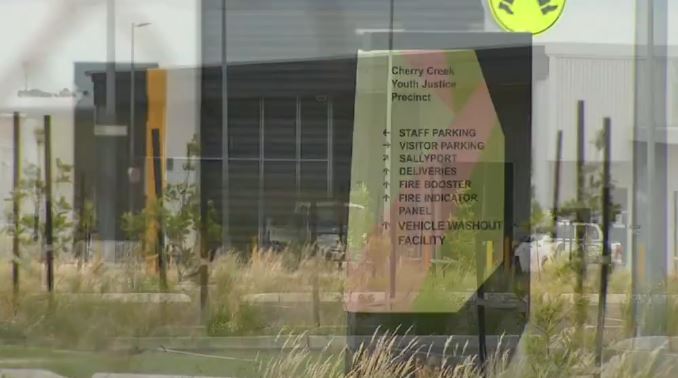



 Drug deaths researched after 18 months of operation are based on empirical data available from the Coroners Court.
That the Richmond facility saves lives has never been confirmed, but what has been confirmed is there are a more significant number of deaths in a community serviced by an injecting room than without, and Richmond is no different.
The facility’s claims are no more substantial than misleading perceptions, but proper research disproves the claims that injecting Rooms saves lives.
Addicts regularly use the facility to experiment with higher dosages or different drugs, knowing that if it goes pear-shaped, the facility will resuscitate them.
Those incidents cannot be counted as positive results by the facility as the injecting room facilitates the practice. Without the room, the addicts are less likely to experiment as the risk is well known to them.
Notably, the Premier has announced that the Yooralla Building in Flinders Street will now be developed into a wraparound service dealing with the health and well-being of not only addicts but also other socially marginalised in the City of Melbourne.
This is not dissimilar to the drug strategies published by the CAA over many years.
As laudable as this is, we caution the Premier that the Harm Minimisation brigade, which has hijacked the principle, must be kept from this initiative; otherwise, it will become a de facto Injecting room by stealth.
These proponents are the enemies of addicts and the community trying to normalise the use of illicit drugs without any effort to help addicts get clean and regain their health.
Now that the Premier has taken this step, we must now turn our attention to Richmond and look to close this facility that promotes and facilitates drug use.
All of the rationales applied to the rejection of the city room are multiples of 10, the quantum of the negative aspects of the Richmond facility that must be closed or be converted to follow the Yooralla model.
Helping addicts and users, not promoting and facilitating their addiction, is the only humane way to go.
It has also amazed us that in this litigious society, an addict has not taken action against the State for the injecting rooms encouraging their drug use.
The Government must now move to close or repurpose Richmond or be accused of applying double standards.
The CAA has long expressed concern and offered alternatives to Injecting Rooms; below is a selection of our submissions published on our website:
Drug deaths researched after 18 months of operation are based on empirical data available from the Coroners Court.
That the Richmond facility saves lives has never been confirmed, but what has been confirmed is there are a more significant number of deaths in a community serviced by an injecting room than without, and Richmond is no different.
The facility’s claims are no more substantial than misleading perceptions, but proper research disproves the claims that injecting Rooms saves lives.
Addicts regularly use the facility to experiment with higher dosages or different drugs, knowing that if it goes pear-shaped, the facility will resuscitate them.
Those incidents cannot be counted as positive results by the facility as the injecting room facilitates the practice. Without the room, the addicts are less likely to experiment as the risk is well known to them.
Notably, the Premier has announced that the Yooralla Building in Flinders Street will now be developed into a wraparound service dealing with the health and well-being of not only addicts but also other socially marginalised in the City of Melbourne.
This is not dissimilar to the drug strategies published by the CAA over many years.
As laudable as this is, we caution the Premier that the Harm Minimisation brigade, which has hijacked the principle, must be kept from this initiative; otherwise, it will become a de facto Injecting room by stealth.
These proponents are the enemies of addicts and the community trying to normalise the use of illicit drugs without any effort to help addicts get clean and regain their health.
Now that the Premier has taken this step, we must now turn our attention to Richmond and look to close this facility that promotes and facilitates drug use.
All of the rationales applied to the rejection of the city room are multiples of 10, the quantum of the negative aspects of the Richmond facility that must be closed or be converted to follow the Yooralla model.
Helping addicts and users, not promoting and facilitating their addiction, is the only humane way to go.
It has also amazed us that in this litigious society, an addict has not taken action against the State for the injecting rooms encouraging their drug use.
The Government must now move to close or repurpose Richmond or be accused of applying double standards.
The CAA has long expressed concern and offered alternatives to Injecting Rooms; below is a selection of our submissions published on our website: