
by CAA | May 28, 2026 | Library, Uncategorized
Ivan Ray May ’26
The Herald Sun reported on the 26th of May 2026, the comments from Victoria Police regarding the youth crisis.
The report calls on the Government to coordinate a response to tackle Melbourne’s gang scourge better.
That is code for “It’s about time to get your bloody act together”.
We, like the vast majority of the police and large swathes of the community, are heartened by the Force being so outspoken, calling out the flaws within the Legal processes.
It augers well for VicPol as Chief Commissioner Bush finds his feet, the Force finds its voice and throws the shackles of silence in the WPB – good stuff, really.
However, the response from opposing quarters, the self-righteous left who make up the majority of these Government functions, will be interesting, now that the boot is on the other foot, and they are being roundly criticised, supported by the majority of Victorians, who are tired of inaction and lack of accountability in some Government quarters.
We hope the media will sharpen their pens and focus on these entities, who are generally just unaccountable, wind whistlers.
This police criticism is aimed, not too subtly, at the Courts, particularly the Children’s Court, Corrections Victoria, Departments of Education, Families and Housing, Youth Justice, as well as Local Community leaders (Local Government).
The one glaring anomaly that jumps out is that while the Police are under constant scrutiny, and that is not necessarily a bad thing, these other Government functions are not, to any effective degree. And that is despite what they claim.
The other issue is the apparent lack of accountability among these government entities for youth or for their functions generally.
We have a huge problem, largely created by the Courts, and there are no signs they are taking responsibility or taking action to rectify the issue.
With all their bluster and rapier criticism, particularly of the police, they generally get away scot-free and, while drawing indecent salaries, show no interest in their organisations performing to an acceptable standard.
Benchmarking performance is one of those terms that they believe does not apply to them. After all, they are the Public Service, two words whose natural meaning is foreign to them, Public and Service.
Additionally, it would be useful if the outcomes of the judges’ sentencing decisions, in particular, were monitored electronically to weigh against benchmarking.
If an offender who has been sentenced or bailed reoffends, then the original decision was flawed.
A jurist’s failing would, at least, practically trigger the need for additional training, but continued failure must raise the question of the jurist’s suitability to sit on these matters.
The CAA has, for nearly ten years, coincidentally a similar time frame to the escalation of our current crime Tsunami, argued for a Judicial Review Panel to monitor and take action where necessary for failures in the judicial system and the performance of Justices.
While we continue to have Jurists playing at Social Engineering instead of dispensing Justice, we are never going to see improvements in crime rates.
A very relevant comment in an article on youth crime was attributed to an experienced police officer who said,
“We’ve got a cohort who are disconnected from reality,” he said.
“They don’t understand consequences. They don’t understand that if you stab someone, they could die.”
One could effectively argue that youths are not the only ones disconnected from reality.
This could equally apply to many of the Judicial brethren.
Another glaring example of Social Engineering trumping Justice was reported on the same day, when a Children’s Court Magistrate sent a sixteen-year-old home after the teenager pleaded guilty to four charges of arson, including the high-profile Bar Bambi fire.
The youth, it was claimed, had an IQ of less than 40, allegedly somewhere between that of a child aged 6 and 8.
The court accepted that he was mentally disabled, and as his parents had provided incredible love and support, the child didn’t understand.
As the experienced Policemen elsewhere in this piece claimed, this youth fell into the category of ‘disconnected from reality’ and ‘not understanding the consequences.
So, the magistrate sent him home. As he did with the other coofenderrs.
Precisely where the clash of Social Engineering fails, and how the Courts feed children into the revolving door of crime.
All the lectures from the judges are just white noise to these kids, a waste of the court’s time.
The child now has bragging rights over the Court and is enabled to gain respect from his peers and to move up the social pecking order within his network , strengthening his lack of accountability.
What the Court overlooked was that he had the mental capacity to carry out the crime successfully. Would a 6-8-year-old be physically or mentally capable of such a crime?
Twelve months away from his phone, his criminal masters, and loss of freedom might just let him escape the crime revolving door as he matures a bit. Of course, that depends entirely on the effectiveness of the other services responsible for managing intellectually inept young people, in teaching them that unacceptable actions attract unpleasant consequences.
The Judge in this case directed that, among other things, the boy delete all his contacts on his cell phone. The chances of compliance with these or the other instructions in the Judicial lecture are next to zero.
That is a disconnection from reality by the bench, not the perpetrator.
Counselling and all the other nice-to-dos with kids are a waste of time, and they need to be taught that certain behaviours have uncomfortable consequences, and that has no bearing on their IQ. Even 6–8-year-olds can and do understand right from wrong, no matter how much certain sectors promote the view that they do not- these out-of-touch ideologues need to step aside to allow for pragmatic justice.
A Justice Review Panel would have a field day with this magistrate over his failure to explain why he took a Social justice approach instead of serving justice, not only for the child but also for the victims and the broader community. This is an inappropriate approach to this child’s life.
As stated elsewhere,
“We’ve got a cohort who are disconnected from reality,” he said.
In this context, we are referring to jurists and others in the juvenile justice system.
It’s no good looking to the Police for a solution; the majority are ever more asking the same question about their role: ‘what’s the point?’
Why should they put their life on the line, risking Physical as well as Mental injury, when all their hard work is thrown aside for Social Engineering by the judiciary?
There is one outstanding positive from this debacle for the Police: the Force has become vocal on this issue, and that will have a very positive impact, at least on mental injury – the Force supports them.

DONATE

by CAA | May 25, 2026 | Library, Uncategorized
Ivan Ray May’26
There is no question that Firebombing, or extortion, is now completely out of control, and the public is looking to the police to protect them.
As hard as they may try to do their job, they are unlikely to succeed without the tools to do it.
But before commenting on the tools needed, it is worthwhile to consider what is happening and what is likely to happen.
As we discuss this matter, reflect on why this criminal phenomenon seems to be concentrated in Victoria.
What started as a tool of extortion in the illegal tobacco retail industry, where firebombing was a method to gain control of market share by competing criminals, and reluctant retailers selling illicit products supplied by a particular criminal cohort, the Firebomb strategy was developed as an easy and cheap method to gain compliance by terrorising retailers, landlords, retail staff and customers.
The advantage of this strategy is that they could use kids to do the dangerous stuff for chump change, and the spectacular nature of each event made for sensational media, further amplifying the consequences of non-compliance with the extortion.
Unwittingly, the media has played into the criminals’ hands, doing all the marketing for them.
The media gives greater credibility to the extortion demands because they are not hollow, unlike when any half-baked crook can leave a note pinned to a business door, and the extortion process has begun.
Keeping the organisers at arm’s length from the actual fires, they believe they are somewhat insulated should things go pear-shaped.
But what started as a process restricted to the illegal tobacco industry has now evolved into one of the most serious criminal epidemics Victoria has faced, and nothing of substance is being done about it.
From tobacco stores, the next move was to take on the Nightclubs and Bars with bootleg booze, which, to some degree, is a cover for protection money, a critical part of the move. This extortion is highly clandestine, and the full extent of this criminality is unknown. You can be assured it is widespread, as business owners trying to survive in the current economic climate will not reveal they are being extorted, because that is how extortion works.
The future trajectory is plain to see, with liquor warehouses with over $3.5m damage, Sex shops, innocent people having their cars torched, and car dealerships being targeted.
Most Victorians have generally considered that this spate won’t affect them directly, given the targets thus far. Still, the real danger is that more and more crooks will jump on the Extortion bandwagon of easy money, and it will impact all of us.
It is inevitable, and it won’t be long before other businesses are targeted with straight-out extortion. Pay protection money, or you get a visit from our fire team.
Your local Supermarket, fish and chip shop, McDonald’s, Chemist, and petrol station (the bombing of a petrol station would be catastrophic but with the knuckle heads the criminals use, anything can happen) will all be vulnerable to the growth of this insidious criminality, where the extortion can remain hidden as business people are coerced into paying the extortion rather than risk their business, staff and or their customers.
We are confident this activity is no longer down to one or two crime lords but a plethora of would-be crime kings.
Easy money is the crooks’ incentive, and they are attracted to it like a moth to a light. The longer we leave the light on, the more moths that will be attracted.
Hoping that no innocent person is harmed is just wistful thinking and not very useful because we need urgent action to get on top of this issue before it gets on top of us.
If you think that the Police will solve this, you are naive. It will take far more than that because we are probably at this stage because we have hamstrung the police for too long, and now we are paying the price.
This is a government problem, and only the government can address it.
This list is not exhaustive, as there are obviously things that can be done, but priority should be given to recalling Parliament to deal with this urgent issue in a non-partisan way, where ideology is put aside for the welfare of this State and its citizenry.
Legislation is required.
- Introducing a new criminal offence for individuals recruiting, managing or otherwise facilitating children under 18 to commit a crime.This offence must reverse the onus of association with a child onto the accused, requiring the accused to show that the interaction was lawful. Upon conviction, a mandatory minimum term of imprisonment of five years and a maximum of fifteen years must apply.
- Introduce minimum mandatory sentencing for those convicted of extortion and associated offences under the Crimes Act. Knowing that they face a minimum of five years’ jail without parole will dissuade many fringe players.
- Abolish by Legislation the ‘doli Incapax’ legal tenet and leave it to the Jurists to decide how best to deal with juvenile offenders. Remove the bureaucratic intervention in criminal matters. Applying this tenet does not serve a child well. Being granted an age exemption feeds into the juvenile mind of unaccountability.
- Establish, as a matter of urgency, a Judicial Review Panel to manage the efficiency and performance of all courts and jurists. Remove inefficiencies and develop benchmarks for jurists to maintain high performance. The current system has failed and has contributed to the high-end evolution of criminality.
- Urgently reintroduce the Consorting Legislation so that the police have a weapon to manage the criminal element.
- Embrace new technology to allow access, without a warrant, to communications, encrypted or not, between criminals, including the youths they attempt to recruit, and, if necessary, employ high-end expertise in this area.
- Legislate the power for the Police to apply to the Courts for a warrant to access this and other metadata from declared individuals on a long-term basis. The legislation must empower the courts to direct Telco companies to cooperate with each warrant.
- Provide the Chief Commissioner with the necessary budget and authority to explore the latest technology in crime fighting to gather intelligence to avoid criminal endeavours, targeting the communication systems used by the criminal class.
Compromising their ability to communicate, supported by updated consorting laws that encompass electronic consorting, will be the most potent weapon and could have immediate as well as long-term impact.
While we are unaware of the level of expertise currently available to VicPol, the strictest confidence as to the current Force’s skills level in this area is understandable and justifiable. Given the success and rapid growth of the criminal extortion rackets, which appear to be accelerating rather than abating, it is clear that VicPol has been found wanting in this area.
The Parliament must accept responsibility and address this matter as a matter of urgency, as it is fast approaching a life-or-death scenario; if truth be told, we are probably already there.
Wake up, Victoria. The next firebomb might be yours.
DONATE

by CAA | May 19, 2026 | Library, Uncategorized
Noel Newnham, May 2026
The devious Left is slowly beginning to reveal itself. It has long been the case that a fairly large group of the political left hates and detests anything that might conceivably pose any opposition to its own worldview. Thus, they “know” how to deal with crime and criminals, and the police are loathed and shunted aside for daring to have a view.
No wonder there is no traction for views that talk about real consequences for crime. Only the do-nothing left are perceived as having a worthwhile view.
But it goes further. The same cabal now seems to be stepping up its campaign against the Australian Defence Force.
Consider, this is the mob that refused to allow returning Vietnam Vets to march through our capital cities; men and women who served their country were treated like pariahs by the new government whose political aims were not served by acknowledging such iconic values as mateship, sacrifice and service.
They are not game to say it but they divide and they destroy and they belittle those who hold a contrary view.
Take the case of Ben Roberts-Smith. I make no real comment on what I understand to be the merits of the case beyond this:
- That any criminal prosecution based upon secret and unidentified informers must be suspect.
- That identity evidence, notoriously unreliable at the best of times, has to be crucial but seems to be more than a little shaky, in this case.
- That the outrageous public conflating of drinking from a prosthesis as somehow probative of murder makes those who did that more than irresponsible headline hunters, but more like head-hunters out to contaminate any future jury pool.
- The treatment of BRS by the Federal Police, his unnecessary and media-staged arrest, was completely disgraceful. There can be no doubt that BRS would have answered a summons, or if an arrest was truly necessary, then the common practice of surrender for arrest could have been used.
But then the recent budget set aside millions of dollars for finding more “war criminals” – more victims for our moralistic crusaders against Australian values and institutions.
You know, these are the guys who will not allow an examination of the abuse of Aboriginal children – so that some get killed; the same guys who force us to buy batteries made with cobalt extracted by slave-like labour in Africa rather than with Australian-mined cobalt.
Morality be damned; it is much more the case that they set out to divide us to rule us.
Was it Marx who preached the need to destroy in order to rebuild to your own specifications?
Meanwhile, publicly exposed rorting of major government projects continues. We all get ripped off by – at the very least, massively negligent public officials.
Does anyone else feel pummelled into insensitivity, or is it just me?
DONATE

by CAA | May 16, 2026 | Library, Uncategorized
Ivan Ray May’26
doli incapax’, all sounds too cute by half. Still, this legal principle from over 400 years ago is nothing but an embarrassment for any government that supports it, let alone the judiciary.
The doctrine of doli incapax (Latin for “incapable of wrongdoing”) was not introduced at a single fixed date in the way modern statutes are. Instead, it developed gradually in the early stages of the common law.
Doli incapax, emerged in English common law by at least the 17th century (1600s), and was already well‑established by the 18th century. [mylawquestions.com], [legalclarity.org]
The idea comes from ancient legal traditions, influenced by Roman law and early medieval English law. [researchpo…bria.ac.uk] from an era referred to by academics as the’ Dark Ages’.
With that pedigree, the concept of Doli incapax should have been relegated to History decades ago.
- It developed into a clear doctrine in English common law, where:
- By the time of Blackstone’s Commentaries (1760s), this structure was already firmly recognised in law. [legalclarity.org]
That means the doctrine was effectively part of the legal system centuries before modern legislation, rather than being “introduced” by a single Act. In the 17th Century.
So here we are, some 400 years later, applying this antiquated legal principle to a feckless thirteen-year-old girl, that even in those dark ages would have at least been required to prove that she didn’t know she was doing wrong.
In the 17th century, there were no State schools for the lower classes. Moral and legal education of children was in the hands of mostly illiterate parents. That is no longer the case, and if schools are not filling the void, we need to ask ‘Why’?
Whilst we like to feel that our legal system is current and can be relied upon to deliver Justice, by and large successfully, this ancient hangover drags the Justice system backwards.
The emotional argument that locking up kids is somehow immoral has many flaws.
The flawed argument promoted is that it’s aimed at saving children from themselves.
How does putting children who are addicted to crime back on the streets to reoffend, save them from themselves?
Committing a serious crime is inherently very dangerous to the perpetrators as it is to the victim.
Will it take the death of a child to make legislators realise the dangers to the children, let alone the community?
It is worth remembering that when Doli incapax evolved, cars and access to technology and a range of other innovations had not been considered, let alone developed.
To provide legislation to remove the defence of Doli incapax may seem an overreach, but the example of the 13-year-old committing 109 offences, of a serious nature, is a case that highlights the folly of persistence with this ancient concept.
What is overlooked is that this principle is applied prior to any evidence being tested, so the evidence of the allegations is never tested.
- The many victims of the child will continue to live in fear and without closure.
- No action to change the behaviour of the child is mandated.
- The impact on this case on any young person with aspirations for criminal notoriety, is manna from heaven.
It is noteworthy that when Doli incapax was created around 460 years ago there was no social media for young people to communicate. That didn’t happen until the 2000’s, some 400 years later, so the adverse impact on the deterrent factor of this public information has only started to be felt.
This phenomenon will increase as the young people see the outcome of the criminality and know that their age entitles them to do what they like, as they aspire to be like their role models in the criminal sphere. One of the preeminent driving forces for Juvenile crime.
It is not unreasonable to predict that applying the Doli incapax rule will have a severe and lasting adverse impact on the young accused.
These include.
- Without consequences for their actions, the likelihood of making the child bulletproof to the impact of the law will promote further and escalating lawless activity.
- The child will continue to be exposed to extremely dangerous behaviours likely to have disastrous consequences for the well-being of the child as well as the victims.
- The risks to the community from this child’s behaviour are unacceptable.
- This 13-year-old will be highly regarded by her peers, who are also on the cusp of lawlessness.
- She has been handed the ability to recruit and lead other children down her criminal path.
The sentence of Doli incapax imposed on this child by the ‘Justice’ system will ensure she never makes old bones.
That a criminal is young should only impact the sentence, and that is a matter for the courts and can only be applied if they are convicted.
Furthermore, to compare the mental acuity of a child of the 1600’s to children of today is disingenuous at the very least.
From their physical development through nutrition to their mental development through education and access to social media, they are light-years ahead of their early peers.
The community, however, is well attuned to the development of young people, and anyone who has experience with young people will attest to their knowledge of right from wrong and what is criminal is well entrenched.
We call on all politicians to make the necessary legislative changes to consign this antiquated principle to history where it belongs.
Leave the matters of adjudicating evidence-based justice to the Jurists, not legal bureaucrats.
DONATE

by CAA | May 5, 2026 | Library, Uncategorized
Ivan Ray May ’26
The Government has just announced sweeping changes to sentencing as a strategy to fix the crime problem. The ‘Allan govt orders $3m review of Victoria’s Sentencing Act’ as reported in the Herald Sun, 5th of May 2026.
There are probably areas of the Sentencing Act that need updating, but a full review is nonsensical and will do nothing to slow the escalating crime rate.
With the latest spate of fire bombings, innocent lives will inevitably be lost in this extortion racket.
The government could do a lot better if it took notice of people like the CAA,
The CAA was established over 10 years ago to give victims a voice on Law and Order issues and has attracted former Police with a combined Policing experience of over 500 years. They are supported by a large group of non-police, representing a wide cross-section of the community. Ranging from victims of horrific crime to several Health professionals to people with corporate experience and the entertainment industry.
The Police experience covers all ranks and all police functions, both operationally and corporately.
The 500 number is growing as more and more former Police officers are dissatisfied with the performance of the Force to which they have committed a large part of their lives. The common thread that binds them is that the Force can be so much better; Victoria and the serving members deserve it.
Not all the issues are the fault of the Force, and poorly briefed governments have made their fair share of clangers, and this announcement is one of them.
While the CAA struggles financially to survive, the government will waste millions on a strategy doomed to fail.
The CAA strongly recommends that,
An Independent Law and Order Standing Commission be established with bipartisan support to oversee all matters concerning Law and Order and Good Governance within the Criminal Justice system.
Getting an effective and efficient Criminal Justice system that punishes wrongdoers might just give the Victoria Police under Mike Bush the chance to reform and improve the lives of Victorians and the Police who serve them.
A reform that would be a cheaper and more effective strategy than just throwing our money at it for a limited outcome.
Changing the sentencing laws will achieve nothing to impact this crime spike. These lowlifes committing these horrendous crimes wouldn’t have a clue or, moreover, be influenced by governments or anybody else talking tough; to the juvenile idiots, this is just white noise if they even hear it.
Remember, these kids committing these crimes are influenced by the mature crooks whom they are trying to emulate, so who do you reckon they will listen to?
The common denominator in most juvenile crime is that the offenders are generally already on bail for earlier offences that are not yet resolved.
The courts use the flimsiest excuse to avoid locking up kids on the premise that this will only make them worse.
This ‘woke’ approach promotes the ideology that locking kids up will make them worse than what they are already; they are already in the worst category, committing high-end crime.
But at least if they are not out on bail, they are not committing more crimes.
No, the current proposal won’t work; the focus needs to be on holding the courts to account.
There is chatter about minimum sentencing, but the problem is that if a minimum sentence applies to an offence and the Jurist doesn’t philosophically agree with the concept, they will find a way not to convict. They have many options at their disposal.
That government strategy will fail before it starts and will feed into the untouchable ethos of criminal juveniles, making the problem worse, not better.
DONATE

by CAA | May 4, 2026 | Library, Uncategorized
Ivan Ray May’26
How often do you need to be bitten before chaining the Dog?
It seems that 10 years is not long enough.
Since its formation, the Community Advocacy Alliance has been arguing that the current approach to policing is flawed, and no effort has been made over this period to seriously address the issues we have continually raised.
Dismissed as old ‘has-beens’ not in touch with today’s reality, to be ignored. But 10 years of consistency must now be seriously considered because the CAA, much to the chagrin of the critics, has been proven right and the naysayers wrong.
The CAA has equal representation of Police and concerned citizens from a broad church and is a true microcosm of the broader population.
The CAA warned of a crime Tsunami and published a Plan to address the issues in 2017, in a document entitled ‘PLAN 100’. (see link below). This document has had four iterations, but the principles of the original remain unresolved or even unacknowledged by Victoria Police or the Government.
From cause to solution, the CAA has published a plethora of articles exceeding 500, addressing aspects of the issues. We have now achieved an average monthly readership of over 20,000, that’s over 100,000 per year.
A lot of interested/concerned Victorians by any matrix.
Below are extracts from published articles that led to the first Plan we submitted to VicPol and the then Government to address these issues.
Plan 100 in 2017 demonstrated we were across the issues then, as we are today and until the Government and the Victoria Police start to seriously address what we have raised, in another 10 years the community will still be wondering what happened to one of Australia’s premier Police Forces and the crime rate and general lawlessness of the current crime Tsunamis will make living in this State intolerable both from a cultural and practical perspective.
Some of the articles that spawned PLAN 100..
The policing experiment that caused a crime wave
“Victoria is labouring through a policing experiment where tasking, or management by statistics, is being marketed as “Modern Policing,” but instead of reducing crime, it has dramatically increased it.
Worryingly, there is no guarantee that the ‘Modernising Policing’ tasking experiment will ever work, and, if it doesn’t, then what?
When we find in five years 3,000 extra police are not enough, do we recruit 6,000 to be sure?”
Published December 2016
https://caainc.org.au/the-policing-experiment-that-caused-a-crime-wave/
Act Now or Crime Will Spiral Out of Control in Victoria
“Chairman of the Community Advocacy Alliance and former Chief Commissioner, Kel Glare, said the plan would address rampant violent crime, aggravated burglaries and robberies by youth, car thefts, assaults and the lack of respect for Police and the law in Victoria.
Put simply, if we all don’t act now, crime in this state will continue to spiral out of control, and everyone will be less safe. The reputation of Victoria as a safe state will be trashed.
My colleagues and I didn’t give years of service to policing in this state to see that happen.”
Published April 2017
https://caainc.org.au/act-now-or-crime-will-spiral-out-of-control-in-victoria/
Victoria in serious trouble still
“The Community Advocacy Alliance (CAA) again warned of the current Crime Tsunami nearly two years ago, and unfortunately, our predictions were accurate.
The CAA further warned that the Pursuit Policies of VicPol would lead to serious consequences, and unfortunately, that prediction was also accurate. The Bourke Street massacre highlighted the folly of current police policies.
We now predict that unless there are major changes to the police philosophy, the Judicial and Penal systems, the Crime rate will not flatten as Community and Police Leaders would try to have you believe, but escalate to unbelievable levels.
As Police and Community leaders search for the slightest positive in the latest crime figures, the reality is, no matter how you cut it or slice it, we are spiralling towards anarchy.”
Published 2017
https://caainc.org.au/686-2/?doing_wp_cron=1777849326.8314599990844726562500
72,000 lost shifts – Police victim blaming
The latest police sick leave figures (HS 30/9/17) are unbelievable and equate to nearly 350 shifts lost per week.
With these sorts of numbers, you would have thought the penny might drop with the Government that VicPol has structural problems and should address those before victim-blaming.
The problem predominantly is the organisation, not the police members.
Teaching senior staff how to help staff is a bit off. Apart from the obvious question of how they became senior staff without this basic management skill, suggests that VicPol wants to dodge the real cause: structural problems.
The Government’s only answer is to recruit more police. When will real action be taken when the lost shifts achieve 100,000?”
Published 2018
https://caainc.org.au/72000-lost-shifts-police-victim-blaming/?
PLAN 100…..
The Plan addressed in particular the three major issues where failure is rife: within VicPol, effectiveness, efficiency, and morale.
These are but three of the pillars of the organisation, and no meaningful effort to at least acknowledge the problem exists, or to address the problems, all that happens is they open another pack of ‘band-aids’ when the pressure is placed on the organisation.
Improving the organisation is also apparently not within the purview of the Police Association (TPAV), who rejected attempts by the CAA to even discuss these issues, albeit that apart from the benefit to the community, the largest group to benefit from the CAA plans are the Police members themselves, a concept that does not appear to light a fire under the Police Association.
This State is facing a November election, and it is the only chance we will have in four years to install a government that will take Policing and Law and Order seriously and do something positive about it.
We have previously acknowledged that Chief Commissioner Mike Bush has a herculean task in making Victoria Police an effective organisation again.
An Independent Law and Order Standing Commission must be established with bipartisan support to oversee all matters concerning Law and Order and Good Governance within Government, and particularly the Criminal Justice system.
Getting an effective and efficient Criminal Justice system that punishes wrongdoers might just give the Victoria Police under Mike Bush the chance to reform.
Although Plan 100 was written ten years ago, it is as relevant today as it was then, and if you are concerned about the way Law and Order is not progressing, in this lawless state, make your views heard by your local member.
You can review Plan 100 by following the link. https://caainc.org.au/plan-100/
The Community Advocacy Alliance (CAA) is funded by the members and the generous donations from the public. Please consider donating to help us continue to work for you. Simply click on the button below. Thank you – your generosity is very much appreciated.

DONATE

by CAA | May 1, 2026 | Illicit Drugs, Library, Media, Politics, Uncategorized, Victoria Police Issues, Violence
It is now essential that Victoria Police review their operational approach to the prevention and detection of crime.
We accept they are working under staff pressures; however, the time for using that as an excuse has passed.
A St Kilda Chemist was assaulted in his shop in the middle of the day, trying to protect his staff and his property, the shop stock, from a light-fingered, aggressive male many years his junior.
Several things are very disturbing, not least of all, it took twenty-four (24) hours for the police to respond to the 000 calls for help.
That makes the ambulance ramping times look positively rapid in comparison.
But if the police were doing their job well, this incident would probably not have occurred at all, and that is the frustration with the current mindset of policing.
The Chemist shop located in St. Kilda has been targeted on many occasions by apparent drug-affected individuals, over a very long period, and the behaviour necessitates the owners to use 000 very regularly. This was the longest no-show of police, and it was just good luck rather than good police work that the assault did not continue to escalate further.
The injuries sustained by the Chemist are bad enough, but do they have to wait until it is a fatality before the Police respond?
Given the age of the victim, he is extremely lucky not to have suffered fatal one-punch injuries.
The CAA membership is well aware of the trauma associated with a one-punch death as experienced by another of our members, who is a strong advocate for legislative change.

The two owners of the business have made every effort to encourage the police to make their neighbourhood safe for everyone and have been regular attendees at the Police information forums to provide feedback on the issues.
We note that, when interviewed by the media, Charlotte, Russell’s wife, corrected the Secretary of the Police Association, who was claiming the percentage of Police unavailable was much lower than the truth, which is closer to 25%. A very embarrassed Secretary had to admit on live TV that her figures were more accurate. Charlotte is a member of the CAA and actively works for the good of others in her community.
But the situation that they found themselves in is aggravated by the amount of effort the couple put into making St. Kilda a safer place.
VicPol has made as many promises as they have had management turnovers, and each wants to put their own stamp on the territory.
The promise of more patrols (proactive crime-prevention strategies) can happen for short periods if they are lucky, but are generally ineffective, as this incident demonstrates. It begs the question: where was the foot patrol when this incident happened, and why did it take 24 hours for the police to attend?
Had the Police attended when the first alarm was made, it may have prevented the assault.
But if there had been a foot patrol doing its job in the vicinity, then the assault would not have occurred at all.
The answer probably lies with the attitude of local police and their command, with a questionable attitude to preventing crime. They can’t see past reported crime.
They haven’t worked out that they can reduce what may be a serious work overload by reducing crime in the first place.
The numbers game will again be trotted out as a defence. Still, the community is sick of hearing this mantra and wants the Police management to provide leadership and exercise creative strategies to reduce crime.
The available Police resources can be used to maximum efficiency to address problems like this, and there are a plethora of options open to police commanders to use resources more effectively, but little public knowledge that they are even trying.
They just keep playing the same staffing refrain.
The public would accept some problems in resourcing if they are satisfied that management is trying to resolve them, and this hinges on open and frank discussions with the community, not on the traditional excuse mantra.
It looks very much like nothing much will happen until the Chief Commissioner issues directions to achieve the reduced crime environment.
It will need some Police managers to be held to account for failing to manage the volume of reported crime under their geographical area of responsibility due to a lack of proactive measures.
Being held to account and sanctioned would change attitudes overnight for the betterment of the Force, the Police members and the community.
The Community Advocacy Alliance (CAA) is funded by the members and the generous donations from the public. Please consider donating to help us continue to work for you. Simply click on the button below. Thank you – your generosity is very much appreciated.
DONATE

by CAA | Apr 30, 2026 | Library, Uncategorized
What does this phrase really mean?
The phrase “the standard you walk past is the standard you accept” was popularised by the Australian Army Chief, Lieutenant General David Morrison, in 2013. He used it to emphasise that ignoring misconduct or poor behaviour—especially disrespect, bullying, or unethical actions—makes those behaviours seem normal.
At its core, the message is about responsibility, accountability and culture:
-
-
- If you see something wrong and stay silent, you’re helping it continue.
- If you ignore low standards, you lower the standard for everyone.
- If you want a better culture—at work, in society, or at home—you must act when something isn’t right.
This applies to leadership, workplaces, communities, and even personal life.
When leaders or individuals overlook problems, they signal that those problems are acceptable, which can erode trust and create toxic environments. – various sources.
The principles of the phrase can be applied to unacceptable behaviours recently demonstrated at the Box Hill Police Station (One of those not closed, at least at the time of this incident).
A senior member of the CAA had a private cause to visit this Station recently and noticed that three other mature male persons were also waiting for service at the counter.
A Constable was attending to two additional females.
The conversation between the Constable and these women was clearly audible to the gathering, bordering on theatre. It soon became obvious that one of the women, who was showing signs of distress, was reporting a domestic violence matter, and the second woman was her support person.
So far, the situation, although not entirely desirable, was acceptable; however, it went downhill from there.
The Constable delved into the issue in great detail with a series of questions that were both very personal and embarrassing to answer, aggravated by the audience present.
Any respect for the privacy of this alleged victim evaporated.
It was obvious to the CAA member that he was not the only one feeling discomfort at the way this probable victim was being exposed for all to hear. He observed the body language from the other males waiting for service, who also seemed very uncomfortable with the process the female was subjected to.
Even when another female member attended the counter to help those waiting and the CAA member raised the situation with her, she agreed the behaviour was unacceptable and would take it further; however, she did not intervene as the interrogation of the victim continued.
The circumstances and content of the domestic complaint are, by and large, irrelevant to the woman’s privacy and the professionalism of a police member.
The interview should have been conducted privately, not made into a public spectacle.
There is no doubt that the constable should be disciplined based on the information to hand and made an example of.
The greatest concern, however, is that the constable was in a work environment where he believed this type of behaviour was acceptable.
When the issue is formally investigated, and the facts within this report are confirmed, the list of those disciplined will be extensive when the phrase “the standard you walk past is the standard you accept” is applied to this incident.
The role of others and their breaches in order of their culpability are,
- The Station Commander should bear the greatest responsibility for allowing a work environment and culture to evolve where this type of behaviour can be acceptable. The Station OC may not have been aware of the incident, which does not reduce culpability for cultural failings.
- The Local Area Commander for failing to adequately oversee and manage the cultural failings of a Police Station where behaviours like this are acceptable, and in particular a Station where the officer is located. Whether the LAC was on duty or not is irrelevant.
- The on-duty supervisor for not performing adequate supervision of staff. The Shift Supervisor must be aware of what is going on with all staff at all times, otherwise they can’t supervise.
- The Policewoman for failing to take action or seeking out a supervisor to intervene and facilitate a private location for the continuation of the interview of the female complainant,
- The Constable responsible.
A prima facie case against all the members engaging in conduct they displayed is likely to bring Victoria Police into disrepute or diminish public confidence in it, and is a defined breach of discipline under Section 125 of the Victoria Police Act 2013, which can attract severe penalties if found guilty.
The proliferation of domestic issues foisted onto the police is a major contributor to members downgrading the importance of these issues to generally not much more than annoyance, which is not an excuse for a professional Force.
But this may highlight an urgent need for the police, in domestic incidents, to further refine their role to keep the peace and, where necessary, to investigate to determine whether any party has committed an offence and to bring the suspect before the Court.
The welfare of the parties, victims or otherwise, and determining which party is at fault, or trying to adjudicate a solution, is not a police role, but the Courts
Other well-qualified individuals employed by the government would best serve these extended functions.
The solution is fairly simple.
The (original) model developed by the Crisis Assessment and Treatment Team (CATT) used in the Domestic space would alleviate a major workload issue for the police, freeing them up to attend to other matters requiring their attention.
It is well known that the most effective intervention for behavioural issues is an early one.
The Critical CATT Teams concept, which would translate to DVCATT, would, apart from reducing risks to victims, also allow the welfare of the families involved to be managed in real time, rather than through a future referral, reducing tensions.
Additionally, a fair proportion of the administrative workload created for Police attending DV incidents could be covered by the DVCATT system.
The interrelationship between the roles of the Police and DVCATT is a matter for the establishment of protocols.
For every DV incident allocated to a Police Unit, the same allocation must be made to the DVCATT to attend in a timely manner while Police are on scene.
This system will not only benefit the police but also the participants and families where DV incidents occur.
Having professionals attend in addition to the police in the first instance will most likely reduce the amount of DV requiring intervention by authorities, a win for everyone, including the broader community and the cost of DVCATT development and implementation will be offset by Police efficiencies, a dual benefit for the State.
A cost-benefit analysis on police overtime and administration hours alone would well cover this initiative.
The Community Advocacy Alliance (CAA) is funded by the members and the generous donations from the public. Please consider donating to help us continue to work for you. Simply click on the button below. Thank you – your generosity is very much appreciated.
DONATE

by CAA | Apr 27, 2026 | Library, Uncategorized
We would argue that both are critical because the escalation in crime rates is directly linked to the Judiciary’s performance and effectiveness.
Linking the crime rate is, heaven forbid, akin to making the Judicial fraternity accountable and providing a measure by which their performance can be assessed, both as a profession and individually.
The figures produced by the Herald Sun on the 25th of April should be a wake-up call to the Judiciary to lift their game in both quantitative and qualitative terms.
“There are currently an estimated 489 judicial officers and VCAT members, according to Court Services Victoria’s latest annual report, including more than 130 magistrates and 70 County Court judges, where the backlogs are growing fastest.
The growing backlog crisis is most pronounced in the County Court, where the number of pending criminal matters ballooned by 603 to 3000 between December 2024 and December 2025.
In the Magistrates’ Court, 3404 criminal cases were added to the waitlist over the same period, bringing to 65,788 the number of matters waiting to be finalised.”
The most damning statistic is the number of cases that remain unfinalised: 65,788, which equates to 134 unfinalised cases for each jurist – they need to put more time into their job and improve their decision-making efficiency dramatically.
We suggest that, unless radical changes are made, this number will grow to a level impossible to rein in.
Simply more Judges will help, but may exacerbate the problem as well, particularly if the new Judges are as ineffective as those already serving.
This number alone shows the adverse impact on Victims, offenders, and the community overall, and addressing this issue will go a long way to unclogging the Court System.
In the Herald Sun article, the Leader of the Opposition, Jess Wilson, announced that she was open to appointing new judges, which is a positive step toward resolving the current imbroglio. But the rationale is somewhat constrained, and the current problems are not quantitative alone.
The government claims in the same article that,
“The government has repeatedly said higher court volumes were not a failure, but a result of new laws introduced to crack down on crime.”
This claim may have some basis in fact, but if the ‘crime crack down’ is not applied throughout the Legal system, then the crackdown is a myth.
But the big question is how and what needs to be addressed.
The community is sick and tired of offenders who Police arrest for crime being granted bail on what would seem the flimsiest of excuses, only to be in the headlines within days, arrested for more of the continuation of their original criminal behaviours, and in some reports, the behaviour has escalated.
Anybody who follows the media reporting on the performance of the judiciary would easily conclude that some of the Legal brethren would rather play at being Social Justice warriors rather than administering the Law as it was intended by our legislators.
This churlish behaviour brings disrespect to all the judiciary, many of whom do not deserve that ridicule.
The, what some would argue, draconian Laws and processes where sanctions can be imposed without a trial in the domestic violence space have been largely accepted by the community. It may be time to look at taking a similar approach to crime more broadly, with built-in safeguards to stem the tide, as current strategies are not working.
This revolving-door mindset that the Judiciary sponsors must be challenged, and the best way to do that is to enshrine accountability for judges who grant bail and/or, upon conviction, allow perpetrators to re-enter the community without penalty for their indiscretions.
The vast majority of Juveniles appearing before a court for a crime see walking out at the end of the hearing as beating it. All the Court processes and lectures delivered from the bench are just white noise to be tolerated
Administrative penalties don’t cut it and are interpreted as non-penalties.
A perpetrator’s refusal to accept accountability for their indiscretions is a major factor in recidivism, so the Courts must accept responsibility for imposing sanctions that do not achieve the accountability objective.
Why should a Judicial Officer continue to serve in a Court Division where they constantly have offenders reoffending after conviction?
That surely must be a legitimate measure of the Jurist’s performance.
Further, the caseload of each Jurist must be measured and compared with their peers to assess the Jurist’s quantitative performance.
It is also relevant to measure the quantum of cases awaiting finalisation by each jurist so that ditherers can be identified and guided to better performance.
The CAA has long argued that a Judicial Review Committee should be created to oversee the Judiciary’s performance and that the Committee should include non-lawyers among its members.
As to the political bias of Jurist, we are not aware that it is a problem per se; however, there are serious problems in the Legal processes where important cases are not finalised, and perpetrators can escape prosecution. That is called ‘corruption.’
We would argue that there is a proliferation of matters that reek of political bias, and that the bias is generated not by the judiciary but within the Law Department itself.
The matters that have been at the forefront over the last decade include
- Slug Gate
- The Gobbo affair
- Politicians’ Travel Rorts
- Bike Boy
- Branch Stacking and Misuse of Public Resources (Operation Watts)
- Hotel Quarantine Failures and Accountability Gaps (COVID‑19
- Improper Influence over Public Contracts (IBAC – Operation Daintree)
- “Red Shirts” Affair – Use of Taxpayer Funds for Campaigning
- Planning, Developer Donations, and Political Access (Operation Sandon).
The one thing these items have in common is the dearth of culprits who have not been held to account; we are not talking about some junior participant; the architects of these rorts are the ones who need to be held to account. If that starts to happen, there will be an immediate lift in performance within the legal system.
The behaviour of those responsible for this disgraceful approach to Law and Order, where some are untouched by prosecution, sends an unequivocal message to all those Victorians with a criminal bent: crime pays.
One standard for one section of the community and a different standard for others is a recipe for failure of Law and Order.
There are other contributors, and a pattern seems to have emerged across the decade of:
- Politicisation of public administration
- Weak accountability for ministerial advisers
- Over‑centralisation of power
- Limited anti‑corruption jurisdiction and enforcement.
Victoria seems to have evolved a class of oligarchs similar to those in some places in Europe, the untouchables, and this must be curtailed.
Coupled with reviewing the Judicial performance, these areas are in critical need of attention.
Addressing these issues, where historical matters at last find resolution and those responsible are held to account, is imperative.
Making those who serve the community accountable has to be the State’s priority, and for that, we need to rely on the politicians.
The Community Advocacy Alliance (CAA) is funded by the members and the generous donations from the public. Please consider donating to help us continue to work for you. Simply click on the button below. Thank you – your generosity is very much appreciated.
DONATE
by CAA | Apr 17, 2026 | Library, Politics, Uncategorized, Victoria Police Issues
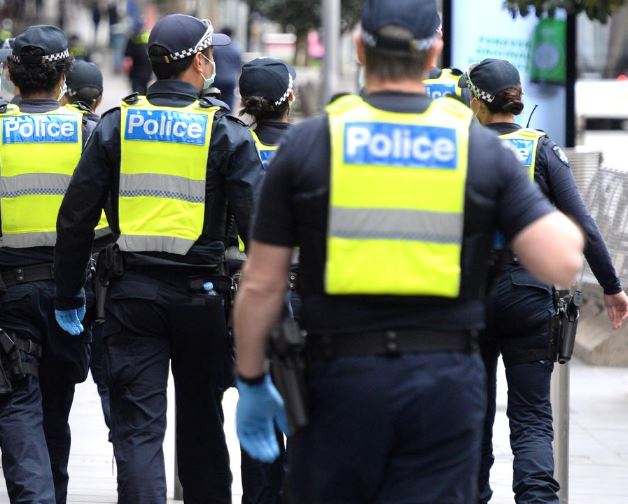
One Policing art that has been disappearing over the last decade has now reached a point where it poses a real and ever-present danger to Police on the beat, extending to Police mobile patrol units and is reflected in the crime statistics that show clearly that the proactive function of police patrols is ineffective.
The Art of the Police foot patrol has all but disappeared, replaced by a quantitative approach that is endangering the lives of the police involved.
Central to this new, increased danger is the loss of the skill of Situational Awareness.
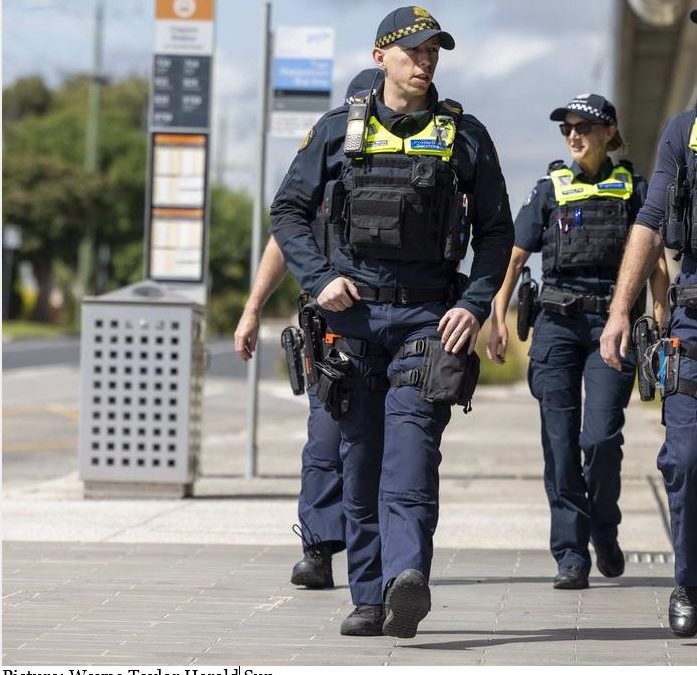
Today, you are more likely to see a gaggle of police walking along a city street than police members on patrol. Still, the gaggle is in response to a perceived need by management, mistakenly believing that numbers create a deterrent rather than an individual well-trained police member properly performing Patrol with well-tuned situational awareness and community engagement skills.
To increase the deterrent impact, if there are four or five members detailed for patrol, they must be spread out to cover greater areas, and that is effective deterrent Policing, metaphorically a police presence on every corner.
An effect achieved by properly trained supervisors.
It is surprising that the Police Association (TPAV) is not very vocal on this issue; in fact, their silence is deafening. The skill of patrolling directly relates to Police members’ safety, an issue we presume is of critical interest to the TPAV.
What we don’t know is whether these patrol skill deficits are a lack of training of members and or supervisors, or just the easy way out for supervisors.
We would hope this is not Force policy; we credit the Police administration as being smarter than that.
What you will see with these skill deficits is police engaged with each other, perhaps talking about babies, station gossip, or football, who knows, but what we do know is that this practice is very dangerous. These groups, inwardly focused, are a bigger target for terrorists or organised crime gangs, or rogue individuals, and these risks should not be discounted.
The gaggle phenomenon should be known as the ‘non-patrol ’.
The members in conversation have no Situational Awareness, so they will not see danger coming.
You can’t dodge a bullet (metaphorically) if you don’t see when it is coming.
In this era of heightened risk of terrorism, the Police groups make easy targets all bunched together out in the open, walking at a leisurely pace, not concentrating on their function, is a recipe for disaster in lost Police lives.
One of the most dangerous activities reported to us has been groups of members convening a meeting, perhaps by a supervisor, in public places with their backs to where any threat may eventuate.
Sitting Ducks is an appropriate analogy.
Probably the misguided two-up policy of years ago has never been fully corrected.
Policy Introduced in 2015:
Near-total ban on solo public policing.
Now:
Two-up is strongly enforced for high-risk and Highway Patrol duties. Multiple exemptions based on risk assessment, location, urgency, and staffing realities—functionally a risk-managed policy, not a universal rule.
The problem is that members have become entrenched in the need for the company rather than ensuring operational effectiveness.
And while on members’ safety, supervisors must intervene to manage gawkers at incident scenes.
Far too often, we see in media footage at incident scenes, gawkers standing around, apparently enjoying the event, and we are not talking about the public, but other police.
Gawking, not keeping an eye on the background to protect themselves and the members directly involved, must be addressed before any real harm occurs, apart from being unprofessional.
It will take strong leadership to turn this around. Something we are confident Chief Commissioner Bush could provide.
It does not seem logical that a well-trained police officer cannot undertake foot patrol or mobile patrols one-up.
If there are two members available, one should patrol either side of the street, multiplying the visible Police presence.
This allows for community engagement, the most potent proactive Police function. And when it comes to mobile patrols, the same logic should apply.
When a supervisor is tasking their shift, vehicle availability is a critical consideration.
It seems illogical to have one or two vehicles two up when the Station has other vehicles idle.
Three or four vehicles, one up, are far more effective than the apparent holy grail that Police vehicles must be two-up.
The concept of an observer in a Police vehicle in practise means the passenger has eyes down on a phone or other electronic device, making the role of observer moot.
The role of the supervisor is to manage all vehicle crews, so the allocation of resources to a public call may require two or three, or more, one-up vehicles to respond.
Often, as the case may be, once the matter is under physical control, resources can be peeled off, making patrol more efficient in any geographical area, reducing initial response times and increasing patrol visibility, thereby reducing crime. On many occasions, leaving just one member to complete the administration.
The two-up policy, even though it has been diluted since its inception, must be rescinded so lame-duck excuses cannot be used to maintain the status quo.
Although introduced as a safety issue, the risk to members has not diminished since its introduction but has increased.
More members have paid the ultimate sacrifice during the two-up period than at any other time, including multiple deaths not seen since the Kelly ambush of 1878 at Stringy Bark Creek near Mansfield.
The most effective safety strategy to reduce fatalities and injuries to Police in the Patrol environment is Situational Awareness, but what is it, and why is it so critical for Police?
Simply put, it is the art of looking at the bush and seeing the trees.
Ask anybody to look at the traffic and explain what they see. Usually, the answer is a lot of Cars.
Ask a trained Police member what they see, and they will report the types of vehicles and any obvious anomalies, such as passenger-side windows wound down when all other vehicles have them closed, erratic driving, avoiding being blocked in, a very young driver with similarly aged occupants in a high-end car.
And the real giveaway is that all occupants are paying attention to the police vehicle.
All these things, and more, justify checking out the vehicle.
A trained member on patrol will engage with the public, but, more importantly, will focus on the faces of every individual they pass. They are looking for body language that may indicate unlawful intent.
These are just a small part of the many aspects of Situational Awareness.
None of this happens when a gaggle of Police, or even just two, stroll around, talking amongst themselves.
We are confident that the Chief Commissioner is across this issue, and we hope, for the benefit of members, that the Police Association becomes proactive in this approach, given the benefits to members.
The Community Advocacy Alliance (CAA) is funded by the members and the generous donations from the public. Please consider donating to help us continue to work for you. Simply click on the button below. Thank you – your generosity is very much appreciated.
DONATE
by CAA | Apr 14, 2026 | Library, Politics, Uncategorized, Victoria Police Issues
The announcement in the Herald Sun, 12th of April 2026, ‘Victoria is haemorrhaging police officers’, by the Leader of the Opposition, Jess Wilson, to increase the Police numbers by 3000, is very welcome news indeed. Long-suffering Victorians can at least have hope that, with a change in government, the issue of law and order, particularly the Police capacity, in this once fine State would be seriously addressed. At last, our safety is a priority.
What concerns us most is the methodology the Opposition proposes to achieve its targets.
Establishing overseas recruiting centres and the associated marketing to attract recruits could be a very expensive option, especially if no suitable ‘sunset’ clause for this process is included.
It also has the potential of the Force, believing the problem is fixed and fails to address the problems within, the root cause of the current issues.
It is worrying that no real effort has ever been made to recruit Victorians.
It is true that well-trained personnel from the countries listed and interstate will help, but it is not the solution; rather, it is a welcome stopgap.
The problem, as we understand it, is that there are plenty of Police applicants; it is the training and processing that is the bottleneck.
The CAA has raised this issue before and proposed a solution.
The first step before we head overseas is to examine and review the selection process of Recruits to ensure they’re fit for purpose from selection to retirement.
Failing to do that adequately is kicking the can down the road.
Poor recruitment selection today creates the problems of tomorrow.
The epidemic of resignations as Police exit in alarming numbers is more than likely to be, in large part at least, the manifestation of poor selections in the past as much as poor management today. Perhaps focusing on a quantitative rather than a qualitative outcome is the problem.
It is critical that applicants are screened more effectively to minimise the risk of non-physical injuries during their service, and investment in this area would be money well spent, provided the outcomes are monitored.
It would also be a good investment to properly examine the exit avalanche to identify causes and address those. Failing to do that will only mean the causes are still there, and the problem will reignite at some point in the future.
One of the major failures is that VicPol has outsourced recruitment application training, so the potential recruits are not being evaluated on their merits but on a taught response from independent contractors.
That is a major recruiting flaw, regardless of how dedicated the applicant trainers may be.
Outsourcing this process is the result of the Force seeking greater efficiency, rather than understanding that effectiveness should never be compromised for efficiency.
We are advised that a potential recruit may need to pay up to $2,000 to complete the application process and training before assessment. That has to be a major disincentive for many suitable people considering a career with Victoria Police.
Victoria Police must take back control of this process and be responsible for all aspects of it. It seems disingenuous to ask people to join and pay for the privilege of being considered.
The Force must also review management accountability, not only for staff functional performance in the field but also for their ability to deal with the non-physical stress that the police service exposes them to.
In summary, there is a need for overseas recruiting, but recruiting in Victoria should be the first priority, as it will be substantially cheaper, enabling world-class training to be developed and implemented across the Force to improve the organisation’s overall performance and the conditions in which personnel are forced to work.
We have seen in recent years vast improvements in the employment conditions of Police in this state, but this has been overshadowed by the large numbers leaving the organisation. So simply improving tangible benefits of themselves is not the answer without the non-tangible benefits being developed.
Although we do not begrudge any improvements, given the conditions that police work under, the provision of new buildings, better equipment, and improved conditions can be counterproductive to the organisation’s efficacy.
Tangible rewards do not replace effective management; however, rewards used judiciously may solve the current problems.
Rather than spend millions overseas, why not invest in the current staff to slow the retention exodus?
Retention bonuses will go a long way to stem that tide and encourage others to join. It would also attract interstate serving Police seeking a reward for service.
Additionally, this scheme, which can be spread over many budgets, would be easier to maintain.
A bonus system starting with Graduation, then two years of service, five years, then ten-year increments would overtly reward service and discourage those considering an exit plan from Policing.
Investing in the current members, showing appreciation for their work, can be a cost-effective strategy as the scheme has many attractions, particularly if the bonus is linked to performance.
It would be disheartening for hardworking members to see lazy, incompetent members rewarded simply for turning up for work.
Senior Police and political leaders should have a look at the Hawthorne experiment undertaken by Elton Mayo, although it was many years ago; it is as relevant today as it was then and relates to Policing, as is currently evident throughout the Force.
The Hawthorne experiments at Western Electric’s Hawthorne Works plant demonstrated that worker productivity increased not only because of physical conditions (such as salary, leave and other conditions) but also because workers felt valued when observed and given special attention, a phenomenon known as the Hawthorne effect. Led by Elton Mayo, the studies highlighted the importance of social relations, employee morale, and management attention over strict physical working conditions.
By all means, we encourage overseas and interstate recruiting of serving Police officers as a short-term fix, but what is desperately needed is a serious effort to recruit locally and retain existing staff.
We would like to be assured that if the Opposition wins government, they can walk and chew gum simultaneously.
The Community Advocacy Alliance (CAA) is funded by the members and the generous donations from the public. Please consider donating to help us continue to work for you. Simply click on the button below. Thank you – your generosity is very much appreciated.
DONATE

by CAA | Apr 7, 2026 | Library, Politics, Uncategorized, Victoria Police Issues, Violence
With all the boo-hoo-hah about our wonderful city and how it is being overrun with druggies and the homeless, it has taken Steve Price, a Melbourne Herald Sun journalist, to really nail the issue and perhaps indirectly provide a solution.
Steve recently got himself down to the alleged epicentre of the Melbourne problem to see first-hand what is going on.
This was what gave his article (Herald Sun Saturday 4th April 2006) real authenticity and demonstrated to decision-makers that they should also get off their butts and go down and get firsthand experience.
Then we might get some strategies and decisions that actually work.
“A couple of weeks ago, during mid-morning on Elizabeth St, a confrontation between a couple of police officers and three obviously drug-affected people outside a liquor store had a disturbing outcome.
The three had decided paying for booze wasn’t necessary, so they simply walked out of the shop with any expensive alcohol they could lay their hands on.
Sadly, for them, there were two police on foot patrol right out front. One of the three had already collapsed onto the pavement and was swigging away at whatever she had stolen, one of the others – a bloke – was shirtless, clutching a bottle along with his mate.
This was midmorning in the centre of Melbourne at a renowned hot spot for the homeless and drug-affected zombies that the Melbourne City Council claims they are cleaning up.
What happened next, though, shows there is more than one way to solve a crime problem.”
To avoid confronting this issue, those responsible jump to the avoidance fallback, with great enthusiasm, ‘this is a Community Health problem’. Effectively diverting the focus from the reality that this problem is primarily one of Law and Order, the health component, although important, is secondary.
First and foremost, the community leaders need to accept that there is a problem and that none of the current strategies is working.
Moreover, the problem is not isolated to Elizabeth Street but also affects other areas in the city, inner-city, metropolitan, and rural areas. In other words, it is a Statewide problem.
It is also arguably a National problem; however, shifting responsibility to the National approach only ensures that nothing effective will be done, other than blame shifting.
Recognising the depth and breadth of the issue is but part one, and no solution can be achieved if those who are our community leaders don’t accept reality but remain blissfully oblivious in their comfort zone of denial.
But back to Steve Price’s work.
“As I stood listening to the exchange between the police officers and the thieving druggies, I was amazed when one of the uniformed officers got into the face of the two that were standing and pointed toward a stationary tram at the stop on the corner of Elizabeth and Flinders streets. He told the pair, “Go and get on that tram right now, and catch it to the end of the line and f— off out of here”.
Tactically, not strictly out of the Victoria Police handbook and not doing much for the idea that if you are a homeless druggie, you shouldn’t be stealing from Liquorland, but it solved the immediate problem.
The moral of the story is that despite all the promises from the state government and Melbourne City Council, they still haven’t addressed the issues haunting Melburnians, desperate to claim their once great city back. Broken promise after broken promise and useless media spin-driven solutions are a joke and simply don’t achieve anything”..
The actions of the Police member involved were laudable, exercising his lawful discretionary power in that it immediately resolved a problem, but unfortunately, only relocated it, albeit temporarily. We cannot help but wonder whether the Police member was unduly influenced, given that, in the current administrative climate, charging these thieves was a waste of time.
Which raises the issue of whether it is right both morally and legally for the three druggies not to face court for their thievery.
The theft is distinct from their drug sobriety and must be treated independently, and the impact of drugs on their behaviour must be ignored; drug addicts must not be allowed to blame drugs for their crimes.
Deal with any criminal matters as the priority and then deal with their health issue as a result of their poor life choices separately.
The Courts are not the referral point for treatment, as that lies with Corrections.
In the unlikely event that they are jailed.
The Courts are responsible for instilling accountability. Corrections are responsible for rehabilitation and referring the addict’s health issues to the responsible authority, Health.
Being under the influence of any addiction must never be an excuse for criminal activity.
We have no hope of resolving this blight on society unless the Police can do their job and the Courts do theirs, and once those two sectors are working, then the issue of dealing with the perpetrators’ health can be addressed.
The health approach hasn’t worked and is not likely to, no matter what the apologists for drug addicts committing crimes may think and, unfortunately, espouse.
Compassion for addicts/users deprives those innocent of any wrongdoing, the victims, of justice. It’s the Victims who deserve compassion from the courts, not the perpetrator of a crime.
The solution, as in the case witnessed by Steve Price, has become clear: the health argument has failed, and the only option is a law-and-order approach.
Unfortunately, the police member exercising his discretion failed the sector of the community most impacted by this activity, the victims.
The Police must be encouraged to charge any person associated with the drug scourge for even what is considered a minor crime. If they commit an offence, they must be arrested (assuming there is a power of arrest for that offence) and brought before a court.
If the offence is proven, then the Courts must be directed not to consider their sobriety at the time of the offence as a mitigating factor in sentencing.
This strategy will imbue accountability in the users, the lack of which is a major contributor to the drug epidemic.
Building up convictions for minor matters will eventually end up with the addict being sentenced to prison, if the Courts are doing their job, instead of trying to be social engineers.
This social engineering approach generally leads to failure, failure for the victim and the addict.
Unless there are consequences for unacceptable (criminal) behaviour, there is no motivation for the addicts to change their behaviour or seek help, remembering that they are as addicted to the drug lifestyle as much as their drug of choice.
Tackling the lifestyle by instilling accountability, there is a chance of substantial change for the better, and health outcomes will become effective.
Well done, Steve.
The Community Advocacy Alliance (CAA) is funded by the members and the generous donations from the public. Please consider donating to help us continue to work for you. Simply click on the button below. Thank you – your generosity is very much appreciated.
DONATE
by CAA | Mar 23, 2026 | Corruption, Library, Politics, Uncategorized, Victoria Police Issues
While Police Command and the Police Association dance around each other, trying to score points, the crime rate is either stabilising (not according to the statistics) or that an injection of 1,500 replacement members will solve the problem.
It would be nice, and good for policing and the community if these two would at least adopt a common approach rather than lock heads. That approach does not provide solutions, just more grief.
The Herald Sun report on the 20th of March 2026 exposed this imbroglio.
If anyone thinks an injection of 1500 will solve the problem, they need to take a serious look at what they are saying. At current rates, the replacements will take longer than many of us will live.
At the accelerated rate of 70 + per annum, over attrition, the shortfall in Police graduating from training will be reached in about 20 years, provided attrition does not continue to accelerate.
Given the current realities of policing in this State, the chances of stabilisation are extremely low.
20 years is a long time to wait for sufficient police to attend to your problem.
Shortening courses is a band-aid fix, as less police training translates into poor police performance. If these few weeks were scuppered so easily, why were police trained to the full measure for so many years?
Probably because the Force collectively thought it was necessary to produce effective, efficient police. Surely it wasn’t being done for the hell of it.
You can see the claims coming thick and fast in the future, where members blame the lack of training that caused their mental health to deteriorate.
Additionally, VicPol’s argument that the crime rate will plateau is unrealistic, because how would they know unless their crystal ball works better than ours?
Telling the public that the Police Stations shuttered across the Mornington Peninsula has limited effect because victims ringing 000 is arrant rubbish, as there is no evidence that Stations weren’t being contacted before they were closed.
The problem with the Station closures is that they are misleading the public, as the majority of those stations are actively operational; they just don’t provide a forward-facing inquiry counter.
That people do not attend Police Stations during certain periods is well known, and closing the inquiry counter during these periods is reasonable, but a 24-hour approach results in the Force failing dramatically in an important function of Service delivery.
One of the most outstanding and embarrassing claims attributed to Deputy Commissioner Hill in this Herald article justifying the station closures was –
“and (officers) weren’t answering the telephone, because no one was ringing.” ‘Doh,’
It may well be more accurate to say that nobody answers the telephone, so nobody rings.
The Police Advice Line (not operated by Police)and the 000, also non-police systems, have major service delivery failures, frustrating callers. Police simply supervising call takers is not enough.
Add to that Crime Stoppers, which seems never to provide callers with feedback, and the whole of the forces and allied communications systems need to be reviewed and updated to be fit for purpose, whether you’re the caller or the recipient.
There is a desperate need for a change in attitude within the Force Command.
The Force is there to serve the community, not the other way round.
As to what can be done.
The Police Association and the Force need to be on the same page and come up with solutions, not more rhetoric, butting heads, and blame shifting.
Here are but a few matters to consider.
a) G-Tag
The spike in stolen vehicles would be dramatically reduced by implementing the CAA G-Tag project. A pilot run some years ago that failed because the onus was put on the car owners, and the police abandoned their role again, and the Pilot did not follow the G-Tag proposal.
b) Training efficiency
Training could be accelerated by accommodating training off campus from the Police Academy. Recruits start for a number of weeks at the Academy, then move to an off-campus facility for theory training, returning in the last fortnight of their training at the Academy and for graduation. When operated properly, this initiative could triple the number of recruits processed each year, and there would be no need to reduce training timeframes. Judicious planning may be required to coordinate this scheme, but the outputs justify the work.
c) Reduce Night shifts.
To alleviate personnel shortages, each member of every Task Force or other specialist group should remain on their station-of-origin roster for the night shift. With fewer night shifts, members’ overall welfare will improve, with little impact on the groups from which this resource is sourced. Additionally, the Task Force or Special Duties members can keep in touch with operations at their station of origin.
d) Administration efficiency
The streamlining of administration plaguing operational members is being addressed; however, the members are generally not aware of progress. Reporting on what is being done and accountability to front-line members will give them hope that things will improve. Reversing the negative effects of admin overload, particularly if a reporting mechanism includes opportunities for members to provide feedback, will help develop members’ ownership of the changes. Accountability to frontline members by those charged with fixing the problem will expedite results and improve overall morale.
e) Increase operational staff by 10,000 days.
Another mechanism to improve staffing levels is to introduce a leave buy-back scheme. All members currently enjoy substantial leave entitlements, whether they are working in the frontline or elsewhere. A voluntary scheme available only to frontline police, if it attracted 500 participants for four weeks, would create an additional 10,000 on-duty workdays per annum.
This scheme would be attractive to members trying to get into the property market, recovering from a financial hardship, or just the added income as a valuable tool to improve their lifestyle. A voluntary scheme such as this will be the most cost-effective way to increase the Force’s capacity in the short term.
f) Role of leading Senior Constables.
Our understanding of the Leading Senior Constable (LSC) was akin to that of a Master Police Patrolman (MPP), experienced and equipped, capable of any police operational undertaking, including the more difficult or complex tasks than the rest—a cut above the others.
They do, however, seem to be treated as just another member and their skills are not recognised.
LSC’s should be capable of one-up patrols as first responders to determine the additional needs required for the reported incident.
One key area that would have an immediate impact is the reintroduction of one-up Highway patrols, doubling the number of Police Highway vehicles on the road.
If implemented, it would increase the number of patrolling vehicles by a factor of two across the Force.
g) Two-up patrols
Rescinding the two-up patrol mandate of 2015, based on a heightened terrorism threat, was, in hindsight, an overreaction that has limped along, reducing the force’s capacity to respond to community needs for a decade. This policy coincides with the rapid escalation of crime over the last decade. Halving Police patrols was a major contributor to the crime spike, which would go a long way to impacting crime and the road toll.
The instruction has been debunked as a safety issue for police, as more Police have been slain in that decade in incidents involving multiple officers than any recorded death of a Police member working alone. Public records indicate eight Police deaths since the policy was introduced, none of them working one up. Therefore, it can be safer for members to work one-up. The additional Police freed up should be detailed to other vehicles (There seems to be no lack of them as you drive by Stations and see police cars parked doing nothing for hours) or other patrol functions to increase the Police presence by 100%.
h) Police proactive youth programs
If you want to make inroads into the crime statistics, then police working with children in targeted areas is the only strategy that will work. It’s no good relying on the Court system, and a piecemeal approach is problematic.
A revamped and targeted Police Schools program where Police are actively involved in Schools at the age target level of year 7.
Part of the industrial action currently being undertaken by Teachers and Principals is the danger they regularly face. A Police presence in schools will alleviate some of these concerns and make schools a safer place for staff; students will also benefit from a safe environment that promotes better learning outcomes. All contributing to a reduced crime rate.
The in-school work of the police, apart from building bridges on a personal level with students, is to deal with, assist, and guide any child who is heading toward a future in crime. What won’t work is random school attendance for students to play sports with the police. Perhaps enjoyable for both, but effectiveness is severely limited. A more formal approach with structured learning, however, would be a more effective use of Police resources.
It is time the pendulum swings to a proactive youth focus and stop blaming everybody else for the crime surge when creative planning would address the problem overnight. It’s called Crime Prevention.
These initiatives would go a long way toward creating a more functional Force, and the 1,500– 2,000 police officer number shortfall, depending on who you talk to, could be largely addressed by these initiatives.
And, more importantly, take pressure off members, slowing the attrition rate as the job becomes more result-driven, increasing job satisfaction.
For the Force and the Association to have a public spat is not helpful to either side.
The recent matter we became involved in with a member being forced back to the frontline with a serious health issue should never have happened, but shows that the Force has a long way to go to ensure the welfare of its police members and the Police Association must review their function, given those who helped the sick member, sought our help rather than the Association is embarrassing.
The welfare of Police must be the highest priority for both the Force and the Association.
The Community Advocacy Alliance (CAA) is funded by the members and the generous donations from the public. Please consider donating to help us continue to work for you. Simply click on the button below. Thank you – your generosity is very much appreciated.
DONATE

by CAA | Mar 22, 2026 | Library, Uncategorized, Victoria Police Issues
If “service efficiency” is relevant to how well VP trains its members, and “service effectiveness/delivery” relates to how well those members do the job they have been trained to do, it seems to me that there is a loss of memory and a big hole in the thinking of the senior VP management presently concerned.
Consider the older methods of training, way back before the rubbish about worrying how efficient the Instructional members of VP and the many public servants doing the training are, in turning out “street police” – what matters is the fact that police turned up to do whatever job was necessary. NOTE THAT – enough police turned up to do whatever work was needed at the point of intersection with the public. There were just about enough trained and operational members to cover the needs of the jobs.
Let’s go back to the training at the Academy about 1970: when I did it, it was twenty straight live-in weeks at the St. Kilda Road Depot. In those 20 weeks, we were SATURATED in POLICE work, behaviour, experiences, laws and structure – nothing else! With the two limited “outsiders” exceptions for Social Studies and Typing instructors, the only people we dealt with were POLICE members, all of whom were senior in rank and experience to us trainees. Nietzsche said, “What doesn’t kill me makes me stronger”, and that was appropriate when the POLICE Depot was active.
We learnt only from POLICE persons, thus we knew and learnt only POLICE behaviours – there were NO outside opinions from biased Government-body “teachers” or other politically-motivated do-gooder opinions to change or challenge proper POLICE learning behaviours and beliefs.
Therefore, POLICE recruits graduating from the Depot acted and thought like POLICE. At the Depot, the Squad Law Instructor was God, and from him, [a carefully-selected and very experienced, properly-trained POLICEMAN], we learnt the LAW and POLICE beliefs, and were examined on our knowledge depth, and breadth of subjects, many times during those twenty hard weeks.
Then we went out, mostly to POLICE Stations, and learnt more the hard way from our superiors in rank and experience, on how to do the job properly. AND in two years’ time, we went back to the Depot to do what was known as RETENTION – many more weeks of POLICE learning, instruction, and knowledge updating, and exams, to make sure we were really doing well enough to be kept on as REAL POLICE, and if we passed, we were confirmed as POLICE!
I would argue strongly that, unlike the “woke” ideas currently used, this idea and system turned out REAL POLICE!
BUT in later years, training moved to Glen Waverley, and the learning system changed a lot.
Firstly, it went over to a program called PCETS or Probationary Constable Extended Training Scheme – that was the start of VP going downhill, because by then, non-police “outsiders” were brought in to “teach” recruits, and thus the POLICE attitude was beginning to be lost!
Members being produced from then on were not really POLICE; mostly they were nice, kind persons trained to help little old ladies across the pedestrian crossing, and to speak politely and kindly to motorists, and were also hatless persons wearing irregular or poor uniform clothing standards who sometimes walked down the street, whilst not looking at anyone! (a euphemism for foot patrol)
Being nice to people was more important than being an actual POLICE member, and operational performance figures, even before the change of this Century, began to show this. The job kept slipping downhill… and has kept on digging downwards since then. It may not have reached the bottom yet!
Hard, efficient work by some police members wanting to be POLICE has plainly been affected, even negated, at all levels since then by poor VP management not biting back. This has allowed interference by Legal persons and the media, and allowed Court rules to prosper fully on the side of offenders.
Hamstrung and frightened police, caused by obstruction, negative mobile phones, and media interference that is everywhere at public demonstrations, have themselves added to the widespread weight dragging current VP members down.
Internal low-grade support from self-aggrandising VP management and gutless operational supervisors has limited and worsened the abilities of operational members. Lowered VP standards of recruitment acceptances, TAFE and other non-police outside study and examinations, external video and phone influencing, TV and print media interference, even writing “Police” on vehicle doors instead of “POLICE”, and political interference affecting police recruits, have all been allowed by senior VP management to drag REAL POLICING down to the low stage VP now is!
Back about the late 1990s, the print media in general, video influencers, TV media and the general public had absolutely no say or effect in POLICE training. A loud and blunt return to those rules and behaviours might just return VP to the way it needs to be to do the policing job properly. Just as it’s taken years for police to dig and slide down to the poor standard VP has now reached, sadly, it will take years to improve and repair, assuming CCP BUSH is left alone to do his job, and that he actually has the capability to renew VP.
No longer is it the once-proud Victoria Police Force – and until it’s repaired, it can only be known as Victoria Police SERVICE!
The Community Advocacy Alliance (CAA) is funded by the members and the generous donations from the public. Please consider donating to help us continue to work for you. Simply click on the button below. Thank you – your generosity is very much appreciated.
DONATE

by CAA | Mar 19, 2026 | Library, Uncategorized
A few days ago, the Community Advocacy Alliance (CAA) received information that a Victoria Police member of over nineteen years’ service was facing a life-threatening illness.
As a result, she had been afforded the grace of being excused from operational duties, which would have jeopardised her ongoing treatment.
This compassionate decision was overturned, and the member was placed back on the streets, putting her at substantial risk and interfering with her medical treatment.
The CAA contacted the Chief Commissioner’s Office seeking a review of this decision.
In fairness, it is believed that local Officers were considering the merits of that decision.
On March 16 the station received an unannounced visit from Chief Commissioner Mike Bush. CCP Bush had a protracted discussion with the member concerned and promptly reaffirmed the decision not to return her to operational duties. He also called those on the station together and demanded that this member receive every assistance and consideration in an act of compassion that does him great credit.
Bush’s actions were greatly appreciated by the affected member and sent a clear message to the decision makers who put her back on the street.
That the CCP found time in his busy schedule to take an interest in a single member shows he regards his members as individuals and not just numbers on a roster.
The CAA applauds CCP Bush for his humanity and common sense in intervening and further strengthens our view that Victoria Police is now in good hands.
CCP Bush is the real deal.
The Community Advocacy Alliance (CAA) is funded by the members and the generous donations from the public. Please consider donating to help us continue to work for you. Simply click on the button below. Thank you – your generosity is very much appreciated.
DONATE
by CAA | Mar 18, 2026 | Library, Uncategorized
A byproduct of the shortfall in Police numbers, estimated at 1500, is saving the Government approximately $434 m in sworn police employees’ costs per annum.
- All in cost per sworn officer (organisation-wide total expenses ÷ sworn FTE)
≈ $289,800 per officer per year.
Calculation uses Victoria Police’s 2024–25 total expenses of $4.610 b and sworn FTE of 15,909. [police.vic.gov.au], [police.vic.gov.au]
- Personnel component only (employee expenses ÷ sworn FTE)
≈ $230,600 per officer per year.
(Employee expenses: $3.668 b). [police.vic.gov.au], [police.vic.gov.au]
You don’t have to be a mathematical genius to understand what is going on.
Add to that that the population of Victoria has increased by over 640k, dramatically diluting the overall ratio of Police to population.
This is clearly one of the drivers for the crime surge – there are not enough police to do the job.
Available Official Population Data
When you review the Budget allocated to Victoria Police since 2020, you will see a failure to keep pace with inflation, severely hampering the Force’s ability to provide optimal service and retain staff. Calculating the Annual budgets,
Annual budgets (A$ billions)
| Financial year |
Budget (allocation) |
Actual output appropriations |
Source(s) |
| 2020–21 |
3.787 (original BP3 budget) |
4.089 |
Budget Portfolio Outcomes table shows “Output appropriations – Original Budget: 3,787,302 ($’000); Actual: 4,088,960 ($’000)” [police.vic.gov.au] |
| 2021–22 |
3.7 (published budget) |
~4.083 |
Budget stated in the Annual Plan 2021–22 (“published budget of $3.7 billion”); BPO workbook shows actual output appropriations ≈ 4,082,978 ($’000) and confirms prior year 4,088,960 for 2020–21 [police.vic.gov.au], [content.po…vic.gov.au] |
| 2022–23 |
— |
4.150 |
2022–23 Budget Portfolio Outcomes workbook shows actual output appropriations ≈ 4,150,233 ($’000) [police.vic.gov.au] |
| 2023–24 |
4.128 (total output cost budget) |
— |
Victoria Police Annual Report 2023–24 (“received a total output cost budget of $4.128 billion in 2023–24”) [police.vic.gov.au] |
| 2024–25 |
4.499 (total output cost budget)* |
— |
Victoria Police Annual Report 2024–25 (“total output cost budget of $4.499 b”); Corporate Plan page rounds this to $4.51 b in narrative (“received $4.51 b to fund our 2024–25 budget”) [police.vic.gov.au], [police.vic.gov.au] |
| 2025–26 |
4.51 (budget allocation) |
— |
Corporate Plan 2025–26 (“received $4.51 b from the Victorian Government to fund our 2025–26 budget”) [police.vic.gov.au] |
* Two official sources present the 2024–25 figure slightly differently due to rounding: the Annual Report cites $4.499 b; the Corporate Plan.
Since 2020, police budgets have severely constrained VicPol’s ability to provide the services Victoria needs.
Over that period, the average inflation rate applicable to the Budgets is 3.61%.
When you add the inflation shortfall of $124 m and the savings from not maintaining a fully staffed Police service of $463 m, the Budget allocation for 2026 should have been circa $6 m.
Average inflation rate, 2020–2026
Using the seven annual values:
| Year |
Inflation (%) |
| 2020 |
0.84 |
| 2021 |
2.86 |
| 2022 |
6.59 |
| 2023 |
5.60 |
| 2024 |
3.16 |
| 2025 |
2.40 |
| 2026 |
3.80 |
Calculated average:
Average = 3.61%
These figures are worth looking at because they show clearly that the Force has been underfunded or deliberately defunded each year since about 2020. By a significant amount, aggravated by the estimated additional 648k increase in the States’ population. This population number does not include Temporary or Student Visa holders.
Increasing the population increases crime and disorder, so it is no wonder Police in this State are feeling the impact of underfunding over an extended period with no apparent relief on the horizon. Insufficient funding to attract police in sufficient numbers, the frustrations of the poor, unfit for purpose, IT tech the Force relies on, adds very much to the frustration, causing the exit of many experienced police, skills that cannot be easily replaced.
It is no wonder Police are leaving in droves when they are required to fill out multiple forms, repeating the same data entry multiple times just because they used their discretion to warn somebody, and the computer system integration is either non-existent or an abysmal and embarrassing failure.
Just one example that frustrates the community, which translates into a lack of intel on crime. A victim contacts the Police Advice Line 131444 and provides their details to the operator, who may see fit to transfer the call to 000. There, the operator starts again from the beginning with basic details of the complainant. All the while, the victim has to bide their time while an inefficient system cannot even get the basics right. Bad luck if the victim is hanging on by their fingernails, and the likelihood of that person ringing again to get help is dramatically reduced.
The government must apply some of the savings it is reaping to fix the very embarrassing Force IT shemozzle.
Although only one step to fixing the Force issues, it is a major one, and the savings realised must be applied in part to rectifying and making the Force fit for purpose.
A 1970s-designed system that is expected (and fails) to perform adequately in the 2026 police environment is totally unacceptable.
When reality strikes, as it currently is, with the escalating crime rates, the community will demand a proper Police response to their needs for safety.
To do that, the Force is not 1500 down but more likely 4000 thousand below what the strength should be to deliver an effective service.
The irony is that the cost of crime to the community has become so outrageously high (most of it hidden), an effective and properly resourced Police Force will save money.
A Force capable of preventing crime, a hypothetical police on every corner, will save the State and the community millions.
Preventing crime has a flow-on effect, reducing demand on Courts, Jails, Support services and other Emergency services. Education is more effective and even the pressure on Health Services will be lower.
Spending more in the right places reduces budget impacts, not increasing them.
Police in this State are being defunded by stealth, and the community pays.
The Community Advocacy Alliance (CAA) is funded by the members and the generous donations from the public. Please consider donating to help us continue to work for you. Simply click on the button below. Thank you – your generosity is very much appreciated.
DONATE

by CAA | Mar 17, 2026 | Library, Uncategorized
Authorities shocked to discover criminals had better service delivery
Authorities confirmed this week that they have shut down an illegal police station operating in a suburban garage for nearly eight months.
According to stunned investigators, the rogue station had been functioning so efficiently that residents only became suspicious when officers there actually answered the phone, arrived at crime scenes, and filled out paperwork on the same day.
“This immediately raised red flags,” said a spokesperson for the South African Police Service (SAPS). “Real police stations simply don’t operate like that.”
“We thought it was legit”
Local residents say they had no idea the station was fake. In fact, many praised the service.
“They helped me open a case in under ten minutes,” said one resident. “They even gave me a case number and followed up the next day. Looking back, that should have been the first clue something was wrong.”
Another resident said the officers politely asked for statements, offered advice, and did not once suggest that the printer was broken or that the detective was ‘on lunch’ for the sixth hour in a row.
“That level of efficiency was suspicious,” he admitted.
The shocking discovery
The illegal station was eventually uncovered after a senior officer visited the premises and noticed several irregularities:
The building had working computers
Officers answered questions clearly
The kettle in the break room was not the most important piece of equipment in the building
“These things simply do not match official SAPS operating procedures,” said investigators.
Authorities also became suspicious when officers at the station reportedly solved three cases in a single week, a pace analysts described as “reckless and unrealistic.”
Suspects arrested
The group running the operation has been arrested and charged with impersonating police officers, providing competent public service, and creating unrealistic expectations among citizens.
Police confirmed the suspects were not hardened criminals but former security guards, two retired detectives, and a man who once binge-watched an entire season of crime documentaries.
Officials say the group will also face charges for making the real police look bad.
Community reaction
Residents expressed disappointment after the closure.
“To be honest, it was the safest we’ve felt in years,” said a shop owner. “They even walked around the neighbourhood at night.”
One pensioner added:
“They caught the guy who stole my washing line clips. I didn’t even know that was a solvable crime.”
Government response
Officials reassured the public that law enforcement remains committed to maintaining the proper standards of inefficiency expected at legitimate police stations.
“We cannot allow unregulated law enforcement to operate,” the spokesperson said. “If people start thinking crimes can be solved quickly, it could destabilise the entire system.”
Authorities confirmed that residents seeking assistance should now report crimes to the nearest official police station run by the South African Police Service, where the traditional process of waiting, returning tomorrow, and being told the detective is currently ‘in a meeting’ will resume as normal.
Meanwhile, investigators say they are searching for two more suspected illegal police stations, believed to be operating somewhere in the country after reports that stolen bicycles were returned within 48 hours.
“This kind of behaviour cannot be allowed to spread,” officials warned.
‘’’’’’’’’’’’’’’’’’’’’’’’’’’’’’’’’’’’’’’’’’’’’
Satire Disclaimer: “This satire piece was widely circulated online; original author unknown.”
This article is a work of satire intended purely for humour and commentary. It is not factual reporting and should not be interpreted as real news. Any resemblance to actual events, institutions, or service delivery experiences is purely coincidental… or just part of the joke.
The Community Advocacy Alliance (CAA) is funded by the members and the generous donations from the public. Please consider donating to help us continue to work for you. Simply click on the button below. Thank you – your generosity is very much appreciated.
DONATE

by CAA | Mar 17, 2026 | Library, Politics, Uncategorized, Victoria Police Issues
“ Jacinta Allan has repeatedly conceded the crime crisis that has gripped Victoria is unacceptable. She’s tried bail reform, tougher sentencing, and machete bins, but it now appears there’s a new hunt for someone to really fix it.
The Department of Justice and Community Safety is on the hunt for a Director, Police Policy and Crime Prevention, a senior executive role paying up to $298,488 if you don’t mind, to provide “expert policy and strategic advice” on policing and community safety.
The five-years fixed term position will oversee crime-prevention programs and help guide policing policy across government. With crime dominating the political agenda and continuing to rank chief among the concerns of Victorians, the new recruit might quickly discover the job description could be shortened to just two words: good luck.”- Herald Sun 15/013/2026- Backroom Baz
This proposed appointment is downright offensive, not only for all police, but also for the broader community. We definitely don’t need another high-paid expert telling the Police what to do. A function that may well be illegal, as VicPol is an independent authority or is supposed to be.
But it is interesting who this position may attract, but given past performances, the Government has already offered the job.
It surely wouldn’t be one of the former Chief Commissioners, given that of the eight, still around, the field is very narrow. Of those that aren’t already in highly paid jobs, there is only one or perhaps two at a pinch who would have the ability to do the job, but probably wouldn’t want it.
Dropping down the hierarchy, there is more to choose from, but if they couldn’t, as senior executives address these issues when they held the executive positions, what would make any clear thinker imagine that they could do any better, even with a big salary?
The salary package would cost the government somewhere North of half a million per year. When adding operational and functioning costs of staff, this little venture is going to cost the taxpayer somewhere north of $1-3 million.
For a government of its fiscal knees, this is outrageous.
If this is so, then for a fraction of this cost and far more effectively, the funding of a formal curriculum-based Police In Schools Program across the education system, which, apart from anything else, will make the schools safe for our kids.
It could also fund the redevelopment of the Blue Light Discos, a favourite with the kids (and parents) that gives them somewhere to enjoy themselves free from the tyranny of violence and intimidation. Learning how to enjoy themselves safely is a critical skill.
Operation New Start could be expanded to have a real impact. A program designed by teachers and the police to ensure all children get an education. Closed down by Police management, on the basis that it was not efficient and didn’t deal with large numbers of young people.
That it worked brilliantly was seen as irrelevant, go figure?
The new role will be Director, Police Policy and Crime Prevention, to ‘oversee crime-prevention programs and help guide policing policy across government.’
The Chief Commissioner may just tell the Director to but out, and would be well justified to do so, as the position directly conflicts with the role and duty of the Chief.
This appointment is a flat-out opportunity for nepotism, and the return on investment for Victorians is extremely questionable; it certainly does not reduce the pain and suffering of the many crime victims – the Directors’ spin will only aggravate them.
Paying somebody a huge salary does not always guarantee success and is not all that clever by one important metric: why start all over when programs that have an undeniable advantage over what may be dreamed up; – they actually work?
The Community Advocacy Alliance (CAA) is funded by the members and the generous donations from the public. Please consider donating to help us continue to work for you. Simply click on the button below. Thank you – your generosity is very much appreciated.
DONATE

by CAA | Mar 14, 2026 | Library, Politics, Uncategorized, Victoria Police Issues
This headline in the Herald Sun on the 12th of March 2026 refers to a recent Machete attack in Melbourne. It happened in Melbourne’s East, where a group of youths started throwing rocks at the victim’s house before the attack.
It was reported that a Mooroolbark man said he was “lucky to be alive,” after he was slashed across his face, hand and back as he tried to defend his home – located just two minutes from a (closed) police station – from a machete-wielding gang.
We, like all Victorians, are getting sick of the ‘Argy-bargy’ over police numbers and the closure of police stations. It is misleading the public and causing additional stress on an already stretched Police Force.
It is time to air some issues that seem to miss the point of Law and Order and the policing role.
First and foremost, and ‘make no bones’, there are some very serious problems within Victoria Police, but they didn’t pop up at the same time as the Machete scourge. The problems took some time to develop and are now manifesting as a serious problem. Unfortunately, too many within the Force are in denial and entrenched in their comfortable offices.
The cause has been a combination of poor management of the Force, a Court system that dispenses social reform rather than justice, and a government’s extremist agitators that are happy to see the Police hamstrung or defunded by stealth.
This has caused huge frustration among police members and made the policing task just so difficult that many have decided Policing is not a career for them, and, frustratingly, with a little bit of foresight and sage advice to the Government (if they would listen), could have avoided the problems the Force now faces.
So, combining poor management with reduced resources has got us where we are today. With a Force that is not meeting the community’s needs, the measure of any effective police service.
Nothing is achieved by ‘raking over cold coals’, any spark is well departed and beyond recovery, but we must look forward to creative solutions.
Importantly, the public must realise that closing a Police Station (inquiry counter) doesn’t mean the Station isn’t functioning as normal; it just doesn’t have a forward-facing inquiry counter.
It is highly unlikely that if the Mooroolbark police station had been open at the time of this attack, police would have attended any earlier.
The problem might be more to do with the management of available resources rather than the quantum of police rostered at that time—a Force-wide issue.
It all comes down to training and the accountability of managers and supervisors in the operational resource space. Training Sergeants to proactively manage staff in real time and avoid wasting resources is critical.
Depending on the nature of the call and the circumstances, what may at first blush seem very serious and dangerous can, once the police are on the scene, dissipate very quickly. Still, inevitably, the additional resources are only cleared at their discretion, where a supervisor should step in and clear unnecessary resources.
If you take note of many Police incidents, there are those directly involved and usually a number of police spectators, a major resource management failure.
The point made is that efficient and well-trained frontline supervisors will go a long way to improving the police service.
Another glaring anomaly is the number of Police who are ‘Acting’ or upgraded for whatever reason. Still, Acting Sergeants through to Acting Commissioners mean that the fully trained and accountable Police at all ranks are replaced by members who may be experienced and, to a degree, capable, but they are not the trained, the real deal.
Most importantly, as a temporary custodian of a position, they are not responsible for the overall performance of the position they fill.
Inevitably, this must lead to substandard supervision and operational management.
What is obvious from the plethora of Acting supervisors is that there are insufficient qualified members at the various ranks to cover sick leave, Annual leave or other rostering challenges; bad planning.
A review of the quantum of members at the various ranks needs to be undertaken as a major step in making the force better and fitter for purpose.
The Operational members deserve no less than competent, trained supervisors. Non-operational areas, the issue is not so critical.
There could also be a strong argument to rethink how Police communications are delivered and managed.
There is no sugar coating that being an operational police member on the road can be dangerous and stressful, and that includes the various line supervisors (Sergeants). Every effort must be made to provide the very best support for these members that the organisation can muster. An issue that must be addressed by the Police Association in the interest of all members.
The tendency to look to technology for a solution has often been counterproductive, as the focus on the technology belies the need for sound experience and skill for the source input operators.
Operational Police didn’t understand the introduction of unsworn staff as radio Operators (D24) some time ago, as it can take years for even Police operators to develop a basic skill set in Police operational practices and procedures to assist and support members in the field.
If you are chasing crooks over back fences, it was always D24 who had your back.
Most current Police do not know any difference, therefore accept the status quo; however, the Force could do a lot worse than re-examining this process, and while technology is important, it cannot replace experience and skills that years of policing achieve.
It’s similar to AI – there are really great things that can be achieved with it, but not at the expense of competent human input.
The Police radio is not simply a communications tool; it also provides support and comfort to members in the field and is an important resource for ensuring the right services are dispatched to help members perform their tasks.
Experienced Police operators can second-guess the operational needs of the members as they evolve, something that technology (and AI) cannot.
This part of the policing process, in addition to being critically important for operational effectiveness, also supports members’ welfare. The detached voice of an experienced Police operator can make a hugely positive impact on the effect that tragedy can have on the members in the field.
Clearly, a key aspect, and of equal importance to the operational effectiveness and the welfare of the police, is the impact on and response to victims.
The Force has been driven by budget constraints and a lack of corporate management skills to pursue efficiency, which is treated as some holy grail that all managers must aspire to.
Whether that is because of poor training of senior ranks or a need to have efficiency achievements writ large on their CV, it needs to be explored, but efficiency is not efficient if it adversely affects the output of the organisation’s Service delivery.
The CAA has been amazed at the number of Senior Police who do not understand and or confuse the two concepts.
Just a portion of the outward-facing service where efficiency has trumped Service delivery.
- Police Advice Line– marked as effective, but Victims and the general public find it substantially lacking in delivery.
- Crime stoppers– similar failings discourage the public from using the service – no caller feedback.
- Police exercising discretion – must complete multiple administrative functions requiring the repetitive recording of data, distracting Police from Operations.
- Recording Call response times – so adequate resources can be relocated to service areas of need. This must be benchmarked.
- Victim feedback –a priority that must be measurable to ensure proper function.
- Police numbers –creative use of Government space created by WFH to be converted into training facilities to at least double the projected training output of 77 per annum to somewhere north of 150.
- Police Training efficiency -Recruits can start training at the Academy, covering Operational Safety Training (OST), and then move to a Training building off campus for Law and procedural training and return to the Academy for their last few weeks for exams and graduation, increasing the output without the need to reduce the training timelines and compromise the critical initial training phase.
The Force needs to undertake a structural review to address not only what we have identified; there is no doubt that many other areas could be improved, with a priority on Service delivery over Service efficiency. It should be all about effective outcomes for the service the Force is responsible for, not what efficiencies can be created inwardly.
It is worth noting that the corporate sector, which widely followed a trend of locating call centres overseas to achieve efficiency (reduce costs), is now reversing that trend, with more call centres being relocated onshore.
The overseas option wasn’t delivering the service needed and was hurting the businesses that adopted it. We are now seeing more corporate players using the fact that their call centres are onshore as a marketing advantage.
The solution for Victoria Police starts with addressing and updating the Planning Function currently in vogue to be fit for purpose.
The planning function of Victoria Police currently involves:
- Developing annual corporate plans with a 4-year outlook.
That has been a failure given the current situation.
- Setting strategic priorities based on community safety and government direction.
Setting Strategic priories have failed dramatically.
- Allocating resources effectively to meet current and emerging demands.
That has also been a failure of dramatic proportions.
- Monitoring organisational performance to ensure goals are met.
It depends on whether you measure relevant data or only data that supports performance.
- Engaging stakeholders and communities in shaping police responses.
Community consultation is an exercise in deflecting community concerns, with attendees at forums very disappointed in the attitude of the police.
- Ensuring organisational capability through workforce and asset planning.
A glaring omission from the planning process is the plight of Victims.
– That is where planning should start. To omit them from the process says it all about force priorities.
If this function was being performed correctly, we would not be facing the crime the community is experiencing or the lack of police service.
.All very good, but by any matrix, the planning process is failing; the current staffing imbroglio proves that, either planners were asleep at the wheel, or were measuring the wrong data, or the correct data hadn’t been collected.
This current staffing and response capacity of the Force did not occur overnight but took years to achieve its current abysmal level. It will take years to recover completely; however, in the short term, the focus must be on delivering the services the public wants and needs, not what some Police bureaucrats think they need.
To find out, all they have to do is ask.
A good place to start may be the victim from Mooroolbark.
Chief Commissioner Bush has a monumental task ahead. We wish him well.
The Community Advocacy Alliance (CAA) is funded by the members and the generous donations from the public. Please consider donating to help us continue to work for you. Simply click on the button below. Thank you – your generosity is very much appreciated.
.

by CAA | Mar 3, 2026 | Library, Uncategorized, Victoria Police Issues
An article by journalist Justin Smith in The Herald Sun, 2nd of March 2026, exposes the failure of the Police Advice Line (PAL) and prompts memories of retired police involved at the management level in the introduction of 11444 in the 1980’s -1990’s.
It also exposes the inability, often referred to by the CAA in the Force, to understand Service Delivery or Service efficiency concepts accurately.
The CAA has been amazed at the lack of understanding of the concepts and their application by executive Police, let alone lower but still senior people.
This lack of understanding is embarrassing for the Force, where changes intended to improve Service Delivery are blatantly Service Efficiency masquerading as Service Delivery, as Smith has exposed in this instance.
The PAL does not do what it is purported to do; it is a failure. All the claims about saving Police time may be efficient if the Service is still delivered, but that is clearly not the case.
In the kindest interpretation, all the claims about why the public should use the PAL are blatantly misleading.
When you ring 131444, you will not get Police advice; you will be connected to a console operator who will refer you elsewhere. With all the good training and intent, they are not the Police and cannot, and should not, be touted as providing advice and taking crime reports, etc.
That is the role of sworn police, and, surprisingly, the Police Association is not more vocal in protecting the Police profession.
It is a classic example of service delivery and service efficiency failure when someone with good intent rings the number and a crime report is taken, or advice is given by a non-police operator.
Any wonder that the pride in policing is waning when, as a noble and specialist profession in society, it has been relegated to a job anybody can do.
The community is entitled to be aggrieved when they thought they were talking to a police member, and trust and confidentiality are blown away when they discover that they were not talking to a police person after all.
Taking the example of a theft being reported via 131444, firstly, the person taking the report has no policing skills or experience and can only tick boxes, so that when the file is forwarded to a Police Station for investigation, the member who is allocated the crime must start from scratch, making the report taken redundant.
The problems with this process are,
- That the attending member must start from scratch again makes the claims of efficiency false,
- The savings alleged in Police time are nonsense if work has to be repeated, just duplication at another place.
- Time-critical intelligence may not be obvious to call takers and may be lost to the investigator when the report makes it to the attending member from the 131444 operators.
- While there are delays in getting the report to the appropriate Police for attention, the crook may escape, or a crime scene may be decimated or compromised.
- Local knowledge of crime trends is not apparent to console operators, and what may seem an innocuous crime of itself may be critical to a wider investigation. This can only be identified by police with current local knowledge of crime trends.
So, for all the money expended on the PAL line, it is neither efficient nor provides even minimal service delivery, but does produce false efficiency figures, as Jason Smith’s report highlights.
Although it is claimed that the PAL was introduced in 2019, it was preceded by Police Advice Line 11444, which retired Police members of the CAA were involved in at the management level.
- The Courier (Ballarat)reported (Feb 14–15, 2019) that in the 1980s–1990s Victorians used 11 444 (Police), and that Telstra had decommissioned those numbers by 2002.
And why was 11444 selected as the PAL number? The telco at the time researched the most easily recalled numbers and found that 11444 was the most easily recalled number, and in particular, it was suitable for people using it in stressful situations because of the proximity of the numbers on a keypad.
The original 11444 was manned by sworn Police and seen at the time as essential for the effectiveness of the service.
It is interesting to understand the mindset of the creators of the launch of PAL (mark 2) in 2019; that the number change by the inclusion of a 3, meant that calls to the police were charged to the caller, not the police, as was the case with 11444. And then a large amount of money had to be spent promoting the alleged new service number; questionable economics writ large.
It does seem the changes wrought were an example of fixing something that was not broken.
Having said all that, and what has been written over the years about the PAL line, much of it now exposed by Smith as propaganda, a very exhaustive search of the Internet has failed to identify one critical aspect of this sorry tale.
Without reviewing, how can management understand whether a project is performing well?
Failure to measure the effectiveness of the service from the end users’ perspective (who it was designed to benefit) is or should have been designed /undertaken into the service before the new contracts were agreed to. An embarrassing ‘faux pas’.
The solution may be painful initially, but the only way to resolve the issue is to automate the exchange so that all incoming calls to 131444 are directed to the nearest open Police Station.
It would be up to the Station Commanders to ensure the service is delivered at the lowest possible levels, a philosophy in modern management and currently embraced by Force Command. Decisions closer to the function.
Supervision, accountability and training at that level will ensure the calls are answered and actioned promptly and properly.
To achieve the resources necessary to implement this initiative, broadening the recruitment of former members on a part-time basis would be an obvious solution.
Even some ex-members who have retired and are medically unfit for general duties should not be ignored, but, subject to medical assessment, may perform this duty and benefit from regaining a sense of purpose in life.
This is not a matter of apportioning blame for the failure of PAL, as that is pointless, but advancing a solution as to how the situation can be rectified.
And it all starts with proper evaluation of performance, not from an efficiency perspective alone, but for the function or service delivered to the community.
The introduction of effective Key Performance Indicators (KPI) give management at all levels the ability to ensure Police output achieves its purpose.
Footnote:
After completing this article and explaining it to my local Hot Bread girl, who was interested in knowing what I did in my retirement, she related a very disturbing story.
She had occasion to notice a car apparently dumped near her home, so she rang 131444 to report the vehicle. As she saw it her civic duty. The operator who took the call claimed the car wasn’t stolen, and nothing could be done. Later, she had the local police knocking on her door, telling her the car was stolen and asking if she had seen anything or any other person from the vehicle.
She was most distressed when she was told that the person who took the original call was most probably not a police officer.
As she said, “I could have told that non-police person anything, and God knows what they would have done with the information”.
“I have decided never to ring again, as they can’t even sort out whether a car is stolen or not”.
How many times has this happened?
The Community Advocacy Alliance is wholey funded by memberships and the generous donations by people like you. Please consider donating to help the CAA continue advocating on behalf of people like you. Click on the banner below:
by CAA | Mar 1, 2026 | Library, Politics, Uncategorized, Victoria Police Issues, Youth, Youth Crime
Two teenagers were arrested after stealing a taxi and holding a knife to the driver’s throat during a terrifying carjacking.
The apparent arrogance of the Jurists to legislation, the government, and the people of this state is now ‘beyond the pale.’
The recovered knife was well capable of inflicting the fatal wound of slitting the driver’s throat, as their actions implied.
The children appeared before a Children’s Court Magistrate and were granted bail.
This offence was committed some three hours after the new stricter laws came into effect in an effort by the government to reduce juvenile crime.
It is concerning that the legislation fails at the first test.
The actions of the Youths aggravate this by throwing the knife onto a Factory roof, demonstrating they well knew their actions were criminal, and that is further aggravated by the knife they used.
Not your common domestic variety, but a type used in abattoirs, butchery and gutting fish, arguably more dangerous than a machete, showing another flaw in the machete legislation.
While we support the Judiciary in its difficult task, blatant disregard for legislation cannot be tolerated, as it will undermine the Judiciary’s independence.
This matter of wanton disregard for the law by a Court is as egregious as the offences committed by the youths. This must be addressed, and the immediate issuing of proceedings against the Magistrate to show cause why they should not be held in contempt of Parliament is necessary.
If this action is not taken immediately, these actions by a Magistrate could well lead to a breakdown in the long-held traditional relationship between the Jurists and the Government.
It is likely to force the Government to enact further legislation, reinforcing their role as the legislators and the Courts’ subservience to legislation.
A lack of decisive action by the Government will show them up as weak and not committed to proper and effective jurisprudence.
We are disappointed that other Jurists have not spoken out against this Magistrate’s actions, reinforcing the view that some Jurists have formed a club that encourages pushback against laws they do not favour for ideological reasons, rather than being servants of the Law.
We have long argued that the role of the Courts in reducing crime should be one of their primary considerations, and Justices should be held to account for their effectiveness.
Bad decisions that do not serve the community well must be identified and remedial action taken to ensure that all jurists perform to a satisfactory standard.
But the problem is that there appear to be no standards, and there does not appear to be an effective Judicial Review process to rein in outlier Justices or cancel their contracts.
In most other spheres of professional endeavour, there are checks and balances to ensure the particular cohort is performing to its optimum
However, there appears to be no such process in place for the Jurists, and if there are any, they are totally ineffective. The community is entitled to know how the Jurists are performing.
How the Courts can avoid accountability to the community for their role in the current crime wave is really extraordinary.
It is time that the current court system is put under the microscope.
- The performance of individual Jurists.
- In sentencing,
- Adherence to the Legislation,
- Efficient use of allocated Court time,
- Further education undertaken,
- Their review of the impact of their decisions on sentencing and bail procedure after the event (performance effectiveness measuring).
- The performance of the Courts,
- Court efficiency and work output by Jurists, compared across the Court system.
- Using the same comparative process, the effectiveness of the jurist’s decision-making can be evaluated.
Like all their endeavours, it is critical that the Courts take responsibility for Service Delivery and not fall for the trap of masking poor Service delivery with Service efficiency, as many other organisations have.
When it comes to organisational or individual efficiency, it must be tested for its impact on Service delivery; if it reduces or affects that part of the equation, then back to the drawing board and try again.
The temptation to undertake a review of the system and the performance of individuals is real, however, who should conduct that review is the burning question, because the norm seems to be that any attempts to upgrade and make the Court system more productive and efficient is generally given to individuals who are part of and immersed in the current system, so anything that might upset the comfortable ‘apple cart’ will render the reviewer ‘persona non gratia’ in the Legal profession the fear of which controls the profession.
The Community Advocacy Alliance (CAA) is funded by the members and the generous donations from the public. Please consider donating to help us continue to work for you. Simply click on the button below. Thank you - your generosity is very much appreciated.
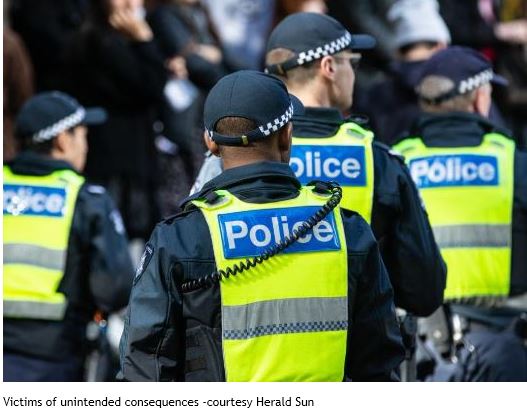
by CAA | Feb 27, 2026 | Library, Politics, Uncategorized, Victoria Police Issues
Industrial relations between the Force and its Police employees are currently facing a significant crisis, but an even greater problem is heading down the rails towards them.
When it arrives, it will have devastating consequences, particularly impacting the Victorian diaspora.
We are referring to,
- The concept of employees working from home being legislated.
- The significant number of Migrants, with many from countries where the rule of law either does not apply or is only marginal.
- The continuing erosion of the legislated Powers for Police to do their work, driven by ideology.
- The lack of support from the judiciary. This is particularly so in relation to Bail processes, and again, ideologically driven.
- and the Inefficiency of the Court System penalising both the police and the victims.
Coupled with the industrial landscape, the Force now finds itself on a collision course of these factors, and the consequences do not bear thinking about.
The mass exodus of 450 Police, accepting a sick leave payout deal, was reported in the Herald Sun on the 22nd of February 2026.
‘How a Victoria Police sick leave deal triggered a mass exodus from the force’. – HS Headline.
The deal that expired on the 31st of December 2025 is the key to aggravating an already dire staffing problem that is having a devastating impact on Force members.
As if what the police who are left are dealing with isn’t enough, gross negligence will only exacerbate the situation and lead to an increased rush out the door.
What we don’t know is who is responsible for creating this crisis.
- Is it the Government?
- The Police Association or
- The then Police administration negotiating the EBA?
An independent inquiry into this fiasco is urgently required to apportion blame and provide guidance on how the Force can address this staffing disaster.
Did they not see the unintended consequences of the impact this would have on the rest of the Force by this Enterprise Bargaining agreement?
Or was this some sleight of hand or skulduggery whereby the Government moved unrealised liabilities to another part of the ledger, so that paying out the Police members with the Sick Leave sugar hit, the Government achieved immediate savings on salaries?
The average pay grade for a Police member, including allowances, is over $100k per annum. When you consider other employment liabilities and costs, the 450 members who were attracted to the Sugar hit, in real numbers, translates into half a Billion Dollars off the government’s budget bottom line. We already know that it will take perhaps a decade to bring the numbers back up.
All the while, the Government wallows in the knowledge that they are saving a bomb for the entire forward estimates and paying homage to those who see defunding the Force as a legitimate cause.
Based on current estimates, it will take 6.25 years just to replace those lost due to the EBA. And that does not take into account any other adverse staffing hits incurred through to 2032 just to bring the Force back up to 2025 levels. The risk factors are insurmountable; in the current environment, it just won’t happen.
As Darryl Kerrigan would say, “ Tell ’em they’re dreaming”
Although the community inevitably suffers when the numbers in the Force drop to the point where one in 11 police vacancies are unfilled, what is not spoken about is the devastating impact on the remaining members trying to hold the Force up.
This latest double whammy has a two-pronged impact.
Firstly, it is undeniable that losing experienced Officers is counterproductive, but the pressure placed on the remaining staff will only lead to increased sick leave and resignations.
Police across the State already work a disproportionate number of after-hours shifts. Still, this latest blow will increase the frequency of Night Shift and other shifts that are less conducive to their lifestyle and family, putting greater negative pressure on them not to continue their careers.
We do not begrudge the members being paid out; the question is how, in such a difficult staffing climate, this payout was allowed to be so mismanaged, rather than a phased approach over a number of years and more closely managed.
Somebody has failed, and we need to know who the culprits are.
Then, to top things off, we have a more significant crisis heading our way that seems to be completely overlooked, and we see no strategies in place to deal with it.
Yes, the ubiquitous Working From Home (WFH) monster is heading for the Force (and all other emergency services) at breakneck speed, with legislation touted to be introduced before the Elections in November for a legislated two-day WFH right for State workers.
Yes, it does have some wishy-washy qualifier, an if, but how long that if will last is anybody’s guess, but in the norm for Industrial relations issues, the shoe is in the door.
There has been a lot of publicity about how employees who work from home can save money, but that is insulting to those who have the ‘if’ applied to them without compensation.
Police are already under huge stress due to the routing of the Force’s strength.
When the WFH train hits, problems will multiply, and the exodus will continue and accelerate alarmingly as members burn out more quickly, aggravating staffing shortfalls.
Why would anybody work godforsaken shifts to be spat on and cursed, be expected to deal day in and day out with the scum of our society, with a workload that is increasing exponentially while the workforce declines by the same matrix?
How fair is it that these people, who put their social lives in limbo, their safety on the line, and are increasingly being called on to deal with the worst that society has to offer, be any less deserving of the financial windfalls than other State employees who enjoy WFH?
The whole WFH debate lacks one imperative: productivity.
How is an employee’s productivity measured when they WFH?
There is no doubt that some WFH individuals are diligent, but many others may go through the motions without proper supervision.
Anecdotally, we are advised that traffic on Golf Courses has increased dramatically in recent times, as has dog walking, and that car parks at gyms are full during the traditional working week. You have also probably noticed a substantial increase in Lycra-clad treadlies on our scenic roads.
Productivity, accountability, and satisfactory levels of employee performance and effectiveness, compared to the salaries they attract, have not been included or even discussed. The example of individuals doing the big circuit for months at a time or answering their phone while on the beach will continue to rort the system.
Then think of the poor Police, who are again the brunt of this mismanagement, with the consequences seemingly evaded.
Our new Chief Commissioner has shown strong leadership, being clear-eyed about the issues. However, his role is being stymied by other pressures not of his making that will have far-reaching, deleterious impacts on the Force; impacts that even he may not be able to manage.
We definitely need a Royal Commission into this whole issue of police staffing and allied impacts so that proper planning to address the issues can be determined, as equally important as who or what entity is responsible for this mess and how they will be held to account.
It will be argued that a Royal Commission would be too expensive. Still, that expense pales into insignificance compared with the impact of the Government’s mismanagement of the Force in recent decades, which continues unabated.
But what can be done?
A review of the Force’s training would be one answer.
The media claim of 77 additional recruits per year is a drop in the bucket that will evaporate before having any impact, so radical approaches must be explored.
With the WFH edicts, the Government must have redundant buildings, as maintaining an exclusive workstation or office for WFH employees is nonsensical, so rationalisation is imperative.
This would free up additional resources to accommodate a vast quantitative expansion of training.
The resources for conducting the training can be drawn from members who need some reprieve from the frontline, a sabbatical, and/or members who can be encouraged to return to the Force in a training capacity.
Rather than the current approach to Police ongoing training needs, which currently favours online training of operational members, they can be trained at a new facility in a matter of weeks, rather than the months it takes for online training.
Shorter periods of focused classroom training will be more effective and have added benefits over the online model, which proponents argue is more efficient, but that is at the expense of effectiveness.
Classroom training advantages give the members a break from the frontline, exposing them to peers and enabling proactive assessment of their psychological status rather than waiting for the dreaded PTSI to strike, making them incapable of performing.
As far as recruits go, that number can be increased threefold by the first part of their training at the Academy, followed by the bulk of their training off campus at
another training facility, returning to the Academy for the last four weeks and graduation.
This approach will also avoid the need to reduce recruits’ training time to accommodate larger numbers, which may well be a false economy. Training is critical to the organisation’s effective capability and should attract greater focus.
It will be the Police administration’s ability to think outside the square to address staffing problems that makes a difference.
Many other initiatives will alleviate the issue; our Police members deserve something better.
The whole concept of encouraging retired police back to alleviate pressure on the existing force must be rethought so that the numbers returning are substantial, which may include removing the time barriers after leaving the force, as it is the quality and suitability of the returning applicant to perform the tasks on offer, not some arbitrary date, that should be the primary consideration.
The arbitrary date methodology is an antiquated approach from a bygone era. Matching the applicant to a task approach is more current in staff appreciation.
Is there a need for an inquiry? Yes.
The Community Advocacy Alliance (CAA) is funded by the members and the generous donations from the public. Please consider donating to help us continue to work for you. Simply click on the button below. Thank you - your generosity is very much appreciated.
by CAA | Feb 25, 2026 | Library, Politics, Uncategorized, Victoria Police Issues
‘Decanting’ is the name given to the process of shuffling prisoners on remand around Police stations to avoid exceeding the 14-day holding limit for each prisoner. With over 300 prisoners being shuffled between Police cells, as reported in The Age on the 24th of February 2026, this is an absolute disgrace on multiple fronts. Foremost is the unnecessary use of Police time being absorbed, not only the physical movement of prisoners, but the wasted time police spend on accompanying paperwork. Additionally, the greatest risk to the safety of Police and Prison staff is when prisoners are being moved, and the risk of escape or violence is most likely to occur; therefore, prisoner movements must be discouraged, not extended.
But back to the ‘Decanting’. How is it that the Force can breach the detention days by shuffling prisoners? They are still in detention, and the police are being used to breach the intention of the Prisoner management rules – how legal is that? The strategy of this process allows the police to ‘reset the clock’ to avoid breaching regulations. That is not how a problem like this should be dealt with, breaking the rules, and a proper solution needs to be determined as a matter of urgency before a hapless police member is caught up in an incident with a Prisoner during the transport that sees the member injured or charged.
If something happens, you can bet the hierarchy will see the blame at the frontline, not the administration’s failure to facilitate a solution to an obvious, avoidable problem. We have lost hundreds of Police from the street whose job it is to protect us, but we have police tied up ‘defending prisoners’ rights, how is that justified? Facilitating the police to break the rules is a disgrace. We expect our Police to set an example for the rest of the community, but in this case, the Force accepts/requires breaches to occur, although the problem was not caused by the Police.
Charging criminals and opposing bail for the safety of the community is their real job. We accept that prisoners on remand are not convicted of the alleged crimes, and that a Court has determined they should be remanded pending the hearing to determine the outcome of the charges. Ensuring the prisoner returns to Court and that the community’s safety is protected are essential considerations. The prisoner’s welfare or cultural issues should play no part in the Court’s decision, as all prisoners should be treated equally before the Law. The solution is mind-bendingly simple. For a Prisoner to be held on remand, they have the same physical and administrative resource needs no matter where they are located. And the Prisoner on remand or a Prisoner serving a sentence should have the same basic rights and restrictions.
The label on the door is the only thing that changes from one cell to another. That the prisons are full is hardly an excuse, given that they were closing down a Jail in Victoria and building additional capacity in the juvenile justice space. Some creative management should solve this problem overnight, and a Prisoner on remand in the same facility as Prisoners serving sentences, though separated, must and could well be accommodated.
Remember, the label on the cell door determines the status of the person behind it. The management of Prisoners is a corrections issue, not a police one, and given the egregious level of lack of safety the public is experiencing, it is essential that police used in this process be returned to general duty (making us safe) as an absolute priority. This problem dates back to at least 1987. After almost forty years, it cannot be said that the Government has been taken by surprise.
The Community Advocacy Alliance (CAA) is funded by the members and the generous donations from the public. Please consider donating to help us continue to work for you. Simply click on the button below. Thank you - your generosity is very much appreciated.

by CAA | Feb 14, 2026 | Corruption, Investigations, Library, Politics, Uncategorized, Victoria Police Issues
Picture Herald Sun.
It would be reasonable to transpose the issues, with a modern twist, that led to the permanent deregistration of the Builders Labourers Foundation (BLF) in 1986, including the jailing of their Secretary, Norm Gallagher.
The long-standing Secretary of the CFMEU, until recently, John Setka, although jailed in 1990, unlike Gallagher, has not been jailed for his CFMEU activities. That might all change, as he is due to face court in June 2026 on seven charges relating to threatening and abusive emails.
The alleged criminal behaviour of the CFMEU, as reported in the Herald Sun on 12 February 2026 and other publications, when compared to the behaviour of the BLF in the 80’s, makes the BLF seem tame.
As disgraceful and criminal as this alleged behaviour may be, there is a more serious consideration: the need for a “please explain” from the Victorian Government.
After all the reports of bad behaviour, how did this government not act?
All the rhetoric that the politicians may present cannot erase the hard fact that the Government has failed, because they have been ‘once bitten, twice shy’. How irresponsible is it to have this problem resurface?
It now means the Government must not only resolve the CFMEU’s current issues but also undertake the necessary work to ensure that such alleged criminality in the organised union workforce does not recur.
Unfortunately, the Union movement as a whole will have to accept restrictive practices imposed not only because of the CFMEU’s behaviour, but also because this is not the first time Unions have facilitated criminality.
Among the restrictions designed to promote and protect lawful union behaviour will be the need to change the industrial relations landscape across the board.
The Government must accept responsibility for managing Union activity and provide enforceable behavioural and activity-based standards, with breaches subject to swift prosecution, including jail time and fines.
The Fair Work Commission (the National Workplace Relations Tribunal) coordinates its activities through the Australian Council of Trade Unions (ACTU).
The failure of these bodies has clearly been the root cause of and the explosion of alleged criminality within the union movement.
Having the ACTU coordinating the regulations of the Fair Work Commission, along with their State branch affiliates like the Victorian Trades Hall Council (VTHC), not only is cumbersome and likely to be inefficient, but it could be argued that this is like ‘putting a fox in charge of the chook house’; nothing good can come from it.
As unpalatable as it might be politically, the Premier is caught between ‘a rock and a hard place’.
If she doesn’t call a Royal Commission, the Opposition will have a field day as the community will accept nothing less.
If she calls a Royal Commission, the evidence could be politically damaging if made public during the election lead-up. Again, the Opposition can make an issue of this.
There have been four Royal Commissions in Victoria over the last decade, and they are all well-justified and go to addressing serious anomalies; however, we would argue that the impact on Law and Order, the safety of our community, and the cost to the State (us) in the broader impact of the CFMEU issue, has far surpassed previous Commissions.
Key Victorian Royal Commissions (Approx. 2016–2026):
- Royal Commission into Family Violence (2015–2016): Led to major reforms in the state’s approach to domestic violence.
- Royal Commission into the Management of Police Informants (2019–2020): Investigated the use of lawyer Nicola Gobbo as a police informer.
- Royal Commission into Victoria’s Mental Health System (2019–2021): Investigated and made recommendations to overhaul the state’s mental health services.
- Royal Commission into the Casino Operator and Licence (2021): Investigated the suitability of Crown Resorts to hold the Melbourne casino licence.
A Royal Commission is essential to ensure no other entities have been turning a blind eye or otherwise compromised.
Our laws are the cornerstone of our democracy and the freedoms we enjoy, so, as with other serious matters, it is essential that the CFMEU and the broader Building/Construction industries, as well as Unionism more broadly in this State, be addressed.
What cannot be expressed strongly enough is that the alleged unlawful behaviours of the CFMEU and other players, not yet identified, constitute serious organised crime, and that the adverse impact on all of us, as crime stretches its tentacles, goes far beyond the Building Industry. The Industry is just the epicentre.
The solution is to equip IBAC, as our anti-corruption body, with the resources and expertise to be effective, something that they are now not.
The Community Advocacy Alliance (CAA) is funded by the members and the generous donations from the public. Please consider donating to help us continue to work for you. Simply click on the button below. Thank you - your generosity is very much appreciated.