
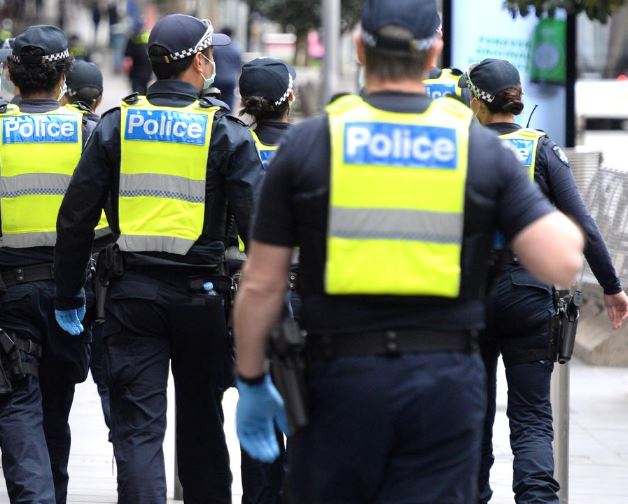
While Police Command and the Police Association dance around each other, trying to score points, the crime rate is either stabilising (not according to the statistics) or that an injection of 1,500 replacement members will solve the problem.
It would be nice, and good for policing and the community if these two would at least adopt a common approach rather than lock heads. That approach does not provide solutions, just more grief.
The Herald Sun report on the 20th of March 2026 exposed this imbroglio.
If anyone thinks an injection of 1500 will solve the problem, they need to take a serious look at what they are saying. At current rates, the replacements will take longer than many of us will live.
At the accelerated rate of 70 + per annum, over attrition, the shortfall in Police graduating from training will be reached in about 20 years, provided attrition does not continue to accelerate.
Given the current realities of policing in this State, the chances of stabilisation are extremely low.
20 years is a long time to wait for sufficient police to attend to your problem.
Shortening courses is a band-aid fix, as less police training translates into poor police performance. If these few weeks were scuppered so easily, why were police trained to the full measure for so many years?
Probably because the Force collectively thought it was necessary to produce effective, efficient police. Surely it wasn’t being done for the hell of it.
You can see the claims coming thick and fast in the future, where members blame the lack of training that caused their mental health to deteriorate.
Additionally, VicPol’s argument that the crime rate will plateau is unrealistic, because how would they know unless their crystal ball works better than ours?
Telling the public that the Police Stations shuttered across the Mornington Peninsula has limited effect because victims ringing 000 is arrant rubbish, as there is no evidence that Stations weren’t being contacted before they were closed.
The problem with the Station closures is that they are misleading the public, as the majority of those stations are actively operational; they just don’t provide a forward-facing inquiry counter.
That people do not attend Police Stations during certain periods is well known, and closing the inquiry counter during these periods is reasonable, but a 24-hour approach results in the Force failing dramatically in an important function of Service delivery.
One of the most outstanding and embarrassing claims attributed to Deputy Commissioner Hill in this Herald article justifying the station closures was –
“and (officers) weren’t answering the telephone, because no one was ringing.” ‘Doh,’
It may well be more accurate to say that nobody answers the telephone, so nobody rings.
The Police Advice Line (not operated by Police)and the 000, also non-police systems, have major service delivery failures, frustrating callers. Police simply supervising call takers is not enough.
Add to that Crime Stoppers, which seems never to provide callers with feedback, and the whole of the forces and allied communications systems need to be reviewed and updated to be fit for purpose, whether you’re the caller or the recipient.
There is a desperate need for a change in attitude within the Force Command.
The Force is there to serve the community, not the other way round.
As to what can be done.
The Police Association and the Force need to be on the same page and come up with solutions, not more rhetoric, butting heads, and blame shifting.
Here are but a few matters to consider.
a) G-Tag
The spike in stolen vehicles would be dramatically reduced by implementing the CAA G-Tag project. A pilot run some years ago that failed because the onus was put on the car owners, and the police abandoned their role again, and the Pilot did not follow the G-Tag proposal.
b) Training efficiency
Training could be accelerated by accommodating training off campus from the Police Academy. Recruits start for a number of weeks at the Academy, then move to an off-campus facility for theory training, returning in the last fortnight of their training at the Academy and for graduation. When operated properly, this initiative could triple the number of recruits processed each year, and there would be no need to reduce training timeframes. Judicious planning may be required to coordinate this scheme, but the outputs justify the work.
c) Reduce Night shifts.
To alleviate personnel shortages, each member of every Task Force or other specialist group should remain on their station-of-origin roster for the night shift. With fewer night shifts, members’ overall welfare will improve, with little impact on the groups from which this resource is sourced. Additionally, the Task Force or Special Duties members can keep in touch with operations at their station of origin.
d) Administration efficiency
The streamlining of administration plaguing operational members is being addressed; however, the members are generally not aware of progress. Reporting on what is being done and accountability to front-line members will give them hope that things will improve. Reversing the negative effects of admin overload, particularly if a reporting mechanism includes opportunities for members to provide feedback, will help develop members’ ownership of the changes. Accountability to frontline members by those charged with fixing the problem will expedite results and improve overall morale.
e) Increase operational staff by 10,000 days.
Another mechanism to improve staffing levels is to introduce a leave buy-back scheme. All members currently enjoy substantial leave entitlements, whether they are working in the frontline or elsewhere. A voluntary scheme available only to frontline police, if it attracted 500 participants for four weeks, would create an additional 10,000 on-duty workdays per annum.
This scheme would be attractive to members trying to get into the property market, recovering from a financial hardship, or just the added income as a valuable tool to improve their lifestyle. A voluntary scheme such as this will be the most cost-effective way to increase the Force’s capacity in the short term.
f) Role of leading Senior Constables.
Our understanding of the Leading Senior Constable (LSC) was akin to that of a Master Police Patrolman (MPP), experienced and equipped, capable of any police operational undertaking, including the more difficult or complex tasks than the rest—a cut above the others.
They do, however, seem to be treated as just another member and their skills are not recognised.
LSC’s should be capable of one-up patrols as first responders to determine the additional needs required for the reported incident.
One key area that would have an immediate impact is the reintroduction of one-up Highway patrols, doubling the number of Police Highway vehicles on the road.
If implemented, it would increase the number of patrolling vehicles by a factor of two across the Force.
g) Two-up patrols
Rescinding the two-up patrol mandate of 2015, based on a heightened terrorism threat, was, in hindsight, an overreaction that has limped along, reducing the force’s capacity to respond to community needs for a decade. This policy coincides with the rapid escalation of crime over the last decade. Halving Police patrols was a major contributor to the crime spike, which would go a long way to impacting crime and the road toll.
The instruction has been debunked as a safety issue for police, as more Police have been slain in that decade in incidents involving multiple officers than any recorded death of a Police member working alone. Public records indicate eight Police deaths since the policy was introduced, none of them working one up. Therefore, it can be safer for members to work one-up. The additional Police freed up should be detailed to other vehicles (There seems to be no lack of them as you drive by Stations and see police cars parked doing nothing for hours) or other patrol functions to increase the Police presence by 100%.
h) Police proactive youth programs
If you want to make inroads into the crime statistics, then police working with children in targeted areas is the only strategy that will work. It’s no good relying on the Court system, and a piecemeal approach is problematic.
A revamped and targeted Police Schools program where Police are actively involved in Schools at the age target level of year 7.
Part of the industrial action currently being undertaken by Teachers and Principals is the danger they regularly face. A Police presence in schools will alleviate some of these concerns and make schools a safer place for staff; students will also benefit from a safe environment that promotes better learning outcomes. All contributing to a reduced crime rate.
The in-school work of the police, apart from building bridges on a personal level with students, is to deal with, assist, and guide any child who is heading toward a future in crime. What won’t work is random school attendance for students to play sports with the police. Perhaps enjoyable for both, but effectiveness is severely limited. A more formal approach with structured learning, however, would be a more effective use of Police resources.
It is time the pendulum swings to a proactive youth focus and stop blaming everybody else for the crime surge when creative planning would address the problem overnight. It’s called Crime Prevention.
These initiatives would go a long way toward creating a more functional Force, and the 1,500– 2,000 police officer number shortfall, depending on who you talk to, could be largely addressed by these initiatives.
And, more importantly, take pressure off members, slowing the attrition rate as the job becomes more result-driven, increasing job satisfaction.
For the Force and the Association to have a public spat is not helpful to either side.
The recent matter we became involved in with a member being forced back to the frontline with a serious health issue should never have happened, but shows that the Force has a long way to go to ensure the welfare of its police members and the Police Association must review their function, given those who helped the sick member, sought our help rather than the Association is embarrassing.
The welfare of Police must be the highest priority for both the Force and the Association.
The Community Advocacy Alliance (CAA) is funded by the members and the generous donations from the public. Please consider donating to help us continue to work for you. Simply click on the button below. Thank you – your generosity is very much appreciated.

I served for 25yrs. I went thru the Police Academy on the system provided st that time. A system I believe that was a lot better than today’s. I have noticed not only has the height requirement been dropped but also the physical requirements in the Fitness Profile mainly for women. This should never have been allowed as you don’t get to choose what size offender, all that being violent , you will have to arrest. The actual appearance of members ( in uniform ) is now disgusting. Uniforms look shabby and members walking around with no hats. They look totally unprofessional. You now don’t see members out on patrol either on foot, in a car or patrolling freeways. Youth offenders know this and are blatantly offending. Speaking to a police member at a station is sometimes reassuring to a complainant. Listening to a recorded message isn’t or some public servant who is trying to Duck Shuv your call.
Some Senior Officers and those wanting to be, have lost the art of communication with the troops.
The TPA has failed to do its job over the years for members. The position of CCP has been a failure due to unsuitable members who obtained that position. The last CCP who had any credibility with the members was Mick Miller. He wasn’t a puppet for the govt.
If the dept treated its troops better and stopped the internal Bullying, covered up by Senior Members, then it may have retained more members.
The first step to fixing VicPol is to clean out the ALP sub branch of VicPol force command that so many senior officers are members off and the second is to clean out Professional Standards Command and the Police Conduct Unit in particular! Until that happens VicPol will always be the finest force the ALP’s $ can buy!
Well said , the politicizing of Vic Police by the ALP is deplorable!
Well thought out set of proposals in particular back to one-man patrols where appropriate (most of the time).
I’m a current serving member. Your suggestions re police in schools is made with an outlook which is no longer viable as a solution. These kids know they are untouchable, that they are not held accountable for their actions which is detrimental to the child not just their victims. I have had recidivist youth offenders confidently tell me they will get a caution or a warning and they’re not wrong that’s generally exactly what happens. Police are expected to pick up the shortfalls of other agencies, the mental health system and DFFH spring to mind. Bring back consequence for actions and crack down on solicitors who advise their clients on how to weaponise the DV legislation during custody and property disputes. Appropriately staff AV and Child Protection so that they can do what their charter says instead of pushing it back onto police because they’re short staffed. Some of the comments suggested on here show how wildly out of touch you are and are simplistic solutions for a complex problem. FV takes up a massive amount of time and resources. The changes to the mental health legislation means police are back babysitting the mentally ill at hospitals for hours, and I mean hours at a time. And yet you trot out what was done in the past as a solution completely overlooking how society has changed, the role police play in it and community expectations on what police can do. The only thing that is not from this is how we did it back in the day was the training suggestion and that would probably work.
Deb you have covered off what the members are facing today very well. However, we know how frustrating it is but if we are going to make inroads into youth offending, by the time they exercise their rights it is to late, the work has to start before they get to that stage,