
by Ivan Ray | Feb 14, 2026 | Corruption, Investigations, Library, Politics, Uncategorized, Victoria Police Issues
Picture Herald Sun.
It would be reasonable to transpose the issues, with a modern twist, that led to the permanent deregistration of the Builders Labourers Foundation (BLF) in 1986, including the jailing of their Secretary, Norm Gallagher.
The long-standing Secretary of the CFMEU, until recently, John Setka, although jailed in 1990, unlike Gallagher, has not been jailed for his CFMEU activities. That might all change, as he is due to face court in June 2026 on seven charges relating to threatening and abusive emails.
The alleged criminal behaviour of the CFMEU, as reported in the Herald Sun on 12 February 2026 and other publications, when compared to the behaviour of the BLF in the 80’s, makes the BLF seem tame.
As disgraceful and criminal as this alleged behaviour may be, there is a more serious consideration: the need for a “please explain” from the Victorian Government.
After all the reports of bad behaviour, how did this government not act?
All the rhetoric that the politicians may present cannot erase the hard fact that the Government has failed, because they have been ‘once bitten, twice shy’. How irresponsible is it to have this problem resurface?
It now means the Government must not only resolve the CFMEU’s current issues but also undertake the necessary work to ensure that such alleged criminality in the organised union workforce does not recur.
Unfortunately, the Union movement as a whole will have to accept restrictive practices imposed not only because of the CFMEU’s behaviour, but also because this is not the first time Unions have facilitated criminality.
Among the restrictions designed to promote and protect lawful union behaviour will be the need to change the industrial relations landscape across the board.
The Government must accept responsibility for managing Union activity and provide enforceable behavioural and activity-based standards, with breaches subject to swift prosecution, including jail time and fines.
The Fair Work Commission (the National Workplace Relations Tribunal) coordinates its activities through the Australian Council of Trade Unions (ACTU).
The failure of these bodies has clearly been the root cause of and the explosion of alleged criminality within the union movement.
Having the ACTU coordinating the regulations of the Fair Work Commission, along with their State branch affiliates like the Victorian Trades Hall Council (VTHC), not only is cumbersome and likely to be inefficient, but it could be argued that this is like ‘putting a fox in charge of the chook house’; nothing good can come from it.
As unpalatable as it might be politically, the Premier is caught between ‘a rock and a hard place’.
If she doesn’t call a Royal Commission, the Opposition will have a field day as the community will accept nothing less.
If she calls a Royal Commission, the evidence could be politically damaging if made public during the election lead-up. Again, the Opposition can make an issue of this.
There have been four Royal Commissions in Victoria over the last decade, and they are all well-justified and go to addressing serious anomalies; however, we would argue that the impact on Law and Order, the safety of our community, and the cost to the State (us) in the broader impact of the CFMEU issue, has far surpassed previous Commissions.
Key Victorian Royal Commissions (Approx. 2016–2026):
- Royal Commission into Family Violence (2015–2016): Led to major reforms in the state’s approach to domestic violence.
- Royal Commission into the Management of Police Informants (2019–2020): Investigated the use of lawyer Nicola Gobbo as a police informer.
- Royal Commission into Victoria’s Mental Health System (2019–2021): Investigated and made recommendations to overhaul the state’s mental health services.
- Royal Commission into the Casino Operator and Licence (2021): Investigated the suitability of Crown Resorts to hold the Melbourne casino licence.
A Royal Commission is essential to ensure no other entities have been turning a blind eye or otherwise compromised.
Our laws are the cornerstone of our democracy and the freedoms we enjoy, so, as with other serious matters, it is essential that the CFMEU and the broader Building/Construction industries, as well as Unionism more broadly in this State, be addressed.
What cannot be expressed strongly enough is that the alleged unlawful behaviours of the CFMEU and other players, not yet identified, constitute serious organised crime, and that the adverse impact on all of us, as crime stretches its tentacles, goes far beyond the Building Industry. The Industry is just the epicentre.
The solution is to equip IBAC, as our anti-corruption body, with the resources and expertise to be effective, something that they are now not.
The Community Advocacy Alliance (CAA) is funded by the members and the generous donations from the public. Please consider donating to help us continue to work for you. Simply click on the button below. Thank you - your generosity is very much appreciated.
Co-founder and Deputy Chair/CEO of the CAA, a former Police Inspector with 32 years of service in Metro Uniform, Traffic Metro and Highway Patrol, Crime Cars, and CIB. Former Editor of Police Life and long-serving Public Relations Officer of VicPol. Founder and Life Member of the Blue Light Disco movement, Life Member of the Blue Light Federation, and completed his Police career as an Inspector after 6 years as a Patrol Officer. He then ran his own Business for 20 years until retirement. Ivan co-founded the CAA with former Victorian Chief Commissioner Kel Glare, and built the CAA into an influential voice for Victorians.
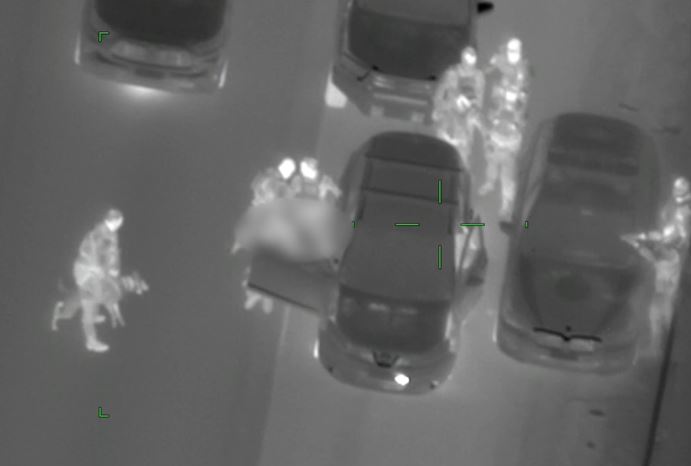
by Ivan Ray | Feb 11, 2026 | Library, Politics, Uncategorized, Victoria Police Issues, Violence, Youth Crime
Herald Sun Pic.
The Herald Sun article, 9th of February 12026, highlights the shocking statistics recently released by Victoria Police on this crime trend.
The numbers are important, but what matters most is the real impact on the victims.
Tough new laws introduced by the Government in 2016 have had no positive effect.
It is clear now that the habit of certain politicians making announcements without any intent of the problem being addressed or resolved. It is now turning out to be the mantra of the most recent decade of political leaders, as more and more announcements turn out to be just hollow rhetoric designed to impress the electorate, a veil for inaction.
These politicians who are highly shortsighted will pay a steep price for their recklessness.
It is now evident that hollow political policy announcements are a form of obfuscation. Exposed with regular monotony in the daily news over a wide spectrum of social issues lately. Carjacking is just another subject in a long line of false undertakings.
Politicians must be accountable, and not just at the ballot box.
And while politicians may revel in their effectiveness in deceiving the electorate, the number of victims keeps racking up as rapidly as the effectiveness of the courts decline.
The view that the problem is a Policing one is shallow and ill-informed. Although there are actions the Police can take, the real cause of the upswing in this crime is the Courts’ mismanagement of the perpetrators and the Government’s failure to hold the Courts to account and ensure that perpetrators suffer real consequences sufficient to discourage further offending.
Until the Courts accept, or are directed to accept, accountability for the problems predominantly caused by Juvenile offenders, then and only then will we see improvements in the management of this and other serious Juvenile crime.
The Government has many levers at its disposal and must start to use them.
All the sentencing initiatives are of no use if the judiciary can find ways to circumvent them.
Until the Judiciary starts to put the community and the victims first, we will see no meaningful change, yet the Government has the power to legislate the hierarchy of considerations in sentencing as an adjunct to the sentencing guidelines.
Unfortunately, the guidelines have morphed into instructions that may not reflect the will of the legislators but can be used by Jurists to administer the law in a manner conducive to their social reform agenda.
Putting the welfare of an individual perpetrator ahead of the community at large and the victims is an anathema to good jurisprudence.
The solution is not easy and does not rest solely with the Courts, although their role is pivotal; there is a pressing need to identify mechanisms to engage with the criminal cohort to raise awareness of the risks they face from their behaviour and to promote change.
Although no criminal will commit a crime knowing they will be caught, even with the chances of being caught extremely high, there is no accounting for stupidity, ignorance, or both.
The cost to the community and Government of this crime is horrendous, so spending on communicating and promoting a clear and consistent message that crime doesn’t pay will have a positive impact.
Particularly, if the perpetrators are belittled for their behaviour in the view of their peers by a simple slogan. “Don’t be a bloody idiot”, promoted by the media and the Courts.
Language they would understand and a label they would abhor.
The Community Advocacy Alliance (CAA) is funded by the members and the generous donations from the public. Please consider donating to help us continue to work for you. Simply click on the button below. Thank you - your generosity is very much appreciated.
Co-founder and Deputy Chair/CEO of the CAA, a former Police Inspector with 32 years of service in Metro Uniform, Traffic Metro and Highway Patrol, Crime Cars, and CIB. Former Editor of Police Life and long-serving Public Relations Officer of VicPol. Founder and Life Member of the Blue Light Disco movement, Life Member of the Blue Light Federation, and completed his Police career as an Inspector after 6 years as a Patrol Officer. He then ran his own Business for 20 years until retirement. Ivan co-founded the CAA with former Victorian Chief Commissioner Kel Glare, and built the CAA into an influential voice for Victorians.

by Ivan Ray | Feb 10, 2026 | Library, Uncategorized, Victoria Police Issues, Violence
Picture Herald Sun
This heading says it all.
This is the only reasonable explanation for the wanton danger Police are placed in by the Governments and Police Administrations.
Shocking photos emerged today, the 10th of February 2026, in the Herald Sun, of the violent clash between police and demonstrators in New South Wales.
Whilst the reports indicate that the Victorian demonstrations were less violent, it was nevertheless clear that they infringed Victorians’ rights by blocking access to infrastructure and impeding free movement throughout the city.
The police seemed powerless to address such a large number.
But the major issue is why police administrations and Governments continue to fail to provide the necessary legislation, supported by the Courts, and the equipment for Police to effectively control crowds, irrespective of the crowd’s collective cause.
We are sick and tired of watching reports of Police being pummelled with many ending up in hospital as a result of criminal elements attending these demonstrations.
Politicians and Police administrations wringing their hands and talking tough do not heal Police bruises or mend broken bones.
Let’s hope our advocacy yields results before a member does not return to their family after a demonstration.
The CAA has long advocated the introduction of Water Cannons to take the load and minimise the risk to police who are there doing their job for all citizens.
These vehicles are used effectively not only to dampen demonstrators’ enthusiasm but also to move them on, where required, with minimal risk to police on foot.
It is very disappointing that the Police Associations in Australia have remained largely silent, at least publicly, on the dangers their members face.
In any other sector of a workplace where the safety of the workers was not paramount, and the dangers were not mitigated, there would be ‘hell to pay’, with immediate industrial action and a string of cases before WorkCover.
In this case, Police lodging WorkCover claims would clog the system for years.
The provision of suitable water cannons, which should be capable of being built in Australia, supporting local manufacturing, with the already-proven Bushmaster modified for crowd-control use, would fit the bill.
The key to using these smaller, highly manoeuvrable, and robust vehicles, rather than the larger-capacity vehicles used overseas, is to operate them in tandem so one can be refilled while the other continues to respond.
The presence of two of these vehicles near gatherings would be an effective and cheap deterrent, as the number of police deployed could be substantially reduced.
Many people who appear in media reports would respond positively to the sight of these vehicles in the vicinity and avoid a confrontation.
Prevention is the ultimate Policing weapon.
But we are still at a loss as to who is blocking the equipping of the Police and continually causing Police to be put into danger.
Those responsible should stand alongside the Police at the next demonstration and be exposed to the challenges the Police must continually contend with.
Australia used to have this equipment, and speaking with a former head of an interstate Police Force, who disposed of their Water Cannon and did so on the basis that they were maintaining kit that was never used.
Perhaps because they had the kit, the deterrent effect did the job, preventing police officers from becoming victims of violence.
The Community Advocacy Alliance (CAA) is funded by the members and the generous donations from the public. Please consider donating to help us continue to work for you. Simply click on the button below. Thank you - your generosity is very much appreciated.
Co-founder and Deputy Chair/CEO of the CAA, a former Police Inspector with 32 years of service in Metro Uniform, Traffic Metro and Highway Patrol, Crime Cars, and CIB. Former Editor of Police Life and long-serving Public Relations Officer of VicPol. Founder and Life Member of the Blue Light Disco movement, Life Member of the Blue Light Federation, and completed his Police career as an Inspector after 6 years as a Patrol Officer. He then ran his own Business for 20 years until retirement. Ivan co-founded the CAA with former Victorian Chief Commissioner Kel Glare, and built the CAA into an influential voice for Victorians.

by Ivan Ray | Feb 2, 2026 | Library, Politics, Uncategorized, Victoria Police Issues
As the Community Advocacy Alliance (CAA) steps into 2026, we do so with momentum, clarity of purpose, and a deep respect for those who have served before us. Our achievements in 2025 were significant—but they were also constrained by a simple reality: capacity.
Retired police members have always been at the heart of the CAA’s work. Their insight, operational understanding, and lived experience of service make them uniquely positioned to help shape the future of community safety in Victoria.
Critical to the effectiveness of the CAA is the non-police members who come from a diverse background, providing balance and real insight into the hearts and minds of the community.
Now, more than ever, we need you to join us in the fight.
Ten Years of Progress—But Much More to Do
In 2025,
- The CAA website had 174,833 visits in 2025 with 1,063,489 pages accessed from a reach of 43,000, making the site our primary communication vehicle, an outstanding success by any measure.
- We advocated for countless individuals who were unable to make their voices heard.
- Provided informed, operationally grounded advice on multiple Bills before Parliament.
- Developed a policy that CAA does not make comments on any issue unless it can also provide suggested solutions.
- Continued vital work supporting former Police suffering from PTSI—injuries caused not by lifestyle, but by duty.
- Assisting the PSTI Health Service through our PTSI Team, ensuring former members are as far as possible, not left behind.
- Expanded our role in combating the rise of doxing—a dangerous trend that has cost young people their lives.
- Providing advice to VicPol from our vast Policing experience influenced by our strong, diversified non-police members.
- Continues to advocate strongly, representing various communities badly affected by the drug scourge.
- We also strengthened our working relationship with VicPol subsequent to the appointment of Chief Commissioner Mike Bush, giving us a direct and productive channel to raise issues and propose solutions.
Why 2026 Is Critical
Our workload continues to grow. Community demand is increasing. And every week, more people turn to us for help navigating systems that are often complex and unresponsive.
But like many volunteer-driven organisations, our membership is ageing, and our capacity is stretched.
To keep doing this essential work—work grounded in integrity, fairness and community safety—we need to bring in more experienced hands.
We need to bring you in..
Be Part of the Next Chapter
2026, an election year, will be a defining year for the CAA and the law-and-order space. With the right people on board, we can expand our impact, amplify the voices of those who need help, and build a stronger organisation for years to come.
We are asking for people who know what service truly means—to stand with us.
Join us. Support us. Continue the mission.
Your experience matters—and Victoria needs you.
If you are the right fit, the next step is?
Forward your expression of interest and contact details by email to ceo@caainc.org.au .
We will arrange for one of our Directors to contact you to discuss membership.
The Community Advocacy Alliance (CAA) is funded by the members and the generous donations from the public. Please consider donating to help us continue to work for you. Simply click on the button below. Thank you - your generosity is very much appreciated.
Co-founder and Deputy Chair/CEO of the CAA, a former Police Inspector with 32 years of service in Metro Uniform, Traffic Metro and Highway Patrol, Crime Cars, and CIB. Former Editor of Police Life and long-serving Public Relations Officer of VicPol. Founder and Life Member of the Blue Light Disco movement, Life Member of the Blue Light Federation, and completed his Police career as an Inspector after 6 years as a Patrol Officer. He then ran his own Business for 20 years until retirement. Ivan co-founded the CAA with former Victorian Chief Commissioner Kel Glare, and built the CAA into an influential voice for Victorians.

by Ivan Ray | Jan 28, 2026 | Library, Uncategorized, Victoria Police Issues
As the Community Advocacy Alliance (CAA) steps into 2026, we do so with momentum, clarity of purpose, and a deep respect for those who have served before us. Our achievements in 2025 were significant—but they were also constrained by a simple reality: capacity.
Retired police members have always been at the heart of the CAA’s work. Your insight, operational understanding, and lived experience of service make you uniquely positioned to help shape the future of community safety in Victoria.
Now, more than ever, we need you back in the fight—in a way that honours your service but doesn’t place you back on the front line…
A Year of Progress—But Much More to Do
In 2025, the CAA achieved,
- Via our primary communication channel, our website received 174,833 visits and 1,063,489 page views.
- Advocated for countless individuals who were unable to make their voices heard.
- Provided informed, operationally grounded advice on multiple Bills before Parliament.
- Continued vital work supporting former Police suffering from PTSI—injuries caused not by lifestyle, but by duty.
- Assisted the Health Service through our PTSI Team, ensuring former members were not left behind.
- Expanded our role in combating the rise of doxing—a dangerous trend that has cost young people their lives.
- Strengthened our working relationship with VicPol through the appointment of Chief Commissioner Mike Bush, giving us a direct and productive channel to raise issues and propose solutions.
Why 2026 Is Critical
Our workload continues to grow. Community demand is increasing. And every week, more people turn to us for help navigating systems that are often complex and unresponsive.
But like many volunteer‑driven organisations, our membership is ageing, and our capacity is stretched.
To keep doing this essential work on behalf of serving police and the community —work grounded in integrity, fairness and community safety—we need to bring in more experienced hands.
We need to bring in you.
Why Retired Police Are So Important to Us
Retired Police bring something no one else can replicate:
✔ Operational experience
✔ Insight into policing, systems and communities
✔ Credibility when speaking to government, media and VicPol
✔ A practical understanding of risk, public safety and accountability
✔ A lifelong commitment to serving others
Your service didn’t end when you left the job.
Your skills didn’t disappear.
Your voice still carries weight.
And the CAA provides a place where that experience makes a real difference—without the stress, pressures or dangers of frontline work.
What Joining the CAA Means for Former Police
Becoming a member gives you the opportunity to:
▶ Continue serving the community—on your terms
▶ Influence meaningful policy and legislative reform
▶ Protect vulnerable people who have nowhere else to turn
▶ Support former colleagues battling PTSI and other service‑related injuries
▶ Strengthen accountability and safety across Victoria
▶ Help shape the future direction of an organisation built by Police, for the community
Many retired officers tell us they miss the sense of purpose, teamwork, and knowing their work matters.
The CAA gives you that purpose again—without the uniform.
Be Part of the Next Chapter
2026 will be a defining year for the CAA. With the right people on board, we can expand our impact, amplify the voices of those who need help, and build a stronger organisation for years to come.
We are asking retired Police—those who know what service truly means—to stand with us.
Join us. Support us. Continue the mission.
Your experience still matters—and Victoria still needs it.
To discuss what your membership could involve, contact the CAA CEO Ivan Ray on 0427100990.
The Community Advocacy Alliance (CAA) is funded by the members and the generous donations from the public. Please consider donating to help us continue to work for you. Simply click on the button below. Thank you - your generosity is very much appreciated.
Co-founder and Deputy Chair/CEO of the CAA, a former Police Inspector with 32 years of service in Metro Uniform, Traffic Metro and Highway Patrol, Crime Cars, and CIB. Former Editor of Police Life and long-serving Public Relations Officer of VicPol. Founder and Life Member of the Blue Light Disco movement, Life Member of the Blue Light Federation, and completed his Police career as an Inspector after 6 years as a Patrol Officer. He then ran his own Business for 20 years until retirement. Ivan co-founded the CAA with former Victorian Chief Commissioner Kel Glare, and built the CAA into an influential voice for Victorians.

by Ivan Ray | Jan 6, 2026 | Politics, Victoria Police Issues
As we move into 2026 and 2025 fades into history, we need to focus on what this year can deliver. In this area, we each have a responsibility to help make 2026 better than 2025.
Without your effort, complacency will set in, and we will look back on ’26 as the year that could have been but never was.
At a time when crime is at an all-time high, and many citizens live daily with fear, the insidious growth of crime erodes all of our freedoms just as certainly as COVID did.
What is regularly overlooked is the damage the sheer cost of crime imposes on all of us, and at this time of fiscal austerity, these costs are borne mainly by those who can least afford it.
The cost of crime likely outstrips the acceleration in energy costs, the single most significant cost we all bear beyond shelter and food.
It was very recently that we lost most of our freedoms through the poor management of the COVID Pandemic, and we are fast losing our freedom again, this time, crime is the culprit.
There is plenty of blame-shifting over who is responsible, and most of those blamed likely bear some culpability. Still, there is reason for hope that ’26 will see dramatic changes in the effectiveness of Victoria Police, the bulwark against crime.
We can blame the Courts, and so we should; however, the primary role of any Police Force is to prevent crime.
While the Courts have a vital deterrent role and a duty to protect society from the bad or mad, it is the Police who must tackle the issue by preventing crimes before they occur.
To do this, the Force needs to be fit for purpose, and to date, that has been problematic.
If it were not for the dedication of vast numbers of individuals in the Force, then our situation would have further deteriorated.
It is highly commendable that individual police officers have risen to the challenge despite disincentives and barriers caused by poor administrative decisions that were actively placed in their way.
The appointment of Mike Bush as our new Chief Commissioner is a bright light at the end of a gloomy tunnel, and we are confident he will make a difference, prompting us to reflect on an analogy to an Orange Tree for the task he faces.
For an Orange tree to bear quality and quantity of fruit fit for purpose, the first thing that needs to be done is to address the piles of manure piled up around its trunk, expecting in vain that this will produce a viable crop.
The risk with this approach in Policing has been evident for a long time, as these piles rot, the damage to the tree becomes evident.
Trees like the Force need more than just manure; they need other vital inputs like water, but most importantly, the tree needs light.
An overwatered or overfed tree will not produce well, but as any worthwhile horticulturist will tell you, the maintenance of the structure of the tree is critical.
Dead wood must be pruned back to the trunk and the tree stripped of any diseased parts, even if there are signs that part of the diseased structure may bear some fruit.
The removal must be done carefully to prevent disease and infestations from spreading, and the centre of the tree should be thinned to allow sunlight to penetrate throughout the tree.
Policing will always be healthier when the light is let into the organisation and accountability is fostered.
Regular, proactive treatment of the tree is paramount, as it helps prevent disease and promotes a healthier tree and better yields.
It is often too late when disease or infection becomes apparent, so regular, proactive attention is critical.
To achieve an outstanding tree that produces exceptional fruit, careful, skilled management and planning are required.
And where does this all start in Policing with this analogical theory?
It starts with the pile of manure at the base of the tree that needs to be scraped away and disposed of, and with recognising all those parts of the tree that have had to battle through these piles to perform their function.

Co-founder and Deputy Chair/CEO of the CAA, a former Police Inspector with 32 years of service in Metro Uniform, Traffic Metro and Highway Patrol, Crime Cars, and CIB. Former Editor of Police Life and long-serving Public Relations Officer of VicPol. Founder and Life Member of the Blue Light Disco movement, Life Member of the Blue Light Federation, and completed his Police career as an Inspector after 6 years as a Patrol Officer. He then ran his own Business for 20 years until retirement. Ivan co-founded the CAA with former Victorian Chief Commissioner Kel Glare, and built the CAA into an influential voice for Victorians.

by Ivan Ray | Dec 22, 2025 | Library, Politics, Uncategorized, Victoria Police Issues
CAA comment
This plea, published by Martha Tsamis, a Director of the CAA, resonates with all Australians at this time when terror has struck.
One of the most effective weapons against terrorism is community harmony.
This narrative delivers a poignant message that other community leaders must embrace to help build community resilience against tyranny.
It’s not just politicians who must embrace rebuilding our country’s heart; other business and social leaders must do the same.
Sitting on the window ledge, I look out and realise it’s the same play — just different actors. Different times, tougher paths, changing faces… but the human story never really changes.
For nearly two decades on Chapel Street, Patrick & I have seen the best and the worst of life and hospitality. We’ve watched people celebrate, grieve, fall apart, fall in love, rebuild, and start again. What I’ve learned is this: we are not meant to do life alone.
Social spaces aren’t just about nightlife — they’re about connection. About belonging. About mental health, community, laughter, music, and that moment where someone feels seen instead of invisible.
The challenges today are heavier. People are facing tougher versions of life than ever before. And that’s exactly why connection matters more than ever. When we lose places to gather, we lose more than businesses — we lose support systems.
Chapel Street has long been iconic for its people. It still can be. But it needs care, courage, and community to thrive again.
Different actors. Same stage. And we’re all connected — whether we realise it or not. So, let’s bring back the Chapel Street Festival.
Martha
Chasers Nightclub
Co-founder and Deputy Chair/CEO of the CAA, a former Police Inspector with 32 years of service in Metro Uniform, Traffic Metro and Highway Patrol, Crime Cars, and CIB. Former Editor of Police Life and long-serving Public Relations Officer of VicPol. Founder and Life Member of the Blue Light Disco movement, Life Member of the Blue Light Federation, and completed his Police career as an Inspector after 6 years as a Patrol Officer. He then ran his own Business for 20 years until retirement. Ivan co-founded the CAA with former Victorian Chief Commissioner Kel Glare, and built the CAA into an influential voice for Victorians.

by Ivan Ray | Dec 20, 2025 | Library, Politics, Uncategorized, Victoria Police Issues
One could be mistaken by this headline as to who the victims of the Bondi massacre were.
The headline supports the reality that Multiculturalism has been manipulated and assisted by inaction and poor leadership by legislators and promoted by sectors of the media; Australia has become a Nation of tribes.
We are now reaping what we have sown, with 15 Australians dead and at least 38 injured.
The truth is that while our hearts go out to all those directly or indirectly affected by this outrage, the victims of this murderous rampage are Australians, victims of a very un-Australian act and it all could have been avoided.
This misleading headline assumes that one particular tribe in Australia was the victim.
While they may have been a target for some obscure reasons that promote hatred towards fellow humans, the reality is that tribalism has hit us hard and must be attacked as viciously as the attack on the Australians, who are part of the Australian Jewish (tribe) community.
We have seen the failings of a tribal culture and how it spawns terrorism, and know of no examples, worldwide, where tribalism has built and maintained a successful nation, yet we are encouraged to embrace and promote it for our First Peoples, an act of cruelty.
Driven by the ideological left’s elites, we must push back against the further encroachment of this social wedge.
This event will cause, or must cause, a seismic shift in the attitude of our leaders to avert a repeat and demonstrate a lack of tolerance for hatred and tribalism.
On 28 April 1996, at Port Arthur in Tasmania, Martin Bryant killed 35 people during the attack and injured 23 others. It remains the deadliest mass shooting in modern Australian history and led to sweeping gun law reforms nationwide.
The Port Arthur attack prompted an immediate response (leadership) from the government of the day under Prime Minister Howard, who led the unpopular (with firearm owners) amendments to gun laws outlawing semi-automatic weapons of the type used by Bryant.
It is interesting that, without access to automatic weapons, the Akram duo shot five fewer victims than Bryant. If the Akrams had access to the types of weapons used by Bryant, the outcome at Bondi does not bear thinking about.
What separates this barbarous act of terror at Bondi is the global influences that contributed and a clear failure of our immigration processes, allowing extremists who dedicate themselves to the destruction of our Liberal democracy to enter the country.
The Bryant massacre was entirely homegrown, but this massacre was, in a sense, imported. This means that a robust border system can dramatically reduce the risk of bringing international conflicts to our shores.
Poor migration decisions based on local ideological values must stop.
Initial reactions from our Prime Minister seem to be gun-focused, and while we support the tightening of gun laws in Australia, we need to ensure that the focus is not entirely on the weapons but on the lowlifes using them.
We must ensure the government’s focus is appropriately placed, and that they do not use the weapons as a smokescreen to avoid more pressing matters that would help prevent a repetition.
The Government does not need inquiries and commissions to address the issue of migration; it should vet those seeking to join our wonderful Nation.
The Australian Values Statement already exists but has never been made Law, as is the case in many comparable jurisdictions.
The Australian Government’s Values Statement includes a commitment to:
- Respect for the freedom and dignity of the individual.
- Freedom of religion, including the freedom not to follow a particular religion.
- Freedom of speech and freedom of association.
- Commitment to the rule of law – that all people are subject to the law & should obey it.
- Parliamentary democracy.
- Equality of opportunity for all people, regardless of gender, age, disability, race, sexual orientation, or national or ethnic origin.
- A “fair go”, embracing mutual respect, tolerance, compassion for those in need, and equality of opportunity.
- Recognition of the English language as the national language and a unifying element of Australian society.
An addendum including some of the additional matters we see as essential must be passed into law as a matter of urgency, and the value Statement included in the constitution so it cannot be fiddled with by successive governments.
These values must be enforceable and enforced, and as a general rule, any breach would see the prospective visa holder returned to their country of origin.
Those who have applied and been granted citizenship must, as a matter of course, follow the principles of the Value Statement. Failure would create an automatic cancellation of their citizenship. |
|
|
|
|
The following adjustments and actions must be considered.
Citizenship
- If any migrant resists accepting the liberal democracy principles, they and their family should have all visas or citizenship revoked and be sent back to their country of origin.
- Immediately revoke any visas or citizenship of any person preaching or promoting hate against any other Australian or group of Australians.
- Immediately legislate the prohibition of Sharia Law or other ideologies masquerading as religion that is not compatible with a Liberal Democracy. Proponents already in the country must have all visas cancelled, and those who have been granted citizenship must be deported. A zero-tolerance approach must be applied.
- Remove the rights of individuals and or families to use the legal system to delay deportation or other sanctions. They can reapply or contest the decision from their country of origin.
- Remove all social services support for any Visa holder – only available to Australian citizens.A two-year period after granting citizenship before they can be considered for welfare. If they do not have reasonable reasons, their citizenship can be revoked and be returned to their country of origin.
- Legislate a prohibition on any government or other entity from providing financial support for individuals to challenge Migration decisions in the Courts.
- While controversial, the impact of criminal breaches of citizenship requirements must be applied to the perpetrator and their family. Deporting a family will have the most significant preventive impact of any initiative.
If a family consists of children born in Australia, a Child over 18 of good character who can demonstrate they can support themselves has a choice whether to accompany their family.
Motivating complete families to take responsibility for violence will be the most significant deterrent available.
It is incomprehensible that no other members of the AKRAM family were aware or suspected the murderous intent of the father-son duo.
National Security
- Immediately upgrade the capacity of ASIO and Police intelligence services to identify potential risks earlier.
- Immediately implement the CAA proposed G-Tag system (https://caainc.org.au/g-tag-a-new-paradigm-in-community-safety-2) to strengthen intelligence gathering and or incident mitigation.
- Do not allow the Government to deflect from the complex issues, in particular migration, by blaming the firearms.
Policing
- Increase funding to all State Police Forces by 25%. A necessity that is no longer a luxury and must be afforded.
- Immediately adjust the budget for ASIO to enable it to be fit for purpose.
- Hold police Commissioners to account for the failure to enforce laws prohibiting antisemitic or other hate activities.
- Immediately review the appropriate legislation to ensure it is fit for law enforcement purposes.
- Ensure that State Police prosecute any crimes under Federal legislation.
- Immediately establish a declared fund to compensate any Police officer or other emergency worker who puts their own life in jeopardy or is injured performing their duties.
- Politicians must stop playing the ‘numbers game ‘ semantics with the Police and other emergency organisations’ staffing levels. Australia has increased its population dramatically in recent years, but not the number of police, so the police-to-population ratio is not met.
- Establish the Australian benchmark for State Policing at 3 per 1000. In Victoria, this would equate to about 18,400, up from about 15,000.
- Constantly overlooked by legislators is the impact of the large numbers of additional migrants who require a disproportionate amount of Policing resources due to their cultural background and ideologies. Policing resources must be commensurate with the additional demands on police caused by this. Policing numbers in any prescribed enclave of migrants where crime or extremism is evident must be 6 per 1000.
Firearms
- Immediately establish the National Firearms Registry to specialise in the management of firearms within the community and ensure that access to weapons is limited to appropriate purposes.
- Remove this as a State Police function, but not the Police’s power to enforce the legislation.
- Establish a permanent, generous buy-back scheme. to encourage citizens to dispose of firearms that they no longer use. If you don’t use it, you lose it.
- Restrict each firearm license holder to a maximum number and type of firearms commensurate with their intended function that serves their needs recreationally or professionally. Remove numeric calculations. Trying to get a license for a smooth-bore or centrefire long-arm to destroy vermin in any town or city would not be justification; however, an air-powered weapon may be appropriate. Equally, a rimfire weapon would be totally unsuitable for the purpose of pig hunting or other large feral animals. The days of owning multiple firearms because they like them are over. Firearm licence holders must demonstrate that the purpose for their licence and associated weapons remains as relevant when the licence was issued- a 12-monthly review.
- Apart from registering all firearm licensed holders, the actual firearm must be registered and linked to a firearms license capable of being tracked Nationally.
- Any person who is not an Australian Citizen must not have access to any firearm or be granted any Licence to possess or carry a firearm, irrespective of the intended use. Any breach is subject to immediate revocation of any Visa or other authority and deportation.
- Visa holders cohabitating with family or others who have access to a legal firearm must be prohibited.If it is of a temporary nature, the firearms must be stored with a licensed Gun dealer for the duration of the cohabitation.
- Any person who is not an Australian Citizen must surrender any firearms and their Licence until they have achieved citizenship and satisfied any new criteria established post Bondi.
To project Australia’s strength internationally and discourage undesirables. Apart from resourcing our police, it is equally important to arm our Military.
Australia has developed a soft underbelly due to our weak, under-resourced military and equally weak justice system that favours social justice causes. A Country where you can cause mayhem and murder, and the Country will pick up the tab for your defence and associated legal costs, is self-destructing. This must stop.
Moreover, we are such a soft touch that we probably provide welfare to the accused terrorists and their families while our embarrassingly convoluted legal system is processing them. This must stop.
Critical to any Legislative review is ensuring that penalties for breaches of the Law do not create martyrs but instead degrade the ideology that sponsors them.
In the Bondi matter, the deceased father must have his remains disposed of, not returned to his family to become a martyr.
Financing the actions necessary to protect our citizenry and our culture will not be cheap; however, it must take top priority in Government expenditure.
The question most poignant now is, why do we continue to welcome and tolerate people who are of the ilk of these terrorists?
While we understand migrants will always adhere to their traditions and mother tongue, assimilation means that individuals would lose their identity, which is humanly impossible. Australia also benefits from diversity, be it cultural, social or economic.
What must be paramount is that, despite this, immigrants are loyal to Australia.
Reality has now set in, and Government priorities must place the highest priority on this issue. The safety of the State and its citizens ranks above all else.
A 3-year hiatus in expenditure on other less essential functions of Government would fund the necessary upgrades to our security to protect our Nation and its citizens.
The other priorities will still be there after the hiatus ends.
It is pointless to spend money on other issues when we may not be here to enjoy them; Our safety must prevail.
A Priorities review is now essential; we have had the wake-up call.
Co-founder and Deputy Chair/CEO of the CAA, a former Police Inspector with 32 years of service in Metro Uniform, Traffic Metro and Highway Patrol, Crime Cars, and CIB. Former Editor of Police Life and long-serving Public Relations Officer of VicPol. Founder and Life Member of the Blue Light Disco movement, Life Member of the Blue Light Federation, and completed his Police career as an Inspector after 6 years as a Patrol Officer. He then ran his own Business for 20 years until retirement. Ivan co-founded the CAA with former Victorian Chief Commissioner Kel Glare, and built the CAA into an influential voice for Victorians.

by Ivan Ray | Dec 18, 2025 | Library, Uncategorized, Victoria Police Issues
|
VALUES & WHAT WE CHOOSE TO STAND FOR
CAA Comment:
This article, reprinted with kind permission from Heston Russell, the founder of the Australian Values Party, is a must-read for every Australian who cares about their country, our culture and our values. There is also sage advice on how the Police should go about recruiting.
|
| What happened in Bondi was an act of terror and mass murder. Innocent people were killed while going about their lives, and families and a community have been shattered.
Moments like this rightly stop a nation – but they also test us.
In 2021, I raised the Australian Values Party for a simple reason:
Values are the bedrock of culture, society, and social cohesion.
Without shared values, laws become hollow, debate becomes tribal, and unity fractures.
Australia relies not only on laws, but on morals and ethics – the standards that shape how laws are written, interpreted, and enforced.
During my time in the Special Forces, when I was responsible for running the Commando Selection Course, we selected people almost entirely on values. Skills could be trained. Fitness could be built. Tactics could be taught.
But values – integrity, responsibility, respect for others, self-discipline, and accountability – had to already be there.
Get the values right, and together you can train the right people, build the right culture, and achieve extraordinary outcomes.
Values define identity.
Many Australians may not know this, but the Department of Home Affairs already has an Australian Values Statement – and it is not symbolic.
Every person entering Australia on a temporary visa, and every applicant progressing through to permanent residency, is required as a literal part of their visa processing to read, sign, and agree to this Values Statement.
Ironically, many people born here have never seen it.
The Australian Government’s Values Statement includes a commitment to:
- Respect for the freedom and dignity of the individual.
- Freedom of religion, including the freedom not to follow a particular religion.
- Freedom of speech and freedom of association.
- Commitment to the rule of law – that all people are subject to the law & should obey it.
- Parliamentary democracy.
- Equality of opportunity for all people, regardless of gender, age, disability, race, sexual orientation, or national or ethnic origin.
- A “fair go”, embracing mutual respect, tolerance, compassion for those in need, and equality of opportunity.
- Recognition of the English language as the national language and a unifying element of Australian society.
These values already exist. They are agreed to.
But they are not enshrined, visible, or enforced in the way they should be.
The United States has a Bill of Rights. Religions have commandments.
Australia already has its values – and I believe they should be:
- Enshrined in law;
- Displayed in government buildings and public institutions;
- Used as the moral and ethical charter against which laws, decisions, and actions are measured; and
- Form a clear basis for accountability – including removal or deportation where those values are fundamentally rejected or violated.
These values are not about religion or ideology.
They cut across religion, culture, and background. They are about people and purpose – not prophets or politics.
They include freedom of religion – but not before commitment to the rule of law, and respect for the freedom and dignity of the individual.
What we are seeing now – politicians fumbling for words, grasping at policy responses, defaulting to symbolic gestures or rushed fixes – is what happens when leaders are not anchored in clear, shared values. Many likely don’t even know these values already exist.
Agreed values must be known, communicated, understood, accepted – and enforced.
Tragedies like Bondi also expose bias – particularly political bias. It hasn’t taken long to see people using this moment to attack.
To be clear: I don’t care much for Anthony Albanese at all.
But pretending that any Prime Minister is personally responsible for every failure across years of policy, bureaucracy, intelligence, policing, and licensing decisions is a bit of a stretch. His failures in leadership, however, are not.
If we are serious about preventing this from happening again, then we need to examine the entire chain – honestly and without fear.
That means asking how:
- An individual could be placed on a terrorism watch-list in 2019;
- Yet remain within the system without effective intervention;
- And how, despite that, a direct family member – his Father – could later be granted a firearms licence.
Those questions matter because risk does not exist in isolation.
Accountability doesn’t stop at the front counter.
It runs through agencies, information-sharing, assessment frameworks, leadership, oversight, and ultimately all the way up.
Before rushing to impose broad new restrictions on millions of law-abiding Australians, we should first identify where the system failed, who made those decisions, and why – and then hold those responsible properly to account.
Anything less is politics, not leadership.
Finally, a word of caution.
In the aftermath of violence, vultures appear – in media, in politics and online. Trauma becomes a tool. Fear becomes currency. Division becomes profitable.
We owe the victims and their families more than noise.
We owe them clarity, responsibility, and courage.
That starts – and ends – with values.
Sincerely,
Heston |
Co-founder and Deputy Chair/CEO of the CAA, a former Police Inspector with 32 years of service in Metro Uniform, Traffic Metro and Highway Patrol, Crime Cars, and CIB. Former Editor of Police Life and long-serving Public Relations Officer of VicPol. Founder and Life Member of the Blue Light Disco movement, Life Member of the Blue Light Federation, and completed his Police career as an Inspector after 6 years as a Patrol Officer. He then ran his own Business for 20 years until retirement. Ivan co-founded the CAA with former Victorian Chief Commissioner Kel Glare, and built the CAA into an influential voice for Victorians.

by Ivan Ray | Dec 8, 2025 | Family Violence, Library, Uncategorized, Victoria Police Issues, Violence
A recent article we published by Bettina Arndt shines a light on a subject that police administrations have avoided for a very long time, from three critical perspectives.
Primarily, the adverse impact on genuine victims of domestic violence and secondly, the effect on police themselves, plus the overall impact on the community that suffers from reduced police capacity to deal with many other community issues that are far more serious than two people working through a period of acrimony.
The first change that must be made is to categorise these conflicts as a two-tier response.
For disputes involving violence, and the police can establish evidence to support any claims of Domestic Violence (DV), then that is a Level 1 issue. If there is no corroborating evidence of violence, then the matter is Domestic Acrimony (DA) Level 2. Only in exceptional circumstances is an incident reported to the Police to be categorised as Level 1 without some mitigating evidence.
There needs to be an urgent change in the language around these matters so that valuable Police resources are not wasted.
Police who are sworn to do their duty can exercise discretion in all matters and must therefore be able to decide the category of the incident under investigation. Unless there is compelling and additional evidence forthcoming after the police’s on-scene classification, that classification must not be altered by administrative processes.
This interference in the front-line Police function must not occur.
The problems we as a community face with these issues start with the title ‘Domestic Violence’ or DV.
This has now morphed into any dispute between any individuals in a domestic setting. The ‘Violence’ part of the title is the problem and creates the false illusion that every dispute involves Violence, and that is an abhorrent manipulation of the facts.
It has also created a false narrative around the problem, leading to preconceived perceptions treated as fact, unchallenged and therefore untested, resulting in poor justice outcomes for all parties.
Amongst the most detrimental aspects to actual victims of violence is that allegations in the domestic setting are accepted, and whatever the complainant states is taken as fact without challenge.
When it is obvious to attending Police that there are doubts about the allegations (lack of supporting evidence of the claims made), they should be able to exercise their discretion and downgrade the call to the Domestic Acrimony (DA) in the initial stage of Police intervention.
The police function is to preserve the peace and bring criminals before the courts. Not applying sanctions to individuals on untested allegations, which the current approach requires.
Police are cognisant of the Law and the legal framework they work within/requiring them to perform their task in accordance with protocols that effectively deny them the ability to investigate a matter before applying sanctions on the alleged aggressor, is counterintuitive.
Unless there is evidence to support the claims made by either party alleging Violence, the guilt requiring any sanction must be resolved by the Courts on the evidence, not by the Police.
If that means introducing a 24/7 Family Court system in the interest of Justice, this must be done.
There are many nuances to the issue of responsibility and function of policing, resolving Domestic conflict should not be one of them. We don’t expect police to repair a car that is stolen or a window broken by criminal activity, nor should they act as counsellors.
The function of conciliation, or resolving a dispute, is within the purview of other professionals who are trained and capable of achieving an outcome for the parties involved.
The current approach of referrals, etc, does little to help resolve the issues between the parties. The clinicians are operating in a void, lacking important information, only gained by dealing with these people at the time of the conflict, not days or weeks later, when both parties have had the chance to convince themselves of their role and ingrain the acrimony that exists, from their perspective, which may differ from the facts.
There has been an industry that has evolved to serve the needs of individuals involved in domestic issues. It is time that those in the industry ventured outside their offices and attended the scenes of Domestic dispute calls when they are happening, so they may have a better chance of understanding the reality. Their early intervention will lead to better outcomes for the participants.
There are serious doubts that the current system is working in the best interest of the parties and the community.
The following actions will help improve the current situation.
- Instigate a 24/7 Family Court system available to Police to refer matters they are dealing with for Court-imposed directions and sanctions.
- Family Courts must have the capacity, within certain circumstances, and where warranted, issue a direction that an electronic monitoring device be worn by the alleged aggressor (Ankle bracelets).
- If a party declines to follow the court-imposed rules, the courts can upgrade the case to Level 1 and, with that, apply more restrictive sanctions.
- Add the title of Domestic Acrimony (DA) as a level 2 event as opposed to Domestic Violence (DV), a level 1 priority.
- Review the administration required by the Police for a level 2 incident, and only the essential components applied.
- In all Domestic incidents, Police must only complete the administration that is relevant to the Police function, and if other agencies require information, then they must collect it.
- As a matter of course, where a complainant provides false evidence in reporting an incident, they must be prosecuted for ‘making a false report’. A warning must be issued about this possibility before any action is taken.
- The issue of domestic violence or acrimony involving Police members must be reviewed. The dispute, when private and not Police-related, should be treated as any other private incident.
- Critically achieve early intervention by professionals.
- Calls to Police for assistance must be triaged by professionals into either of the two categories to give the Police a chance to respond according to need.
- Develop an advertising campaign to inform people of the consequences of domestic disputes getting out of hand or becoming violent. (Currently, no effort is made regarding prevention.)
- Introduce DART (Domestic Acrimony Response Teams). A response capacity following the very effective CATT teams model used by Psychiatric Units in hospitals throughout Melbourne. Achieving a DART response would reduce the likelihood of Level 2 Incidents from escalating to Level 1.
- Require agencies working in the domestic space to provide resources to create a 24/7 Domestic Acrimony Response Team (DART).
- The priority for DART is to attend any domestic situation where children are present to minimise the impact on the children and ensure their safety.
Anybody who has witnessed CATT in action will attest to the successes in their ability to de-escalate people suffering psychotic episodes, and there is no question that in a highly charged domestic situation, the participants in a Domestic dispute can be having a psychotic episode without necessarily suffering from a Psychiatric disorder. Therefore, there may be a crossover with the CATT function.
The CATT Teams achieve better outcomes for patients and their families than the Police can ever hope to, or be expected to accomplish in the psychiatric space, and those outcomes would flow over to the Domestic space.
Police can’t be trained up to perform the tasks that the professionals have mastered over many years, and neither should they, as the normal scope of Police work, enforcing the Law, is not conducive to a conciliation function.
The function of the Police in separating or reducing physical violence as it happens is a counterintuitive skill set compared to conciliation.
Victoria Police attend over 100,000 family violence incidents annually, with the most recent data showing 102,082 incidents were recorded in the 12 months ending December 2024.
This equates to police attending a family violence incident around every six minutes in Victoria. Or about 300 per day, which equates to approximately 600 police taken from other duties per day, but this does not include the many hours the members must undertake to follow up on administrative work post-event.
The number of reported incidents has been steadily increasing over the past decade, partly due to increased public awareness and improved police recording practices ( which translates into a growth of paperwork of questionable necessity).
The issue revolves around the Police role and the unnecessary (for policing) functions foisted on them. If there is no risk or minimal risk of violence, then the Police should get out of the way and let professionals do their job.
Box-ticking administration serves no good purpose and is not a good use of Police resources; these tasks can probably be done over the phone by another agency. Police can forward the participant’s phone number to the attending agency for attention.
Activists involved in this area have been agitating for the police to undertake more de-escalation and other psychiatric training to handle domestic situations.
When fists are flying, de-escalation is moot.
We would argue that the Police need to stick to their knitting, and that all the experts and others who make up the support industry for Domestic incidents get out of their cushy nine-to-five work environments, to get where the rubber hits the road, and take the load off the Police.
This will have an enormously positive impact on the frequency and seriousness of Domestic violence incidents and improve the overall community compliance with the Law.
More importantly, it will have a very positive influence on the ability to achieve a settlement of the acrimony amongst parties between the ‘blow up’ and the attempt at resolution; time is the greatest enemy.
The chances of a resolution, or at least a workable peace, deteriorate rapidly as the parties’ attitudes become entrenched over time; early intervention is essential.
Circumstances for violent offenders do not change, with the exception that they can be brought before a Court much earlier than would be the case in other circumstances. Dealing with these individuals early also reduces the risks to the victim.
We are aware of a number of incidents where false allegations against Police in their Domestic setting have ended careers and seen innocent parties sanctioned severely without any recourse.
The number of Police officers who become involved in their own Domestic Acrimony is minuscule when viewed from the overall numeric size of the community (Over 100,000 DV incidents reported per annum), which raises an important question that demands action to review the status quo.
Comparing the number of Police falsely accused of violence to the number of civilians who have been processed for DV would suggest that the number of civilians who have been processed and sanctioned who are innocent must be truly staggering.
“It is better that ten guilty persons escape than one innocent suffer”
– Sir William Blackstone
The underlying principle is that convicting an innocent person is considered a far greater injustice than failing to punish someone who is guilty.
Co-founder and Deputy Chair/CEO of the CAA, a former Police Inspector with 32 years of service in Metro Uniform, Traffic Metro and Highway Patrol, Crime Cars, and CIB. Former Editor of Police Life and long-serving Public Relations Officer of VicPol. Founder and Life Member of the Blue Light Disco movement, Life Member of the Blue Light Federation, and completed his Police career as an Inspector after 6 years as a Patrol Officer. He then ran his own Business for 20 years until retirement. Ivan co-founded the CAA with former Victorian Chief Commissioner Kel Glare, and built the CAA into an influential voice for Victorians.

by Ivan Ray | Dec 6, 2025 | Uncategorized, Victoria Police Issues
Plus, how domestic violence is destroying our police force – author Pettina Arndt 
Some months ago, Australia’s most senior judge, Chief Justice Stephen Gageler, warned of a global diminution of trust in institutions, including our courts, which he said were portrayed as “partisan, political institutions.”
Speaking at a West Australian legal event, he advised the judiciary to “stick to their knitting, and only do law, and to do it in a very distinct way according to orthodox legal method.”
There’s another critical part of our judicial system where members would love to stick to their knitting, and that’s our Police Force. Our law enforcement agencies are in trouble, losing increasing numbers of officers and struggling with recruitment, as police officers across the country complain about frustration and burnout.
The force has been hijacked. Police now find themselves working for a partisan political institution devoted to feminist ideology and involved in policing that largely has nothing to do with keeping people safe. Rather, this vital institution promotes an agenda that labels marital acrimony as domestic violence and enlists the force in the ongoing war on men.
Most police want only to return to their knitting. They want to fight crime. But police authorities are catering to the whims of politicians and the media, who are determined to keep police on the front line of their gender wars.
“The system is broken. Police face an impossible situation. Officers are caught between political pressure, risk-averse policy, and media narratives that punish them no matter which way they respond. It is no wonder so many leave the job.”
The speaker knows all about these pressures. He’s a former Detective Senior Constable who spent 15 years with the Victorian police trying to walk this tightrope. Ironically, his initial troubles stemmed from a period where he was under severe stress because the unit where he was working was totally gutted, as staff were moved to newly created domestic violence teams. The strain of doing his job in the understaffed unit had such an impact on his mental health that he burnt out and required a period of leave to recover. All this ultimately led to the disintegration of his marriage.
He then found himself on the receiving end of precisely the type of allegation he’d been policing for so many years. His wife enlisted the help of some former colleagues to lodge false violence allegations, which ended up not only driving him out of his job but also out of the state, as she set up breaches of her protective violence order, which could result in him being sent to prison.
I’ve made a podcast with this former cop – I’ve called him “Adrian”. We also included an ex-police officer from NSW who has an equally horrendous story of fighting false allegations. These two men represent the dozens of police officers who have contacted me over the years who have been wrongly accused, including some still in the force and too nervous to be interviewed.
Compelling stories told by the true victims at https://www.youtube.com/watch?v=CR0BhvXtszY&t=5s
Here are the ultimate witnesses to a system on its knees. They have first-hand experience of the immense damage being caused to our justice system by incentivising false, unchallenged allegations which provide women – and it is almost always women – with unparalleled power to drive a former partner out of their lives and those of their children.
These former police officers’ discussions with me show how false allegations are tearing apart the social fabric of Australia and undermining the credibility and professionalism of our police services.
All this passes unnoticed in our culture with its feminist-controlled media, blinkered politicians and people in power all determined to pretend it isn’t happening. It is disgraceful that our media and politicians rant about the struggle police are having in controlling violent house invasions and adolescent gangs in Victoria and Queensland, without a word about the dangerous diversion of resources to policing false and trivial domestic violence matters. What a farce.
So, what do these falsely accused officers reveal about our troubled police forces?
One striking moment in our conversation was Adrian speaking with great enthusiasm about an earlier point in his career where he was required to attend extra training in a domestic violence risk assessment system being implemented in the Victorian police force. He was so hopeful that this new system would allow police to do proper evaluations of violence allegations to determine the truth. But instead, he found himself caught up in the current tick-a-box system, which totally ignores an alleged perpetrator’s side of the story.
The ultimate irony was that when some of his colleagues helped his wife embellish allegations she was making against him, they drew on examples taken from their domestic violence training manual to create truly horrendous accusations about his behaviour.
The other ex-cop who was part of our discussion – I called him “Liam” – also had harrowing tales of a wife who made various historic assault accusations against him. When police were called, the investigating officer initially told him that he’d determined the allegations were false and that he would have them withdrawn. But when this officer returned to his police station, he was overruled by senior officers who said that because Liam was a former police officer, he had to be held to a higher standard. He was charged with four counts of domestic violence assault dating back 8 years.
Eventually, the matter was heard in court, and the allegations were dismissed by a very experienced magistrate who was scathing about the charges, saying that they were clearly designed to gain advantage in a family law matter and should never have ended up in court. They were dismissed due to insufficient evidence, with costs made against the police force.
The very next day, Liam’s ex-wife went back to the same police station and made new allegations, which led to another protective order. That too was ultimately dismissed, but only after the violence order had influenced family court proceedings, denying him contact with his children. Liam is currently involved in a malicious prosecution case against the NSW police. (He’s part of an organisation called Kilo4Delta, which has ambitious plans for change, including a malicious prosecution class action.)
Both men are aware of many other cases of officers who have been similarly falsely accused. I’ve been talking to another NSW officer still in the force, who was married to a very violent woman who regularly threatened to destroy his career with rape and violence allegations and to make sure he never saw his son again. Once, he ended up having stitches in the hospital after she threw a wine glass at him.
When they eventually split up, it turned out she had been reporting to domestic violence services that he had been physically and sexually abusive during their marriage. She made a report to police claiming he had threatened her with his work firearm, but he was luckily able to disprove this with video recordings from his phone and home security.
Since he was able to document her years of violence, threats and false allegations, there was such overwhelming evidence against her that she was eventually charged and convicted of a string of offences, and he ended up with custody of his son (after paying crippling legal fees using his inheritance.)
But his case is unusual. As Liam and Adrian explain, most police officers lose their careers after false allegations, with management keen to be seen as tough on rogue members.
Of course, our media loves stories of police officers as wife abusers. Just look at this breathless report from The Guardian, gloating that an investigation had revealed “11 NSW officers had been investigated for domestic violence, in some cases more than once!” Never any suggestion that any of these allegations could have been false.
Yet on the rare occasions police dare speak out about the issue, the truth sometimes emerges. “We receive multiple false claims per year against our officers, which halts their careers and requires significant resources for defence,” said Queensland lawyer Calvin Gnech, speaking at a Senate Inquiry into domestic violence. Gnech had been doing work for the Queensland Police Union for over a decade.
Recently, there has been some welcome resistance emerging in police management, with some prepared to point out that the current swamping of proper police work is unsustainable.
Domestic violence case management is not “core business” of police, declared Queensland’s Acting Commissioner Shane Chelepy at a press conference last July, announcing the findings of a 100 Day review into police operations and structure. He warned that DV is contributing to “significant mission creep” as police are forced to take on roles for which they are untrained. Besides, he added bravely, “Most Queenslanders would expect the police service to be the frontline response to violent crime.” This is a very welcome acknowledgement that policing domestic violence rarely has anything to do with genuine violent crime.
Last year an article “Law Enforcement and Public Health” in the Oxford Research Encyclopedia of Criminology and Criminal Justice compared policing in Australia to Canada and the UK, and noted Australia’s framing of domestic violence as a “wicked problem” which requires comprehensive police-led interventions, leading to heavier police reliance for holistic support and diverting time from acute enforcement to non-priority tasks like counselling. The other countries use more integrated interagency models (e.g., co-responder teams with health professionals), which mitigate police strain.
The evidence of a police force in trouble is overwhelming:
- Across Australia, there are more than 4,500 vacancies for police officers.
- Queensland faces its worst officer exodus in five years, leaving nearly 1400 positions unfilled across the state.
- Police Federation of Australia CEO Scott Weber said the shortage was ‘the worst I’ve ever seen in my 30 years of policing’.
- The Queensland Police Union president, Shane Prior, confirmed that DV workload is “directly correlated” to officers leaving the force.
- A study of 492,393 DV events in NSW Police reports found that emotional or/verbal abuse was the most commonly recorded abuse type (33.46% of events).
- Each DV incident takes frontline officers between 4 and 6 hours to resolve.
- A study of Australian frontline officers showed DV-specific stress as a likely contributor to burnout.
- It is mainly mid-career, experienced males who are leaving the force, to be replaced by young women.
Recently, The Guardian did a major promotion of a two-year investigation into police domestic violence enforcement failures, claiming the force isn’t doing enough to protect women in trouble.
It’s certainly true that police sometimes under-respond to genuine domestic violence, responds Adrian. But he points out such media stories completely ignore the other side of the story – the over-response to allegations that are false, exaggerated or simply normal family dynamics reframed as abuse.
That over-response is inevitable in a policing culture shaped by pressure, politics and ideology. It’s crippling our police force and diverting help from those who need it most.
Campaigns by feminist groups, often bordering on the hysterical, ensure that the captured media and many politicians put unwarranted pressure on our senior police to devote increasing resources to domestic violence. This is having a very unhealthy effect on the independence of our police, who feel pressured to devote scarce resources to an exaggerated problem, rather than prioritising those resources as they see fit.
We need our police forces to prioritise the most serious crimes. Domestic violence allegations, which are often based on trivial behaviour or are fabricated, are NOT our most serious criminal threat.
We must demand an end to this ideological crusade and a return to proper policing.
Co-founder and Deputy Chair/CEO of the CAA, a former Police Inspector with 32 years of service in Metro Uniform, Traffic Metro and Highway Patrol, Crime Cars, and CIB. Former Editor of Police Life and long-serving Public Relations Officer of VicPol. Founder and Life Member of the Blue Light Disco movement, Life Member of the Blue Light Federation, and completed his Police career as an Inspector after 6 years as a Patrol Officer. He then ran his own Business for 20 years until retirement. Ivan co-founded the CAA with former Victorian Chief Commissioner Kel Glare, and built the CAA into an influential voice for Victorians.

by Ivan Ray | Nov 30, 2025 | Family Violence, Illicit Drugs, Library, Politics, Uncategorized, Victoria Police Issues, Violence, Youth, Youth Crime
For many years, the issue of when a child can commit a crime has been quietly ticking away, but now the Government has stepped in, as they always do, and changed a system that had flaws; instead of fixing them, they have exacerbated them.
In 2024, the Government lifted the age of criminal responsibility, Doli Incapax, to 12 years, meaning children aged 10 and 11 could no longer be held criminally responsible.
Now the chickens have come home to roost with an 11-year-old armed with a kitchen knife, an edged weapon, and an imitation firearm, entering another classroom at a Primary School and injuring an 8-year-old child and a teacher with the knife. As reported in the Herald Sun, 29th of November 2025.
The 11-year-old apparently stormed a grade 1 classroom, making threats.
If that is accurate, it is tough to argue that the 11-year-old didn’t know his action was criminal.
The aggravating factor is that the 11-year-old was carrying a kitchen knife, so he was undoubtedly intending to storm another class, demonstrating an element of planning and premeditation well before the incident.
This was not some schoolyard tiff that got out of hand, but a deliberate, thought-out attack.
The problem is not as narrow as dealing with a young child, but rather that the Courts need to play a role to ensure that the child is put on the right path.
Simply sending a child who has committed what would otherwise be a crime on their way without a hint of a sanction is tantamount to giving them a free ticket, rewarding bad behaviour.
In these circumstances, not only is the 8-year-old a victim, but so is the 11-year-old, a victim of a poor legislative approach to the handling of juvenile crime.
There is a desperate need, at a minimum, to revert to the age provisions previously in place, whereby children between 10 and 14 can only be charged if they understand the criminality they have committed, and if they do not, ask why not?
Removing the 10-year-old limit would be very positive for the child as well as society. Removing the lower restrictions to allow the courts to decide, on a case-by-case basis, and on the evidence, and independently resolve whether the doctrine of Doli Incapax applies in that particular case. This resolves the flawed one-size-fits-all approach.
This would allow the court to make orders to protect the child, if necessary, as well as test whether the child knew what they were doing was criminal.
There was once a provision for dealing with children who were likely to lapse into a life of vice or crime. It might be a good time to resurrect such a provision.
The development of our younger generation now makes them better informed and more mature than that of their peers 20 years ago, but we are raising the age of criminality rather than lowering it, which would be more practical.
Allowing anybody of any age, but particularly young people, a free ride to flaunt the law and commit heinous crimes, which this 11-year-old did, is a recipe for disaster, promoting the idea that crime is free from sanctions, which therefore loses its deterrent effect.
The chance of this 11-year-old ending up on the end of a machete is real; it will be sheer luck which end he ends up on.
We need to remember that a child of any age can swing an edged weapon – the weapon does not discriminate by age.
The legal concept of Doli Incapax is surely outdated. Ten-year-olds should have had four or five years of schooling. If they have not received education on the evils of criminal behaviour by then, it is a sad indictment of their parents and particularly of the education system.
Co-founder and Deputy Chair/CEO of the CAA, a former Police Inspector with 32 years of service in Metro Uniform, Traffic Metro and Highway Patrol, Crime Cars, and CIB. Former Editor of Police Life and long-serving Public Relations Officer of VicPol. Founder and Life Member of the Blue Light Disco movement, Life Member of the Blue Light Federation, and completed his Police career as an Inspector after 6 years as a Patrol Officer. He then ran his own Business for 20 years until retirement. Ivan co-founded the CAA with former Victorian Chief Commissioner Kel Glare, and built the CAA into an influential voice for Victorians.

by Ivan Ray | Nov 26, 2025 | Library, Politics, Uncategorized, Victoria Police Issues
The headline in the Herald Sun, 25th November 2025, our Premier Jacinta Allan says, ‘ – government’s crime crackdown ‘sending a clear message that sentences need to be longer’.
This rhetoric is ‘smoke and mirrors’ and very unlikely to bring about a change in sentencing levels for Victorian Courts, because Courts, thankfully, should not operate on the whim of the elected Government of the day, as that would be totalitarianism, but on precedent and any variations to legislation.
The Premier’s statements are also an admission that the Government has made major mistakes, as this Government is responsible for the appointment of all the judiciary over the past decade, so they are reaping what they sow.
Many of the worst decisions reported have been made by this government’s judicial appointees. So they need to fix the problem of their making.
We know of no empirical data supporting the theory that criminals will not offend, knowing that the sentence for the crime they are about to commit has increased.
For that matter, I defy anybody to find a criminal who knows the penalty for any crime; responsibility is not their strong suit.
The Spring St boffins fail to realise that crooks, no matter how dumb their actions may seem, do not commit a crime if they think they are going to get caught, and that is the only matrix that matters or influences them.
The Allan approach presupposes that crooks gather for a pre-crime meeting to discuss the penalties they may face conducting a SWAT Analysis before deciding what crime to commit – give us a break.
Have they not heard of institutionalisation? A complex issue, but critically, the time factor of the period somebody is held against their will, like jail, will become time-irrelevant very quickly.
Whether a criminal gets four years or six matters little and has no influence on the likelihood of recidivism or on other criminals considering the same behaviour.
The victim may gain some solace, but that’s about it, and the extra jail time just becomes a financial burden on the State, requiring not only more prison beds but all the infrastructure and operating costs associated with the increased time served, and we, the community, including the victims, have to pay for that.
This should be electoral suicide for any Government, particularly given Victoria’s perilous budget deficit.
The only substantial argument for an extended sentencing regime, if it were workable in the Courts, and we argue it is not, is to afford a longer period of protection for the community, which coincidentally costs us all a bomb.
Sentencing must be related to the evidence of the crime put before the Court.
We do, however, strongly believe that Courts have deliberately flaunted the power they possess to act as social engineers instead of sticking to their knitting, dispensing justice, not just for the accused, but the community as a whole.
The answer to the crime tsunami is to provide sufficient police to not only arrest and capture offenders but also to implement a strong, high-visibility deterrence presence to mitigate criminal opportunity.
This, coupled with a serious proactive Force culture, will start to make inroads as soon as it is implemented, and we are confident that the new Chief Commissioner Mike Bush has the capacity, knowledge and skills to drive this change.
Additionally, fortunately, there is still a very high percentage of serving police who would share this view; all they need is to be unshackled from the medieval attitudes the Force has developed under a series of poor leaders.
Long-term sentencing does little to stop crime; however, failure by the courts, which seem reluctant to jail accused offenders, feeds into the adage that ‘crime pays’, and while that exists, there is no hope of a reduction.
We oppose draconian sentencing but support the nuanced use of Prison as a major crime reduction initiative. It matters little the criminals’ age; numerically greater use of the Prison system is what’s required.
Remember, every time an accused at any age walks out after facing Court and being convicted, irrespective of what they may have been sentenced to, or what orders are placed on them, the walking out from court, of itself, is perceived as a win for the crook, and something to brag about, further building confidence in the criminal class that consequences for crime don’t exist.
Even in these austere times, the Government must prioritise the financial support for Policing because unless we have a well-funded and equipped Force pursuing the correct ideals of ‘best practice’ Policing, nothing will change and everybody in this state is mightily aware that they may be the next victim.
As far as the Courts are concerned, the Government would do a whole lot better, rather than making hollow headlines, by focusing on establishing a Judicial Review Panel that has the power to manage Jurists based on performance and effectiveness.
This must be an attractive proposition for a Government that has failed in the Law and Order space; shift blame to the Panel.
The administration of the Court system is inefficient and not fit for purpose, with extraordinary delays denying justice to both Victims and accused. By the time an accused is fully processed by the Courts, many have continued their criminal ways and subjected the community to untold grief – that is Justice denied.
A Justice Panel could identify underperforming and inefficient Jurists, provide guidance, and, if necessary, impose sanctions to ensure the system becomes efficient; establish processing benchmarks; identify flaws in the system; and determine whether the problem lies with the administration or Jurists’ performance.
Similarly, an efficient and professional justice system will reduce crime, equally as well as the support for the Police in bringing perpetrators to the Court system.
Co-founder and Deputy Chair/CEO of the CAA, a former Police Inspector with 32 years of service in Metro Uniform, Traffic Metro and Highway Patrol, Crime Cars, and CIB. Former Editor of Police Life and long-serving Public Relations Officer of VicPol. Founder and Life Member of the Blue Light Disco movement, Life Member of the Blue Light Federation, and completed his Police career as an Inspector after 6 years as a Patrol Officer. He then ran his own Business for 20 years until retirement. Ivan co-founded the CAA with former Victorian Chief Commissioner Kel Glare, and built the CAA into an influential voice for Victorians.

by Ivan Ray | Nov 24, 2025 | Library, Politics, Uncategorized, Victoria Police Issues
We do not profess to know all the answers, but our life skills have taught us a few worthwhile ones, particularly in the youth space.
Early intervention is a significant priority, but perhaps more important, and effective, is the development of pathways that are productive for young people as they start to mature, rather than having their lives controlled by Government bureaucratic edicts.
The pathways, if managed correctly, should encourage young people to start making constructive choices for themselves. When we say ‘managed,’ we mean the Government generally stepping back and allowing young people space to resolve their own issues.
Although parents have a vital role and a responsibility in encouraging their children to adopt a worthwhile path, they cannot and should not live their lives through their children. It is the child’s life, not the parents.
An article in the Herald Sun on the 23rd of November 25, titled ‘Half of students miss a month of school amid fears it is irrelevant,’ goes a long way to explain what is really happening to our youth.
https://www.heraldsun.com.au/education/half-of-students-miss-a-month-of-school
We have been critical of the schools sending children home for misbehaviour, which, in our view, is a major contributor to the development of anti-social and criminal behaviour in our young.
This process is triggered predominantly by minor behavioural infractions and, on occasion, by incidents not the student’s fault.
This send-them-home option is a relatively new concept, as schools in the past have dealt with these minor infractions in-house without abdicating responsibility and leaving students to their own devices. In this context, it is not a contradiction to provide pathways.
There appears to be no effective management of this discipline process, and our information is that when children are sent home, it is problematic whether the parent/s are aware, unless the child informs them.
So much for families with parents who must work to support them and rely on schools to care for their children while they are being educated.
Schools that adopt this approach are abdicating their responsibility and may need a civil case to wake the system up to its failings.
Until the research in this HS article was made public, we have been at a loss to identify just where the problems lay. We know that children are not born with antisocial and criminal tendencies, which are learned behaviours, and it appears now that the research in that article points clearly to the culprit that teaches them – their misdirected education.
It generally boils down to the education we are foisting on our young being irrelevant to the skill sets they see as necessary to run their lives, and they have an excellent argument.
We continually hear from educators that their curriculum is overfull, so they can’t add to it, but that assumes that the curriculum is relevant. Relevance to those for whom the education is being delivered is essential – but, clearly, much of it is not in the eyes of many students.
Removing ideological material that has found its way into the curriculum must be the first action, and then the rest of the curriculum benchmarked against the needs of our youth. That purge must be brutal.
“It just feels like we’re not being taught how to handle our finances properly,” Sarah said. “We’re not being taught how to save, invest, manage our bank accounts or file our taxes. That’s something you’ve really gotta figure out on your own.”
–Sarah, 17 years reflecting on her views when she was 14 years old.
To this point, you may wonder the relevance of this material to our core direction, law and order.
Suppose you are going to teach children irrelevant material, send them home for minor infractions and fail to engage the pupils. In that case, it very quickly becomes a life of boredom and failure for the pupil, and the more bored they become, the more disruptive they are, and more often they are sent home.
Taking time off from school is the go-to solution that the school teaches them.
All this time at home can accumulate very rapidly and lead to increased boredom. Life becomes less relevant, so they seek solutions in very unhelpful ways – crime, self-harm, addictions and inappropriate social interactions become the only way to achieve a sense of fulfilment for them.
UNICEF Australia’s Chief Advocate for Children, Nicole Breeze, said the report paints a stark picture.
“In a country like Australia, we have all the conditions and infrastructure to be the best place in the world for children to grow up,” Ms Breeze said. “It is unacceptable that suicide remains the leading cause of death for young Australians and that we are seeing persistent negative trends.”
What this all adds up to is the need for a ‘root and branch’ overhaul of our education system, and by that we are strongly opposed to a series of talk fests, more research, and academic papers arguing the rights and wrongs of the assertions we make, as the proof positive already exists.
The Report author, Megan O’Connell, from the Australian Research Alliance for Children and Youth, said the landmark report — published in the Herald Sun, developed with UNICEF Australia and supported by the Minderoo Foundation — found an increasing number of kids feel school is not providing them with the skills that they need for their future.
The problem needs to be addressed urgently, as there is no time to waste on procrastination and blame-shifting.
The government must issue an edict for action to Tony Bates, the Secretary of the Department of Education in Victoria, who was appointed in August 2025.
The edict must, without equivocation, direct that this issue must be addressed urgently for two reasons: we can’t afford to have one more child exposed to this failed system, and the responsibility lies at the feet of the Director and any inaction at the feet of the Education Minister.
If the Director can’t or won’t fix it, then he should be replaced, as should any other executive within the Education Department who does not fall into line.
What must be achieved is curriculum variation to remove ideological material and replace it with the skills required by young people. These skills can be life-based or designed to equip them for further education.
In relation to behaviour, the practice of sending young people home must be discontinued without exception, and to achieve a reasonable standard of behaviour, the Police in Schools Program must be urgently reintroduced to help schools address misbehaviour and provide students with a safe school environment and life skills to live harmoniously within the community.
All schools must also be required have and enforce a Code of Conduct.
There can be no excuses for inaction, as these changes will have no impact on the State’s fiscal demise.
Additionally, young people’s ability to join the workforce or further their academic studies must not be hindered by ‘the system’.
Currently, young people cannot enter an apprenticeship until they are aged 16, and if they work before then, they can only do 20 hours a week. From an academic perspective, the schools make students feel that if they can’t excel in academia, then they are a failure.
It is past time for the Government to repeal these rules and move out of the way.
This one-size-fits-all approach is badly flawed, and it should be left to employers to judge the suitability of an applicant, the applicant’s parents, and the child.
Opportunities for young people to re-enter the education system without penalty must be well promoted.
This is particularly true of age-relevant life skills. Young people are better equipped to enter the workforce physically and mentally at a far younger age than when these rules were designed and applied.
Better to be at work learning rather than at school marking time, causing havoc.
Unblocking Pathways is the key.
Co-founder and Deputy Chair/CEO of the CAA, a former Police Inspector with 32 years of service in Metro Uniform, Traffic Metro and Highway Patrol, Crime Cars, and CIB. Former Editor of Police Life and long-serving Public Relations Officer of VicPol. Founder and Life Member of the Blue Light Disco movement, Life Member of the Blue Light Federation, and completed his Police career as an Inspector after 6 years as a Patrol Officer. He then ran his own Business for 20 years until retirement. Ivan co-founded the CAA with former Victorian Chief Commissioner Kel Glare, and built the CAA into an influential voice for Victorians.

by Ivan Ray | Nov 15, 2025 | Library, Politics, Uncategorized, Victoria Police Issues
The Police Association Secretary Wayne Gatt was reported in the Herald Sun on the 16th of November under the heading ‘Police union boss Wayne Gatt slams 90-day summer operation as ‘brain fart’ amid struggle to fight crime’, which is somewhat of a surprise and disappointing for a respected Union.
Later in the article, Gatt said, “while the union did not in principle oppose the potential of the moves, there were concerns about ‘a lack of detail or thought or planning”.
So what was he on about, accusing the Chief of a ‘Brain Fart’?
That seems like a euphemism for, “Why wasn’t I told?” Obviously, the Union was told so that Gatt was able to relay the Union’s views.
Perhaps this is more about Gatt’s influence fading.
Criticising the Government, Gatt also failed to be aware of the circumstances, such as the reorganisation of resources and the introduction of reservists, which had been devised by the Chief and the Minister, advised. But that may have been more to do with masking his derogatory reference to the Chief.
Gatt may like to explain why putting more people on the street is reckless and what the ‘dependencies’ he is referring to are.
Mr Gatt would be well advised also to start leading and creating innovative ideas on how to reduce the crime rate, rather than promoting “lack of detail or thought or planning”. That, together with his issue of consultations, won’t help the community at all. Bush’s action will help immediately, and that’s what the community wants.
But to the nub of the matter, the allocation of resources is a matter for the Chief Commissioner.
Bush has read the room correctly, and for Gatt to accuse the Chief of a “Brain Fart” is disingenuous and disrespectful to his office; to have Gatt slight him in this manner requires an apology.
The Chief is demonstrating leadership that has been lacking in a string of previous Chief Commissioners, so the Association will have to get used to the idea that the Force now has a leader. And they should treat him with respect.
These initiatives, supported by the CAA, are going to be welcomed by the community, as up until now, and apart from platitudes, every time there is a serious community issue raised about crime, nothing changes in VicPol, and the community has long tired of ‘More patrols’ knowing they may get some. Still, it will be a splash in the pan and not address the real issues they are dealing with.
Bush’s move to more proactive policing is also welcome, as preventing crime must be the primary function of any Police Force and a strategy more likely to be embraced by the community than ‘more police’. Interestingly, those who push the more police mantra rarely give any insight into what that means, what will be achieved and when.
It will literally take years to bring the force up to full strength, so the use of reservists is a very clever move to free additional police to provide the public with a better police service and reduce the crime rate.
Critics of the use of Reservists should read this comment from the CAA Website by a former member who was medically discharged.
“I already volunteer as a Justice Peace at the reception counter of my local 24 HR police station? Other unofficial duties in the absence of sworn uniform members include signing in those reporting on bail, compiling VicPol property forms & taking property over the counter, general police advice, and taking messages for members. You never forget your training & previous knowledge base. I was ESSS Discharged, pensioned out of my job with a spinal injury. Not ready to retire yet, so will happily return as a paid VPS1 or reservist part-time!!”
We are aware of many former members who would like to be considered for involvement in a Reserve program.
There would also be hundreds of former members who left their police careers to raise their families, and when their families grew up, would jump at the chance for a Reservist position.
Their life experiences make them a valuable asset if they can be encouraged to return.
The sad part of this announcement is that where you would expect the Police Association to support the initiative and encourage Reservists to rejoin that organisation, instead, they have all been insulted, being classified as a ‘Brain Fart’ that will be remembered as Gatt’s Gaff.
Co-founder and Deputy Chair/CEO of the CAA, a former Police Inspector with 32 years of service in Metro Uniform, Traffic Metro and Highway Patrol, Crime Cars, and CIB. Former Editor of Police Life and long-serving Public Relations Officer of VicPol. Founder and Life Member of the Blue Light Disco movement, Life Member of the Blue Light Federation, and completed his Police career as an Inspector after 6 years as a Patrol Officer. He then ran his own Business for 20 years until retirement. Ivan co-founded the CAA with former Victorian Chief Commissioner Kel Glare, and built the CAA into an influential voice for Victorians.

by Ivan Ray | Nov 11, 2025 | Library, Uncategorized, Victoria Police Issues
Some time ago (2017), the CAA presented a solution to the ever-increasing rate of vehicle thefts and the enormous cost this imposes on all of society, and that is apart from the huge danger this behaviour creates.
The only reaction was a half-baked pilot that did not work and, in our view, was designed to fail as the then Chief Commissioner had a negative fixation on the CAA, for reasons we have no idea.
The problem of car thefts is not just some kids joyriding, and that would be bad enough, but the thefts are also a key part of the criminal activity in this state.
There is little serious crime undertaken without the involvement of sometimes multiple stolen cars, and the majority are then burnt, costing society millions upon millions, not to mention the hardship on the owner, the other victims.
Reduce access to the mobility offered to criminals by cars and reduce the crime rate.
All these cars, stolen and often driven by inexperienced individuals, pose an unacceptable risk to the Police and the community at large.
The solution is to remove the ability of cars to be a useful tool for crooks and joyriders.
To enable the Police to shut down a stolen vehicle, temporarily, or for that matter any other vehicle involved in a criminal endeavour putting the community in danger, is technically possible, so the reluctance of Victoria Police to embrace this technology is a blight on their sworn duty, preventing crime.
The problem is that implementing a system is complex, but well-managed; it should not be cost-prohibitive to the State.
It can be implemented in stages to spread costs and promote community acceptance.
The concept of a G-Tag was launched by the CAA in 2016 at https://caainc.org.au/the-g-tag-a-new-paradigm-in-community-safety/?doing_wp_cron=1762724424.3639779090881347656250
CAA G-Tag is a proposed community safety initiative by the Community Advocacy Alliance (CAA) for a vehicle tracking and disabling system. The ‘G-Tag’ sticker on a car window identifies that the vehicle can allow police to remotely disable a stolen vehicle, putting it into “limp home mode” to prevent high-speed chases. The proposal includes measures for data privacy, with police as the sole operators and strict security for data storage.
How it would work
- Anti-theft: When a car is stolen, a G-Tag would allow police to track and disable it.
- Remote disabling: The system could initially reduce the vehicle’s speed to 80 KPH and then safely disable the engine.
- Police coordination: The police could use the system to coordinate the interception of a stolen vehicle.
- Privacy safeguards: The system would have built-in safeguards to protect individual privacy, with tracking only on targeted vehicles, data having an expiry date, and strict penalties for unauthorised data release.
- Data security: Data would be encrypted and accessible only to sworn police officers.
Benefits
- Deterring crime: The presence of the sticker could deter thieves from targeting vehicles equipped with the system.
- Reducing evidence destruction: Thieves would have less opportunity to torch the vehicle to destroy forensic evidence.
- Assisting in welfare checks: The system could be used to locate missing persons or overdue travellers to check their welfare.
- The value of this system for National security to deter or intercept terrorists cannot be underestimated.
- Vehicles manufactured offshore could then be managed, should a rogue nation try to use them to breach National Security.
It will take some time to equip the 5 million vehicles in this state, but the cost per vehicle will be a couple of hundred dollars and should be borne by the owner.
Most new vehicles delivered in recent years would have the capacity, and an amendment to the Australian Vehicle Standards would deal with the new vehicles. For the public to take up the initiative, the incentive of the window sticker would help, as would making the G-Tag a necessary part of a vehicle’s roadworthiness. Insurance companies stand to benefit, and negotiating an offer to vehicle owners would be an excellent marketing tool for them and the G-Tag.
Damming figures may be Police Chase Chaos, but doing nothing to address the problem is irresponsible.
Co-founder and Deputy Chair/CEO of the CAA, a former Police Inspector with 32 years of service in Metro Uniform, Traffic Metro and Highway Patrol, Crime Cars, and CIB. Former Editor of Police Life and long-serving Public Relations Officer of VicPol. Founder and Life Member of the Blue Light Disco movement, Life Member of the Blue Light Federation, and completed his Police career as an Inspector after 6 years as a Patrol Officer. He then ran his own Business for 20 years until retirement. Ivan co-founded the CAA with former Victorian Chief Commissioner Kel Glare, and built the CAA into an influential voice for Victorians.
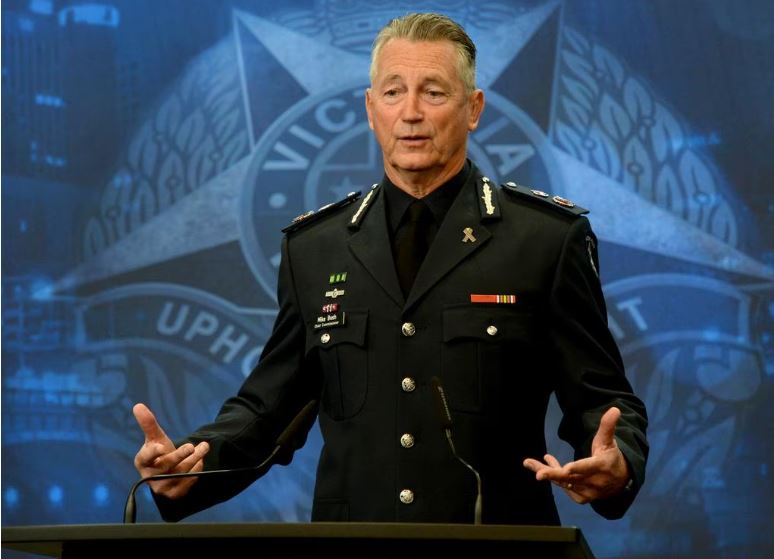
by Ivan Ray | Nov 8, 2025 | Blue Light, Library, Uncategorized, Victoria Police Issues
Starting where the rubber hits the road, Chief Commissioner Bush has implemented a Force-wide edict reversing a policy that has not worked and has been persevered with for years without empirical data to support its retention, exacerbated by the current lack of Force numbers.
The Minimum Police Station staffing policy, we suspect, was conceived within the upper echelons of the Force, far removed from the practical, real-world policing issues faced by police daily and the operational variables between one police station and any other.
An adverse byproduct of a bloated bureaucracy and a clear demonstration of why the one-size-fits-all approach is a failure.
Exposing these types of policy decisions gives an insight into the organisational failure that has plagued VicPol for years.
Running the ‘Oh my god’, ‘Close a Police Station?’ is an alarmist mantra that is not helpful without understanding the reality of policing and the history of how this once great organisation has declined due to poor management at the highest level.
The Chiefs’ edict does not necessarily translate into mass Station closures; it is more about moving decision-making to the level that is best equipped, where managers can make sound calls to serve the community better.
The Chief has previously indicated his interest in using former Police to assist the organisation, and the role of manning the public face of a police station could well fall within that concept.
The value of a long-serving experienced police member would not only provide better service delivery but also provide a role model function for junior police at a station.
The Local Area Commander (LAC) is the key person best placed to make resource allocation decisions within their span of control in consultation with Station or Unit Commanders.
The LAC benefits from local knowledge and an understanding of the strengths and weaknesses of the resources under their command.
To be most effective, the move to loosen the bridle on LACs and give them flexibility will undoubtedly come with additional accountability for the performance of the area under their Command. This, in turn, will also require subordinate managers within this structure to take responsibility for the performance and accountability of their units.
Suppose a Police Station is not managing the prevention and detection of crime to the standard set by the LAC for their area of responsibility. In that case, the manager should be mentored and, if necessary, receive additional training. If that fails, they should find an alternative position they are capable of managing.
The same rules should be applied equally to all managers in the hierarchical linear system, including LACs.
Properly implemented, this move will free up managers and their support staff further up the Totem pole to be redeployed as their functions diminish.
The bloated hierarchy resulted from creating and throwing another Command and all the ancillary Command support staff at a problem to fix it, rather than pragmatic management strategies.
Examples of unnecessary Executive Commands, like the four Regional Commands, can be rationalised.
If LACs are working correctly, then one Regional and one metropolitan are all that are required. State and Emergency Command can be addressed by the regional Commander where the Disaster is occurring.
That alone would free up a large number of Police and support staff, sworn and unsworn, to reallocate to operations and operations support at a Station level.
The Family Violence Command requires a coordination Office only, not a Command, and serious work to identify non-police functions in this space will free up countless police.
There are a myriad of other areas that need severe pruning or reorganisation because subsequent executives lost sight of the Police role – serving the community, not a corporate monolith, and not creating poor justifications for perceived weaknesses in the Force’s performance by establishing more bureaucracy or more Police Quangos.
It seems Bush is on the right track.
Thankfully, the Rotation management system has been largely consigned to the WPB, where it should have always resided. However, the damage caused will linger for years as the generation of officers who were blooded in that process and deprived of a real opportunity to learn and showcase their capabilities move through the system.
Whether many of them can regain their Mojo is, unfortunately, moot.
A serious consideration of reintroducing the prerequisite for all Officers to complete the Officers Training College as a live-in training facility would be a good step, allowing for a course restructuring to train all Officers in the rebuilding of a positive Police culture.
As a live-in course, the students gain insight into their peer’s experiences and develop career-long bonds that will serve them well as they progress. Having the opportunity to evaluate their own capability compared to peers’ develops an essential skill-set for future leadership roles.
Reviewing the approach to Officer Training would equip the Force for the next millennium, producing a modern, capable team of Officers who can apply the Peelian principles in a contemporary environment. A tendency to move training to a more academic, university-style model has not served the Force or the State well.
It would be unrealistic to expect all Officers to embrace the concept of effective policing and its accompanying accountability component, given the conditions they experienced under various flawed management models and the equally flawed application of them.
Additional training would be a very reasonable approach.
Focusing on the LACs first for retraining would hasten the benefits to frontline members, where the need for change is most critical, for their benefit and the community, where improvements in Force service delivery will be felt most keenly.
Co-founder and Deputy Chair/CEO of the CAA, a former Police Inspector with 32 years of service in Metro Uniform, Traffic Metro and Highway Patrol, Crime Cars, and CIB. Former Editor of Police Life and long-serving Public Relations Officer of VicPol. Founder and Life Member of the Blue Light Disco movement, Life Member of the Blue Light Federation, and completed his Police career as an Inspector after 6 years as a Patrol Officer. He then ran his own Business for 20 years until retirement. Ivan co-founded the CAA with former Victorian Chief Commissioner Kel Glare, and built the CAA into an influential voice for Victorians.

by Ivan Ray | Nov 6, 2025 | Library, Media, Politics, Uncategorized, Victoria Police Issues
There is a lot of faux bluster and wringing of hands over the use of the Police Chopper by the Chief Commissioner Mike Bush in recent times, his trip to Tasmania and now a flight from Avalon to the Victoria Police Centre (VPC).
It has now been reported that he allegedly took his wife on a flight and committed the most grievous sin of allegedly laughing about the brouhaha of the Tasmania flight.
In the scheme of things, these issues are nothing but white noise, but there is an underlying sinister overtone.
At worst, the Chiefs’ use of the aircraft could be argued as him having a ‘tin ear’.
The last accusation of using an aircraft to return from Avlon was perhaps expedient, and it matters little whether the Chief was in the back seat of his Car or the helicopter for the return. Both vehicles had to return to Melbourne.
The most serious issue that must attract the greatest focus is the report of the alleged laughing by the Chief Commissioner in a group about the Tasmanian flight.
There could be a million reasons for jocularity, but that of itself is incidental.
What is most egregious is that this was reported to the media, which can only be described as a bona fide undermining of his position.
The other airwing use could have been leaked by any number of people, but this latest alleged reaction could only reasonably have been done by his inner circle, indicating where all the leaks emanated.
It goes to the heart of the solidarity of the Command of VicPol and is very worrying, highlighting the difficulties that exist at that level in the Force.
There is obviously a rat in the ranks.
In an organisation where the average Police member would be hung, drawn and quartered for even a misspoken word to the media or anybody else outside the Force, but those in the upper echelons feel they have the right of free rein to attack the Chief.
The Herald Sun reported:
“Some police staff are understood to be fuming over the undeclared flights, with one describing his wife’s trip as nothing more than “a joy ride”.
“People are really annoyed he has misled them,” a source said.
“He is taking the public, and his staff, for fools … It’s about integrity.”
Sources also claimed that Mr Bush and a few of his colleagues had further upset staff by “laughing about Choppergate” since his apology on October 22.
They added that it was particularly galling at a time when positions were being reviewed as part of a force restructure.
“Everyone is really scared about their jobs,” they said.
To that statement, we add – the ‘Source and some Police staff ‘ ought to grow a backbone and talk to the Chief about their concerns, that would be integrity. But only after the Source has a chat with the psych unit about their insecurities.
Double standards cause poor leadership and management at any level.
The Chief underestimated the nature of the VicPol hierarchy by announcing his intent to streamline the upper command and release many staff and other managers from unnecessary Command Units, returning them to the frontline, where the priority lies.
The NIMBY (Not In My Back Yard) principle has been applied by incumbents being forewarned of the austerity target, and somebody or some people in these higher positions are so insecure that they see themselves as being part of the austerity target, so feel the need to discredit the Chief and, in turn, sabotage his intent.
As far as we are concerned, the person or persons responsible for the leaks should be the first to go. Fulfilling their own insecurities. Check their phones.
It makes one wonder whether the use of the Airwing was a decision by the Chief or whether he was receiving advice to set him up for criticism.
Perhaps his biggest failure was to underestimate the narcissism that is created by being part of the VicPol executive command, and that he must now be extremely diligent, as this latest issue may, in fact, be the start of an orchestrated campaign to discredit him.
Most danger will come from those who have worked hard to be close and gain his trust.
Ironically, a trust not reciprocated.
Co-founder and Deputy Chair/CEO of the CAA, a former Police Inspector with 32 years of service in Metro Uniform, Traffic Metro and Highway Patrol, Crime Cars, and CIB. Former Editor of Police Life and long-serving Public Relations Officer of VicPol. Founder and Life Member of the Blue Light Disco movement, Life Member of the Blue Light Federation, and completed his Police career as an Inspector after 6 years as a Patrol Officer. He then ran his own Business for 20 years until retirement. Ivan co-founded the CAA with former Victorian Chief Commissioner Kel Glare, and built the CAA into an influential voice for Victorians.

by Ivan Ray | Nov 5, 2025 | Library, Uncategorized, Victoria Police Issues, Violence, Youth, Youth Crime
In our most recent article, “The 300 Club Phenomenon” at https://caainc.org.au/the-300-club-phenomenon/, the CAA has outlined the issues with the current approach to juvenile crime and what needs to be done to address them.
Setting out what drives the youth phenomena, the article identifies major causes and who is responsible for failures.
Fundamental to this piece is the impact of social cohesion failure.
Over the last 20 years, our society has been ruptured, changing it from a society that respects the variety of cultures and ethnicities of its population to one that is fractured along tribal lines.
Respect for the family is continually undermined by governments hell-bent on destroying the fabric of the family, as if it competes with it.
Respect has all but evaporated, and that is founded in the application of the laws of this State and overzealous governments creating cultural divisions by promoting individual tribes, blatantly for political reasons rather than what is best for our society, coupled with overt support for fringe groups not representative of the overall community but focused on small sectors of it. These highly visible and vocal activist groups are not representative of the community as they would have you believe, but are an anathema to it.
Australia, and in many ways, Victoria led the way in creating a cohesive society where new and old groups were treated with respect. However, today, state leaders are pitting one group against another, and this manifests most vividly in our Youth.
We have lived in harmony with other cultures, but today that harmony is being eroded from all directions, and it is worsening.
In the future, we predict that the fundamental building blocks of our society will continue to erode.
Among the areas under siege, the Courts are the most obvious and most vulnerable.
This vulnerability has been created from within the Court system itself, where activist justices work to erode the court’s power, all the while ignoring the realities of society and the victims.
Failing to read the room will be the Court’s demise.
The effect of these jurist activists is to render the legal system so ineffective that the Government will have no choice but to create more restrictive laws regarding the freedom and independence of the Courts, or otherwise, anarchy will prevail.
Further, the Courts have sidelined not only the victims in criminal matters but also the perpetrator’s family, abdicating them of any responsibility.
This is a critical failure, particularly in the management of juvenile criminals.
Most of the strategies favoured by activists is to attack the family, who must be cultivated to perform the critical task of guiding and or disciplining young people away from a life of crime. They see the family as the vulnerability, to destroying society.
There are, of course, families who nurture crime by either overt actions or sheer indifference; however, legislators must enact a penalty structure for parents whose children commit crimes. Hitting them in the hip pocket will be the most effective way to focus their minds on the parenting task.
Whether that is through reformation, distinct penalties, or a combination of both is moot; something must be done.
To rectify the issue, or at least put us on a path to recovery, we must rely on those justices who the activist agenda has not swayed to show leadership and, by example, highlight the weaknesses and or activism of their fellow judges by issuing penalties that highlight the failures of others; Leadership by a new, higher standard.
We, however, fear that until we have a government that focuses on governing for everyone rather than pet projects based on ethnicity (and votes), we are unlikely to see improvements anytime soon.
Activism is not confined to the Courts but high-profile, unlawful, and violent demonstrations on our streets in pursuit of an activist agenda is a standout act of insurrection.
There is little hope of reigning in uncontrollable activities – without taking back control of our streets.
The government’s inaction on this issue is tantamount to acquiescing to the lawlessness, something a government cannot and should not do under any circumstances.
This is not about the content of any demonstration, as peaceful demonstrations are a right we all possess; it is about the lawlessness that must be given no quarter.
Unfortunately, and we would argue deliberately, the Public Service appears to be a hotbed of alternative activist activity, and the concept of providing impartial advice to government ministers on policy matters has been lost; the Public Service has morphed into an arm of the government’s ideological agenda without a discernible gap to support the separation of powers concept and foundational to our democracy, which is fast becoming a myth.
Another area impacting our youth is education.
Schools are failing in their function to educate, and they cannot claim otherwise when they routinely send children home (with or without parental knowledge) rather than addressing any indiscretions by pupils in school, as was historically the case.
Moreover, the Schools are, as a matter of course, sidelining parents in the development of their children.
They have claimed a mantle of knowing what is best for a particular child or children in general and acting accordingly, often to the deliberate exclusion of parents. This approach aligns with the activist agendas in several social areas.
Children as young as the Preparatory year are being exposed to socially divisive issues as deliberate conditioning—a manipulation of young minds who should be educated, not manipulated, on an activist community construct.
The real damage, however, is the harm to the family cohesiveness, where the views imposed on young children may conflict with those of their parents, either culturally or otherwise.
Parents have little hope of influencing the development of children when the schools act as influences on activist agendas. This is particularly true of some ethnic families, aggravated by English not being their first language or the Australian culture being dissimilar to their own.
It is no wonder that there is an overrepresentation in the crime statistics of cultures, as arrivals in Australia in recent years have had their parental role subordinated..
The combination of these factors has eroded the concept of accountability within social cohesion, and inaction every day deepens the demise of the State and its residents.
Addressing all these issues is now a matter of urgency.
Co-founder and Deputy Chair/CEO of the CAA, a former Police Inspector with 32 years of service in Metro Uniform, Traffic Metro and Highway Patrol, Crime Cars, and CIB. Former Editor of Police Life and long-serving Public Relations Officer of VicPol. Founder and Life Member of the Blue Light Disco movement, Life Member of the Blue Light Federation, and completed his Police career as an Inspector after 6 years as a Patrol Officer. He then ran his own Business for 20 years until retirement. Ivan co-founded the CAA with former Victorian Chief Commissioner Kel Glare, and built the CAA into an influential voice for Victorians.

by Ivan Ray | Oct 27, 2025 | Library, Uncategorized, Victoria Police Issues, Youth, Youth Crime
It has been estimated that around 300 young people in this state are responsible for the overwhelming majority of violent crimes, particularly in Melbourne.
While some estimates refer to just 50, that only refers to the very worst and prolific offenders in the 300 group.
The ability to accurately quantify criminals is fraught, as by the nature of criminal activity, it can wildly fluctuate, and different measurements throw up seemingly contradictory assertions.
Suffice to say, and on this issue, there is one overriding consensus: Victoria is faced with a severe crime problem, the like of which has never been seen before.
And while our politicians equivocate over whether we have a crime problem or not, there are well over 300 victims who can attest from lived experiences, except some who are no longer with us, that there is a crime epidemic.
The problem we are now facing is that those who exercise influence over our lives see the solution in pouring resources into the 300 group to change their ways and gain respite for the community, well-intentioned, but a totally wrong-headed solution that will see us reporting on the 400 club in 12 months.
The wrong focus will increase the recidivist population, not reduce it.
To change these perpetrators, the first thing needed is a desire for criminals to change for the better, but that just isn’t going to happen because the life they currently lead is better, in their minds, so why would they change? Add to that the lack of an effective deterrent for criminal behaviour, and hope for change is an anachronism.
The battle some would rage is lost without firing a shot.
The reality is that we will inevitably encounter incorrigible criminals in the youth space, regardless of what we do. Hence, strategies to reduce are the best we can hope for; it is worth noting that during the late 1970s, the Turana Youth detention centre held 200 youths. So the Youth problem is not really new.
The difference then is that most of the recidivists were in detention.
A large proportion of those went on to become career criminals, and many did not survive to make old bones, many at the hands of their contemporaries.
Comparisons between those in detention and those in the 300 group must be based on objective care; however, the trends are irrefutable.
As of the June quarter 2024, an average of just 88 juveniles were in detention overnight in Victoria, see,
Australian Institute of Health and Welfare https://www.aihw.gov.au
This may go some way toward explaining why we have such a vast number of incorrigibles on our streets, creating mayhem.
With Turana holding, in 1979, 200 youths out of a state population of about 3.5 million. Today, with 278 juveniles averaging just 88 in detention per night and a population of 7.1 million, the trend is evident.
We should be looking at somewhere north of 4-500 youths in detention to account for population growth.
The figure of 300 incorrigibles doesn’t look that bad except that they are on our streets creating more mayhem rather than being incarcerated to protect the citizens.
A popular theory amongst some is that inside every thug is a decent human being; all we need to do is tap into that being.
No scientific or practical experience supports this, unless you count the thugs growing out of the phase in a few years—if they live that long—which is wishful thinking; unfortunately, that does nothing for the thugs’ victims until they do.
The reason we have ‘the Club’ is that the Courts have generally taken the view that the rehabilitation of the worst is possible and that putting these criminals in jail will make them worse, but the question that is never answered is: worse than what?
They are already violent murderers, machete-wielding assailants and gang leaders.
The reality is there will and always has been a hardcore of juvenile offenders who continually run amok until a Judicial officer with wisdom decides to protect the community and lock them up.
The government must couch legislation to direct the Judiciary in this endeavour.
It is not just refusing bail but handing out severe penalties to remove their power base.
There is no magic-bullet solution to this problem, no matter what is pontificated; the only practical and effective way to minimise the mayhem caused is to take the hardcore off the streets and reduce the number of younger children who are ‘feeders’ that maintain the power base of the club members.
That should be our total focus: prevention.
Understanding what motivates these thugs is essential,
- Notoriety and bragging rights, fed by the Justice revolving door or justice without accountability.
- Exercising leadership and cohesive control over other youths who should be our target. Young people are aspirational, wanting to emulate those people whom they judge as heroes or role models. Harmless enough unless that hero is a thug, so attacking the thugs, notoriety must be a primary strategy.
- The buzz and excitement, another harmless trait; however, when boredom evolves, the excitement of a more challenging activity becomes a magnet, and crime provides that outlet.
- Being free to choose whatever and whenever they want to do it. Freedom is reasonable but needs to be tempered with accountability for behaviour that affects others. Young people not being held to account is a Justice failure, promoting more antisocial behaviours.
- A sense of achievement. Aspirational achievements can be a good thing for youth and promote personal development, but essentially, where that manifests as criminal behaviour, it is essential to demonstrate to the youth that they have failed, not achieved. Walking from the court without a penalty feeds the negative aspect of this trait.
- Answering to no one, this is sometimes a myth that young people exploit because if they are not complying with society’s rules, there is no doubt they will be answering to other members of the criminal fraternity.
- Exercising power over victims, A very worrying behaviour if detected in a
relatively minor crime, it is a good indicator that this trait will evolve over time to become violent. Victims usually can’t fight back, so young thugs are motivated to exercise control by fear, and when that no longer works, a gradual increase in the severity of the violence to satisfy their power lust is inevitable.
- Beating the system plays an important role; thumbing their nose at the legal system reinforces all the other traits with their peers. Irrespective of what the adjudicating jurist may say or what the legal intricacies are of a court appearance by a thug, as they walk out the door, they have beaten it. The Jurist may not see it that way, but that doesn’t matter, as the Court has provided the power to the thug. The lectures from the bench given to thugs are just white noise and serve no practical purpose other than to enhance the bragging rights of the thug and perhaps gain some notoriety in tomorrow’s paper for the Jurist.
Restorative Justice is a major driver of this failure, as it has been allowed to infect the Judiciary, and the latest instructions to magistrates hearing bail applications show just how unhinged this concept is.
The ‘Bail Bench Book’, updated by the Judicial College of Victoria on October 3, instructs decision makers that they should continue to “impose the minimum intervention required” on accused young offenders.
The guide states: “A child, especially an Aboriginal child, should be released on bail, with conditions, wherever possible.
“Of course, there is a risk this will not succeed, or worse, but it can be a risk worth taking in the name of community safety via recovery and rehabilitation in the long run.”
What is outrageous in these instructions is the apparent laissez-faire attitude the Judicial College has towards the victims these youths prey on.
How dare they presume that the ‘risk worth taking’ to the potential victims is acceptable?
That is not justice by any stretch, and it is noteworthy that it is not the authors of this guidance who are taking the risk, it is the community..
What can be done to redress the issue?
The way we have dealt with youth thus far is an abject lesson in what not to do.
Role of the Courts – The Courts must return to their intended role and not try to be social engineers. In other words, stick to their kitting, which they are capable of doing very well.
Role of Schooling –What is absolutely beyond reproach is that young people who remain at school are far more likely to succeed and avoid a life of crime than those who do not.
The argument that granting bail enables the kids to attend school is an absolute rubbish argument. One of the primary reasons the child is in trouble in the first place is school non-attendance.
Schools must change their ways – When we have schools that would rather send the kids home to avoid dealing with behavioural issues, in the flawed belief that homeschooling is somehow beneficial.
Inevitably, those misconceptions dramatically increase our crime rate and the loss of those valuable assets as future contributors to our community —the kids.
The last thing that should happen is that they are sent home from school because most parents have to work to survive, and children not under supervision will not conform.
If that is not a receipt from crime, I don’t know what is.
This practice must stop, and schools must devise ways to discipline children within the school space. It wasn’t that long ago that schools did precisely that, so the solution needs to be resurrected.
The community first, not the thug. – Children who commit serious and persistent crimes must be incarcerated to protect the community and teach the child accountability for their behaviour.
The detention centres must focus on education so that children who are incarcerated cannot avoid structured education.
The argument is often that locking kids up will make them worse; however, the institution must address this issue and find innovative ways to manage juveniles – a reward-for-good-behaviour rather than a reward-to-achieve-good-behaviour philosophy should underpin its management philosophy.
Employment for juveniles – Rather than kids marking time at school, our young people entering the workforce must be revised.
The aspiration of parents for their children to achieve higher academically than they did is not a harmful trait; however, the pendulum has swung too far, creating unrealistic social pressure on families, particularly the children.
To succeed in life, education levels are only part of the equation and are not a panacea for success.
Whether a child is capable of joining the workforce is a matter that the market can determine entirely. An employer will not employ even a junior if they are not confident they can make a valuable contribution to the enterprise.
The minimum age must be reduced considerably.
The practice of raising the ages of accountability or other age-related restrictions must be pragmatically reviewed, and there is a strong argument for lowering them.
A young person of today is far more socially and physically developed than their counterpart of 30-40 years ago, when many of these restrictions were imposed. Just one metric—the average height of young people today—is a strong indicator that there has been a change.
A 12-year-old was historically too young to be employed. Still, today, they are generally better able to contribute to the workforce—a better alternative than wasting time at home (if they stay there) when they could be learning productive life skills and gaining practical experience, earning a wage. This concept would be applied on a case-by-case basis, determined by the market, as an employer is unlikely to hire someone who cannot provide a return on investment.
Youth initiatives – Traditionally, when we talk of new initiatives to manage youth, the perennial issue of boot camps is always at the fore.
We would oppose such a strategy because it is reactive and feeds into the thugs’ psyche, allowing them to use the experience not to mend their ways but to exacerbate them —bragging rights.
If a youth is so criminally misbehaved that they should go to a boot camp, they should be incarcerated, which should be the ultimate Boot Camp..
The most effective initiatives must be based on empirically measurable outcomes, and the most effective methods have not yet been devised, or if they were, have been discontinued.
There is a desperate need for all programs and youth initiatives to be identified and evaluated to avoid the wasteful use of resources and to promote and expand the effective ones.
The Parents
The role of parents when their children break the law creates a conundrum and has therefore never truly been debated.
Our view is that parents must accept responsibility, and that responsibility should be related to the child’s age. The younger the child, the more responsibility a parent or parents must assume.
Courts, on conviction of a Juvenile, must be given the role to determine reparation for the victims.
Moreover, the Courts must attach a value to the crime. A car stolen worth $2000 should be considered relevant in determining a thief’s penalty, to a car worth $100,000. That either car is, or is not, insured is irrelevant as the cost is borne not by the perpetrator but the community at large.
The liability to provide the determined amount must fall on the youth and their parents. if the youth is below working age.
Changes to Victoria’s child employment laws apply from 1 July 2023. … The Act applies to the employment of children under the age of 15.
In Victoria, the minimum age to work is generally 11 for certain delivery jobs, with most other work starting at 13 in retail and hospitality, though an employer must obtain a Child Employment Permit for anyone under 15.
Employment would be a good option for many delinquents, but the discipline to undertake work (Getting out of bed in the morning) is generally lost with many young people from a combination of weak family discipline, weak or no accountability for crime by the courts, and schools opting out of responsibility; the send-home policy.
Although much discussion is needed to come up with a definitive strategy around these issues, the introduction of reformation and accountability for parents will focus the minds of many parents when their child’s adverse behaviour hits their hip pocket.
The role of the Police –
Victoria Police historically had an enviable and proud record of proactive policing with a focus on youth; however, over the last decade or so, that record has been shattered by a series of Chief Commissioners who were incapable of seeing the larger picture, instead focusing nearly exclusively on reactive policing.
Although there has always been a commitment to youth and resources applied, most of the police work falls into the reactive side, much of it masked as proactive, indicating that police leaders didn’t understand the difference.
The strategies of Chief Commissioner Mike Bush translate into targeting young people effectively before they join the 300 club.
And that is precisely what needs to happen.
We are confident that Chief Commissioner Bush may turn out to be the leader who corrects the freefall into anarchy we are currently facing, not just in policing.
Conclusion
Like the educators, corrections, the judiciary, and the Police, all need to be creative and not too proud to resurrect initiatives that have been discarded, perhaps for ideological reasons or because managers want to be different.
Don’t spend wasted time reinventing the wheel; perhaps just modify it.
Co-founder and Deputy Chair/CEO of the CAA, a former Police Inspector with 32 years of service in Metro Uniform, Traffic Metro and Highway Patrol, Crime Cars, and CIB. Former Editor of Police Life and long-serving Public Relations Officer of VicPol. Founder and Life Member of the Blue Light Disco movement, Life Member of the Blue Light Federation, and completed his Police career as an Inspector after 6 years as a Patrol Officer. He then ran his own Business for 20 years until retirement. Ivan co-founded the CAA with former Victorian Chief Commissioner Kel Glare, and built the CAA into an influential voice for Victorians.
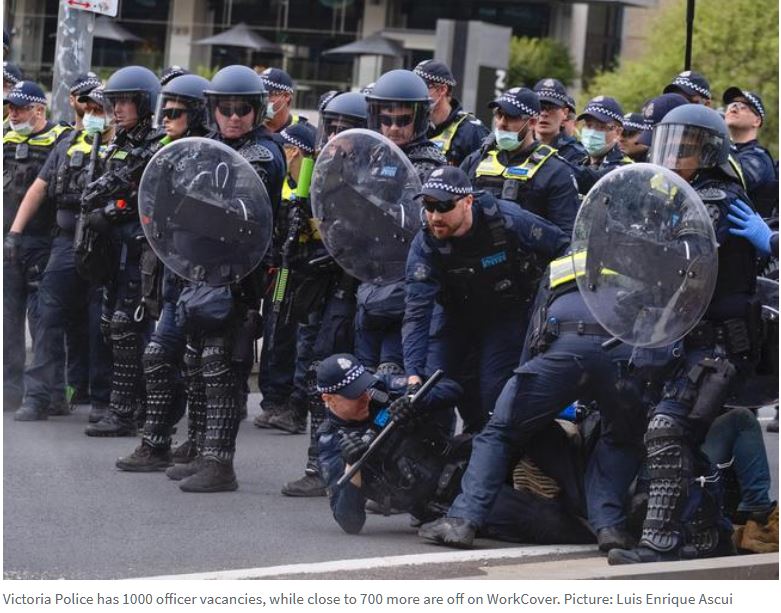
by Ivan Ray | Oct 22, 2025 | Library, Politics, Uncategorized, Victoria Police Issues
But two swallows can herald a fine summer is near.
Applying Aristotle’s theory to policing may seem odd and even a stretch, but recent events have given strong indications that the winter of discontent with policing in Victoria is drawing nigh, and a good summer looks to be invitingly within reach.
We refer to two recent events indicating that VicPol is quickly implementing change since the appointment of Mike Bush as the new Chief Commissioner.
With apologies to the two members for the analogy used, but it sort of works.
The first incident involved a news conference by Detective Inspector Graham Banks, whose straight-talking, candid comments about Juvenile incidents, including the Cobblebank murders of two young boys by machete-wielding thugs, was a refreshing departure from standard police rhetoric, telling the community the truth without any hint of political or other filters.
The second incident, following the most recent violent demonstrations in Melbourne, was a news conference by Commander Wayne Cheeseman, supported by props collected from the demonstration site, who provided an unsanitised, non-partisan description for all Victorians to absorb.
Telling the truth also contradicted sections of the media that had tried to fudge the actual actions of participants in the violent demonstration, leaving it open for the Advance Australia group, predominantly mums and dads, to be as culpable as the radical left.
His forthright approach left nobody in doubt that they were not responsible for the violence, as they were cooperative with the police throughout their demonstration, and it was the cowardly masked suspected professional protesters who instigated and pursued violence.
These thugs have lost any connection to a specific cause; they only aim to cause chaos.
It is essential to provide the police with the resources needed to handle this rabble, who cast a negative pall over any Victorian or group of Victorians wishing to express their views through a demonstration. We all should feel free to speak our minds without being lumped in with the rabble of the extreme left, better described as Anarchists.
One of the tools that would give the police the edge and reduce the dangers to police members and the community from improvised weapons that the anarchists use is to supply VicPol with a water cannon.
VicPol has a duty of care to all its members to ensure they are equipped to deal with issues that confront them in performing their duty.
Minimising the risk of incurring harm while performing that duty must be a given.
We have recently written on the difficulties that some police have encountered in trying to gain compensation for injuries suffered, with a number of legal decisions going against the members.
There is no doubt that equipping Victoria Police with suitable water cannon vehicles, ideal for crowd control, will cost, but the cost will be well offset by a reduction in Workcover claims caused by this duty.
We will also see a marked reduction in violence at demonstrations when the troublemakers know they are certain to be hosed down.
However, the Premier has now announced that the Government is pursuing face-covering legislation to combat the surge in violent acts.
Talk about underwhelming.
Since when does making the wearing of facemasks illegal stop scum from throwing rocks and other missiles at police?
This approach by the Government flies in the face of what the new Chief Commissioner is trying to change.
The Force’s direction, from one that’s focused on arresting perpetrators as the first line of defence, to a more effective method, which we support, is to stop crime in the first place.
An enlightened Chief Commissioner knows that arrests may seem effective, but it is the Courts’ handling of the criminal that makes the difference, and at this stage, penalties imposed are manifestly inadequate, hence the escalating crime rates and lawlessness.
The legal system isn’t effective, so the effort to reduce crime by prevention is and should be a no-brainer, as the new Chief espouses.
A force that prioritises compliance through measures like water cannons, primarily to be used as a deterrent, but if compliance is not achieved, to prevent the situation from getting totally out of hand, without injuring not only the police but also innocent members of the community who might accidentally get caught up in a confrontation, is on the right track.
The current strategy has no fail-safe approach should the anarchists raise their level of aggression.
The stress level of the Police will be substantially reduced if the big brother standing behind them has the power of a water cannon.
If you were in their shoes, you would feel the same anxieties and sometimes fear that the Police feel when confronted by the anarchist types they are currently dealing with.
The problem is that these particular lowlifes use any means to inflict injuries on police, and the unpredictability as to what weapons they employ increases the negative pressure on the police members, a deliberate tool in their arsenal.
That anxiety can escalate to become a debilitating consequence, so all Victorians are obliged to take whatever action is necessary to provide police with the ability to reduce their risk factors, and that is where Water Cannons are so important.
The basic approach to the use of these tools by the Police would require legislation to protect the members and the Force from litigation arising out of their use.
Proper use in conjunction with a permit system for demonstrations mirroring the highly successful New South Wales model would ensure permit compliance and where the permit is breached, the capacity to douse miscreants with a spray would generally reduce violent demonstrators resolve; however, if that fails, the cannons can be used to physically remove people from their intended path without exposing members to undue physical or psychological damage.
Simply making masks unlawful is not a great help, only assisting with identifying perpetrators post-event – we want the action pre-event to avoid Police being tied up pursuing offences which may attract only minimal sanctions – police have more important things to do like protecting us from machete attack.
Co-founder and Deputy Chair/CEO of the CAA, a former Police Inspector with 32 years of service in Metro Uniform, Traffic Metro and Highway Patrol, Crime Cars, and CIB. Former Editor of Police Life and long-serving Public Relations Officer of VicPol. Founder and Life Member of the Blue Light Disco movement, Life Member of the Blue Light Federation, and completed his Police career as an Inspector after 6 years as a Patrol Officer. He then ran his own Business for 20 years until retirement. Ivan co-founded the CAA with former Victorian Chief Commissioner Kel Glare, and built the CAA into an influential voice for Victorians.
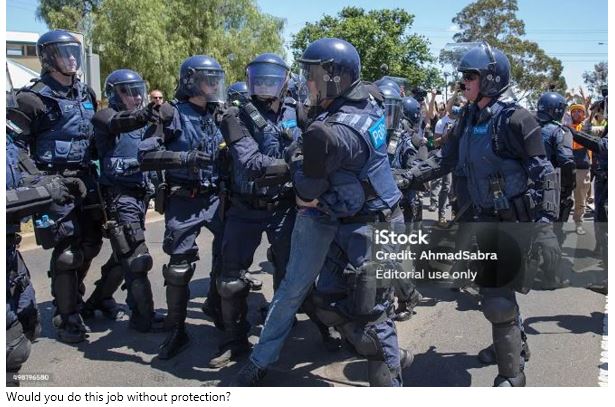
by Ivan Ray | Oct 16, 2025 | Industrial Action, Library, Media, Politics, PTSD, Uncategorized, Victoria Police Issues
Herald Sun, October 15, 2025.
“In a move that has sent shockwaves through the Force, lawyers have successfully argued against any State liability because police officers are sworn officers, not employees.
The argument has been upheld in a number of recent decisions in the County Court that have prompted calls for the Allan government to urgently reform existing legislation that has become a barrier to claims by psychologically injured officers.”
In knocking out the claim, the County Court held that there was no basis for the imposition of a duty of care in favour of the officer.”
Resulting from this legal decision, the indemnity of the State from liability to compensate police injured on duty or who later suffer from PTSI is deplorable. The issue of vicarious liability was also discussed, but faced the same fate for the Police.
“The issue of vicarious liability being owed to injured officers has drawn comparisons by the court to a recent High Court decision, known as Bird v DP, that held that institutions could not be held liable for sexual abuse if an offending priest or member of an institution was not in an employment relationship.”- HS
All of these legal manoeuvres to avoid liability by the government have not been happening behind closed doors, or in a vacuum, so the Government must have been aware of what was being foisted on the Police, and, for that matter, every other sworn person employed or otherwise in the State who are not covered by specific legislation.
Which brings us straight to the Premier, who surely would have been briefed on the risks of these legal findings posed.
Having considered the risk, I wonder if the Premier will be bothered to walk outside and have a friendly chat with her own personal security detail.
The conversation might be along the lines of;
“Hi, guys. You may have read about the court’s finding that you are not covered, should you take a bullet for me? The mental anguish is not covered, but rest assured, we will do something about it at some time.”
“You can at least take heart that should the unthinkable happen and you make the ultimate sacrifice, I will very much appreciate it, and your family has your super, and we promise to leave that alone (at this stage), apart from taxes”.
The State does not owe you a duty of care, but I care; No, I mean I really, really, really do care, believe me, now back to work”.
Equally inane in this legal debacle is that the Judiciary also relies on the police for their safety. Although for obvious security reasons it is not public knowledge, there is no doubt that in certain high-risk proceedings, the jurists are provided with close personal security. We wonder how those Police feel now.
It was also reported in the same article that;
“Australian Lawyers Alliance Victorian President, Susan Accary, on Wednesday called for urgent reforms”.
“Recent court decisions that have allowed Victoria Police to avoid responsibility for injuries to police officers do not reflect the general understanding of the employment relationship between the police force and its officers,” she said”.
“Police officers are employed by the state and are engaged in critical, dangerous and sometimes, traumatic, work.”
“It is unfortunate that the law as it currently stands allows the state to avoid their obligations to their officers.
“Police officers, who often work in a high-risk environment for the benefit of the community, should be able to rely on the state to provide them with the support they need if they are injured at work.”
The risk of more police industrial action is real, as no police member would want to or should be forced to go to work without protection, so it is somewhat interesting that the Police Association is not pursuing a mass walkout of Police.
It is ironic that the last Police strike in 1923 occurred just before the Spring Racing Carnival. The Victoria Police force at the time was understaffed, poorly paid compared to other State police forces, and lacked an industry pension. Although the Police now have Superannuation, the rest of the similarities have a certain Déjà Vu ring.
To follow the illogical legal argument proffered in the courts, the relationship between any sworn person and their employer is a relationship without a ‘duty of care’.
The list of people who are now exposed is extensive, but not limited to,
Clergy, Municipal Office bearers (Mayors), all politicians, the Governor, all Judges and other jurists, even your local scout master, in fact, anybody that takes an oath as part of their employment, paid or otherwise, would seem to immediately exclude their employer from any ‘duty of care’.
If this logic is followed, the employee ceases to be an employee in the usual sense of the word, making it equally outrageous.
This could only happen in Victoria.
Co-founder and Deputy Chair/CEO of the CAA, a former Police Inspector with 32 years of service in Metro Uniform, Traffic Metro and Highway Patrol, Crime Cars, and CIB. Former Editor of Police Life and long-serving Public Relations Officer of VicPol. Founder and Life Member of the Blue Light Disco movement, Life Member of the Blue Light Federation, and completed his Police career as an Inspector after 6 years as a Patrol Officer. He then ran his own Business for 20 years until retirement. Ivan co-founded the CAA with former Victorian Chief Commissioner Kel Glare, and built the CAA into an influential voice for Victorians.

by Ivan Ray | Oct 15, 2025 | Library, Uncategorized, Victoria Police Issues
Victoria’s New Chief Commissioner, Mike Bush, has announced a major restructure of Victoria Police in an effort to make inroads into the burgeoning crime rates.
Although we may not know the full extent of this restructure, what has been reported is extremely good news.
Good news for those of us who favour effective policing based on the community’s needs.
The CAA has advocated these changes for over a decade, through the tenure of five Chief Commissioners who couldn’t or didn’t want to witness the flawed process of ineffective Reactive policing.
Coupled with their lack of leadership skills, the current crime imbroglio was inevitable.
The legacy left behind is that a number of Police officers who were promoted under the flawed reactive model will have difficulty adjusting to the new and modern policing methodology.
They should seriously consider their future and perhaps step aside.
For those who won’t accept the change and take the honourable option, Chief Commissioner Bush has no other choice but to take decisive action to prevent these members from tainting the Police workforce as they adopt this critical change.
The broad principles of freeing up desk-bound police to bolster the proactive function of the force are long overdue.
Similarly, reducing a top-heavy structure that has, for years, consumed both resources and hindered decision-making, drawing decisions up to the hierarchy, far removed from the issue, has effectively diminished the Force’s effectiveness rather than enhancing it.
Solutions to challenges by successive Chiefs Commissioners have led to the creation of more bureaucracies, resulting in more Police being promoted to executive roles and their staff being drawn from the frontline.
The vision by Bush is laudable, focusing on reducing crime before it happens is not a soft option, as some Police hardheads will argue. Their views on reactive (lock ’em up) policing as the way to curb crime have been a failure over the last decade, and it is refreshing to talk about a renaissance of good policing.
It is reported that the Force is facing a mass exodus, which may turn out to be a blessing for the Force and the State.
Some serving members eyeing retirement to escape the fundamentally flawed Police strategy of the last decade may be persuaded to change their minds upon seeing the new direction. Hopefully, many of the hardheads will exit rather than try to adapt to the proactive model.
That would be a significant win for Policing in this state, as many of the ranked members are entrenched in the reactive model and were promoted on this basis.
Their future promotion or retention looks bleak.
The announcement that former or retired Police officers will be offered positions to relieve operational members of administrative duties is not only very sensible but also highly desirable for the benefit of the Force and the Community.
As many of these former members served the Force when it was focused on prevention, they will be an excellent role model to convert sceptical members who have never had that experience.
There are many ex-members who are not so old but resigned for family reasons. Now, as their families grow older, they may relish a return to the Policing fold to restart their careers, given that many of them served before the Force became reactive.
This recruiting cohort could provide the Force with the numbers boost needed to strengthen the proactive model implementation.
The key will be the flexibility and attractiveness of the employment offer.
We hope that this new direction includes a proper Police In Schools Program, which supports Secondary Schools from which most of our juvenile cohort emerge. Not only will this divert many from crime, but it will also create fertile ground for recruiting young people to pursue relevant studies that will equip them to join the Force after leaving school.
We also hope that the Blue Light Disco project is reinvigorated to provide direct interaction between youth and Police aimed at developing long-term positive influences with our youth.
To round out this particular trilogy, the Force needs to take a fresh look at Operation New-Start, designed to keep children in school and off the streets.
Recently published figures on school attendance are abysmal, likely due to schools simply sending problematic children home. Hence, the contribution by this cohort of bored children to the crime epidemic.
Probably a product of the Super School concept, where young people are lost in the system, the only way to improve the situation is to make the necessary legislative adjustments so these children can find employment.
If school doesn’t work for them, joining the workforce at a young age will equip them with life skills for the future, rather than sitting around wasting their life and being drawn to crime.
The current VCAL option is education-focused rather than career-focused and fails troubled kids.
Idle hands are the devil’s workshop.
By adopting this strategy, the net benefit to the State would be immeasurable as opposed to the impact of them committing crimes.
Each of these projects works well in isolation but are highly successful when worked as a trilogy.
This strategy will be far more effective and cheaper than the much-vaunted boot camp concept.
Co-founder and Deputy Chair/CEO of the CAA, a former Police Inspector with 32 years of service in Metro Uniform, Traffic Metro and Highway Patrol, Crime Cars, and CIB. Former Editor of Police Life and long-serving Public Relations Officer of VicPol. Founder and Life Member of the Blue Light Disco movement, Life Member of the Blue Light Federation, and completed his Police career as an Inspector after 6 years as a Patrol Officer. He then ran his own Business for 20 years until retirement. Ivan co-founded the CAA with former Victorian Chief Commissioner Kel Glare, and built the CAA into an influential voice for Victorians.

by Ivan Ray | Oct 12, 2025 | Library, Uncategorized, Victoria Police Issues
In this “And Why Is That?” Podcast interview, Francis Galbally—a Melbourne businessman, former barrister, and descendant of one of Victoria’s most distinguished legal families—speaks candidly about law and order, judicial culture, immigration, and political decay in Victoria. The discussion paints a grim portrait of a state in moral and institutional decline, and a political class indifferent to citizens’ safety. Watch now: https://www.youtube.com/watch?v=DxmN2opbWkQ&t=24s
Legal heritage and background
Galbally opens by tracing his family’s long association with law and politics. His grandfather, Sir Norman O’Brien, and his uncle were Supreme Court judges. His father, Frank Galbally, was one of Melbourne’s most celebrated criminal lawyers, while his uncle Jack Galbally was both a barrister and Labor parliamentarian. Though raised in a Labor household, his father later defected to the Liberal Party under Malcolm Fraser, frustrated with Gough Whitlam’s economic mismanagement. Francis notes that his father played a key role in establishing the SBS network and migrant support services. Proudly Irish-Catholic and a lifelong Collingwood supporter, Galbally represents a lineage of civic engagement and public service.
Lawlessness and the erosion of order
The interview’s central thread is the perceived collapse of law and order. Galbally responds to the brutal murder of two Sudanese-Australian boys in Melbourne’s west, describing it as emblematic of societal decay. He blames government failure, weak policing, and soft judicial culture for creating conditions in which violent youth gangs and organised crime flourish. “We have a government out of control,” he says, accusing Premier Jacinta Allan of ignoring lawlessness in the construction industry and broader community. Public safety—the most fundamental responsibility of government—has, he argues, been abandoned.
Galbally fears a drift toward vigilantism, recalling incidents where citizens have fought back against carjackers. While understanding the impulse, he warns that this path would lead to “a total breakdown of society, a law of the jungle.” Instead, he urges government leadership, cultural renewal within the police force, and stronger judicial resolve. The new police commissioner, he says approvingly, is “a hard-ass” from New Zealand who may finally restore discipline, but entrenched culture will take years to fix.
Judicial accountability and community safety
Galbally’s sharpest criticism is reserved for the judiciary’s handling of bail and repeat offenders. Police morale, he argues, is crushed when offenders are repeatedly released. He calls for tougher bail laws and for magistrates and judges to “respect the community.” Judicial independence must not mean judicial detachment. Parliament, reflecting public expectation, should clarify the law to remove excessive discretion in youth and violent cases.
He also urges parental responsibility: parents of minors who commit crimes should face financial penalties for damages. This, he believes, would reshape attitudes in households where children drift into crime. He also calls for adult sentencing of violent offenders over 14, echoing recent Queensland reforms: “If you knife somebody at 14, you should be tried as an adult.”
While acknowledging a few positive judicial examples—such as the judge’s reasoning in Victoria’s “mushroom poisoning” case—Galbally insists systemic leniency has destroyed deterrence. Yet he is careful to defend the institution of the judiciary, praising Victoria’s judicial appointments process as merit-based and free from political interference, unlike the partisan U.S. Supreme Court.
Government distraction and media complicity
The hosts and Galbally agree that serious crime stories vanish quickly from news coverage, replaced by “shiny distractions.” He accuses the government and compliant media of deliberately shifting attention away from violence, using the announcement of new Indigenous treaty initiatives as an example of political deflection. The Premier, he says, has failed even to meet the families of slain children: “She has no interest. It’s indecent.” For Galbally, this symbolises moral cowardice and misplaced priorities in Victoria’s leadership class.
He broadens this critique to the “crisis of leadership” generally. Citizens, he argues, now march in the streets over overseas issues while ignoring violence at home. “Where is the outrage?” he asks. “We are frightened in our own streets.” He describes personally carrying defensive tools when walking in Melbourne, reflecting widespread insecurity.
Culture, patriotism, and social cohesion
Galbally sees this insecurity as part of a larger erosion of civic identity. He contrasts Australia’s cultural ambivalence with America’s unapologetic patriotism—its ubiquitous flags and sense of unity. Australia, he laments, now regards flag-waving as “fascist,” while tolerating terrorist symbols like Hamas or ISIS flags: “That’s rubbish. People flying a terrorist flag should be jailed.” Burning the national flag, he adds, should also be a criminal offence, as it “insults every citizen.”
Turning to technology and governance, Galbally dismisses the government’s “e-safety” agenda as a distraction from real threats. He warns that such programs risk morphing into surveillance and censorship, arguing that digital regulation is futile when technology evolves faster than government oversight.
Crime, commerce, and fear in the city
Galbally describes how rising urban crime has hollowed out Melbourne’s retail life. Luxury retailers in Collins Street, he says, have seen foot traffic fall by 40% post-pandemic because customers feel unsafe. CCTV footage shows regular smash-and-grab attempts, scaring both staff and patrons. As a result, consumers stay home and shop online, eroding civic life. He points to U.S. examples—New York under Giuliani and Eric Adams—where heavy police presence restored safety and revived urban life. “Zero tolerance works,” he insists.
Immigration, integration, and the economy
Galbally supports immigration but warns that poor management of volume and composition can strain housing and cohesion. He recounts Australia’s long history of migrant waves—from Irish and Italians to Vietnamese—each facing early suspicion before integrating successfully. Problems arise mainly with second-generation youths who feel detached from both cultures. Migration, he insists, is essential to Australia’s prosperity, but must be tied to housing capacity and clear vetting standards: “This is not the White Australia policy; it’s about realism.”
Leadership and political decline
In closing, Galbally laments the absence of true leadership in Australian politics. Both major parties, he argues, are structurally incapable of renewal. Labor is dominated by “union hacks” and career professionals with no real-world experience; the Liberals, conversely, are inward-looking, male-dominated, and disconnected from working Australians. Smart, capable people avoid politics altogether. “Why would anyone want to go into politics today?” he asks. “It’s ugly, brutal, and unrewarding.” His prescription is radical but simple: Australia needs a new political movement built on integrity, civic pride, and competence.
Conclusion
The interview paints Francis Galbally as a tough-minded realist alarmed by Victoria’s moral and institutional decay. His central thesis is that public safety is the foundation of civilisation—without it, no social policy or moral vision can stand. He believes leadership, judicial clarity, and civic pride must be restored before Australia loses confidence in its own laws and values. For Galbally, law and order are not partisan issues but existential ones—the cornerstone of a functioning democracy.
Co-founder and Deputy Chair/CEO of the CAA, a former Police Inspector with 32 years of service in Metro Uniform, Traffic Metro and Highway Patrol, Crime Cars, and CIB. Former Editor of Police Life and long-serving Public Relations Officer of VicPol. Founder and Life Member of the Blue Light Disco movement, Life Member of the Blue Light Federation, and completed his Police career as an Inspector after 6 years as a Patrol Officer. He then ran his own Business for 20 years until retirement. Ivan co-founded the CAA with former Victorian Chief Commissioner Kel Glare, and built the CAA into an influential voice for Victorians.