
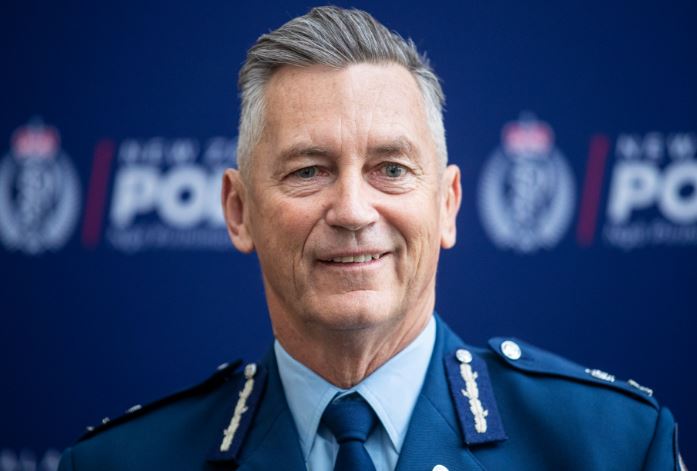
The appointment of former New Zealand Police Commissioner Mike Bush as Victoria’s new Chief Commissioner opens the way for a new era of back-to-basics policing.
To be effective, Mr Bush will need to exhibit an unfailing commitment to always acting with integrity.
A reputation for acting with and exhibiting integrity gains the trust of the police workforce and the trust of the public the force serves.
It is imperative that the Victoria Police change.
In June 2022, the Community Advocacy Alliance (CAA) called for a Police leader independent of the Victoria Police to implement change because the workforce and public trust in police leadership had declined dramatically.
Both police and the public have become disenchanted by the way policing has been conducted over the last twenty or more years.
Mr Bush has an impressive record of changing the then totally reactive policing method in New Zealand to a predominantly proactive crime prevention model that reduced the incidence of crime by twenty per cent in four years.
While arresting and charging offenders is a major requirement of an effective police force, preventing crime is an essential top priority.
The best policing produces no measurable result. If there is no disorder, no crime and no traffic offences, policing may be highly effective, but there is nothing to measure or do except to note the reduction in crime and disorder and the increase of faith in police by the community.
The drop in the crime rate in New Zealand under the Bush-style leadership of police is strong evidence that a new policing model can be introduced, led and managed by this appointment.
Basically, we must see a return to the nine Peelian (ethics, trust and engagement) policing principles:
- To prevent crime and disorder, as an alternative to their repression by military force and severity of legal punishment.
- To recognise always that the power of the police to fulfil their functions and duties is dependent on public approval of their existence, actions and behaviour, and on their ability to secure and maintain public respect.
- To recognise always that to secure and maintain the respect and approval of the public means also the securing of the willing co-operation of the public in the task of securing observance of laws.
- To recognise always that the extent to which the co-operation of the public can be secured diminishes proportionately the necessity of the use of physical force and compulsion for achieving police objectives.
- To seek and preserve public favour, not by pandering to public opinion, but by constantly demonstrating absolutely impartial service to law, in complete independence of policy, and without regard to the justice or injustice of the substance of individual laws, by ready offering of individual service and friendship to all members of the public without regard to their wealth or social standing, by ready exercise of courtesy and friendly good humour, and by ready offering of individual sacrifice in protecting and preserving life.
- To use physical force only when the exercise of persuasion, advice and warning is found to be insufficient to obtain public co-operation to an extent necessary to secure observance of law or to restore order, and to use only the minimum degree of physical force which is necessary on any particular occasion for achieving a police objective.
- To maintain at all times a relationship with the public that gives reality to the historic tradition that the police are the public and that the public are the police, the police being only members of the public who are paid to give full-time attention to duties which are incumbent on every citizen in the interests of community welfare and existence.
- To recognise always the need for strict adherence to police-executive functions, and to refrain from even seeming to usurp the powers of the judiciary of avenging individuals or the State, and of authoritatively judging guilt and punishing the guilty.
- To recognise always that the test of police efficiency is the absence of crime and disorder, and not the visible evidence of police action in dealing with them.
These principles define the mission: keeping law and order, reinforcing a sense of safety, and preventing crime.
Today, the principles must still guide police work and form the basis for a relationship of trust between the police and the community.
This is clearly indicative that it is time for Victoria Police to modernise its leadership and management processes and shake of decades of ineptness while retaining what is sound.
We believe that the capacity, under the leadership of Mike Bush will enable Victoria Police to address these issues.
The CAA believes that the reintroduction of programs like Blue Light, the Ropes Program, the Police in Schools program introduced in Victoria in 1989 and which ran very successfully moderating youth crime until abolished in 2006 and other proactive initiatives will receive active support from Mr. Bush as Chief Commissioner and we will see rapid and lasting improvement in combatting crime in Victoria and the restoration of respect for police that has so sadly been lost.
Mr Bush has demonstrated he is the right person to lead Victoria out of the morass into which it has descended.
Along with the CAA, I welcome Mr Bush and wholeheartedly endorse his appointment.
I wonder if there will be resignations coming from disgruntled senior members being overlooked in favour of Bush. I hope Bush reinstates merit based promotions at executive level and actually weeds out those who tarnish the image of the department For too long, there has been a lot of talk from previous chiefs on this issue but that’s all. We need a doer not a talker
I’m not sure if those qualities mentioned will be enough under this authoritarian socialist government. He served under a committed communist Jacinda Adern, the NZ Prime minister of woke. If he is prepared to maintain his independence and respects the Westminster Separation of Powers he will be a blessing otherwise Victoria will remain crime riddled and dysfunctional. He also has the added burden of an ideological judiciary who prefer woke ideology over and above the Rule of Law.
I whole heartedly agree. BUT, for one other extremely important POINT! I would like to hear from the Allen Labor Government that Mike Bush as our new Police Commissioner in Victoria, will have TOTAL autonomy from any kind of influence from said Government! Total transparency at all times bar obvious moves to stop criminals and organisations!
Hopefully this appointment can also curb the rampant corruption amongst the political operatives and juditiary in this State, that have reduced Victoria to not only a laughing stock world wide, but into a tar pit of doom for future generations.
How did VicPol reach this point of having to “go back to basics” policing?
I am sure it is to do with the failed “experiment” over the past 25 years that has left the legacy we have across all aspects of policing.
There is no doubt that reform is needed with which the current members will learn what policing is all about.
The reforms, I suggest, should include a total organisational restructure designed to reduce the levels and numbers of senior ranks required to provide an appropriate response.
Would’nt is be wonderful to have the dynamic duo of CCP Mike Bush and DC Sir Ken Jones?
I’m not sure Bush will be able to operate as CCP totally removed from any Government influence. Is it at all possible whilst we have the current Government in place?
This man was CCP under Jacinta Adhern. What does this really say about him.
People might refer to him as being proactive but what does this mean. Without Possibility Thinking proactive policing means nothing.
At least we now know that members will not tolerate an ineffective CCP.