
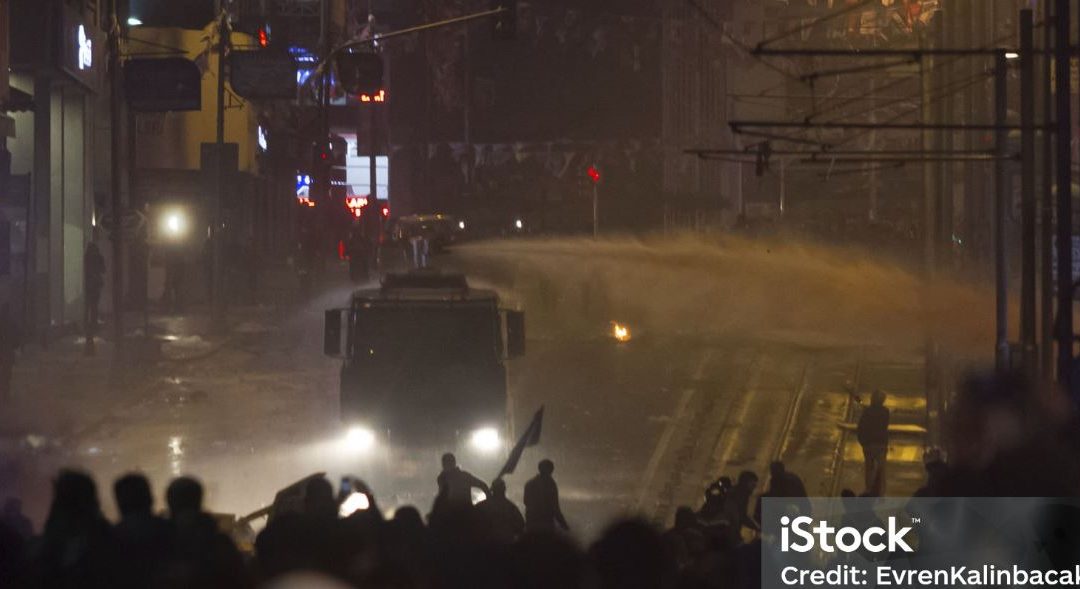
We have long advocated for the use of Water Cannons for crowd control, but there continues to be reluctance both within the force and outside; however, most of the criticism from outside seems to come from those in the community who likely promote and drive unlawful behaviour in demonstrations.
We strongly support the notion of people’s right to peacefully demonstrate in public places for whatever legal cause motivates them; however, we are equally opposed to violent or destructive behaviour that disrupts the rest of the community from going about their lives.
What is often not discussed is the large number of police needed to manage violent or disruptive demonstrations. The impacts are not only on the people directly affected in the vicinity of the rally, but also on the broader community, where police are drawn away from the protection services they provide.
Crime and other community disorders do not stop because the local police are drawn away for these other duties
 To assist, go to https://www.gofundme.com/f/support-caa-to-restore-safety-justice-accountability
The effectiveness of policing and their ability to maintain law and order are directly proportional to the number of Police deployed as well as their deployment strategies.
The first major step is to convince the Government to introduce a permit system similar to the systems introduced in other States. At least that way, the line can be drawn to minimise the impact on other citizens and remove the grey area of legal or illegal demonstrations. A legal demonstration with parameters of a permit reduces the likelihood of the rally getting out of hand and becoming an unlawful gathering.
With the lack of Police, the provision of an effective alternative that can dramatically reduce the demand on police numbers to deal with these matters is a sensible and, we would have thought, urgent issue.
The use of Water Cannons should not be contentious, as the benefits far outweigh the negatives. The community is sick of non-decisive actions by police, particularly when they engage in running street battles, evident during COVID.
The most significant effect that Water Cannons can have is one of prevention, a key component of effective policing.
The main points are,
Purpose and Tactical Value
- Non-lethal deterrent: Water cannons offer a forceful but non-lethal method of dispersing crowds when unrest escalates beyond verbal negotiation or breach of physical barriers.
- Area-wide impact: Unlike batons, pepper spray or other alleged non-lethal devices, Water Cannons can affect a broad zone, reducing the need for close-quarters confrontation that may provoke further violence.
- Equipment-based control: By utilising mechanised dispersal, law enforcement can minimise direct physical engagement, limiting the potential for personal injury to both Police and protesters.
Safety and Risk Mitigation
- Lower risk than alternatives. When appropriately calibrated, water cannons pose fewer long-term health risks than chemical agents like tear gas, rubber bullets or other alleged non-lethal equipment.
- Controlled escalation: They offer a step between passive observation and full riot gear deployment, aligning with principles of measured response and proportionality.
- Visibility and accountability: The use of water is visible and recorded, which promotes transparency. Water cannons are used openly and can be appropriately managed.
Legal and Ethics
- Compliance with use-of-force guidelines: When deployed with clear protocols and oversight, water cannons can comply with international standards on crowd management.
- Supports lawful assembly while responding to violence:
Their use can be strategically restricted to situations where protest becomes violent or dangerously obstructive, thereby preserving the rights of peaceful demonstrators while curbing escalation.
Other Considerations
- Public safety alignment: In urban settings prone to high-density gatherings, water cannons offer scalable, crowd-reshaping options that uphold infrastructure integrity and prevent stampedes.
- Deterrent psychology: The visual and auditory presence of water cannons alone may dissuade violence without active deployment, serving as a psychological buffer.
The issue, in part, is the overall cost of this equipment. However, the savings on police costs alone would quickly outweigh the purchase cost of a water cannon.
It is time for action, not the inaction we have experienced for years and the hidden costs the community endures from lawless behaviour. It is not only the inconvenience, but also the danger of out-of-control demonstrations, that must be reduced.
The CAA calls upon the Government to provide the Victoria Police with a water cannon immediately. To do so makes operational and economic sense.

Water canons are not always a “safe” alternative to other crowd control tools as you claim. Where they have been used in other OECD countries to “pacify” protesting citizens, the water has often been mixed with chemical irritants, with unknown long-term effects on the citizens/taxpayers being attacked.
Additionally, your comment that “the community is sick of non-decisive actions by police, particularly when they engage in running street battles, evident during COVID” is disingenuous, misleading and false. I witnessed hundreds of thousands of concerned, law-abiding citizens, mums and dads, grandmothers and grandfathers peacefully protesting the LONGEST LOCKDOWNS IN THE WORLD, ordered by an autocratic and tyrannical Premier.
From my first-hand observations, the only time the demonstrators became agitated was when VicPol decided to inflame the situation by attacking the community they are sworn to protect with horses, dogs, batons and rubber bullets. Instead of inciting community anger and resentment (VicPol is still trying to win back the community’s trust) I would have preferred to see uniformed members join the demonstrators (dictatorial laws by wannabe tyrants have no place in Australia).
In summary, I don’t believe we need to provide VicPol additional tools with which to attack citizens exercising their right to protest. Andrews is gone, his equally despotic lackey, Patton, is gone: VicPol should now get back to basics in terms of community policing, strike some wins against the growing Victorian crime rate, and win back the community’s trust.
“Water Cannons can affect a broad zone”…….This fact needs to be acknowledged as a possible negative, which in turn needs to be addressed. The protocols for Water Cannon use in controlling demonstrations must include prevention of socially unacceptable behaviour – that is their purpose. That requires discernment/identification of individuals acting irresponsibly [against people or property, or outside permit specifics]. Water Cannons must not be used to prevent that part of demonstrations that are responsible/acceptable or permitted. The unfortunate nature of Water Cannons is that they tend to “paint everybody with the same brush”. From a VicPol PR point of view, it would be a disaster if Water Cannons were to be seen as preventing demonstrations per se. Nonetheless, a thorough and comprehensive analysis of effect/cost/benefit of Water Cannons could be expected to be very positive – if used with discretion.